

Hey there! If you're like me, you've probably spent way too much time hunched over a desk or scrolling through your phone. And let me tell you, it takes a toll on your body. One of the most common issues I've seen is posterior pelvic tilt. It's a real pain in the... well, you know what I mean. But don't worry, I've got some tips and tricks to help you correct that posture and get back on track.
First things first, let's talk about what posterior pelvic tilt actually is. Your pelvis is like the foundation of your body, and when it's tilted backward, it can throw off your entire alignment. This can lead to a whole host of problems, including lower back pain, hip tightness, and even knee issues. You might notice that your lower back is overly arched, your hips are tucked under, and your belly sticks out a bit. It's not the most flattering look, but more importantly, it's not good for your health.
So, how can you tell if you have posterior pelvic tilt? Well, there are a few simple tests you can do at home. Stand in front of a mirror and take a good look at yourself. Notice the position of your hips and lower back. If your hips seem to be pulled back and your lower back is flat or concave, you might have posterior pelvic tilt. Another way to check is to lie on your back on a flat surface. Place your hands under your lower back. If there's a lot of space between your back and the floor, or if you can't easily slide your hands under, that could be a sign of posterior pelvic tilt.
Now, let's get into the good stuff - how to correct it. The first step is to strengthen the muscles that support your pelvis. This includes your abdominal muscles, glutes, and hip flexors. Weakness in these muscles is often what causes posterior pelvic tilt in the first place.
One of my favorite exercises for strengthening the abs is the plank. It's a simple but effective way to engage your core muscles. Start by getting into a push-up position, but instead of lowering yourself down, hold the position for as long as you can. Make sure your body is in a straight line from your head to your heels. Try to do 3 sets of 30 seconds each. As you get stronger, you can increase the time or try more advanced variations, like side planks.
The glutes are also super important for proper pelvic alignment. One great exercise for the glutes is the bridge. Lie on your back with your knees bent and your feet flat on the floor. Lift your hips up off the floor until your body forms a straight line from your shoulders to your knees. Hold for a few seconds, then lower back down. Do 3 sets of 10-15 reps.

In addition to strengthening the muscles, it's also important to stretch the tight muscles that might be contributing to the posterior pelvic tilt. The hip flexors and lower back muscles are often tight in people with this condition.
A simple stretch for the hip flexors is the lunge stretch. Step forward into a lunge position, with your front knee bent at a 90-degree angle and your back knee close to the floor. Lean forward slightly and feel the stretch in the front of your back hip. Hold for 30 seconds on each side.
For the lower back, you can try the child's pose. Kneel on the floor and sit back on your heels. Stretch your arms out in front of you and lower your forehead to the floor. Relax your body and feel the stretch in your lower back. Hold for 30 seconds to a minute.
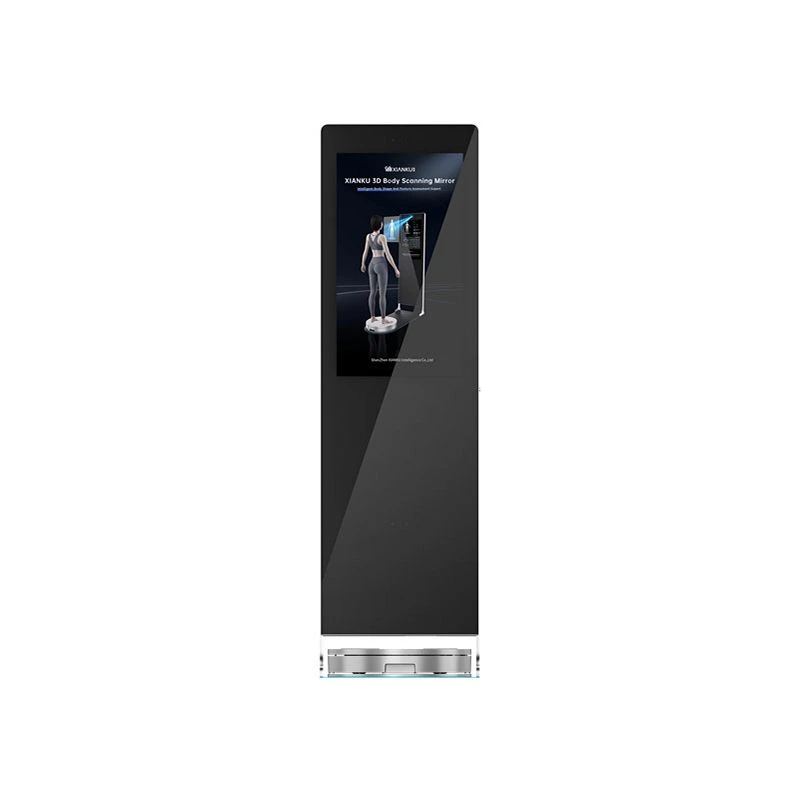
But here's the thing - sometimes, it can be hard to tell if you're really making progress with these exercises. That's where technology comes in. As a posture correction supplier, I'm really excited about the Xianku 3D Body Scanner. This amazing device can give you a detailed 3D scan of your body, showing you exactly how your pelvis is positioned and how your posture has changed over time. It's like having your own personal posture coach right in your own home.
Another great tool is the Xianku 3D Foot Scanner. Believe it or not, the way your feet are aligned can have a big impact on your pelvic tilt. This scanner can analyze your foot structure and provide recommendations for custom orthotics or other foot support devices that can help improve your overall posture.
Now, I know that correcting your posture takes time and effort. It's not going to happen overnight. But with the right exercises, stretches, and tools, you can make a big difference. And if you're serious about improving your posture, I'd love to help. Whether you're an individual looking to correct your own posture or a business interested in providing posture correction solutions to your customers, we've got a range of products and services to meet your needs.
If you're interested in learning more about our posture correction products or have any questions, don't hesitate to reach out. We're here to support you on your journey to better posture and a healthier body.
References
- American Council on Exercise (ACE). (n.d.). Correcting Postural Imbalances. Retrieved from [ACE website]
- Mayo Clinic. (n.d.). Back Pain: Exercises for Back Pain. Retrieved from [Mayo Clinic website]
- National Institute of Arthritis and Musculoskeletal and Skin Diseases (NIAMS). (n.d.). Keeping Your Bones and Joints Healthy. Retrieved from [NIAMS website]