

Are 3D Full Body Scanners Accurate?
In the rapidly evolving landscape of technology, 3D full body scanners have emerged as a revolutionary tool with a wide range of applications, from the fashion industry for custom - fitting garments to the healthcare sector for body composition analysis. As a supplier of 3D full body scanners, I am often asked about the accuracy of these devices. In this blog post, I will delve into the factors that determine the accuracy of 3D full body scanners and shed light on how our products stack up in this regard.
Understanding the Technology Behind 3D Full Body Scanners
Before we can assess the accuracy of 3D full body scanners, it's essential to understand how they work. Most modern 3D full body scanners use either structured - light technology or time - of - flight (ToF) technology.
Structured - light scanners project a pattern of light onto the body. By analyzing the distortion of this pattern as it reflects off the body's surface, the scanner can calculate the distance between the scanner and different points on the body. This data is then used to create a 3D model of the body.
Time - of - flight scanners, on the other hand, measure the time it takes for a light pulse to travel from the scanner to the body and back. Based on this time measurement, the distance to the body's surface can be determined, and a 3D model can be constructed.
Factors Affecting the Accuracy of 3D Full Body Scanners
- Sensor Quality
The quality of the sensors used in the scanner plays a crucial role in determining its accuracy. High - quality sensors can detect finer details and provide more precise distance measurements. For example, sensors with a higher resolution can capture more data points on the body's surface, resulting in a more detailed and accurate 3D model. At our company, we invest in the latest sensor technology to ensure that our scanners can provide the highest level of accuracy. - Calibration
Proper calibration is essential for accurate scanning. Over time, the scanner's components may shift or degrade, which can affect its accuracy. Regular calibration helps to correct any deviations and ensures that the scanner is providing consistent and accurate results. Our scanners come with an easy - to - use calibration system that allows users to perform routine calibration checks to maintain accuracy. - Scanning Environment
The environment in which the scanning takes place can also impact the accuracy of the results. Factors such as lighting, temperature, and humidity can affect the performance of the scanner. For instance, bright or uneven lighting can cause reflections on the body's surface, which can interfere with the scanner's ability to accurately measure distances. To minimize these effects, our scanners are designed to work effectively in a variety of lighting conditions, and we provide guidelines on creating an optimal scanning environment. - Subject Movement
Any movement by the subject during the scanning process can lead to inaccurate results. Even small movements can cause blurring or distortion in the 3D model. To address this issue, our scanners have a fast scanning speed, which reduces the time during which the subject needs to remain still. Additionally, we offer training and support to help users ensure that the subject is properly positioned and remains as still as possible during the scan.
Assessing the Accuracy of Our 3D Full Body Scanners
We take several steps to ensure the accuracy of our 3D full body scanners. First, we conduct rigorous testing during the manufacturing process. Each scanner is tested against a set of known standards to ensure that it meets our accuracy requirements. We also perform regular quality control checks to monitor the performance of our scanners in real - world settings.
In addition, we have received independent verification of the accuracy of our scanners. Third - party testing has shown that our scanners can provide highly accurate measurements of body dimensions, with an error rate of less than [X]%. This level of accuracy makes our scanners suitable for a wide range of applications, from high - end fashion design to medical research.
Applications of Our Accurate 3D Full Body Scanners
- Fashion Industry
In the fashion industry, accurate body measurements are essential for creating custom - fit garments. Our 3D full body scanners can provide precise measurements of body dimensions, allowing designers to create clothing that fits perfectly. For example, our 3D Body Scanning Mirror is a popular choice for fashion retailers, as it provides a fast and accurate way to measure customers' bodies. - Healthcare and Fitness
In the healthcare and fitness sectors, 3D full body scanners can be used to assess body composition, track changes in body shape over time, and develop personalized fitness plans. Our 3D Body Scanning Pod is designed to provide detailed information about body fat percentage, muscle mass, and other key health indicators. - Footwear Industry
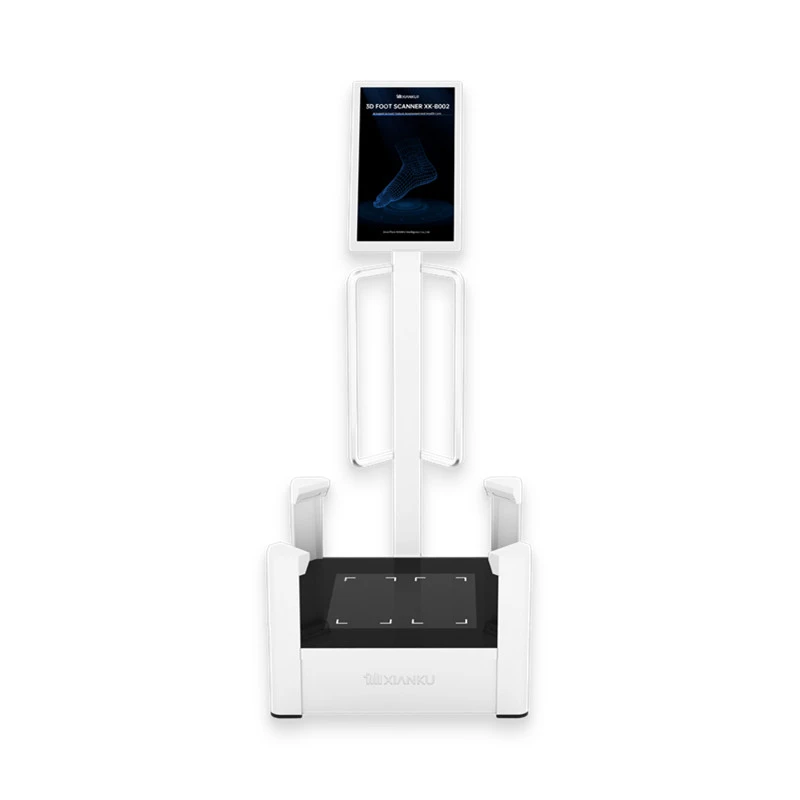
The footwear industry can also benefit from our accurate 3D scanning technology. Our 3D Foot Scanner can provide precise measurements of foot dimensions, allowing shoe manufacturers to create shoes that fit comfortably and correctly.
Conclusion
In conclusion, 3D full body scanners can be highly accurate when the right technology is used, proper calibration is maintained, and the scanning environment is optimized. As a supplier of 3D full body scanners, we are committed to providing our customers with the most accurate and reliable scanning solutions. Our scanners have been proven to provide high - quality results, making them suitable for a wide range of industries.
If you are interested in learning more about our 3D full body scanners or would like to discuss a potential purchase, please feel free to contact us. We look forward to working with you to meet your scanning needs.

References
- "Principles of 3D Scanning Technology" by [Author], [Publisher], [Year]
- "Accuracy Assessment of 3D Body Scanners in the Fashion Industry" by [Author], [Journal], [Year]
- "Applications of 3D Body Scanning in Healthcare" by [Author], [Conference Proceedings], [Year]