

Are precision body scans used in telemedicine?
In recent years, telemedicine has emerged as a revolutionary approach to healthcare, breaking down geographical barriers and providing patients with more convenient access to medical services. At the same time, precision body scan technology has advanced significantly, offering highly detailed and accurate anatomical information. As a precision body scan supplier, I've been closely observing the intersection of these two fields and exploring the potential of using precision body scans in telemedicine.
The Rise of Telemedicine
Telemedicine encompasses a wide range of technologies and services that enable remote healthcare delivery. It includes video consultations, remote monitoring of vital signs, and the exchange of medical information between patients and healthcare providers. The COVID - 19 pandemic has accelerated the adoption of telemedicine as a way to minimize in - person contact and ensure continuity of care.
One of the limitations of traditional telemedicine, however, is the lack of direct physical examination. Healthcare providers often rely on patients' descriptions of symptoms and basic vital sign data, which may not provide a complete picture of the patient's condition. This is where precision body scans can play a crucial role.
Precision Body Scans: An Overview
Precision body scans are advanced imaging techniques that can capture detailed 3D models of the human body. These scans can be used to measure body dimensions, detect anatomical abnormalities, and monitor changes in the body over time.

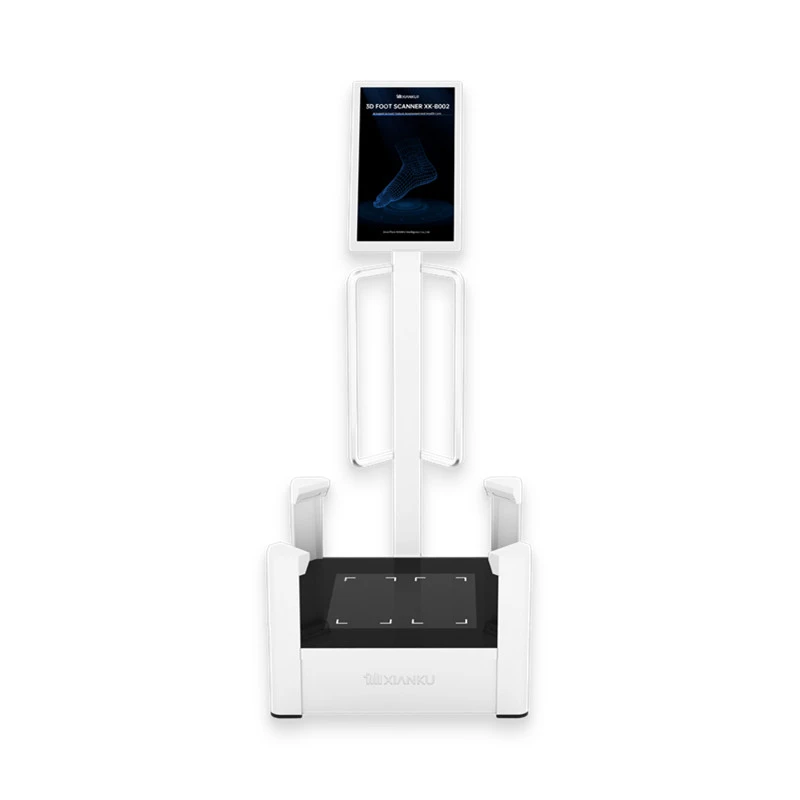
For example, the Xianku 3D Foot Scanner is a state - of - the - art device that can create a high - resolution 3D model of the foot. This scanner is useful for podiatrists, orthopedic surgeons, and shoe designers. It can help in diagnosing foot problems such as flat feet, high arches, and plantar fasciitis, and also in custom - fitting shoes for patients with specific foot conditions.
The Xianku 3D Body Scanning Room is another remarkable product. It can scan the entire body in a matter of seconds, providing detailed information about body shape, volume, and posture. This technology can be used in the fields of sports medicine, physical therapy, and obesity management. For instance, in sports medicine, it can help coaches analyze an athlete's body mechanics and identify areas for improvement.
The Xianku 3D Body Scanner is a more compact and user - friendly option that can still deliver accurate body scans. It can be placed in clinics, fitness centers, or even at home, making body scanning more accessible to a wider range of people.
Applications of Precision Body Scans in Telemedicine
Diagnosis
Precision body scans can provide healthcare providers with objective data that is difficult to obtain through traditional telemedicine methods. For example, in dermatology, a 3D body scan can help in the early detection of skin lesions. The high - resolution images can be analyzed remotely by a dermatologist, who can then make a more accurate diagnosis and recommend appropriate treatment.
In orthopedics, a scan of a patient's joint can show the exact location and extent of damage, even if the patient is miles away from the specialist. This allows for more targeted treatment plans and reduces the need for unnecessary in - person visits.
Treatment Monitoring
Telemedicine often involves long - term treatment plans, and precision body scans can be used to monitor the progress of treatment. For example, in patients undergoing physical therapy for a musculoskeletal injury, regular body scans can show changes in muscle mass, joint range of motion, and posture. This data can be shared with the therapist, who can adjust the treatment plan accordingly.
In weight management programs, 3D body scans can accurately measure changes in body fat percentage and muscle mass over time. This information is more reliable than self - reported weight and can help healthcare providers make more informed decisions about diet and exercise recommendations.
Customized Treatment
Precision body scans enable the creation of personalized treatment solutions. In prosthetics, a 3D scan of an amputated limb can be used to design a custom - fit prosthetic device. The scan data can be sent to a prosthetist remotely, who can then create a prosthetic that matches the patient's unique anatomy. This not only improves the fit and comfort of the prosthetic but also enhances the patient's functionality.
Challenges and Considerations
While the potential of using precision body scans in telemedicine is significant, there are also several challenges that need to be addressed.
Data Security and Privacy
Body scan data contains highly sensitive personal information, and ensuring its security and privacy is of utmost importance. Healthcare providers and scan suppliers need to comply with strict data protection regulations, such as the Health Insurance Portability and Accountability Act (HIPAA) in the United States. This requires implementing robust security measures to prevent data breaches and unauthorized access.
Cost and Accessibility
Precision body scan devices can be expensive, and the cost may be a barrier for some patients and healthcare providers. Additionally, not all patients have access to the necessary technology to perform or transmit body scan data. This digital divide can limit the widespread adoption of precision body scans in telemedicine.
Integration with Existing Systems
Integrating precision body scan technology with existing telemedicine platforms can be complex. Healthcare providers need to ensure that the scan data can be seamlessly integrated with their electronic health record (EHR) systems and other telemedicine tools. This requires technical expertise and collaboration between different stakeholders.
Future Outlook
Despite the challenges, the future of using precision body scans in telemedicine looks promising. As technology continues to advance, the cost of body scan devices is likely to decrease, and their accessibility will increase. Additionally, improvements in data security and integration technologies will make it easier to use body scan data in telemedicine.
In the coming years, we can expect to see more widespread use of precision body scans in various medical specialties, leading to more accurate diagnoses, personalized treatment plans, and better patient outcomes.
Contact for Procurement
If you are a healthcare provider, a research institution, or a business interested in incorporating precision body scan technology into your telemedicine services, we are here to help. Our team of experts can provide you with detailed information about our products, including the Xianku 3D Foot Scanner, Xianku 3D Body Scanning Room, and Xianku 3D Body Scanner. We can also assist you in the implementation process and offer ongoing support. Contact us to start a procurement discussion and take your telemedicine services to the next level.
References
- "Telemedicine: A Guide to Implementation, Use, and Impact" by John R. Hickner, et al.
- "3D Body Scanning Technology and Its Applications in Healthcare" by various authors in medical journals.
- "Data Security in Telemedicine" from industry - specific reports on healthcare technology.