

Are there any risks associated with muscle rate scanning?
As a supplier of muscle rate scanning technology, I often encounter questions from potential clients about the safety and risks involved in this process. In this blog post, I aim to address these concerns and provide a comprehensive overview of the potential risks associated with muscle rate scanning.
First, it's important to understand what muscle rate scanning is and how it works. Muscle rate scanning is a non - invasive technology that uses advanced sensors and imaging techniques to measure the muscle mass, density, and other related parameters of the human body. This information can be extremely valuable for a variety of purposes, such as fitness assessment, sports performance optimization, and medical diagnosis.
One of the primary concerns that people have about muscle rate scanning is the potential for radiation exposure. Unlike some other medical imaging techniques like X - rays or CT scans, most modern muscle rate scanning devices do not use ionizing radiation. Instead, they rely on harmless technologies such as electrical impedance analysis (EIA), ultrasound, or optical scanning.
Electrical impedance analysis works by passing a small, painless electrical current through the body. The impedance or resistance to this current is then measured, and based on the known relationships between impedance and body composition, the muscle mass can be estimated. Since the electrical current used is very low and non - harmful, there is no risk of radiation - related side effects.
Ultrasound - based muscle rate scanners use high - frequency sound waves to create images of the muscles. Sound waves are a well - established and safe technology, commonly used in medical settings for imaging the fetus during pregnancy or examining internal organs. There is no evidence to suggest that the ultrasound waves used in muscle rate scanning pose any risk to human health.

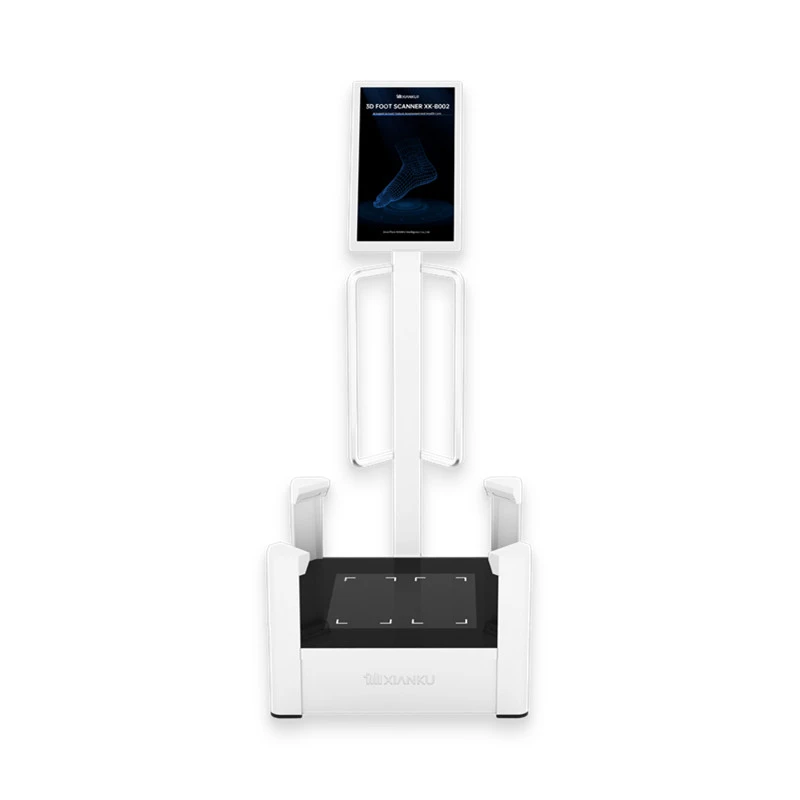
Optical scanning techniques, such as those used in some 3D body scanners, use light to capture detailed images of the body's surface. These scanners are completely non - invasive and do not emit any harmful radiation. They are often used in combination with other technologies to provide a more accurate assessment of muscle mass and body composition.
Another potential concern is the accuracy of the scanning results. Inaccurate results could lead to misinterpretation of the muscle mass and may cause individuals to make inappropriate decisions regarding their fitness or health. However, modern muscle rate scanning devices are designed with high - precision sensors and advanced algorithms to ensure accurate measurements.
For example, our 3D Body Scanning Pod uses state - of - the - art technology to capture detailed 3D images of the body. These images are then analyzed using sophisticated software that takes into account factors such as body shape, posture, and muscle distribution to provide highly accurate muscle mass estimates. Similarly, our 3D Foot Scanner and 3D Body Scanning Mirror are equipped with advanced sensors and algorithms to ensure reliable and precise measurements.
However, it's important to note that the accuracy of the scanning can be affected by certain factors. For instance, if the individual being scanned is not in the correct position or has recently consumed a large amount of water or food, it may slightly affect the results. To minimize these potential inaccuracies, it's recommended that individuals follow the pre - scanning instructions carefully.
Some people may also be concerned about the privacy and security of the data collected during muscle rate scanning. At our company, we take data privacy and security very seriously. All the data collected during the scanning process is encrypted and stored in a secure database. We comply with all relevant data protection regulations and ensure that the data is only used for the intended purpose, such as providing accurate body composition analysis to the users.
In rare cases, there may be some physical discomfort associated with muscle rate scanning. For example, if an individual has sensitive skin, they may experience a mild tingling sensation during electrical impedance analysis. However, this is usually very mild and temporary, and the majority of people do not report any significant discomfort during the scanning process.
Overall, the risks associated with muscle rate scanning are extremely low. The non - invasive nature of the technology, combined with the use of safe and established techniques, makes it a reliable and safe option for assessing muscle mass and body composition.
If you are interested in incorporating muscle rate scanning technology into your fitness center, sports clinic, or medical practice, we would be more than happy to discuss your needs. Our products, including the 3D Body Scanning Pod, 3D Foot Scanner, and 3D Body Scanning Mirror, are designed to provide accurate and reliable results. Contact us to start a discussion about how our muscle rate scanning solutions can benefit your business.
References
- Garrow, J. S., & Webster, J. (1985). Quetelet's index (W/H2) as a measure of fatness. International Journal of Obesity, 9(1), 147 - 153.
- Heymsfield, S. B., & Wang, Z. (2005). Advances in body composition assessment. Current Opinion in Clinical Nutrition and Metabolic Care, 8(5), 505 - 511.
- Kyle, U. G., Genton, L., Hans, D., Slosman, D. O., & Pichard, C. (2004). Bioelectrical impedance analysis - part II: utilization in clinical practice. Clinical Nutrition, 23(4), 1060 - 1072.