

Hey there! I'm a supplier of 3D room scanning services, and I've been thinking a lot lately about the potential of 3D room scanning in museum exhibitions. It's a pretty cool idea, and I want to share my thoughts with you.
First off, let's talk about what 3D room scanning is. It's a technology that uses lasers, cameras, and other sensors to create a detailed 3D model of a room or space. This model can include everything from the walls and floors to the furniture and objects inside. It's like taking a virtual snapshot of a real - world environment.
Now, why would museums be interested in this? Well, one of the biggest advantages is accessibility. Not everyone can physically visit a museum. Maybe they're too far away, have mobility issues, or are just too busy. With 3D room scanning, museums can create virtual exhibitions that people can access from anywhere in the world. They can explore the museum's galleries, look at the exhibits up close, and even get a sense of the spatial layout, all from the comfort of their own homes.
For example, imagine you're a history buff living in a small town in the middle of nowhere. There's no big - name museum nearby, but you're really interested in ancient civilizations. A museum with a 3D - scanned exhibition can bring the artifacts and stories right to your screen. You can zoom in on a delicate ancient vase, read the descriptions, and learn about its history without having to travel hundreds of miles.
Another benefit is preservation. Museums often have to deal with the wear and tear of having large numbers of visitors. People might accidentally bump into exhibits, or the constant flow of air and humidity from the crowds can damage delicate artifacts. By using 3D room scanning, museums can create digital replicas of their exhibits. These replicas can be used for educational purposes, research, or even for creating virtual reconstructions of how the museum might have looked in the past.
Let's say there's a museum with a collection of old manuscripts. These manuscripts are very fragile and can't be handled too much. With a 3D scan, researchers can study the details of the manuscripts without ever touching them. They can zoom in on the text, analyze the ink, and look for signs of wear and tear, all while keeping the original manuscripts safe.
3D room scanning also offers a new way to present information. Instead of just having static displays, museums can use the 3D models to create interactive experiences. For instance, they can add audio guides that play when you click on an exhibit, or they can include animations that show how an object was used in its original context. This makes the learning experience more engaging and fun, especially for younger visitors.
But it's not all sunshine and rainbows. There are some challenges to using 3D room scanning in museum exhibitions. One of the main issues is the cost. Scanning a large museum space can be expensive, as it requires specialized equipment and skilled technicians. And then there's the matter of storage. The 3D models can take up a lot of digital space, and museums need to have the infrastructure to store and manage these files.

Another challenge is the accuracy of the scans. While 3D scanning technology has come a long way, it's still not perfect. There can be issues with lighting, reflections, and small details that might not be captured accurately. This can be a problem when it comes to representing the true nature of the artifacts.
Despite these challenges, I believe that the benefits of 3D room scanning for museum exhibitions far outweigh the drawbacks. And as a 3D room scanning supplier, I'm here to help museums overcome these challenges.
We have state - of - the - art equipment that can capture high - quality 3D models with great accuracy. Our team of experts is experienced in working with museums and can ensure that the scanning process is as smooth as possible. We can also help museums with the storage and management of their 3D models, so they don't have to worry about the technical details.
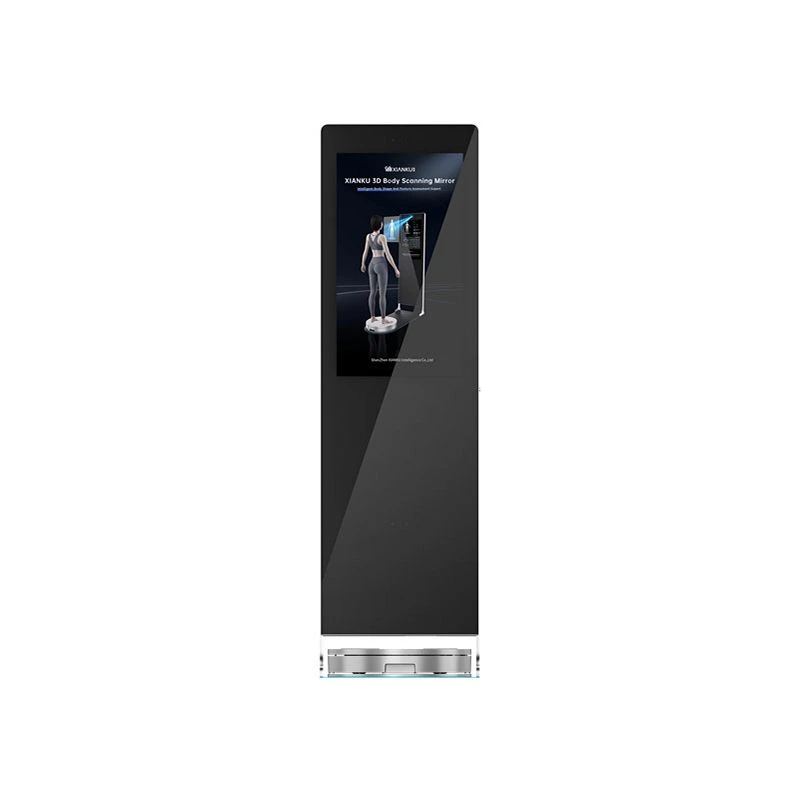
If you're a museum curator or someone involved in museum management, you might be thinking about other related technologies. For example, we also offer Xianku 3D Body Scanner and Xianku 3D Foot Scanner. These scanners can be used in combination with 3D room scanning to create even more immersive and interactive experiences. For instance, you could use the 3D body scanner to let visitors see how they would have looked in the clothing of a particular historical period, or the 3D foot scanner could be used to study ancient footwear.
So, if you're interested in bringing the future of museum exhibitions to your institution, I'd love to talk to you. Whether you're looking to create a virtual exhibition for accessibility, preserve your artifacts, or just add a new dimension to your displays, our 3D room scanning services can help. Don't hesitate to reach out and start a conversation about how we can work together to make your museum even more amazing.
References
- "The Future of Museum Exhibitions: Digital Technologies and Visitor Engagement" by Smith, J.
- "3D Scanning in Cultural Heritage Preservation" by Johnson, A.