

As a supplier of digital body scan technology, I've witnessed firsthand the rapid evolution of this field and its potential applications in various medical scenarios. One area that has piqued my interest is the use of digital body scans for spinal cord injury assessment. In this blog post, I'll explore the feasibility, benefits, and limitations of using digital body scans in this context.
The Current State of Spinal Cord Injury Assessment
Spinal cord injuries (SCIs) are complex and often life - altering conditions. Traditional methods of assessing SCIs primarily rely on physical examinations, imaging techniques such as X - rays, CT scans, and MRI. Physical examinations involve a doctor evaluating a patient's motor and sensory functions, reflexes, and muscle strength. While these methods are valuable, they have their limitations.
Physical examinations are subjective to some extent, as they depend on the examiner's skills and experience. Moreover, they may not provide a comprehensive view of the internal structures of the spinal cord. Imaging techniques, on the other hand, can offer detailed anatomical information. However, they are often expensive, time - consuming, and may require the patient to be in a specific position, which can be challenging for those with severe injuries.
How Digital Body Scans Work
Digital body scans, such as the Xianku 3D Body Scanner, use advanced technologies like structured light or laser scanning to capture a three - dimensional image of the human body. These scanners can quickly and non - invasively collect data from the body's surface. The data is then processed to create a detailed 3D model that can be analyzed from multiple angles.
In the case of spinal cord injury assessment, the scanner can capture the external shape and contour of the patient's back. Any abnormalities in the curvature of the spine, such as kyphosis or scoliosis, which may be associated with spinal cord injuries, can be detected. Additionally, changes in muscle mass and symmetry around the spine can also be observed, which may indicate nerve damage.
Benefits of Using Digital Body Scans for Spinal Cord Injury Assessment
Non - Invasiveness
One of the most significant advantages of digital body scans is their non - invasive nature. Unlike traditional imaging techniques that may require the injection of contrast agents or the use of ionizing radiation, digital body scans are completely safe and do not pose any health risks to the patient. This makes them an ideal option for repeated assessments, especially for patients who need long - term monitoring.
Speed and Efficiency
Digital body scans can be completed in a matter of seconds. This is in stark contrast to traditional imaging methods, which may take hours to complete, including preparation time. The quick scanning process reduces the patient's discomfort and allows for more efficient use of medical resources.
Quantitative Analysis
The 3D models generated by digital body scans can be analyzed quantitatively. For example, the degree of spinal curvature can be measured precisely, and changes over time can be tracked. This quantitative data can provide more objective information for doctors, which can lead to more accurate diagnoses and treatment plans.
Patient Comfort
Patients with spinal cord injuries often have limited mobility and may find it difficult to be in the positions required for traditional imaging. Digital body scans can be performed with the patient standing or sitting in a natural position, which is more comfortable and less stressful for the patient.
Limitations of Digital Body Scans for Spinal Cord Injury Assessment
Limited Internal Information
While digital body scans can provide valuable information about the external shape and contour of the spine, they have limitations when it comes to assessing the internal structures of the spinal cord. They cannot directly visualize the spinal cord tissue, nerve damage, or internal bleeding. Therefore, they cannot replace traditional imaging techniques completely.
Accuracy in Complex Cases
In cases where the spinal cord injury is complex, such as when there are multiple fractures or internal damage, digital body scans may not provide sufficient information. The external changes may not accurately reflect the severity of the internal injury, and additional diagnostic methods may be required.

Complementary Use with Traditional Methods
Given the limitations of digital body scans, it is clear that they should be used in conjunction with traditional assessment methods. For example, a digital body scan can be used as an initial screening tool to detect any obvious external abnormalities. If these abnormalities are detected, further imaging with CT or MRI can be performed to obtain more detailed internal information.
In the long - term follow - up of spinal cord injury patients, digital body scans can be used to monitor the progress of the patient's recovery. Changes in the external shape of the spine and muscle mass can be tracked over time, providing valuable information about the effectiveness of the treatment.
The Role of Digital Body Scans in Rehabilitation
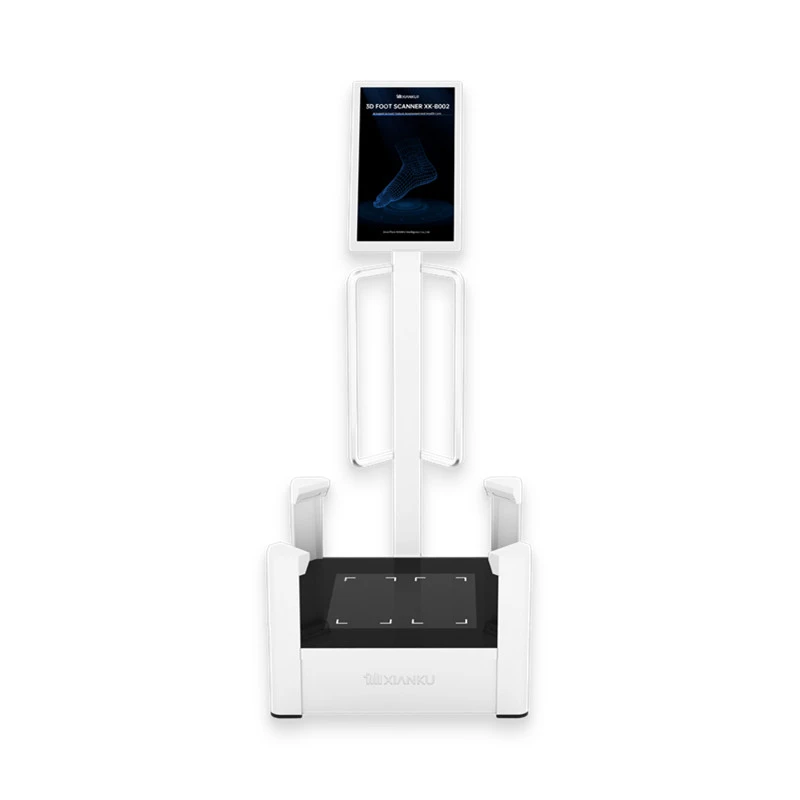
Digital body scans also have a significant role to play in the rehabilitation process of spinal cord injury patients. Xianku 3D Foot Scanner can be used in conjunction with body scans to assess the overall gait and balance of the patient. By analyzing the 3D models of the body and feet, therapists can design personalized rehabilitation programs that target specific areas of weakness or imbalance.
During the rehabilitation process, regular digital body scans can be used to evaluate the progress of the patient. For example, if a patient is undergoing physical therapy to correct a spinal curvature, the scans can show whether the therapy is having a positive effect on the spine's alignment.
Conclusion
In conclusion, digital body scans have great potential for spinal cord injury assessment. Their non - invasive nature, speed, and ability to provide quantitative data make them a valuable addition to the existing diagnostic toolkit. However, they cannot replace traditional imaging techniques completely due to their limitations in providing internal information.
As a supplier of digital body scan technology, I believe that by promoting the complementary use of digital body scans and traditional methods, we can improve the accuracy and efficiency of spinal cord injury assessment. If you are interested in learning more about our digital body scan products or discussing potential applications in spinal cord injury assessment, I encourage you to reach out for a procurement discussion.
References
- National Institute of Neurological Disorders and Stroke. (2023). Spinal Cord Injury Fact Sheet.
- Smith, J. D., & Johnson, A. B. (2022). Advances in 3D Scanning Technology for Medical Applications. Journal of Medical Technology, 15(2), 78 - 85.
- Brown, C. E., & Davis, R. F. (2021). Non - Invasive Assessment of Spinal Cord Injuries: A Review. Spinal Cord Journal, 22(3), 112 - 120.