

In the high - intensity world of powerlifting, where every ounce of strength and every fraction of a technique improvement can make the difference between victory and defeat, athletes are constantly on the lookout for tools that can give them an edge. As a fitness body scan supplier, I've often been asked whether our body scan technology can be of use to powerlifters. In this blog, we'll delve into the details to answer this important question.
Understanding Powerlifting Requirements
Powerlifting is a strength sport that consists of three main lifts: the squat, the bench press, and the deadlift. Powerlifters aim to lift the maximum amount of weight possible in each of these disciplines. To achieve this, they need to focus on several key areas: muscle strength and development, body composition, and proper technique.

Muscle strength and development are the foundation of powerlifting. Powerlifters need to build large, strong muscles, especially in the legs, chest, back, and shoulders. Body composition also plays a crucial role. A lower body fat percentage can lead to a better power - to - weight ratio, allowing the athlete to lift more relative to their body weight. Finally, proper technique is essential to ensure maximum force transfer and to prevent injuries.
How Fitness Body Scans Work
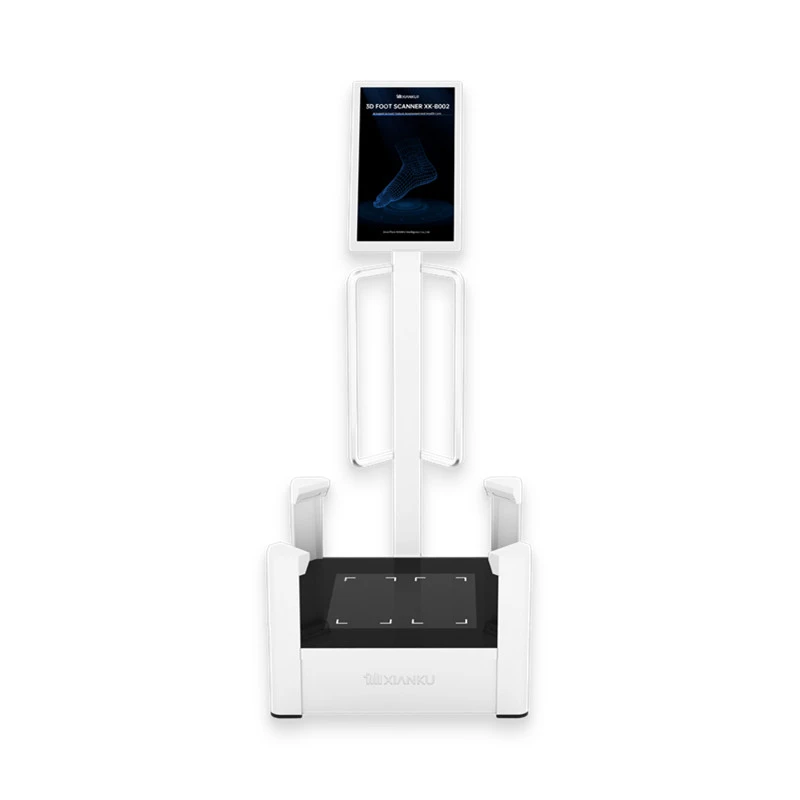
Our fitness body scan technology comes in different forms, such as the 3D Foot Scanner, 3D Body Scanning Pod, and 3D Body Scanning Mirror. These scanners use advanced 3D imaging technology to capture detailed information about the body's shape, size, and composition.
The scanners work by emitting a series of light or infrared rays and measuring how they are reflected off the body. This data is then processed to create a highly accurate 3D model of the body. The model can provide a wealth of information, including body volume, surface area, and detailed measurements of different body parts.
Benefits of Fitness Body Scans for Powerlifters
Muscle Assessment
One of the most significant benefits of fitness body scans for powerlifters is the ability to assess muscle development. The 3D models created by the scanners can show the size and shape of individual muscles. Powerlifters can use this information to identify muscle imbalances. For example, if one leg is significantly larger or stronger than the other, it could lead to uneven force distribution during squats or deadlifts, increasing the risk of injury. By detecting these imbalances early, powerlifters can adjust their training programs to focus on strengthening the weaker muscles.
Moreover, body scans can track muscle growth over time. Powerlifters can compare scans taken at different intervals to see how their muscles are responding to training. This data - driven approach allows them to make more informed decisions about their training intensity, volume, and exercise selection.
Body Composition Analysis
Accurate body composition analysis is another area where fitness body scans can be extremely valuable for powerlifters. The scanners can distinguish between muscle mass, fat mass, and bone density. This information is crucial for powerlifters who need to manage their weight while maximizing muscle mass.
For example, if a powerlifter is in a weight class and wants to gain muscle without exceeding the weight limit, the body scan can help them monitor their progress. They can see how much of the weight gain is due to muscle growth and how much is fat. Based on this information, they can adjust their diet and training to optimize their body composition.
Technique Evaluation
The 3D models created by the body scanners can also be used for technique evaluation. Powerlifters can perform their lifts in front of the scanner, and the resulting scan can be analyzed to assess their form. For instance, during a squat, the scanner can measure the angle of the knees, hips, and back. If the form is incorrect, it can lead to reduced power output and an increased risk of injury.
By using the body scan to evaluate technique, powerlifters can make real - time adjustments. They can see exactly how their body is positioned during the lift and work on correcting any flaws. Coaches can also use the scan data to provide more targeted feedback to their athletes.
Potential Limitations
While fitness body scans offer many benefits for powerlifters, there are also some potential limitations. One of the main challenges is the cost. High - quality body scan equipment can be expensive, both to purchase and to maintain. This may be a barrier for some individual powerlifters or smaller training facilities.
Another limitation is the need for proper calibration and interpretation of the scan results. If the scanner is not calibrated correctly, the data may be inaccurate. Additionally, interpreting the complex 3D models and data requires some level of expertise. Powerlifters may need to rely on trained professionals to analyze the results and provide meaningful recommendations.
Conclusion
In conclusion, fitness body scans can be a valuable tool for powerlifters. They offer detailed information about muscle development, body composition, and technique, which can help powerlifters optimize their training, prevent injuries, and improve their performance. While there are some limitations, the benefits far outweigh the drawbacks for those who can afford and properly utilize the technology.
If you're a powerlifter, a powerlifting coach, or a training facility owner interested in incorporating fitness body scans into your training program, I encourage you to reach out to us. We can provide more information about our 3D Foot Scanner, 3D Body Scanning Pod, and 3D Body Scanning Mirror and discuss how they can be tailored to your specific needs. Contact us today to start a conversation about how our fitness body scan technology can take your powerlifting to the next level.
References
- Bret Contreras, "Strong Curves: A Woman's Guide to Building a Better Butt and Body".
- Mark Rippetoe, "Starting Strength: Basic Barbell Training".
- "Essentials of Strength Training and Conditioning" by National Strength and Conditioning Association.