

In the ever-evolving landscape of sports performance analysis, technological advancements have played a pivotal role in helping athletes and coaches gain deeper insights into physical attributes and performance capabilities. One such innovation that has been garnering attention is the no contact body scan. As a supplier of no contact body scanning technology, I am excited to delve into the potential of this cutting-edge tool for sports performance analysis.
Understanding No Contact Body Scanning
No contact body scanning is a non-invasive technology that uses advanced sensors and imaging techniques to capture detailed three-dimensional (3D) data of the human body without any physical contact. This technology has been widely adopted in various industries, including fashion, healthcare, and ergonomics. In the context of sports, no contact body scanning offers a unique opportunity to obtain accurate and comprehensive information about an athlete's body shape, size, and movement patterns.
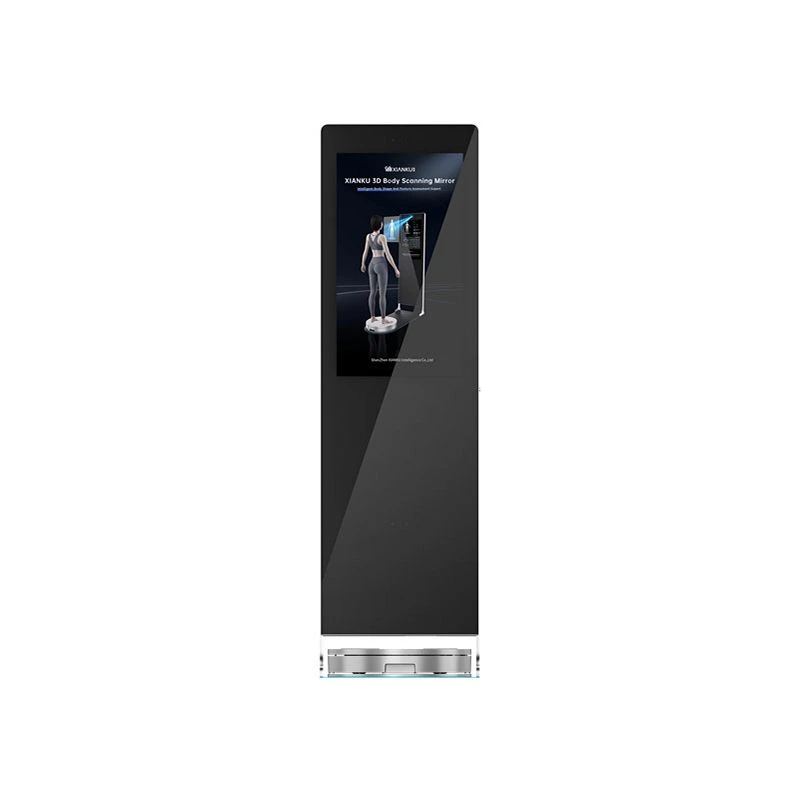
There are several types of no contact body scanning systems available in the market, each with its own set of features and capabilities. For instance, the 3D Body Scanning Mirror is a state-of-the-art device that uses multiple cameras to capture high-resolution 3D images of the body from different angles. This system is ideal for applications where a quick and accurate scan is required, such as in a sports training facility or a fitness center.
On the other hand, the 3D Body Scanning Pod is a more enclosed and sophisticated system that provides a more detailed and precise scan of the body. This system is often used in research settings or for more in-depth sports performance analysis.
Applications of No Contact Body Scanning in Sports Performance Analysis
The potential applications of no contact body scanning in sports performance analysis are vast and varied. Here are some of the key areas where this technology can make a significant impact:
Anthropometric Analysis
One of the primary benefits of no contact body scanning is its ability to provide accurate anthropometric measurements of an athlete's body. Anthropometry is the study of the human body's physical dimensions and proportions, and it plays a crucial role in sports performance. By obtaining detailed 3D data of an athlete's body, coaches and trainers can gain insights into their body composition, muscle mass, and joint angles. This information can be used to develop personalized training programs, optimize nutrition plans, and prevent injuries.
For example, in sports such as basketball and volleyball, height and wingspan are important factors that can affect an athlete's performance. No contact body scanning can accurately measure these dimensions, allowing coaches to identify athletes with the ideal physical attributes for these sports. Similarly, in sports such as gymnastics and figure skating, body proportions and flexibility are crucial. By analyzing an athlete's 3D body scan, coaches can determine their range of motion and identify areas where improvement is needed.
Biomechanical Analysis
No contact body scanning can also be used for biomechanical analysis, which is the study of the mechanical principles of human movement. By capturing 3D data of an athlete's body during movement, coaches and trainers can analyze their gait, posture, and movement patterns. This information can be used to identify biomechanical inefficiencies and develop strategies to improve performance.
For instance, in sports such as running and cycling, proper biomechanics are essential for maximizing speed and efficiency. No contact body scanning can be used to analyze an athlete's running gait or cycling position, allowing coaches to identify areas where adjustments can be made to improve performance. Similarly, in sports such as golf and tennis, proper swing mechanics are crucial for accuracy and power. By analyzing an athlete's 3D body scan during a swing, coaches can identify areas where technique can be improved.
Injury Prevention and Rehabilitation
Another important application of no contact body scanning in sports performance analysis is injury prevention and rehabilitation. By obtaining detailed 3D data of an athlete's body, coaches and trainers can identify areas of weakness or imbalance that may increase the risk of injury. This information can be used to develop targeted strength and conditioning programs to address these issues and prevent injuries from occurring.
In addition, no contact body scanning can be used to monitor an athlete's progress during rehabilitation. By comparing 3D body scans taken before and after an injury, coaches and trainers can track the athlete's recovery and determine when they are ready to return to full training and competition.
Equipment Fitting
No contact body scanning can also be used to ensure proper equipment fitting for athletes. In sports such as cycling, skiing, and swimming, the right equipment can make a significant difference in performance. By obtaining detailed 3D data of an athlete's body, coaches and trainers can ensure that the equipment they are using is the right size and fit for their body.
For example, in cycling, a properly fitted bike can improve comfort, efficiency, and power output. No contact body scanning can be used to measure an athlete's body dimensions and determine the ideal bike size and geometry for their body. Similarly, in skiing, a properly fitted ski boot can improve control and performance. By analyzing an athlete's 3D foot scan, coaches and trainers can ensure that the ski boot they are using is the right size and fit for their foot.
Benefits of No Contact Body Scanning for Sports Performance Analysis
There are several benefits of using no contact body scanning for sports performance analysis. Here are some of the key advantages:
Non-invasive and Comfortable
No contact body scanning is a non-invasive and comfortable procedure that does not require any physical contact with the athlete. This makes it a more appealing option for athletes, especially those who may be sensitive to traditional measurement methods.
Accurate and Precise
No contact body scanning provides accurate and precise 3D data of the athlete's body, which can be used to make informed decisions about training, nutrition, and injury prevention. This technology is more accurate than traditional measurement methods, such as calipers and tape measures, which can be subject to human error.
Time-efficient
No contact body scanning is a quick and efficient procedure that can be completed in a matter of minutes. This makes it a practical option for sports teams and training facilities, where time is often limited.

Customizable
No contact body scanning can be customized to meet the specific needs of each athlete. This technology can be used to obtain detailed information about an athlete's body shape, size, and movement patterns, which can be used to develop personalized training programs, optimize nutrition plans, and prevent injuries.
Challenges and Limitations of No Contact Body Scanning for Sports Performance Analysis
While no contact body scanning offers many benefits for sports performance analysis, there are also some challenges and limitations that need to be considered. Here are some of the key issues:
Cost
No contact body scanning technology can be expensive, which may limit its accessibility for some sports teams and training facilities. In addition, the cost of maintaining and operating these systems can also be high.
Technical Expertise
No contact body scanning requires technical expertise to operate and analyze the data. This may require sports teams and training facilities to invest in training their staff or hiring outside experts.
Data Management
No contact body scanning generates a large amount of data, which can be challenging to manage and analyze. This may require sports teams and training facilities to invest in data management software and systems.
Limited Availability
No contact body scanning technology is still relatively new, and it may not be widely available in all areas. This may limit its accessibility for some athletes and sports teams.
Conclusion
In conclusion, no contact body scanning has the potential to revolutionize sports performance analysis. This technology offers a non-invasive, accurate, and efficient way to obtain detailed 3D data of an athlete's body, which can be used to develop personalized training programs, optimize nutrition plans, prevent injuries, and improve performance. While there are some challenges and limitations associated with this technology, the benefits far outweigh the drawbacks.
As a supplier of no contact body scanning technology, we are committed to providing our customers with the highest quality products and services. Our 3D Body Scanning Mirror, Healthy 3D Customized Pillow, and 3D Body Scanning Pod are designed to meet the specific needs of sports teams, training facilities, and athletes.
If you are interested in learning more about how no contact body scanning can benefit your sports performance analysis, please contact us to schedule a demonstration or to discuss your specific needs. We look forward to working with you to help you achieve your sports performance goals.
References
- Bartlett, R. M., & Bennett, S. J. (2008). The use of 3D motion analysis in sport. Sports Engineering, 11(1), 1-10.
- Dainis, R. B., & Garhammer, J. (2004). Ergonomic assessment of sports equipment using 3D body scanning technology. Journal of Sports Sciences, 22(10), 977-986.
- Leardini, A., Cristofolini, L., & Cappozzo, A. (2005). Biomechanical analysis of human movement using 3D motion capture systems. Clinical Biomechanics, 20(4), 391-401.
- Roi, D., & Geva, A. (2009). Anthropometric assessment using 3D body scanning technology. Journal of Applied Biomechanics, 25(4), 333-342.