

In the realm of podiatry, the integration of advanced technologies has been a game - changer. One such innovation that has piqued the interest of many in the field is 3D foot measurement. As a supplier of 3D foot measurement solutions, I've witnessed firsthand the growing curiosity among podiatrists about the application of this technology. So, do podiatrists use 3D foot measurement? Let's delve into this topic.

The Traditional Landscape of Podiatry
Traditionally, podiatrists have relied on a combination of visual inspection, manual measurements, and basic gait analysis to diagnose and treat foot - related issues. Visual inspection allows them to observe the overall appearance of the foot, such as the shape, alignment, and any visible deformities. Manual measurements involve using tools like rulers and calipers to measure the length, width, and circumference of the foot. Gait analysis often involves watching a patient walk and looking for abnormal movement patterns.
While these methods have been effective to a certain extent, they have limitations. Visual inspection can be subjective, and manual measurements may not capture the full complexity of the foot's three - dimensional structure. For example, a simple ruler measurement cannot accurately depict the contours and irregularities of the plantar surface of the foot, which can be crucial in diagnosing conditions like plantar fasciitis or flat feet.
The Rise of 3D Foot Measurement
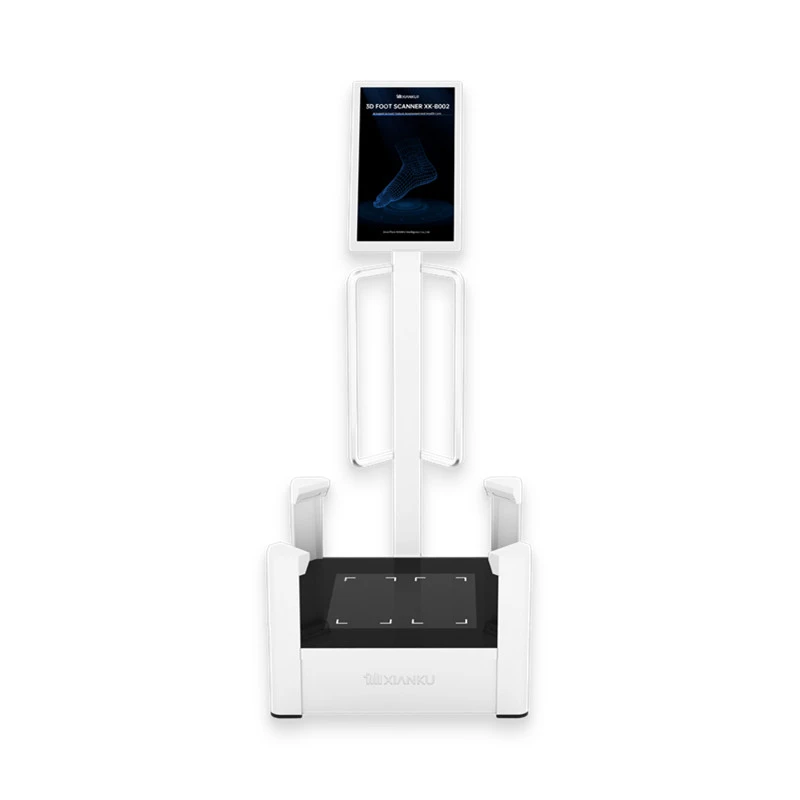
3D foot measurement technology has emerged as a revolutionary alternative. It uses advanced sensors and imaging techniques to create a detailed, three - dimensional model of the foot. This technology can provide a wealth of information that was previously difficult or impossible to obtain.
One of the key advantages of 3D foot measurement is its accuracy. It can measure the foot's length, width, height, arch height, and other parameters with a high degree of precision. For instance, in the case of custom orthotics, precise measurements are essential to ensure a proper fit. A 3D model can capture the unique shape of each patient's foot, allowing for the creation of orthotics that are tailored to their specific needs.
Another benefit is the speed of measurement. With traditional methods, taking accurate measurements can be time - consuming, especially when dealing with patients who have complex foot conditions. 3D foot scanners can obtain a complete set of measurements in a matter of seconds, increasing the efficiency of the podiatry practice.
How Podiatrists Use 3D Foot Measurement
Podiatrists are increasingly incorporating 3D foot measurement into their practices for a variety of reasons.
Diagnosis
In the diagnostic process, 3D foot measurement provides a more comprehensive view of the foot's structure. It can help identify subtle abnormalities that may not be visible to the naked eye. For example, early signs of arthritis in the foot joints may be detected through changes in the joint space or bone shape, which can be clearly visualized in a 3D model. This allows for earlier intervention and more effective treatment.
Custom Orthotics
As mentioned earlier, custom orthotics are one of the most common applications of 3D foot measurement in podiatry. By using a 3D Foot Scanner, podiatrists can create orthotics that precisely match the patient's foot shape. This not only improves the comfort of the orthotics but also enhances their effectiveness in correcting foot alignment and relieving pain.
Gait Analysis
3D foot measurement can also be integrated with gait analysis systems. By combining the static 3D foot model with dynamic gait data, podiatrists can gain a better understanding of how the foot functions during movement. This can help in diagnosing gait - related problems and developing targeted treatment plans, such as physical therapy exercises or the use of assistive devices.
Patient Education
3D foot models can be a powerful tool for patient education. Podiatrists can use these models to show patients the exact nature of their foot problems, such as the degree of flat feet or the presence of a bunion. This visual representation can help patients better understand their conditions and be more engaged in their treatment.
Other Related 3D Scanning Technologies in Podiatry
In addition to 3D foot scanners, there are other related 3D scanning technologies that may have applications in podiatry.
The 3D Body Scanning Mirror can provide a full - body scan, which can be useful in understanding the overall body alignment and its impact on the feet. For example, a misalignment in the spine or hips can put additional stress on the feet, leading to foot problems. A full - body scan can help identify these underlying issues.
The 3D Body Scanning Pod is another option. It can provide a detailed 3D scan of the lower body, including the legs and feet. This can be beneficial in cases where there are complex interactions between the lower limb joints and the feet, such as in patients with knee or ankle problems that may affect the foot's function.
Challenges and Considerations
While 3D foot measurement offers many advantages, there are also some challenges and considerations for podiatrists.
One of the main challenges is the cost of implementing the technology. 3D foot scanners and related equipment can be expensive, and there may also be additional costs associated with software licenses, maintenance, and training. However, as the technology becomes more widespread, the costs are gradually coming down.
Another consideration is the learning curve. Podiatrists need to be trained to use the 3D measurement systems effectively and interpret the data accurately. This may require additional time and resources, but the long - term benefits can outweigh the initial investment.
Conclusion
In conclusion, podiatrists are increasingly using 3D foot measurement in their practices due to its many advantages in diagnosis, custom orthotics, gait analysis, and patient education. The technology provides a more accurate, efficient, and comprehensive way of assessing the foot's structure and function.
As a supplier of 3D foot measurement solutions, we are committed to providing high - quality products and support to podiatrists. If you are a podiatrist interested in exploring the benefits of 3D foot measurement for your practice, or if you have any questions about our products, we encourage you to reach out for a procurement discussion. We can help you determine the best solution for your specific needs and provide you with the necessary training and support to integrate this technology into your practice successfully.
References
- Smith, J. (2020). Advances in 3D Imaging Technologies for Podiatry. Journal of Foot and Ankle Research.
- Brown, A. (2019). The Role of 3D Foot Scanning in Custom Orthotic Fabrication. Podiatry Today.
- Johnson, M. (2021). Gait Analysis and 3D Foot Measurement: A Comprehensive Approach. International Journal of Podiatric Medicine.