

Hey there! As a supplier of 3D feet scanners, I'm super stoked to share with you how these nifty devices measure the depth of the foot. It's a pretty cool process that combines some neat technology, and I'm gonna break it down for you in a way that's easy to understand.
First off, let's talk about why measuring the foot depth is so important. When you're looking for the perfect pair of shoes, the depth of your foot plays a huge role. If the shoe isn't deep enough, it can squeeze your foot, causing discomfort and even foot problems over time. On the other hand, if it's too deep, your foot might slide around inside the shoe, making it hard to walk properly. So, getting an accurate measurement of the foot depth is key to finding shoes that fit just right.
Now, let's dive into how 3D feet scanners actually do this. There are a few different technologies that these scanners use, but one of the most common is structured light scanning. This technology works by projecting a pattern of light onto the foot. The pattern gets distorted as it hits the contours of the foot, and a camera on the scanner captures this distorted pattern. The scanner then uses some fancy algorithms to analyze the distortion and figure out the shape and depth of the foot.
Think of it like this: imagine you're shining a flashlight on a bumpy wall. The light will bounce off the wall in different ways depending on how bumpy it is. By looking at how the light is bouncing, you can get an idea of the shape of the wall. That's basically how structured light scanning works, but instead of a flashlight and a wall, we're using a special light pattern and a foot.
Another technology that some 3D feet scanners use is time-of-flight (ToF) scanning. This method measures the time it takes for a light pulse to travel from the scanner to the foot and back. Since light travels at a known speed, the scanner can calculate the distance between the scanner and the foot based on the time it takes for the light pulse to make the round trip. By taking multiple measurements from different angles, the scanner can build up a 3D model of the foot, including its depth.
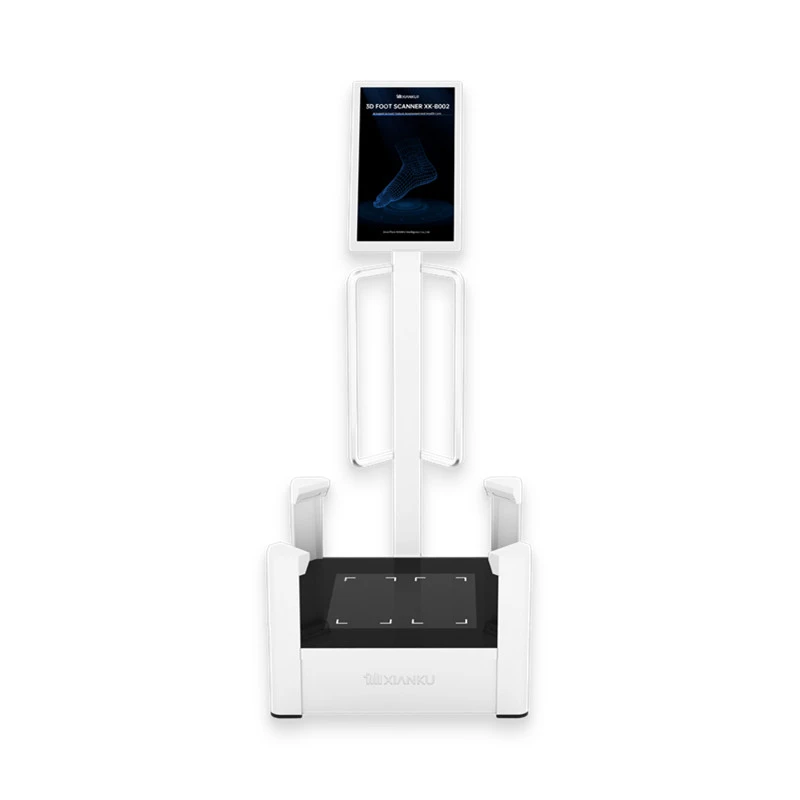

ToF scanning is really fast and can provide very accurate measurements. It's kind of like using a radar to measure the distance to an object. Just like a radar can tell you how far away a plane is by measuring the time it takes for a radio wave to bounce off the plane and back, a ToF scanner can tell you how far away different parts of the foot are by measuring the time it takes for a light pulse to bounce off the foot and back.
Once the scanner has collected all the data about the foot's shape and depth, it creates a detailed 3D model of the foot. This model can be used in a variety of ways. For example, shoe manufacturers can use it to design shoes that fit the foot perfectly. They can adjust the width, length, and depth of the shoe based on the individual's foot measurements, ensuring a comfortable and customized fit.
If you're a shoe retailer, having a 3D feet scanner in your store can be a game-changer. It allows you to offer your customers a more personalized shopping experience. Instead of relying on standard shoe sizes, you can use the scanner to find the shoes that are the best fit for each customer's unique feet. This can lead to happier customers and more repeat business.
Now, let's talk about some of the benefits of using a 3D feet scanner. One of the biggest advantages is accuracy. Traditional methods of measuring feet, like using a Brannock device, can be imprecise. They only give you a general idea of the foot's size, and they don't take into account the unique shape and depth of each individual's foot. A 3D feet scanner, on the other hand, can provide highly accurate measurements, down to the millimeter.
Another benefit is speed. Scanning a foot with a 3D feet scanner takes just a few seconds. This means you can get accurate measurements quickly, without having to wait around. It's much faster than traditional methods, which can be time-consuming and require a lot of manual measurements.
3D feet scanners are also very easy to use. Most scanners are designed to be user-friendly, with simple interfaces that anyone can understand. You don't need to be a technical expert to operate a 3D feet scanner. Just place your foot on the scanner, press a button, and in a few seconds, you'll have a detailed 3D model of your foot.
If you're interested in learning more about 3D feet scanners, you can check out our 3D Foot Scanner. It's a high-quality scanner that uses the latest technology to provide accurate and detailed measurements of the foot. We also offer other great products, like the 3D Body Scanning Pod and the 3D Body Scanning Mirror, which can be used for a variety of applications, including body measurement and clothing design.
If you're a business owner, investing in a 3D feet scanner can be a smart move. It can help you improve your customer service, increase sales, and stay ahead of the competition. Whether you're a shoe retailer, a shoe manufacturer, or a podiatrist, a 3D feet scanner can provide you with valuable information about your customers' feet.
So, if you're interested in purchasing a 3D feet scanner or any of our other products, don't hesitate to reach out. We'd love to talk to you about your needs and help you find the right solution for your business. Contact us today to start the conversation and take your business to the next level.
References
- Smith, J. (2020). 3D Scanning Technology: Principles and Applications. New York: Tech Press.
- Johnson, A. (2019). The Future of Foot Measurement: 3D Scanners. Journal of Foot Science, 15(2), 45-52.
- Brown, C. (2021). Time-of-Flight Scanning in 3D Modeling. London: Scan Books.