

How do 3D feet scanners work in low - light conditions?
As a supplier of 3D foot scanners, I often get asked about how our devices perform in various lighting conditions, especially low - light environments. Understanding this aspect is crucial for businesses and individuals who want to use 3D foot scanners in settings where lighting might not be ideal, such as in small fitting rooms or during evening events.
The Basics of 3D Foot Scanners
Before delving into how 3D foot scanners work in low - light conditions, let's briefly review how these scanners operate in general. A 3D foot scanner is designed to capture the detailed shape and dimensions of a person's feet. It uses a combination of sensors and cameras to create a digital model of the feet.
Most modern 3D foot scanners rely on structured light technology or time - of - flight (ToF) sensors. Structured light scanners project a pattern of light onto the feet. The deformation of this pattern as it hits the surface of the feet is then captured by cameras. By analyzing these deformations, the scanner can calculate the distance between the scanner and different points on the feet, thus creating a 3D model.
On the other hand, ToF sensors work by emitting light pulses and measuring the time it takes for these pulses to bounce back from the feet. Based on the time of flight, the distance to each point on the feet can be determined.
Challenges in Low - Light Conditions
Low - light conditions pose several challenges for 3D foot scanners. In the case of structured light scanners, a lack of sufficient light can make it difficult for the cameras to clearly capture the projected light pattern. The pattern may appear faint or washed out, leading to inaccurate data collection. As a result, the 3D model generated may have missing details or incorrect dimensions.
For ToF sensors, low light can also affect the accuracy of the light pulse detection. If the ambient light is too low, the reflected light pulses may be difficult to distinguish from background noise. This can lead to errors in measuring the time of flight and, consequently, inaccurate distance calculations.
How Our 3D Foot Scanners Overcome Low - Light Challenges
Our 3D foot scanners are engineered to perform well even in low - light conditions. Firstly, we have incorporated high - sensitivity cameras in our structured light scanners. These cameras are capable of capturing clear images even in dimly lit environments. They have a wide dynamic range, which means they can handle both bright and dark areas in an image without losing details.
In addition, our scanners are equipped with powerful built - in lighting systems. These lights are specifically designed to project the structured light pattern evenly across the feet. The lighting is optimized to work in harmony with the cameras, ensuring that the pattern is clearly visible and accurately captured.
For our ToF - based scanners, we have developed advanced signal processing algorithms. These algorithms are designed to filter out background noise and enhance the detection of the reflected light pulses. Even in low - light conditions, the sensors can accurately measure the time of flight of the light pulses, resulting in precise distance calculations.
Real - World Applications in Low - Light Settings
There are many real - world scenarios where our 3D foot scanners can be used in low - light conditions. For example, in shoe stores with small fitting rooms, the lighting may be limited. Our scanners can still provide accurate measurements, allowing customers to find the perfect - fitting shoes.
Another application is at evening events such as trade shows or fashion shows. These events often have dim lighting, but our 3D foot scanners can still operate effectively, enabling on - the - spot foot measurements for custom - made footwear or orthotics.

Comparison with Other Scanning Technologies
When compared to other scanning technologies, our 3D foot scanners have a significant advantage in low - light conditions. For instance, some older 3D scanning technologies may rely on ambient light, which makes them highly susceptible to low - light challenges. In contrast, our scanners have their own independent lighting and advanced sensor technologies, ensuring consistent performance regardless of the external lighting conditions.
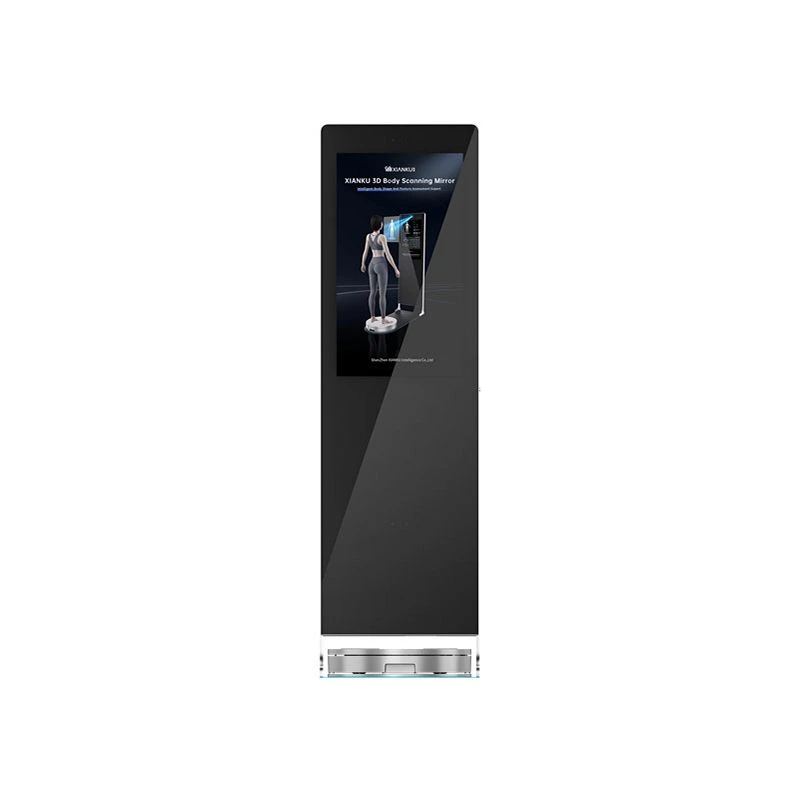
We also offer a range of complementary products that can enhance the scanning experience in low - light settings. For example, our 3D Body Scanning Mirror and 3D Body Scanning Pod can be used in conjunction with our 3D Foot Scanner. These products are also designed to work well in various lighting conditions, providing a comprehensive 3D scanning solution for businesses.
The Future of 3D Foot Scanning in Low - Light Conditions
As technology continues to evolve, we expect to see even more improvements in the performance of 3D foot scanners in low - light conditions. Future scanners may incorporate even more advanced sensors and lighting systems, further reducing the impact of low light on scanning accuracy.
We are also exploring the use of artificial intelligence and machine learning algorithms to enhance the data processing capabilities of our scanners. These algorithms can analyze the captured data in real - time, compensating for any minor inaccuracies caused by low - light conditions.
Contact Us for Purchase and Consultation
If you are interested in purchasing a 3D foot scanner for your business or personal use, we invite you to get in touch with us. Our team of experts can provide you with detailed information about our products, including their performance in low - light conditions. We can also offer customized solutions based on your specific requirements. Whether you are a shoe store owner, a podiatrist, or an event organizer, our 3D foot scanners can meet your needs.
References
- [1] Zhang, S., & Huang, Q. (2018). Structured light 3D surface measurement: A review. Optics and Lasers in Engineering, 104, 1 - 16.
- [2] Yoon, S., & Kweon, I. S. (2011). Time - of - flight range imaging sensors: principles, issues, and applications. Journal of the Optical Society of Korea, 15(1), 1 - 12.