

In the dynamic realm of sports medicine, digital body scans have emerged as a revolutionary tool, offering unparalleled insights into the human body's structure and function. As a proud supplier of cutting - edge digital body scanning technology, I'm excited to delve into how these scans work and their transformative impact on sports medicine.
The Basics of Digital Body Scans
Digital body scans rely on advanced imaging technologies to create a detailed, three - dimensional representation of the human body. There are several types of scans commonly used in sports medicine, each with its own unique capabilities and applications.
One of the most prevalent technologies is structured - light scanning. This method projects a pattern of light onto the body, and cameras capture how the pattern deforms as it hits the body's surface. By analyzing these deformations, the system can calculate the distance between the scanner and each point on the body, creating a highly accurate 3D model. Structured - light scanners are known for their speed and high resolution, making them ideal for quickly capturing detailed body measurements.

Another technology is time - of - flight (ToF) scanning. ToF scanners emit light pulses and measure the time it takes for the light to bounce back from the body. This information is then used to calculate the distance to each point on the body's surface. ToF scanners are particularly useful for capturing larger areas of the body and can operate in a variety of lighting conditions.
How Digital Body Scans are Used in Sports Medicine
Injury Assessment
One of the primary applications of digital body scans in sports medicine is injury assessment. When an athlete sustains an injury, a digital body scan can provide a comprehensive view of the affected area. For example, in the case of a joint injury, a scan can reveal the exact location and extent of damage to ligaments, tendons, and bones. This detailed information allows sports medicine professionals to develop more targeted treatment plans.
Let's say a basketball player sprains their ankle. A digital body scan can accurately measure the degree of swelling, identify any micro - tears in the ligaments, and assess the alignment of the ankle joint. This data helps doctors determine whether the injury requires conservative treatment, such as rest and physical therapy, or more invasive interventions like surgery.
Performance Optimization
Digital body scans also play a crucial role in performance optimization. By analyzing an athlete's body shape, muscle mass distribution, and joint alignment, coaches and trainers can identify areas for improvement. For instance, a scan can reveal if an athlete has a muscle imbalance that may be affecting their performance or increasing their risk of injury.
A sprinter, for example, may have a significant difference in muscle mass between their left and right legs. A digital body scan can quantify this imbalance, allowing the coach to design a personalized training program to strengthen the weaker leg. This targeted approach can lead to improved running efficiency and reduced injury risk.
Custom - Fitted Equipment
Properly fitted equipment is essential for both performance and injury prevention in sports. Digital body scans enable the creation of custom - fitted sports gear, such as helmets, shoes, and braces. By capturing precise body measurements, manufacturers can produce equipment that conforms perfectly to an athlete's body, providing a better fit and enhanced support.
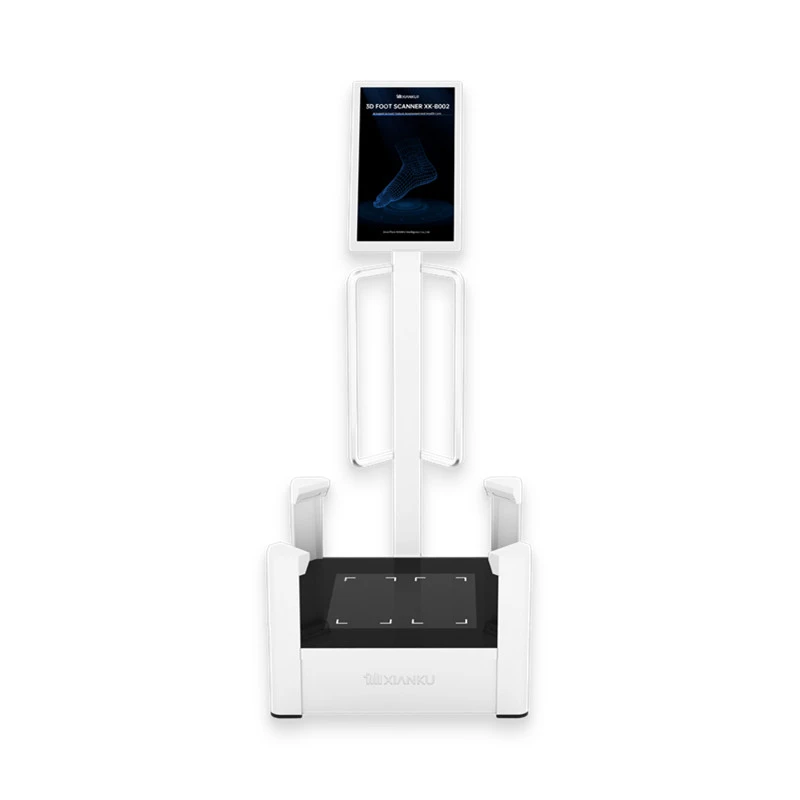
For example, the Xianku 3D Foot Scanner can create a detailed 3D model of an athlete's foot. This model can be used to design custom - made insoles that provide optimal arch support and cushioning, reducing the risk of foot and lower - limb injuries.
The Process of a Digital Body Scan
The process of a digital body scan is relatively quick and non - invasive. Typically, the athlete stands or lies in a specific position within the scanning area. The scanner then captures multiple images from different angles, which are combined to create a 3D model.
The Xianku 3D Body Scanning Room is designed to provide a comfortable and efficient scanning experience. Athletes can enter the room and stand on a platform while the scanner rotates around them, capturing a full - body scan in a matter of seconds.
Once the scan is complete, the data is transferred to a computer, where specialized software processes the images and generates a detailed 3D model. Sports medicine professionals can then analyze this model using various tools and techniques to extract the relevant information.
Advantages of Digital Body Scans in Sports Medicine
Accuracy
Digital body scans offer a high level of accuracy compared to traditional measurement methods. They can capture precise body dimensions and detect even minor anatomical variations. This accuracy is crucial for making informed decisions about injury treatment and performance optimization.
Non - Invasiveness
Unlike some medical imaging techniques, such as X - rays or MRIs, digital body scans are non - invasive and do not involve exposure to radiation. This makes them a safer option, especially for repeated scans over time.
Speed
Digital body scans can be completed quickly, often in a matter of seconds or minutes. This allows for efficient assessment of athletes, minimizing downtime and disruption to their training and competition schedules.
Our Role as a Digital Body Scan Supplier
As a digital body scan supplier, we are committed to providing high - quality, reliable scanning technology to the sports medicine industry. Our Xianku 3D Body Scanner is equipped with the latest imaging technology, ensuring accurate and detailed scans.
We also offer comprehensive support services, including installation, training, and maintenance. Our team of experts is available to assist sports medicine professionals in integrating our scanning technology into their practice and using it effectively to benefit their athletes.
Contact Us for Procurement
If you are interested in incorporating digital body scanning technology into your sports medicine practice, we invite you to contact us for procurement and further discussion. Our innovative solutions can help you take your injury assessment, performance optimization, and custom - fitted equipment services to the next level.
References
- Smith, J. K., & Johnson, L. M. (2018). The use of 3D body scanning in sports medicine. Journal of Sports Medicine and Physical Fitness, 58(3), 345 - 352.
- Brown, A. R., & Davis, C. E. (2019). Digital body scanning for injury prevention in athletes. Sports Health, 11(2), 156 - 162.
- Miller, S. T., & Wilson, R. D. (2020). Advancements in 3D body scanning technology for sports performance optimization. International Journal of Sports Science and Coaching, 15(4), 567 - 574.