

In the realm of biomechanical analysis, technological advancements have continuously revolutionized the way we understand and assess the human body. One such groundbreaking innovation is the 3D Body Scanning Pod, a tool that has significantly enhanced the accuracy and depth of biomechanical research and practical applications. As a supplier of 3D Body Scanning Pods, I am excited to delve into how this remarkable device assists in biomechanical analysis.
High - Precision Data Acquisition
The 3D Body Scanning Pod is designed to capture highly detailed and accurate 3D models of the human body. It uses a combination of multiple cameras and sensors strategically placed within the pod. These sensors work in tandem to collect data from various angles simultaneously. For example, in a matter of seconds, the pod can capture millions of data points across the entire body surface. This high - density data collection is crucial for biomechanical analysis as it provides a comprehensive view of the body's shape, size, and proportions.
In sports biomechanics, understanding an athlete's body structure is essential for optimizing performance and preventing injuries. A 3D Body Scanning Pod can accurately measure limb lengths, joint angles, and muscle mass distribution. Coaches and sports scientists can use this data to design personalized training programs. For instance, if a runner has a slight imbalance in leg length, it can lead to improper gait and increased risk of injury. By using the precise measurements from the 3D scan, corrective exercises can be prescribed to address this issue.
Dynamic Movement Analysis
Beyond static body measurements, the 3D Body Scanning Pod can also be used for dynamic movement analysis. With its high - speed data capture capabilities, it can track the body's movement in real - time. This is particularly useful in analyzing how the body moves during various activities such as walking, running, or jumping.
For example, in rehabilitation settings, doctors and physical therapists can use the pod to monitor a patient's progress during recovery. By comparing 3D scans of the patient's movement before and after a course of treatment, they can objectively assess improvements in joint mobility, muscle strength, and overall movement patterns. If a patient has suffered a knee injury, the pod can track the range of motion of the knee joint during different phases of walking. This data can help determine if the rehabilitation program is effective or if adjustments are needed.

Customized Product Design
Biomechanical analysis often extends to the design of products that interact with the human body. The 3D Body Scanning Pod plays a vital role in this area by providing accurate body data for customized product design.
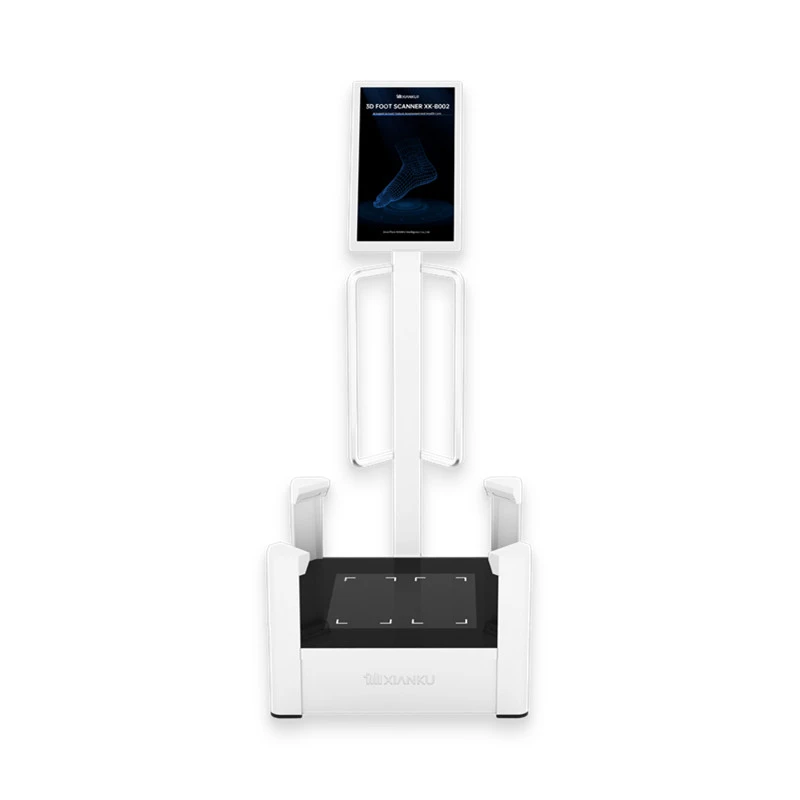
In the footwear industry, the 3D Foot Scanner is a related technology that can work in conjunction with the 3D Body Scanning Pod. By combining the data from the foot scanner and the full - body scan, shoe manufacturers can create shoes that are tailored to an individual's foot shape, arch height, and gait pattern. For example, a person with high arches may require shoes with more arch support, and the 3D scan data can ensure that the shoe is designed to provide the right amount of support in the appropriate areas.
Similarly, in the clothing industry, the 3D Body Scanning Pod can be used to create custom - fit garments. Fashion designers can use the body measurements obtained from the scan to design clothes that fit perfectly, enhancing both comfort and style. This is especially important for people with non - standard body shapes or those who require specialized clothing for medical or athletic purposes.
Posture and Spinal Analysis
Proper posture is essential for maintaining good health and preventing musculoskeletal disorders. The 3D Body Scanning Pod can provide detailed information about a person's posture and spinal alignment.
It can detect subtle deviations in spinal curvature that may not be visible to the naked eye. For example, early signs of scoliosis can be identified through a 3D scan. By analyzing the 3D model of the spine, doctors can determine the severity of the condition and develop appropriate treatment plans. In addition, the pod can also assess the alignment of the shoulders, hips, and pelvis, which are all important factors in maintaining proper posture.
Comparison with Traditional Methods
Compared to traditional methods of biomechanical analysis, such as manual measurements and 2D photography, the 3D Body Scanning Pod offers several advantages. Manual measurements are time - consuming and prone to human error. 2D photography, on the other hand, only provides a flat view of the body and lacks the depth information necessary for accurate biomechanical analysis.
The 3D Body Scanning Pod provides a more objective and comprehensive view of the body. It eliminates the subjectivity associated with manual measurements and allows for more precise and repeatable analysis. For example, when measuring body fat percentage, traditional methods such as skinfold calipers are based on estimates and can vary depending on the skill of the person taking the measurement. In contrast, the 3D scan can provide a more accurate assessment of body composition by analyzing the volume and density of different tissues.
Integration with Other Technologies
The 3D Body Scanning Pod can be integrated with other technologies to further enhance its capabilities in biomechanical analysis. For example, it can be combined with motion capture systems to provide even more detailed information about body movement. By using markers on the body and tracking their movement in conjunction with the 3D scan data, researchers can create highly accurate models of how the body moves.
It can also be integrated with virtual reality (VR) and augmented reality (AR) technologies. In a VR environment, users can interact with their 3D body models to visualize how different movements affect their body. This can be used for educational purposes, such as teaching anatomy and biomechanics to students. In an AR application, doctors can overlay the 3D scan data on a patient's body during a physical examination, providing a more intuitive way to analyze and diagnose problems.
Conclusion
The 3D Body Scanning Pod is a powerful tool in biomechanical analysis. Its ability to provide high - precision data, perform dynamic movement analysis, support customized product design, and assist in posture and spinal analysis makes it an invaluable asset in various fields such as sports, rehabilitation, and product design.
If you are interested in incorporating the 3D Body Scanning Pod into your research, clinical practice, or business operations, we invite you to contact us for a detailed discussion. Our team of experts can provide you with more information about the product, its features, and how it can be tailored to your specific needs. Whether you are a sports scientist looking to optimize athlete performance, a doctor seeking better diagnostic tools, or a manufacturer aiming to create customized products, the 3D Body Scanning Pod can offer solutions to meet your requirements.
References
- Bartlett, R. M., & Bennett, B. M. (2008). Sports Biomechanics: Optimising Human Performance. Routledge.
- Winter, D. A. (2009). Biomechanics and Motor Control of Human Movement. Wiley.
- Cappozzo, A., Della Croce, U., Leardini, A., & Chiari, L. (2005). Position and orientation in space of bones during movement: anatomical frame definition and determination. Clinical Biomechanics, 20(2), 121 - 132.