

Hey there! As a supplier of flat feet scanners, I'm super stoked to dive into how these nifty devices work. Flat feet can cause a whole bunch of issues, from pain in the feet and ankles to problems in the knees, hips, and even the lower back. That's where our flat feet scanners come in handy, helping to accurately diagnose and assess flat feet conditions.

The Basics of Flat Feet
Before we get into how the scanner works, let's quickly chat about flat feet. Normally, our feet have an arch that acts like a shock absorber when we walk, run, or stand. But for folks with flat feet, this arch is either very low or completely absent. This can happen for various reasons, like genetics, aging, obesity, or certain medical conditions.
How a Flat Feet Scanner Works
Our flat feet scanners use state - of - the - art technology to provide detailed information about the foot's structure. The main goal is to create a 3D model of the foot, which gives a comprehensive view of its shape, size, and the presence (or lack) of an arch.
1. Initial Setup
When a person steps onto the flat feet scanner, they're usually asked to stand still in a natural, relaxed position. This is important because the way we stand can affect the shape of our feet. The scanner is designed to be user - friendly, so there's no need to worry about complicated setups or uncomfortable positions.
2. Data Collection
There are a few different technologies that our flat feet scanners might use for data collection:
Laser Scanning
Some of our scanners use laser technology. Lasers are emitted from multiple points around the foot. These lasers bounce off the surface of the foot and are then detected by sensors. By measuring the time it takes for the laser to return, the scanner can calculate the distance between the sensor and the foot at various points. This data is then used to create a detailed map of the foot's surface. It's like taking a bunch of tiny measurements all over the foot to build up a complete picture.
Structured Light Scanning
Another method is structured light scanning. In this case, a pattern of light is projected onto the foot. The way this pattern deforms as it hits the foot's surface is captured by cameras. The scanner then analyzes these deformations to figure out the shape of the foot. It's a bit like looking at how a shadow changes on an uneven surface to understand the bumps and dips.
Pressure Mapping
In addition to capturing the shape, our scanners can also perform pressure mapping. The person stands on a special platform that's equipped with pressure sensors. As they stand, the sensors measure the amount of pressure exerted at different points on the foot. This is really useful because it can show if there are areas of the foot that are bearing too much weight, which is often a sign of flat feet or other foot problems.
3. Data Processing
Once the data is collected, it's sent to a computer. The software on the computer takes all those raw measurements and turns them into a 3D model. It's a complex process, but the software is designed to do it quickly and accurately. The 3D model shows the foot from all angles, allowing doctors, podiatrists, or other healthcare professionals to get a clear view of the foot's structure.
4. Analysis and Results
After the 3D model is created, the software can perform a detailed analysis. It can measure the height and width of the arch, the angle of the foot, and other important parameters. Based on these measurements, the scanner can determine if a person has flat feet and how severe the condition is. The results are usually presented in an easy - to - understand format, with visual aids and numerical values.
Advantages of Our Flat Feet Scanners
Our flat feet scanners offer several advantages over traditional methods of diagnosing flat feet.
1. Accuracy
The 3D models created by our scanners are extremely accurate. They provide a much more detailed view of the foot than a simple visual inspection or a basic X - ray. This means that healthcare professionals can make more informed decisions about treatment options.
2. Non - Invasive
Unlike some other diagnostic methods, our flat feet scanners are non - invasive. There's no need for needles, injections, or uncomfortable procedures. The person just stands on the scanner, and in a few minutes, they have a detailed analysis of their feet.
3. Quick Results
The whole process, from stepping onto the scanner to getting the results, is very quick. This is great for both patients and healthcare providers, as it saves time and allows for more efficient diagnosis and treatment.
Related Products
If you're interested in other types of 3D scanning technology, we also offer some related products:
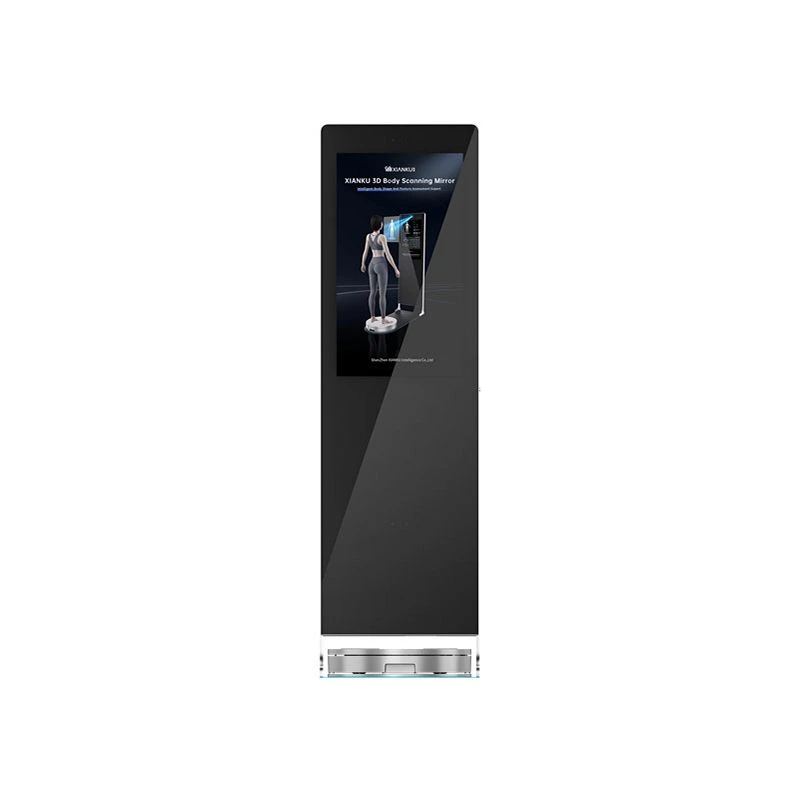
- 3D Body Scanning Mirror: This device can scan the entire body, providing detailed 3D models for a variety of applications, such as fitness assessments and clothing design.
- 3D Foot Scanner: In addition to our flat feet scanners, our 3D foot scanners offer even more comprehensive foot analysis, including detailed information about the foot's biomechanics.
- 3D Body Scanning Pod: This is a great option for those who need to scan the whole body in a more enclosed and controlled environment.
Why Choose Our Flat Feet Scanners
As a supplier, we're committed to providing high - quality products. Our flat feet scanners are built with the latest technology, ensuring accurate and reliable results. We also offer excellent customer support, so if you have any questions or need help with the scanner, our team is always ready to assist.
Contact Us for Procurement
If you're a healthcare provider, a sports clinic, or anyone else interested in purchasing our flat feet scanners, we'd love to hear from you. We can offer competitive pricing, customized solutions, and training for your staff. Don't hesitate to reach out and start a conversation about how our flat feet scanners can benefit your practice or business.
References
- "Biomechanics of the Foot and Ankle" by Michael J. Coughlin
- "Foot and Ankle Disorders" by Eugene S. Chan
So, that's a rundown of how our flat feet scanners work. I hope this has been helpful and has given you a better understanding of this amazing technology. If you have any more questions, feel free to ask!