

In the ever - evolving landscape of the agriculture industry, technological advancements are playing a pivotal role in enhancing efficiency, productivity, and sustainability. One such cutting - edge technology that has been making waves is the no - contact body scan technology. As a supplier of no - contact body scan solutions, I am excited to delve into how this technology operates in the agricultural sector.
Understanding No - Contact Body Scan Technology
No - contact body scan technology utilizes a variety of sensors and imaging techniques to capture detailed information about an object or organism without any physical contact. In the context of agriculture, this technology can be applied to livestock, crops, and even the soil. The main advantage of this non - invasive approach is that it reduces stress on the subjects being scanned, whether they are animals or plants, and also minimizes the risk of cross - contamination.
How It Works with Livestock
1. Data Collection
When it comes to livestock, no - contact body scan technology typically employs multiple sensors such as infrared cameras, lasers, and depth sensors. For instance, infrared cameras can detect the body temperature of animals from a distance. This is crucial as changes in body temperature can be an early indicator of illness. A sick animal may have an elevated or decreased body temperature, and by continuously monitoring these changes, farmers can identify health issues at an early stage.
Lasers and depth sensors are used to create a 3D model of the animal's body. The laser emits a beam of light that bounces off the animal's body, and the depth sensor measures the time it takes for the light to return. By analyzing these measurements, the system can calculate the distance between the sensor and different points on the animal's body, creating a detailed 3D representation. This 3D model can provide information about the animal's body condition score, which is an important metric for assessing the animal's health and productivity.
2. Data Analysis
Once the data is collected, it is sent to a central processing unit or a cloud - based server. Advanced algorithms are then used to analyze the data. For example, the 3D model can be compared to a database of healthy animals to determine if the scanned animal has a normal body shape and size. Any deviations from the norm can be flagged for further investigation.
The body temperature data is also analyzed over time. If an animal's body temperature suddenly spikes or drops, the system can send an alert to the farmer's mobile device or computer. This allows the farmer to take immediate action, such as isolating the sick animal or consulting a veterinarian.
Application in Crop Monitoring
1. Canopy Analysis
In crop monitoring, no - contact body scan technology can be used to analyze the crop canopy. Sensors mounted on drones or fixed platforms can capture images of the crops from above. These images are then processed to extract information about the crop's health, growth stage, and density.
Near - infrared (NIR) sensors are particularly useful in this regard. Plants reflect different amounts of NIR light depending on their health and chlorophyll content. By analyzing the NIR reflectance, the system can identify areas of the field where the crops are stressed, such as due to lack of water, nutrients, or pest infestation.
2. Yield Prediction
The 3D scanning technology can also be used to predict crop yields. By creating a 3D model of the crop canopy, the system can estimate the number of plants, the size of the fruits or grains, and the overall biomass. This information can be used to predict the yield of the crop before harvest, allowing farmers to make informed decisions about marketing and resource allocation.
Soil Analysis
No - contact body scan technology can also be applied to soil analysis. Ground - penetrating radar (GPR) is a type of no - contact sensor that can be used to map the subsurface soil structure. GPR works by sending electromagnetic waves into the soil and measuring the reflections. Different soil layers and features, such as rocks, water tables, and root systems, reflect the waves differently. By analyzing these reflections, farmers can gain insights into the soil's physical properties, such as its density, moisture content, and compaction level.
Our Products in the Agriculture Industry
As a supplier of no - contact body scan technology, we offer a range of products that are specifically designed for the agriculture industry. Our 3D Body Scanning Pod is a state - of - the - art device that can be used to scan livestock. It is equipped with multiple sensors and cameras that can capture high - resolution 3D images of the animals. The pod is designed to be non - intimidating to the animals, ensuring a stress - free scanning process.
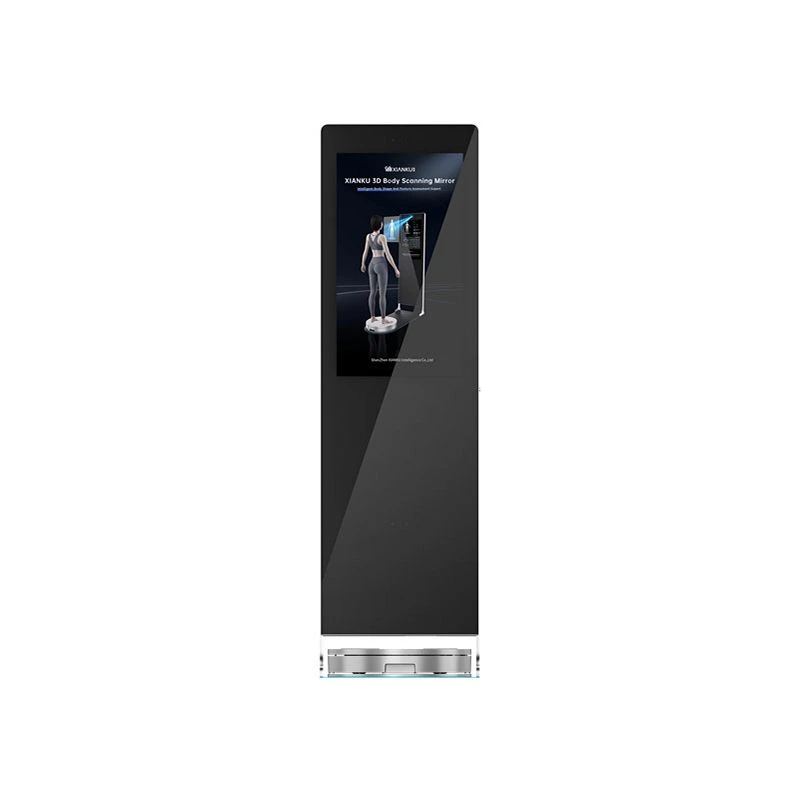
Our 3D Body Scanning Mirror is another innovative product. It can be used to scan crops in a greenhouse or a field. The mirror uses a combination of sensors and imaging technology to create a 3D model of the crop canopy, providing detailed information about the crop's health and growth.

In addition, we also offer the Healthy 3D Customized Pillow, which may seem unrelated to agriculture at first glance. However, this product showcases our expertise in 3D scanning and customization. The same technology used to create customized pillows can be adapted and optimized for agricultural applications, such as creating customized feeding plans for livestock based on their individual body characteristics.
Benefits of Using Our No - Contact Body Scan Technology in Agriculture
- Improved Animal Welfare: By detecting health issues early, farmers can provide timely treatment to their livestock, reducing pain and suffering. The non - invasive nature of the scanning process also minimizes stress on the animals.
- Increased Crop Yields: With accurate information about crop health and growth, farmers can make informed decisions about irrigation, fertilization, and pest control. This can lead to higher crop yields and better quality produce.
- Sustainable Farming Practices: By optimizing resource use, such as water and fertilizers, based on the data provided by the scanning technology, farmers can reduce their environmental impact and practice more sustainable agriculture.
Conclusion
No - contact body scan technology is revolutionizing the agriculture industry. Its ability to collect accurate and detailed data without physical contact is invaluable for farmers who are looking to improve the health and productivity of their livestock and crops. As a supplier of this technology, we are committed to providing high - quality products and solutions that meet the specific needs of the agriculture sector.
If you are interested in learning more about our no - contact body scan technology or would like to discuss a potential purchase, we encourage you to reach out to us for a procurement negotiation. Our team of experts is ready to assist you in finding the best solution for your agricultural operations.
References
- Johnson, R. (2020). "Advances in Non - Contact Sensing Technologies for Agriculture." Journal of Agricultural Engineering.
- Smith, A. (2019). "The Impact of 3D Scanning on Livestock Management." Livestock Science Quarterly.
- Brown, C. (2021). "Using Remote Sensing for Crop Monitoring and Yield Prediction." Agricultural Research Journal.