

When it comes to the world of 3D scanning, the ability to capture surface details is a crucial factor that determines the quality and usability of the scanned models. As a supplier of printable 3D scanners, I've witnessed firsthand how these devices have revolutionized various industries by offering high - precision surface detail capture. In this blog, I'll delve into how a printable 3D scanner performs in terms of surface detail capture, exploring its technology, advantages, limitations, and real - world applications.
Technology Behind Surface Detail Capture
Printable 3D scanners typically use one of two main technologies for surface detail capture: structured light scanning and laser scanning.
Structured light scanning works by projecting a pattern of light onto the object being scanned. The scanner then captures how the pattern deforms on the object's surface using one or more cameras. By analyzing these deformations, the scanner can calculate the distance between the scanner and the object at various points, creating a 3D model with detailed surface information. This technology is known for its high - speed scanning and ability to capture fine details, making it suitable for objects with complex geometries.
Laser scanning, on the other hand, emits a laser beam onto the object. The scanner measures the time it takes for the laser light to bounce back or the angle at which it is reflected. This data is used to create a point cloud, which represents the surface of the object. Laser scanners can provide extremely accurate and detailed scans, especially for objects with smooth surfaces. They are often used in industrial applications where high precision is required.
Advantages of Printable 3D Scanners in Surface Detail Capture
One of the primary advantages of printable 3D scanners is their ability to capture fine surface details. Whether it's the intricate texture of a historical artifact, the detailed features of a human face, or the complex curves of a mechanical part, these scanners can reproduce these details with remarkable accuracy.
For example, in the field of cultural heritage preservation, printable 3D scanners can capture every crack, scratch, and carving on ancient artifacts. This allows museums and researchers to create digital replicas that can be studied, shared, and even printed for educational purposes. The high - level of surface detail capture ensures that the digital models are as accurate as possible, preserving the cultural significance of these objects for future generations.
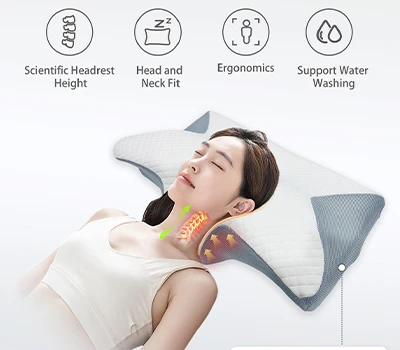
In the medical industry, printable 3D scanners are used to create customized medical devices. By accurately capturing the surface details of a patient's body part, such as a limb or a dental arch, doctors can design and print personalized prosthetics, orthotics, and dental implants. This not only improves the fit and comfort of these devices but also enhances their functionality. For instance, a Healthy 3D Customized Pillow can be designed based on the exact contours of a patient's head and neck, providing better support and reducing the risk of neck pain.
Another advantage is the portability and affordability of printable 3D scanners. Unlike large, expensive industrial scanners, printable 3D scanners are often compact and relatively inexpensive. This makes them accessible to small businesses, hobbyists, and educational institutions. They can be easily transported to different locations, allowing for on - site scanning of objects that may be difficult to move, such as large sculptures or architectural elements.
Limitations of Printable 3D Scanners in Surface Detail Capture
Despite their many advantages, printable 3D scanners also have some limitations when it comes to surface detail capture. One of the main limitations is the scanning range. Printable 3D scanners typically have a limited working distance and field of view. This means that they may not be suitable for scanning very large objects or objects that are located far away. For example, scanning a large building or a landscape would require a scanner with a much larger range.
Another limitation is the material and surface properties of the object being scanned. Some materials, such as transparent or reflective surfaces, can pose challenges for printable 3D scanners. Transparent materials can cause the light or laser to pass through, making it difficult to capture the surface details. Reflective surfaces can reflect the light or laser in unpredictable ways, resulting in inaccurate scans. Special techniques and preparations, such as applying a matte powder to the surface, may be required to overcome these issues.
The resolution of the scanner is also a factor. While printable 3D scanners can capture fine details, their resolution may not be as high as that of more expensive industrial scanners. This can be a problem when very high - precision scans are required, such as in some aerospace or automotive applications.

Real - World Applications of Printable 3D Scanners Based on Surface Detail Capture
Printable 3D scanners have a wide range of real - world applications due to their ability to capture surface details.
In the fashion industry, these scanners are used to create custom - fit clothing. By scanning a customer's body, designers can obtain accurate measurements and create patterns that fit the body perfectly. This reduces the need for multiple fittings and ensures a better - fitting garment. Additionally, the ability to capture surface details allows for the creation of unique and personalized designs, such as clothing with 3D - printed embellishments.
In the entertainment industry, printable 3D scanners are used to create realistic characters and props. For example, in video game development, scanners can capture the facial expressions and body movements of actors, which are then used to animate virtual characters. In movie production, scanners can create detailed models of props and sets, which can be used for visual effects and 3D printing.
In the manufacturing industry, printable 3D scanners are used for quality control and reverse engineering. By scanning a manufactured part and comparing it to the original design, manufacturers can detect any defects or deviations. Reverse engineering involves scanning an existing part to create a digital model, which can then be used to reproduce the part or make modifications.
The 3D Body Scanning Pod and 3D Body Scanning Mirror are examples of innovative applications of printable 3D scanner technology. These devices can quickly and accurately capture the surface details of a human body, opening up new possibilities in areas such as fitness tracking, personalized nutrition, and virtual try - on experiences.
Conclusion and Call to Action
In conclusion, printable 3D scanners offer a powerful solution for surface detail capture, with numerous advantages in terms of accuracy, portability, and affordability. While they do have some limitations, these can often be overcome with proper techniques and preparations. The wide range of applications in various industries demonstrates the versatility and importance of these scanners.
If you're interested in exploring the potential of printable 3D scanners for your business or project, I encourage you to get in touch with us. Our team of experts can provide you with detailed information about our products, answer your questions, and help you find the best solution for your specific needs. Whether you're in the cultural heritage, medical, fashion, entertainment, or manufacturing industry, our printable 3D scanners can help you capture surface details with high precision.
References
- Lichti, D. D., & Jamtsho, K. (2011). Terrestrial Laser Scanning: Data Acquisition and Processing. CRC Press.
- Salvi, J., Pages, J., & Batlle, J. (2004). Pattern codification strategies in structured light systems. Pattern Recognition, 37(4), 827 - 849.
- Zhang, S. (2010). A flexible new technique for camera calibration. IEEE Transactions on Pattern Analysis and Machine Intelligence, 22(11), 1330 - 1334.