

In the ever - evolving landscape of digital technology, body scanners have emerged as a remarkable innovation, catering to a wide range of needs from personal well - being to professional applications. As a digital body scan supplier, I have witnessed firsthand the distinct differences between consumer - grade and professional - grade digital body scanners. These differences span across multiple aspects, including functionality, accuracy, cost, and target users.
Functionality
Consumer - grade digital body scanners are typically designed with simplicity and general use in mind. They often offer basic features that allow users to get a quick overview of their body. For example, many consumer - grade scanners can measure body dimensions such as height, weight, and body fat percentage. Some may also provide a rough estimate of body mass index (BMI). These scanners are usually easy to operate, often with a one - button or touch - screen interface that can be understood by people with little to no technical knowledge.
On the other hand, professional - grade digital body scanners come with a plethora of advanced functions. In the medical field, they can be used for detailed anatomical analysis. For instance, they can detect internal organ abnormalities, measure bone density, and assess muscle mass distribution with high precision. In the fitness and sports industry, professional scanners can analyze a person's movement patterns, joint angles, and muscle activation during exercise. This data can be used to create personalized training programs for athletes or individuals recovering from injuries.
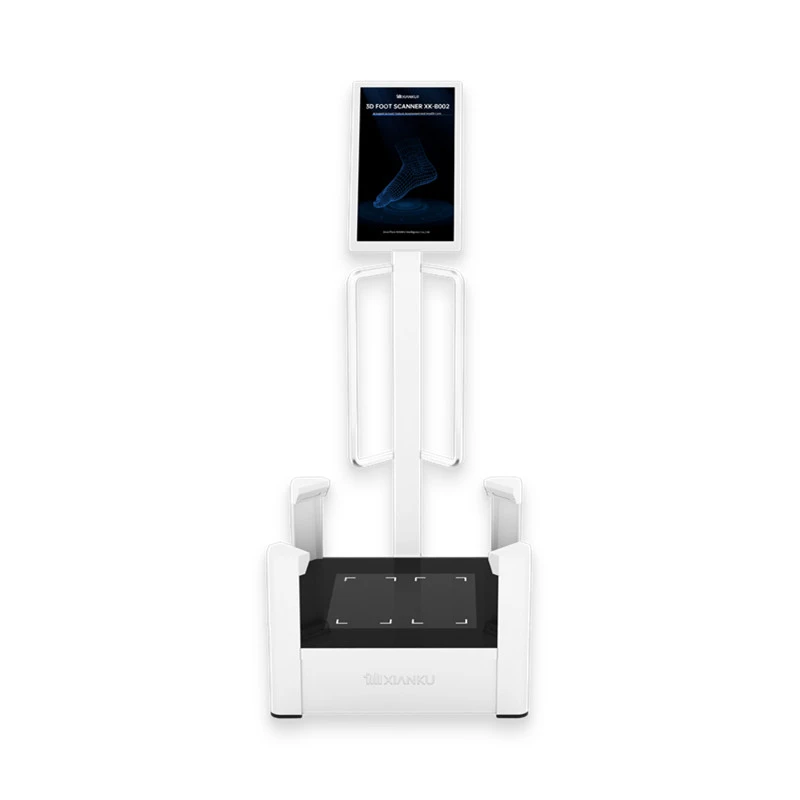
In the fashion and apparel industry, professional 3D body scanners, like our 3D Body Scanning Pod, can capture highly accurate body shapes. Designers can use this data to create custom - fit clothing, reducing the need for multiple fittings and improving the overall fit and comfort of the garments. These scanners can also generate detailed 3D models that can be used for virtual try - ons, enhancing the online shopping experience for consumers.
Accuracy
Accuracy is a crucial factor that sets consumer - grade and professional - grade digital body scanners apart. Consumer - grade scanners, due to their lower cost and simplified design, often have a margin of error in their measurements. For example, a consumer - grade body fat scale may have an error rate of up to 5 - 10% in measuring body fat percentage. This is because they use less sophisticated sensors and algorithms compared to professional scanners.
Professional - grade scanners, on the other hand, are engineered to provide highly accurate results. They use advanced technologies such as multiple high - resolution cameras, laser sensors, and sophisticated software algorithms. In the medical field, for example, professional scanners can detect small changes in tissue density that may indicate the early stages of a disease. In the fitness industry, they can accurately measure muscle strength and power output, which is essential for developing effective training programs.
The high accuracy of professional scanners also makes them suitable for research purposes. Scientists can rely on the precise data collected by these scanners to conduct studies on human physiology, body composition changes over time, and the effects of different interventions such as diet and exercise.
Cost
Cost is another significant difference between consumer - grade and professional - grade digital body scanners. Consumer - grade scanners are generally more affordable, making them accessible to a wider range of consumers. They can be purchased for as little as a few dollars for basic body fat scales or up to a few hundred dollars for more advanced home - use scanners. This affordability allows individuals to monitor their health and fitness levels on a regular basis without breaking the bank.
Professional - grade scanners, however, come with a much higher price tag. The cost can range from several thousand dollars to hundreds of thousands of dollars, depending on the complexity and functionality of the scanner. The high cost is due to the advanced technologies used in their construction, the need for regular calibration and maintenance, and the specialized software required to analyze the data. For example, a professional 3D body scanner used in the fashion industry can cost upwards of $50,000, while a medical - grade scanner for detailed anatomical analysis can cost over $100,000.
Target Users
Consumer - grade digital body scanners are targeted at individual consumers who are interested in monitoring their general health and fitness. They are commonly found in households, where people can use them to keep track of their weight, body fat percentage, and other basic health metrics. These scanners are also popular among fitness enthusiasts who want to monitor their progress during a workout program.
Professional - grade scanners, on the other hand, are used by a variety of industries and professionals. In the medical field, doctors, physiotherapists, and researchers use these scanners for diagnosis, treatment planning, and research. In the fitness and sports industry, trainers, coaches, and sports scientists rely on professional scanners to optimize athlete performance and prevent injuries. In the fashion industry, designers, manufacturers, and retailers use 3D body scanners to create custom - fit clothing and improve the customer experience.
Applications and Use Cases
The different features and capabilities of consumer - grade and professional - grade scanners lead to distinct applications and use cases. Consumer - grade scanners are mainly used for personal health management. For example, a person can use a consumer - grade body fat scale to monitor their weight loss progress during a diet. They can also use a home - use scanner to check their body composition regularly and make adjustments to their lifestyle accordingly.
Professional - grade scanners have a much broader range of applications. In the medical field, they can be used for pre - operative planning. For example, a surgeon can use a 3D body scanner to create a detailed model of a patient's internal organs before a complex surgery. This allows the surgeon to better understand the patient's anatomy and plan the surgical procedure more accurately.
In the fitness industry, professional scanners can be used to design personalized training programs. A trainer can use the data from a body scanner to identify a client's strengths and weaknesses, and then create a training program that targets specific muscle groups. This can lead to more effective workouts and better results for the client.
In the fashion industry, professional 3D body scanners are revolutionizing the way clothing is designed and manufactured. Designers can use the data from these scanners to create custom - fit clothing for individual customers. This not only improves the fit and comfort of the garments but also reduces waste by minimizing the need for returns and exchanges. Additionally, retailers can use 3D body scanners to offer virtual try - ons, which can enhance the online shopping experience and increase customer satisfaction. For example, our Healthy 3D Customized Pillow can be designed based on the accurate body data collected by our professional scanners, providing users with a personalized and comfortable sleeping experience.
Conclusion
In conclusion, the differences between consumer - grade and professional - grade digital body scanners are significant in terms of functionality, accuracy, cost, and target users. Consumer - grade scanners are suitable for individual consumers who want to monitor their general health and fitness in a simple and affordable way. Professional - grade scanners, on the other hand, are essential tools for industries and professionals who require high - precision data for diagnosis, treatment, research, and product development.
As a digital body scan supplier, we understand the unique needs of both consumer and professional markets. We offer a range of high - quality digital body scanners, from consumer - friendly models to state - of - the - art professional scanners. If you are interested in exploring our products for your personal use or business needs, we invite you to contact us for a detailed discussion. Our team of experts can help you choose the right scanner based on your specific requirements and budget. Whether you are a fitness enthusiast, a medical professional, a fashion designer, or a retailer, we have the solution to meet your needs.
References
- "Principles of Biomedical Instrumentation" by John G. Webster
- "3D Body Scanning Technology: Applications and Developments" by various authors in the field of 3D scanning research
- Industry reports on the digital body scanner market from market research firms such as MarketsandMarkets and Grand View Research