

Hey there! As a supplier of digital body scanners, I often get asked, "What are the standards for digital body scan accuracy?" It's a great question, and one that's crucial for anyone in the market for a reliable scanning solution. In this blog, I'm gonna break down the key factors that go into determining how accurate these scanners are and why it matters to you.
Let's start with the basic concept. Digital body scanners use advanced technology to capture detailed 3D images of a person's body. These scans can provide a wealth of information, from body measurements to body fat analysis. But for all of this data to be useful, it has to be accurate. Otherwise, you're just getting a bunch of numbers that don't really reflect the real you.
One of the first things to consider when looking at scan accuracy is the resolution of the scanner. Resolution refers to the level of detail that the scanner can capture. A higher resolution scanner will be able to pick up on smaller features and variations in the body, resulting in a more accurate scan. For example, if you're using a scanner to measure body fat percentage, a high-resolution scanner will be better able to distinguish between fat and muscle tissue, giving you a more precise reading.
Another important factor is the scanner's calibration. Calibration is the process of adjusting the scanner to ensure that it's measuring accurately. Just like a scale needs to be calibrated to give accurate weight readings, a digital body scanner needs to be calibrated regularly to maintain its accuracy. This is especially important if the scanner is being used in a commercial setting, where multiple people will be using it throughout the day.
The type of technology used in the scanner also plays a big role in its accuracy. There are several different types of digital body scanners on the market, each using a different technology to capture the body's image. Some of the most common types include laser scanners, structured light scanners, and time-of-flight scanners. Each of these technologies has its own strengths and weaknesses, and the accuracy of the scanner will depend on how well the technology is implemented.
For instance, laser scanners are known for their high accuracy and ability to capture detailed 3D models of the body. They work by emitting a laser beam onto the body and measuring the reflection of the beam to create a 3D image. However, laser scanners can be expensive and may require a lot of space to operate.

Structured light scanners, on the other hand, are more affordable and portable. They work by projecting a pattern of light onto the body and analyzing the distortion of the pattern to create a 3D image. While structured light scanners may not be as accurate as laser scanners, they are still capable of providing detailed and reliable measurements.
Time-of-flight scanners are a newer technology that uses infrared light to measure the distance between the scanner and the body. These scanners are fast and can capture a large amount of data in a short period of time. However, they may not be as accurate as laser or structured light scanners, especially when it comes to capturing detailed features of the body.
In addition to resolution, calibration, and technology, the environment in which the scanner is used can also affect its accuracy. Factors such as lighting, temperature, and humidity can all have an impact on the performance of the scanner. For example, bright lights can cause glare on the body, making it difficult for the scanner to capture accurate images. Similarly, extreme temperatures or humidity can affect the accuracy of the scanner's sensors.
So, how do you know if a digital body scanner is accurate? One way is to look for scanners that have been validated by independent third-party organizations. These organizations test the scanners under controlled conditions to ensure that they meet certain accuracy standards. For example, some scanners may be validated by the International Society for the Advancement of Kinanthropometry (ISAK) or the American Council on Exercise (ACE).
Another way to assess the accuracy of a scanner is to compare the results of the scan with other methods of measurement. For example, you can compare the body fat percentage measured by the scanner with the results of a skinfold caliper test or a bioelectrical impedance analysis (BIA) test. If the results are consistent across different methods, it's a good indication that the scanner is accurate.
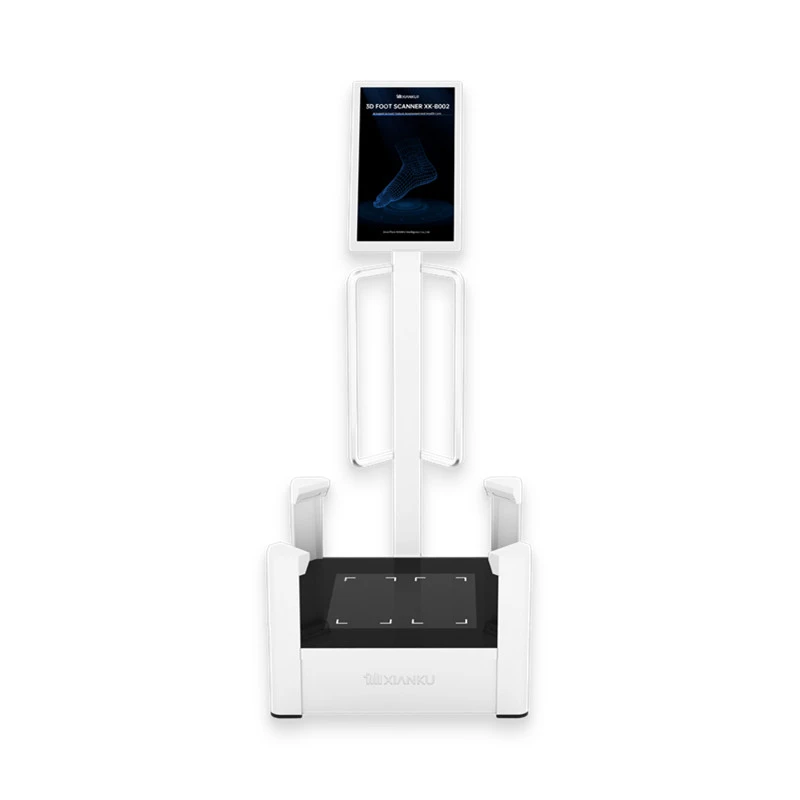
At our company, we take accuracy very seriously. That's why we offer a range of high-quality digital body scanners that are designed to provide accurate and reliable measurements. Our Xianku 3D Foot Scanner is perfect for capturing detailed 3D models of the feet, which can be used for custom shoe fitting, orthotics design, and more. Our Xianku 3D Body Scanner and Xianku 3D Body Scanning Room are designed to capture full-body scans with high accuracy and detail, making them ideal for a variety of applications, including fitness assessment, medical research, and fashion design.
If you're in the market for a digital body scanner, we'd love to hear from you. Whether you're a fitness studio, a medical clinic, or a fashion brand, we have a scanner that's right for you. Contact us today to learn more about our products and how they can help you achieve your goals.
References:
- International Society for the Advancement of Kinanthropometry (ISAK)
- American Council on Exercise (ACE)