

Hey there! As a supplier of 3D foot measurement equipment, I'm super excited to chat with you about the awesome tools we use in this field. In today's blog, I'll break down the different types of equipment for 3D foot measurement, how they work, and why they're a game - changer.
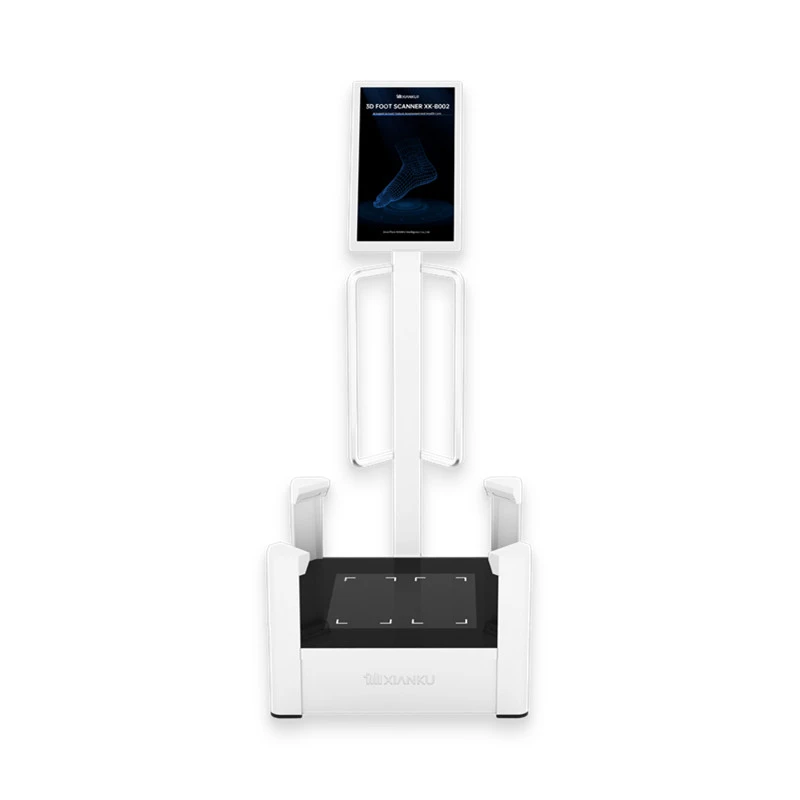
Let's start with the most common piece of equipment, the 3D Foot Scanner. This little (or sometimes not - so - little) gadget is a real workhorse. It uses advanced technology, usually a combination of cameras and sensors, to capture detailed 3D images of your feet.
The way it works is pretty cool. You simply step onto the scanner platform, and it starts doing its magic. The cameras capture multiple angles of your feet simultaneously, and the sensors measure the distance between different points on your feet. All this data is then processed by the scanner's software to create a highly accurate 3D model of your feet.
What's great about the 3D Foot Scanner is its precision. It can measure things like foot length, width, arch height, and even the shape of your toes with incredible accuracy. This is super important for industries like footwear manufacturing. Shoe companies can use the data from these scanners to create custom - fit shoes. No more squeezing your feet into ill - fitting shoes! It also helps in the medical field. Podiatrists can use the 3D models to diagnose foot problems more accurately and design customized orthotics.
Another piece of equipment that's making waves in the 3D measurement world is the 3D Body Scanning Pod. While it's designed to scan the whole body, it also does a great job of capturing detailed foot measurements.
The 3D Body Scanning Pod works by enclosing the person inside a pod - like structure. Inside the pod, there are multiple cameras and sensors placed strategically. When you step inside and stand still, these cameras and sensors start scanning your body from all angles. It creates a comprehensive 3D model of your entire body, including your feet.
The advantage of using a 3D Body Scanning Pod for foot measurement is that it gives a more holistic view. It can take into account how your feet interact with the rest of your body. For example, your posture and the way you distribute your weight can affect the shape and pressure points on your feet. The pod can capture all these factors, which is useful for applications like sports performance analysis. Athletes can get a better understanding of how their feet function during different movements, and trainers can use this information to improve their performance and prevent injuries.
Last but not least, we have the 3D Body Scanning Mirror. This is a really innovative piece of equipment. It looks like a regular mirror, but it's actually a high - tech scanning device.
The 3D Body Scanning Mirror uses a combination of depth - sensing cameras and reflective technology. When you stand in front of the mirror, the cameras capture the 3D shape of your body, including your feet. The mirror then displays a 3D model of you on a screen next to it.

What's unique about the 3D Body Scanning Mirror is its user - friendly nature. It's a non - invasive and easy - to - use option. People can quickly get a 3D scan of their feet in a familiar and comfortable environment. Retail stores can use this mirror to offer customers a personalized shoe - fitting experience. Customers can see how different shoes will fit their feet in real - time, which can increase customer satisfaction and reduce return rates.
Now, you might be wondering about the technical details of these devices. Well, most of them use either structured light or time - of - flight technology. Structured light scanners project a pattern of light onto the object (in this case, your feet). The cameras then capture how the pattern is distorted by the shape of your feet. The software analyzes this distortion to create a 3D model. Time - of - flight scanners, on the other hand, measure the time it takes for light to travel from the scanner to your feet and back. This information is used to calculate the distance and create a 3D map.
When it comes to data management, these 3D foot measurement devices are also top - notch. They can store the 3D models in a digital format, which can be easily shared and analyzed. The data can be exported in different file formats, making it compatible with a variety of software programs. This is great for businesses that need to integrate the foot measurement data into their existing systems.
So, whether you're a footwear manufacturer looking to create custom - fit shoes, a medical professional in need of accurate foot measurements for diagnosis and treatment, or a retailer aiming to provide a better customer experience, our 3D foot measurement equipment has got you covered.
If you're interested in learning more about our products or are thinking about making a purchase, don't hesitate to reach out. We're here to answer all your questions and help you find the perfect 3D foot measurement solution for your needs. Let's have a chat and see how we can take your business to the next level with our cutting - edge technology.
References
- Industry reports on 3D scanning technology
- Research papers on foot measurement and its applications