

Hey there! I'm a supplier of precision body scan devices, and today I'm gonna walk you through the calibration process of these high - tech gadgets.
First off, let's understand why calibration is so important. Precision body scan devices are used in a whole bunch of fields, like healthcare, fitness, and fashion. In healthcare, they help doctors get accurate body measurements for diagnosis and treatment planning. In the fitness industry, trainers rely on them to track clients' body composition changes over time. And in fashion, designers use these scans to create custom - fit clothing. If the device isn't calibrated correctly, all the data it spits out could be way off, which can lead to some pretty big problems.
Pre - calibration Checks
Before we start the actual calibration, we've got to do some pre - calibration checks. This is like warming up before a workout. We need to make sure the device is in good physical condition. Check for any visible damage to the sensors, cameras, or other components. A cracked lens or a loose cable can really mess up the scan results.
We also need to clean the device. Dust, fingerprints, and other debris on the sensors or cameras can interfere with the data collection. So, we use special cleaning solutions and soft cloths to gently wipe down all the surfaces.
Another important pre - calibration step is to check the power supply. A fluctuating power source can cause inconsistent readings. We make sure the device is connected to a stable power outlet or that the battery is fully charged if it's a portable model.
Initial Setup
Once the pre - calibration checks are done, it's time for the initial setup. We need to place the device in an appropriate environment. The lighting should be even and free from direct sunlight or harsh shadows. Uneven lighting can create false reflections and shadows in the scan, making it difficult to get accurate measurements.
We also need to set up the calibration target. This is a specially designed object with known dimensions and properties. For a 3D body scan device, the calibration target could be a mannequin - like structure with precisely measured features. For a 3D Foot Scanner, it might be a foot - shaped model.
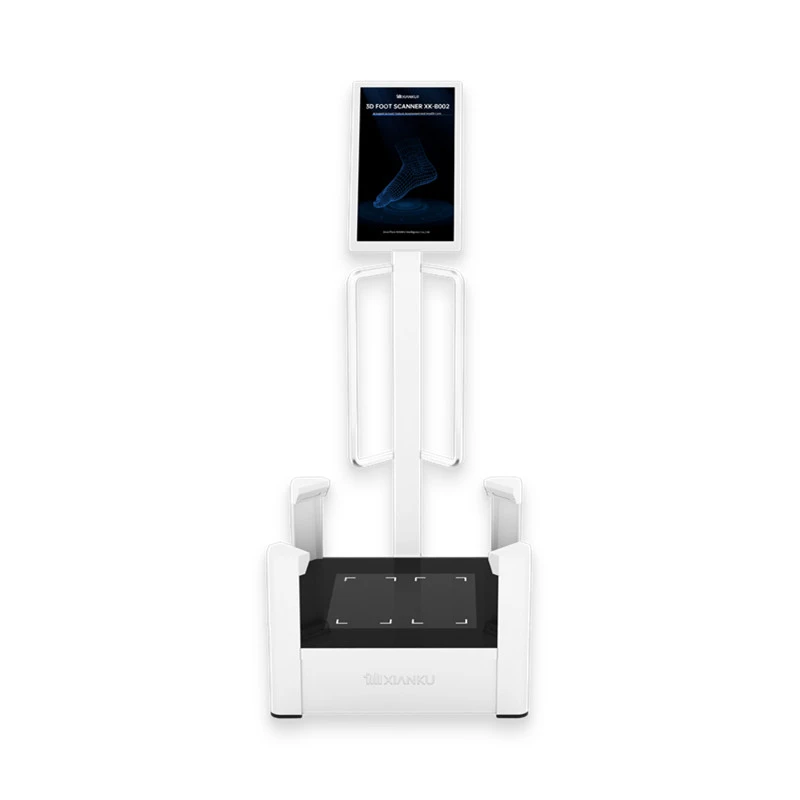

The calibration target needs to be placed in the correct position within the scanning area. We follow the manufacturer's instructions to ensure it's centered and at the right distance from the sensors.
Calibration Process
Now, let's get into the actual calibration process. There are usually two main types of calibration: static calibration and dynamic calibration.
Static Calibration
Static calibration is all about getting the device to accurately measure the calibration target. We start by taking a scan of the calibration target. The device captures a series of images or data points from different angles.
The software then analyzes these data points. It compares the measured dimensions of the calibration target with the known values. If there are any discrepancies, the software adjusts the internal parameters of the device. For example, it might adjust the focal length of the cameras or the sensitivity of the sensors.
This process is usually repeated several times to ensure accuracy. Each time, the software makes small adjustments based on the previous scan results. We keep doing this until the measured values of the calibration target are within an acceptable margin of error.
Dynamic Calibration
Dynamic calibration is a bit more complex. It's about making sure the device can accurately measure moving objects. In real - world scenarios, people don't stand completely still during a body scan. They might shift their weight, move their arms, or take a step.
To perform dynamic calibration, we use a moving calibration target. This could be a robotic arm that moves the calibration object in a pre - defined pattern. The device scans the moving target, and the software analyzes how well it can track the object's movement and measure its dimensions accurately.
If there are any issues with the dynamic calibration, the software adjusts the tracking algorithms and other parameters. This helps the device to better handle real - life situations where the subject is in motion.
Verification
After the calibration process is complete, we need to verify that the device is working correctly. We take another scan of the calibration target, both statically and dynamically. We compare the new scan results with the known values and the previous calibration results.
If the results are within the acceptable range, we can say that the device is properly calibrated. However, if there are still significant discrepancies, we need to go back and repeat the calibration process.
Calibration Frequency
The frequency of calibration depends on several factors. If the device is used frequently, it might need to be calibrated more often. In a busy healthcare clinic or a high - volume fitness center, the device could be calibrated weekly or even daily.
On the other hand, if the device is used less frequently, like in a research lab where scans are done only a few times a month, calibration might be done monthly or quarterly.
Environmental factors also play a role. If the device is exposed to extreme temperatures, humidity, or vibrations, it might need more frequent calibration.
Our Precision Body Scan Devices
We offer a range of precision body scan devices, including the 3D Body Scanning Pod, the 3D Foot Scanner, and the 3D Body Scanning Mirror. Each of these devices undergoes a rigorous calibration process to ensure the highest level of accuracy.
If you're in the market for a precision body scan device, whether it's for a healthcare facility, a fitness studio, or a fashion brand, we're here to help. Our devices are not only accurate but also user - friendly and reliable.
If you're interested in learning more about our products or have any questions about the calibration process, don't hesitate to reach out. We'd love to have a chat with you and discuss how our precision body scan devices can meet your needs.
References
- Manufacturer's manuals for precision body scan devices
- Industry standards for body scanning calibration
- Research papers on 3D scanning technology and calibration methods