

In the realm of orthopedic footwear, the pursuit of the perfect fit has long been a holy grail. For years, orthopedic shoe companies have relied on traditional methods of foot measurement, such as manual tracing and basic sizing charts. However, with the advent of 3D foot measurement technology, a new era has dawned, promising more accurate, personalized, and efficient solutions. As a 3D foot measurement supplier, I've witnessed firsthand the transformative impact this technology is having on the orthopedic shoe industry.
The Limitations of Traditional Foot Measurement
Traditional foot measurement methods have served the orthopedic shoe industry for decades, but they come with significant limitations. Manual tracing, for example, is a time - consuming process that relies heavily on the skill of the person taking the measurement. Small errors in tracing can lead to inaccurate sizing, which may result in ill - fitting shoes. Basic sizing charts, on the other hand, are often based on average foot dimensions and fail to account for the unique shape and contour of each individual's foot.
Orthopedic shoes are designed to provide support, correct foot deformities, and alleviate pain. A poor fit can not only reduce the effectiveness of these shoes but also cause additional discomfort and even exacerbate existing foot problems. For instance, a shoe that is too tight can lead to blisters, calluses, and nerve damage, while a shoe that is too loose may not provide the necessary support.
The Rise of 3D Foot Measurement
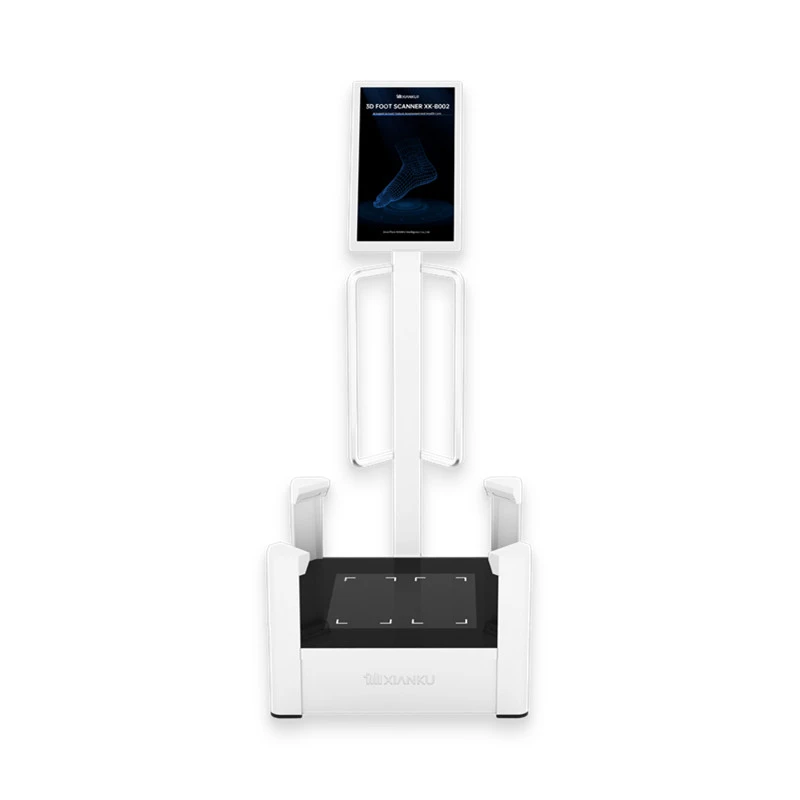
3D foot measurement technology has emerged as a game - changer in the orthopedic shoe industry. This technology uses advanced sensors and cameras to capture a detailed, three - dimensional image of the foot. The data collected includes information about the length, width, height, and curvature of the foot, as well as the position of the bones and joints.
One of the key advantages of 3D foot measurement is its accuracy. Unlike traditional methods, which can only provide a rough estimate of foot dimensions, 3D scanners can measure the foot with millimeter - level precision. This allows orthopedic shoe companies to create shoes that fit the foot perfectly, providing optimal support and comfort.
Another benefit is the speed and efficiency of 3D foot measurement. A 3D scan can be completed in a matter of seconds, compared to the several minutes it takes to manually trace a foot. This not only saves time for both the customer and the shoe fitter but also allows for a more streamlined fitting process.
How Orthopedic Shoe Companies Are Using 3D Foot Measurement
Orthopedic shoe companies are leveraging 3D foot measurement technology in a variety of ways. Firstly, it is being used to create custom - made orthopedic shoes. By using the detailed 3D data of a patient's foot, shoe manufacturers can design and produce shoes that are tailored to the specific needs of the individual. This is particularly beneficial for patients with complex foot deformities or conditions, such as diabetes or arthritis, who require a high level of support and customization.
Secondly, 3D foot measurement is being used for product development. By analyzing the data from a large number of 3D foot scans, orthopedic shoe companies can gain insights into the common foot shapes and dimensions of their target market. This information can be used to improve the design of their standard shoe models, making them more comfortable and better - fitting for a wider range of customers.
Thirdly, 3D foot measurement is enhancing the in - store customer experience. Retailers can use 3D scanners to provide customers with a more accurate and personalized fitting service. Customers can see a 3D model of their foot on a screen and get a better understanding of their foot shape and any potential issues. This not only helps them choose the right shoe but also educates them about foot health.
The Role of 3D Foot Measurement Suppliers
As a 3D foot measurement supplier, we play a crucial role in enabling orthopedic shoe companies to adopt and benefit from this technology. Our Xianku 3D Foot Scanner is a state - of - the - art device that offers high - precision 3D foot measurement. It is easy to use, reliable, and can be integrated into existing retail or manufacturing workflows.
In addition to providing the hardware, we also offer software solutions that can analyze the 3D foot data and generate detailed reports. These reports can be used by orthopedic shoe companies to design custom shoes, make adjustments to standard models, or provide personalized recommendations to customers.
We also provide training and support to our customers. Our team of experts can help orthopedic shoe companies set up the 3D scanners, train their staff on how to use the technology, and troubleshoot any issues that may arise.
Complementary 3D Technologies
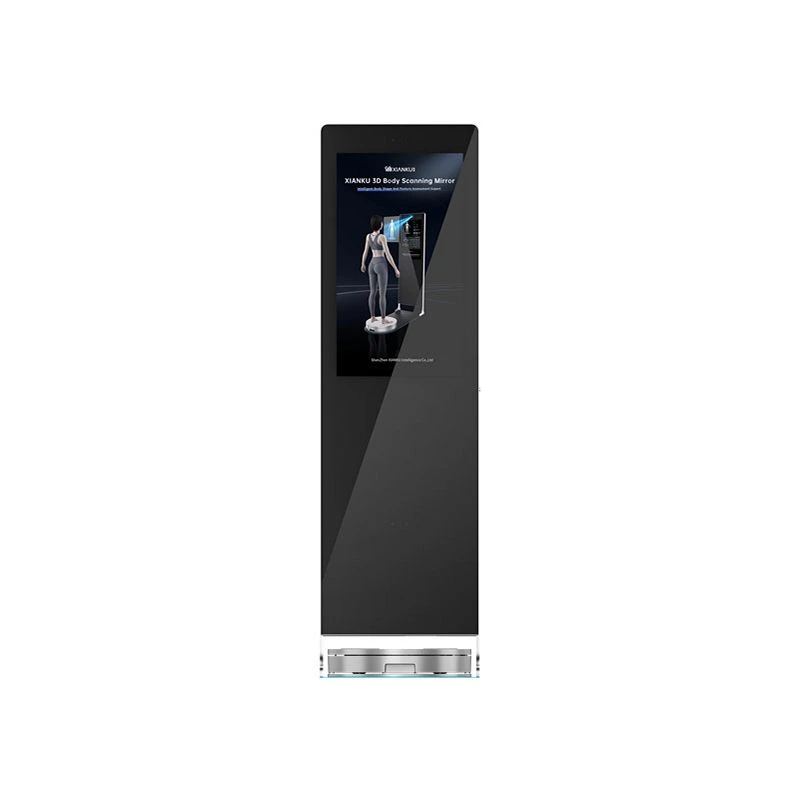
In addition to 3D foot scanners, there are other related 3D technologies that can be beneficial for orthopedic shoe companies. Our Xianku 3D Body Scanning Room can capture a full - body 3D scan, which can provide additional information about the patient's posture and gait. This information can be used to design orthopedic shoes that not only fit the foot but also support the overall body alignment.
Our Xianku 3D Body Scanner is another innovative product that can be used in conjunction with 3D foot measurement. It can provide a 360 - degree view of the body, allowing orthopedic shoe companies to take into account the patient's body shape and movement patterns when designing shoes.
The Future of 3D Foot Measurement in the Orthopedic Shoe Industry
The future of 3D foot measurement in the orthopedic shoe industry looks bright. As the technology continues to evolve, we can expect even more accurate and sophisticated 3D scanners. These scanners may be able to capture additional information, such as the elasticity of the foot tissue or the pressure distribution during walking.
The integration of 3D foot measurement with other technologies, such as artificial intelligence and virtual reality, is also on the horizon. AI algorithms can be used to analyze the 3D foot data and generate personalized shoe designs automatically. VR technology can be used to provide customers with a virtual fitting experience, allowing them to try on different shoes in a virtual environment before making a purchase.
Contact for Procurement and Collaboration
If you are an orthopedic shoe company interested in adopting 3D foot measurement technology, we would love to hear from you. Our team of experts can provide you with more information about our products, demonstrate how they work, and discuss how they can be customized to meet your specific needs. Contact us today to start a conversation about how 3D foot measurement can revolutionize your business.
References
- Dorsch, S., & Kogler, M. (2018). 3D Foot Scanning for Footwear Design and Manufacturing. In Footwear Biomechanics (pp. 113 - 130). Springer, Cham.
- Schmalz, T., & Kogler, M. (2019). 3D foot scanning technology in the footwear industry: Current status and future perspectives. Footwear Science, 11(2), 101 - 110.
- Cavanagh, P. R., & Rodgers, M. M. (2018). Biomechanics of Footwear. In The Human Foot and Ankle (pp. 363 - 382). Springer, Cham.