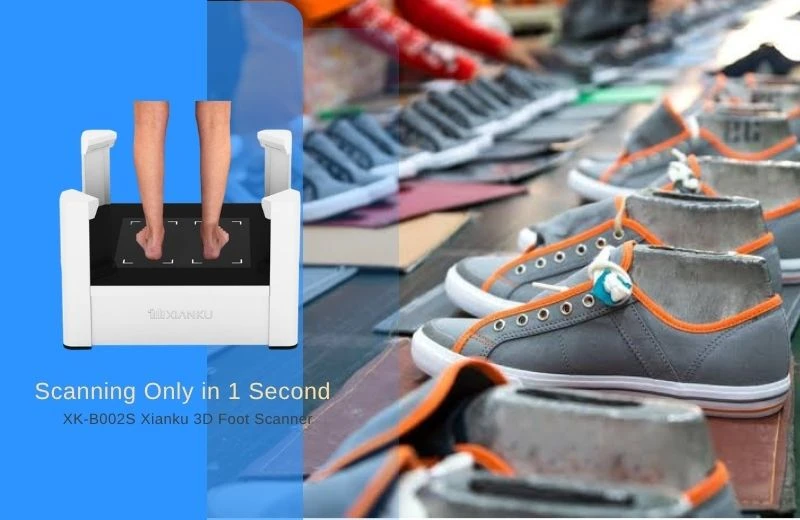
For many shoe retailers, competing with e-commerce seems almost impossible.
Online stores can offer thousands of styles, aggressive discounts, personalized recommendations, convenient home delivery, and reviews from thousands of customers. A physical shoe store cannot realistically win by simply offering more products or lower prices.
So, how can brick-and-mortar shoe stores compete with e-commerce?
The answer is not to become a cheaper version of an online store.
Instead, physical shoe retailers should provide something e-commerce cannot easily reproduce: a personalized, in-store experience built around the customer's actual feet.

1. Stop Competing on Price Alone
Price is one of the biggest advantages of e-commerce.
Customers can compare prices across multiple websites within seconds. If a physical store tries to compete by constantly lowering prices, profit margins can quickly disappear.
Instead, brick-and-mortar stores should compete on value and expertise.
A customer does not only need a pair of shoes. They may need to know:
- What shoe size actually fits them?
- Is one foot larger than the other?
- What type of arch do they have?
- Are their feet wide or narrow?
- Do they have excessive pronation or supination?
- Which shoe structure is appropriate for their foot shape?
- Why does one pair feel comfortable while another causes pressure?
These are questions that a product page cannot fully answer.
That creates an opportunity for physical shoe retailers.
2. Turn Shoe Fitting into a Professional Service
One of the strongest advantages of a physical shoe store is that customers can try shoes on before purchasing.
But simply handing a customer several pairs and asking, "Which one feels comfortable?" is no longer enough.
Modern shoe retailers can transform traditional fitting into a more professional foot assessment and shoe-matching service.
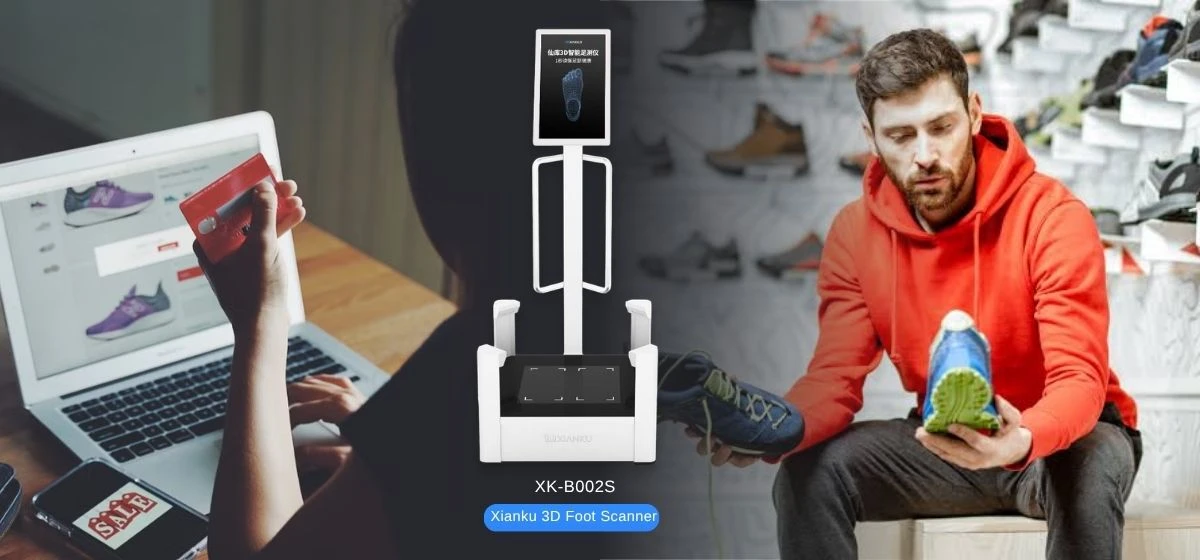
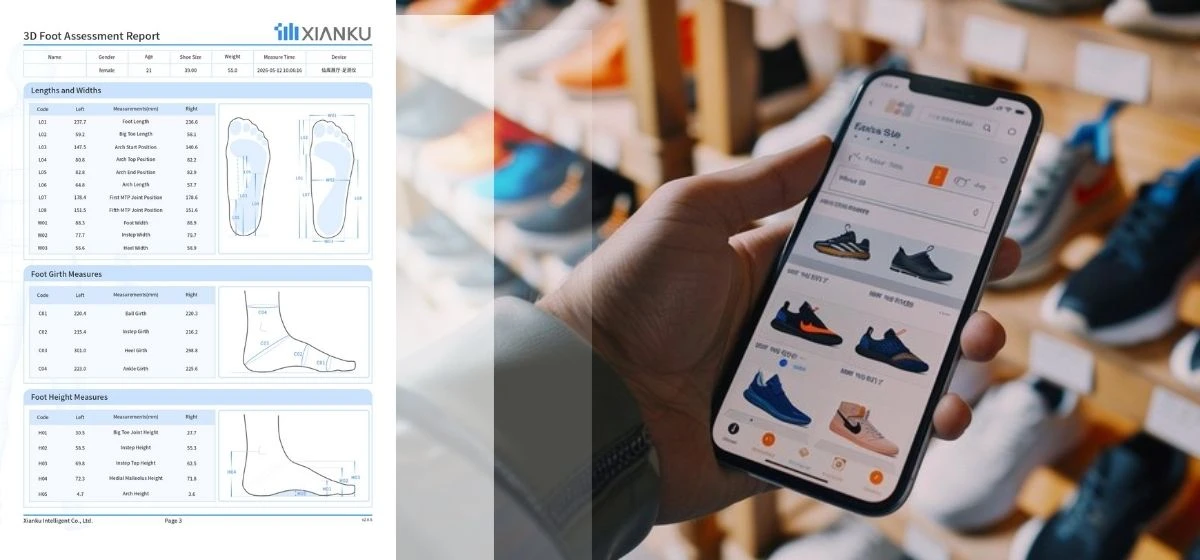
A 3D foot scanner can capture detailed information about a customer's feet, including foot length, width, arch characteristics, and other structural measurements.
Instead of saying:
"You probably need a size 9."
A retailer can provide a more personalized explanation:
"Your left and right feet are slightly different in size, and your forefoot is relatively wide. Based on your foot measurements, these shoe models may provide a better fit."
That changes the role of the salesperson.
They are no longer simply selling shoes.
They are providing foot-fitting expertise.
3. Use a 3D Foot Scanner to Create an Experience Customers Cannot Get Online
A 3D foot scanner can become an important part of the in-store customer journey.
A typical experience could look like this:
Step 1: Scan
The customer completes a quick 3D foot scan.
Step 2: Analyze
The system generates a digital foot profile and identifies important characteristics such as foot dimensions, arch type, and left-right differences.
Step 3: Recommend
The salesperson uses the results to recommend suitable shoe sizes, shapes, and models.
Step 4: Try
The customer physically tries the recommended shoes.
Step 5: Compare
The retailer can explain why one model may be more suitable than another based on the customer's individual foot characteristics.
This combination of technology + professional consultation + physical try-on creates an experience that is difficult for a pure e-commerce retailer to reproduce.
4. Make the Store a "Foot Health Destination"
The biggest mistake a traditional shoe retailer can make is thinking:
"We sell shoes."
A stronger positioning is:
"We help customers find the right shoes for their feet."
That is a very different business proposition.
For example, a shoe store could offer services such as:
- Free 3D foot scanning
- Personalized shoe-size recommendations
- Foot-shape analysis
- Arch-type identification
- Left-right foot comparison
- Shoe fitting consultations
- Recommendations for different activities
- Follow-up fitting services
The shoe becomes the final product rather than the entire service.
This gives customers a reason to visit the physical store even when they could purchase the same shoe online.
5. Connect the Digital and Physical Shopping Experience
Brick-and-mortar stores do not have to fight e-commerce.
They can actually use digital technology to strengthen the physical experience.
For example, after a customer completes a 3D foot scan, the store could maintain their foot profile in a digital system.
When the customer returns months later, the retailer may already have their previous measurements and fitting information.
The customer no longer has to start from zero.
Over time, the store can build a personalized customer profile based on real foot data.
This creates an important advantage.
An online store may know what products a customer clicked on.
A specialized shoe retailer can know how that customer's feet are shaped and what types of shoes have worked for them before.
That is much more meaningful personalization.
6. Turn Technology into a Sales Tool, Not Just a Gadget
Simply placing a 3D foot scanner in a store will not automatically increase sales.
The technology needs to be connected to the sales process.
For example, retailers can use scanning results to guide customers toward different product categories:
- Wide forefoot → wider toe-box shoes
- High arch → shoes with appropriate cushioning and support characteristics
- Different foot sizes → individualized fitting recommendations
- Activity-specific needs → running, walking, work, hiking, or casual footwear recommendations
The goal is not to tell customers that they have a "problem."
The goal is to explain why certain shoes may fit them better.
This makes product recommendations feel more personalized and less like a sales pitch.
7. Why Customers May Still Choose a Physical Shoe Store
E-commerce wins on convenience.
Physical stores can win on confidence.
Customers may hesitate to buy shoes online because they are unsure whether:
- The size will fit
- The width will be comfortable
- The shoe shape matches their feet
- The product will cause pressure points
- Their left and right feet require different considerations
A professional in-store fitting experience reduces that uncertainty.
Instead of asking customers to guess which shoe will fit, the store can help them make a more informed decision.
That is the real competitive advantage of physical retail.
8. Build a New Business Model Around Personalization
The future of physical shoe retail may not be about having the largest inventory.
It may be about having the most personalized fitting experience.
A modern shoe store could position itself as:
Scan → Understand → Recommend → Try → Purchase → Follow Up
This creates a customer journey that combines the advantages of technology with the advantages of physical retail.
E-commerce can provide convenience and product variety.
A specialized physical store can provide measurement, expertise, physical fitting, and human interaction.
The two models do not have to compete on exactly the same battlefield.
Conclusion: Don't Become a Cheaper E-Commerce Store
Brick-and-mortar shoe stores cannot-and should not-try to beat e-commerce at everything.
They do not need the lowest price.
They do not need the largest online catalog.
They need a reason for customers to walk through the door.
That reason can be expertise.
By combining 3D foot scanning, professional fitting, personalized recommendations, and an in-store try-on experience, traditional shoe retailers can transform from simple product sellers into personalized foot-fitting destinations.
The question is no longer:
"How can a physical shoe store sell the same shoes cheaper than e-commerce?"
The better question is:
"What can a customer discover about their feet in our store that they cannot discover from an online product page?"
That is where the future of brick-and-mortar shoe retail may lie.