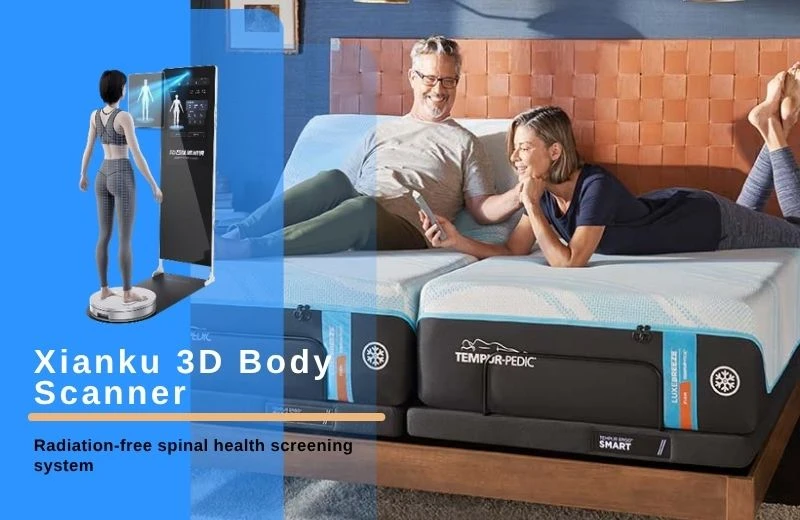
When consumers shop for a mattress or pillow, they are often faced with a familiar problem:
How do you know which one is actually right for you?
A mattress can be soft or firm.
A pillow can be high or low.
A material can feel comfortable in a showroom but completely different after a full night of sleep.
This is one reason why TEMPUR has built such a recognizable position in the premium bedding market.
Rather than competing only on dimensions, materials, or appearance, TEMPUR has spent decades building its brand around a more specific promise:
The sleep surface should adapt to the person using it.
Its proprietary TEMPUR material is designed to respond to body shape, weight, and temperature, while its retail experience encourages customers to physically test its products before purchasing.
This makes TEMPUR an interesting case study for the bedding industry:
How can a bedding brand turn "comfort" from a subjective feeling into a premium, technology-driven customer experience?

1. TEMPUR Does Not Sell a Mattress as a Simple Product
A conventional mattress purchase is relatively straightforward.
Customers compare:
- Size
- Thickness
- Firmness
- Material
- Price
- Brand
Then they choose the option that seems most suitable.
TEMPUR takes a different approach.
The brand puts significant emphasis on how its material responds to the individual body.
According to TEMPUR, its material contains billions of highly sensitive cells that respond to body shape, weight, and temperature, allowing the material to conform closely to the body and distribute pressure.
That changes the marketing conversation.
Instead of:
"This mattress is soft."
the proposition becomes:
"This mattress responds to your body."
That is a much more powerful premium positioning.
2. Technology Is at the Center of TEMPUR's Brand Story
TEMPUR has one particularly strong branding asset:
technology.
The company traces the origins of its material to research developed for NASA-related applications and says it later spent decades developing the material specifically for sleep.
This gives the brand an important psychological advantage.
Consumers are not simply buying foam.
They are buying a product associated with:
Science → Research → Material innovation → Sleep
That creates a perception of expertise.
And expertise is particularly valuable in a category like mattresses, where consumers cannot easily evaluate technical performance before using the product.
3. TEMPUR Turns Pressure Relief Into a Tangible Product Benefit
One of TEMPUR's core product messages is pressure distribution.
Its current PRO mattress collection, for example, uses an advanced version of TEMPUR material that the company says can reduce pressure on the body by 20% compared with its previous material, based on an internal comparison test.
The important thing from a branding perspective is not just the number.
It is the way the company translates material technology into a consumer benefit:
Material technology
↓
Body conformity
↓
Pressure distribution
↓
Comfort and support
The consumer does not need to understand every detail of the material's cellular structure.
They only need to understand:
"The mattress is designed to adapt to me."
That is good product communication.
4. Personalization Does Not Always Mean Manufacturing a Unique Product
This is one of the most interesting lessons from TEMPUR.
When people hear personalized bedding, they may immediately think about a completely custom-made mattress.
But personalization can happen at several levels.
For TEMPUR, personalization is partly achieved through the interaction between the material and the user's body.
The same mattress can respond differently depending on the person's body shape, weight, and temperature.
This is a very scalable form of personalization.
The manufacturer does not necessarily need to produce a completely different mattress for every customer.
Instead:
The material itself adapts to the customer.
That allows the brand to combine mass production with a personalized experience.
5. TEMPUR Also Personalizes Through Product Choice
TEMPUR does not rely on one mattress for everyone.
Its product portfolio includes different mattress collections, comfort levels, pillows, beds, and adjustable systems.
The Japanese TEMPUR retail network, for example, promotes different mattress comfort options and says that combinations of mattresses, beds, and pillows can create more than 6,000 possible sleep configurations.
That is a clever retail strategy.
Instead of telling customers:
"We have one perfect mattress."
the brand creates a selection system:
Different body + different preferences + different products = different sleep experience
This makes the customer feel that they are choosing a solution, rather than simply purchasing a SKU.
6. The Showroom Is Part of the Product Experience
A mattress is an unusually difficult product to sell online.
You cannot fully understand how a mattress feels by looking at a product photograph.
TEMPUR therefore places considerable emphasis on physical product experiences.
Its official Japanese website encourages customers to visit showrooms and authorized stores to actually experience the products. Its showrooms display mattresses, beds, pillows, and adjustable beds, with staff helping customers explore different combinations.
This is important for physical bedding retailers.
The showroom isn't simply a place where inventory is stored.
It becomes:
A place to experience the brand.
The customer lies down.
- They compare different feels.
- They discuss preferences.
- They experience different configurations.
The product is effectively demonstrated through the customer's own body.
7. TEMPUR Uses Human Interaction to Make Technology Understandable
Technology alone is rarely enough to sell a premium product.
A customer may understand the words:
"Pressure distribution."
But they may not understand what that means for their own sleeping experience.
That is why trained retail staff remain important.
TEMPUR's partner-store model emphasizes knowledgeable sales staff who help customers choose appropriate mattresses and bedding configurations.
This creates a useful combination:
- Technology provides credibility.
- Products provide physical experience.
- Staff provide interpretation.
Together, these elements make the premium proposition easier to understand.
8. TEMPUR Has Expanded From Mattress to Sleep Ecosystem
Another important part of the brand strategy is that TEMPUR does not stop at mattresses.
Its product categories include:
- Mattresses
- Pillows
- Beds
- Adjustable beds
- Bedding accessories
- Smart sleep products
Its Ergo Smart bed, for example, combines an adjustable bed with sleep technology. TEMPUR says the system can detect snoring-related vibrations and automatically raise the head section by approximately 12 degrees, while its app provides personalized sleep-related advice.
This represents a significant evolution.
The brand is moving from:
"We make mattresses."
toward:
"We create a complete sleep environment."
That creates more opportunities for cross-selling and customer engagement.
9. The Pillow Is an Important Part of the Personalization Strategy
Mattresses often receive most of the attention in premium bedding.
But pillows are equally important to the overall sleep experience.
A mattress supports the body from below.
A pillow influences the position of the head and neck.
This makes pillow selection inherently personal.
The problem is that pillow shopping is often based on simple categories:
- Soft
- Medium
- Firm
- Low
- Medium height
- High
But these categories do not fully describe the individual.
Two people with the same height may have very different:
- Shoulder widths
- Neck lengths
- Sleeping positions
- Body proportions
- Head and neck alignment
This creates an opportunity for the next generation of bedding retail.
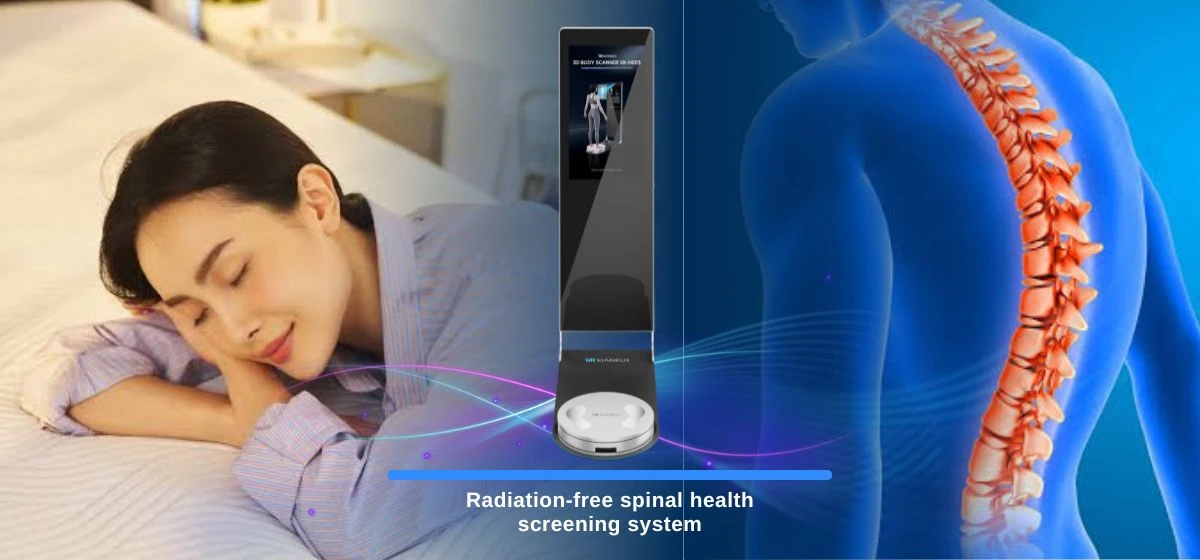
10. Where 3D Body Scanning Can Take Personalized Bedding Further
This is where the TEMPUR model becomes particularly relevant to emerging bedding technologies.
TEMPUR has already built its brand around the concept that bedding should respond to the individual body.
A 3D Body Scanner can take that concept one step further.
Instead of relying primarily on product selection and physical trial, a retailer can begin with a digital measurement of the customer.
A 3D body scan can potentially capture information such as:
- Shoulder width
- Neck and shoulder geometry
- Body proportions
- Posture characteristics
- Left-right asymmetry
- Other measurable body dimensions
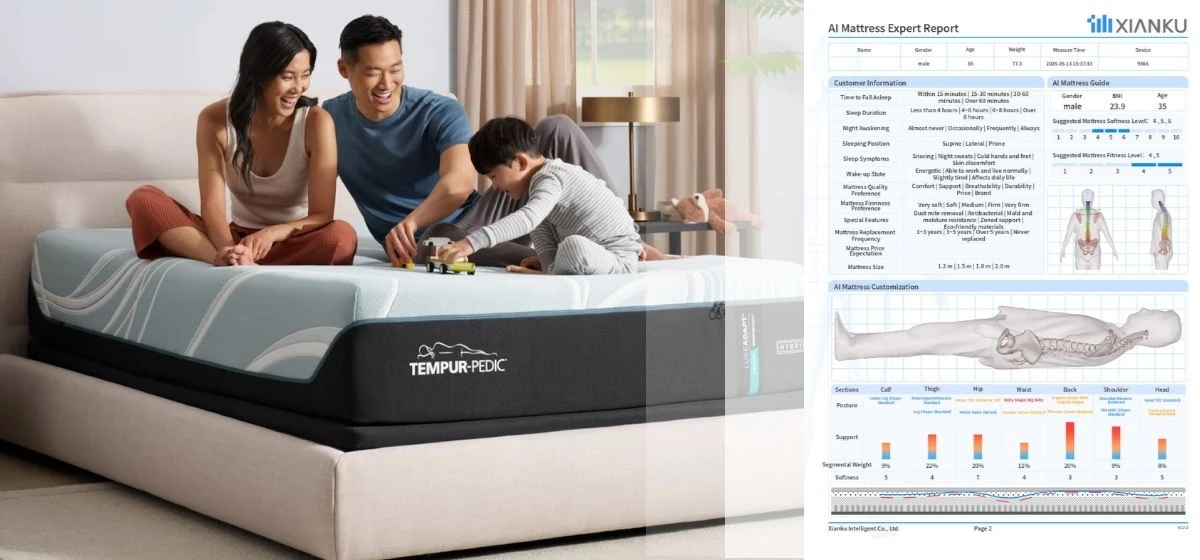
The information can then be used to generate a personalized analysis.
For example:
3D Body Scan
↓
Body & Posture Analysis
↓
Personalized Sleep Report
↓
Recommended Pillow Height
↓
Customized Pillow
This makes the personalization process more visual and data-driven.
11. From "Try This Pillow" to "Here Is Why This Pillow Fits You"
This is perhaps the biggest difference.
A traditional bedding salesperson might say:
"This pillow is our best seller."
A personalized bedding retailer could instead say:
"Based on your body measurements and sleeping posture, this height provides a better starting point for your pillow."
The second conversation feels much more professional.
It also gives the customer a reason to trust the recommendation.
The retailer is no longer simply recommending a popular product.
It is providing an individualized solution.
12. Personalization Can Also Increase Perceived Product Value
This is where premium pricing becomes particularly interesting.
A standard pillow is easy to compare.
Customers can search for:
$30 pillow vs. $50 pillow vs. $100 pillow
But personalized sleep services are much harder to compare purely on price.
The offer becomes:
3D body scan + analysis + personalized recommendation + customized pillow + fitting
The customer is no longer comparing two pieces of foam.
They are comparing two different experiences.
This is the same strategic principle that helps premium brands escape pure price competition:
The more personalized the service, the harder it becomes to compare products only by price.
13. The Future of Bedding Retail May Be Data-Driven Personalization
TEMPUR's evolution offers an important lesson.
The future of bedding may not be about simply creating more mattress models.
It may be about understanding customers more precisely.
Imagine a future bedding store where the customer journey looks like this:
Step 1 - Scan
The customer completes a quick 3D body scan.
Step 2 - Analyze
The system generates a posture and body measurement report.
Step 3 - Recommend
The retailer recommends suitable pillow heights, mattress firmness, and sleeping configurations.
Step 4 - Customize
The customer receives a personalized pillow or other customized bedding product.
Step 5 - Experience
The customer tests the product in-store.
Step 6 - Adjust
The product can be fine-tuned based on feedback.
This is no longer traditional bedding retail.
It is:
Personalized Sleep Experience Retail.
14. What Can Other Bedding Brands Learn From TEMPUR?
TEMPUR's strategy offers several lessons for mattress and pillow businesses.
Lesson 1: Build the brand around a clear technical advantage
TEMPUR's proprietary material is not just a manufacturing detail.
It is central to the brand story.
Lesson 2: Translate technology into consumer benefits
Consumers don't necessarily care about cellular structures.
They care about:
"Will this support me comfortably?"
Lesson 3: Let customers experience the difference
Physical testing is extremely important for products that depend on tactile experience.
Lesson 4: Create a complete sleep ecosystem
Mattresses, pillows, beds, and sleep technology can reinforce each other.
Lesson 5: Make personalization part of the customer journey
Personalization should not be limited to the final product.
It can begin with measurement and consultation and continue through fitting and follow-up.
15. What TEMPUR Does Well-and Where the Industry Can Go Further
TEMPUR has already done an excellent job of making body adaptation part of its product proposition.
Its materials respond to individual body characteristics, and its retail model encourages customers to physically experience different products and combinations.
But there is still a broader opportunity for the bedding industry.
The next step is to make personalization measurable before the customer chooses the product.
Instead of:
Choose → Try → Decide
the process could become:
Measure → Analyze → Recommend → Try → Customize
That is where technologies such as 3D Body Scanning become particularly relevant.
The Bigger Shift: From Bedding Products to Sleep Solutions
TEMPUR's brand evolution demonstrates a broader transformation in the bedding industry.
The traditional model is:
Mattress → Pillow → Purchase
The emerging model is:
Body → Data → Analysis → Personalized Product → Sleep Experience
That is a much more valuable proposition.
A customer is no longer simply buying a mattress.
They are buying a solution designed around how their body interacts with the sleep environment.
For physical bedding retailers, this creates an important competitive advantage.
E-commerce can display hundreds of mattresses.
It can compare prices.
It can collect reviews.
But it cannot easily reproduce a physical consultation where a customer is measured, analyzed, guided by a professional, and matched with a personalized sleep solution.
That is where physical retail can become more valuable-not less.
Key Takeaway
TEMPUR's success provides an important lesson for the premium bedding industry:
Premium sleep products become more valuable when customers understand how they relate to their own bodies.
TEMPUR built its brand around a material that adapts to body shape, weight, and temperature. It then extended that philosophy through multiple mattress and pillow options, showroom experiences, adjustable beds, and increasingly connected sleep technology.
The next stage of this evolution is likely to make personalization even more measurable.
With 3D Body Scanning, bedding retailers can potentially move from simply asking customers:
"Which pillow feels comfortable?"
to:
"What does your body tell us about the pillow you need?"
That is a much stronger foundation for personalized bedding.
The future of premium bedding may therefore look less like a traditional mattress showroom and more like a:
Personalized Sleep Experience Center.
Frequently Asked Questions
-
What makes TEMPUR different from a conventional mattress brand?
TEMPUR differentiates itself through its proprietary pressure-relieving material, body-conforming properties, and a retail experience focused on letting customers physically experience different bedding products.
-
How does TEMPUR personalize its mattresses?
Its material is designed to respond to characteristics including body shape, weight, and temperature. TEMPUR also offers multiple mattress and pillow options so customers can select different comfort configurations.
-
Does TEMPUR use technology beyond mattresses?
Yes. Its product ecosystem includes adjustable beds and smart sleep technology. Its Ergo Smart system, for example, can detect snoring-related vibrations and automatically adjust the bed position.
-
Why is personalized bedding becoming more important?
People have different body shapes, sleeping positions, preferences, and comfort requirements. Personalized fitting can make the buying process more relevant than relying solely on standardized categories such as "soft," "medium," or "firm."
-
Can 3D Body Scanning be used for personalized pillows?
Yes. A 3D Body Scanner can capture measurable body and posture characteristics that may help retailers create more individualized pillow recommendations and customized sleep products.
-
Can 3D scanning help bedding stores compete with e-commerce?
It can give physical stores a service advantage by combining measurable body data, professional consultation, product testing, and personalized recommendations-experiences that are difficult to reproduce through a standard online product page.
-
What is the biggest lesson from TEMPUR?
Don't just sell a mattress or pillow. Show customers how the product is designed to work with their individual body.
That is how a commodity becomes a premium experience.