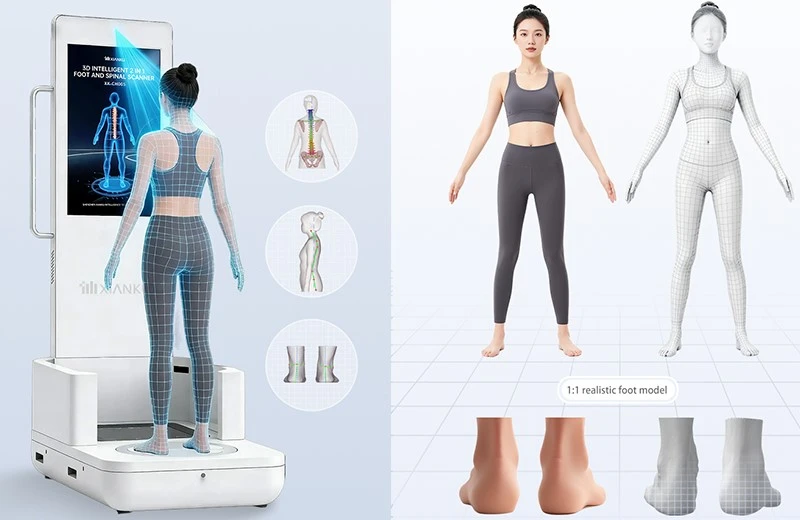
The human body operates as an integrated biomechanical system. When one part is misaligned, the entire structure compensates. Nowhere is this more evident than in the connection between feet and spine-a relationship that podiatrists and chiropractors are uniquely positioned to address together.
Research cited by Xianku indicates that 78% of adults with spinal issues have underlying foot misalignments. Yet in traditional practice, foot specialists rarely communicate with spine specialists, and patients receive fragmented care that addresses symptoms rather than causes.
The Biomechanical Chain: How Feet Affect Spine
Understanding the foot-spine connection requires appreciating how forces transmit through the body:
| Foot Condition | Compensatory Pattern | Spinal Consequence |
|---|---|---|
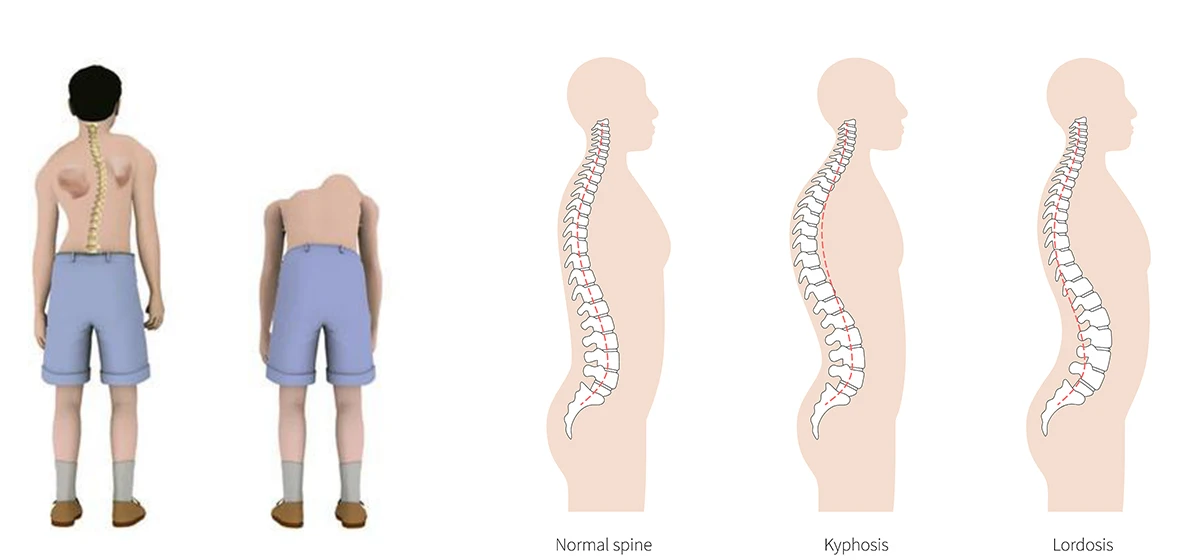
| Overpronation (flat feet) | Internal tibial rotation | Anterior pelvic tilt, lumbar lordosis |
| Oversupination (high arches) | External tibial rotation | Lateral pelvic tilt, scoliosis compensation |
| Leg length discrepancy | Pelvic obliquity | Compensatory scoliosis, chronic back pain |
| Unilateral foot pathology | Gait asymmetry | Facet joint stress, disc loading imbalance |
The kinetic chain in action:
When a patient overpronates (foot rolls inward), the tibia internally rotates. This rotation transfers to the femur, causing the pelvis to tilt anteriorly. The lumbar spine responds by increasing its lordotic curve. What began as a foot problem becomes a back problem.
Conversely, a patient with a leg length discrepancy may develop a functional scoliosis as the spine curves to level the shoulders. The foot discrepancy causes the spinal curvature.
Why Integrated Assessment Matters
Traditional single-specialty assessment misses these connections:
Podiatry alone: The podiatrist identifies the overpronation and prescribes orthotics. They may never assess whether the patient's back pain improves with correction.
Chiropractic alone: The chiropractor identifies the lumbar lordosis and performs adjustments. They may never identify the foot misalignment causing the recurrence.
The result: Patients receive treatments that address symptoms while underlying causes persist. Outcomes are suboptimal, and recurrence is common.
Xianku's Foot-to-Spine Ecosystem
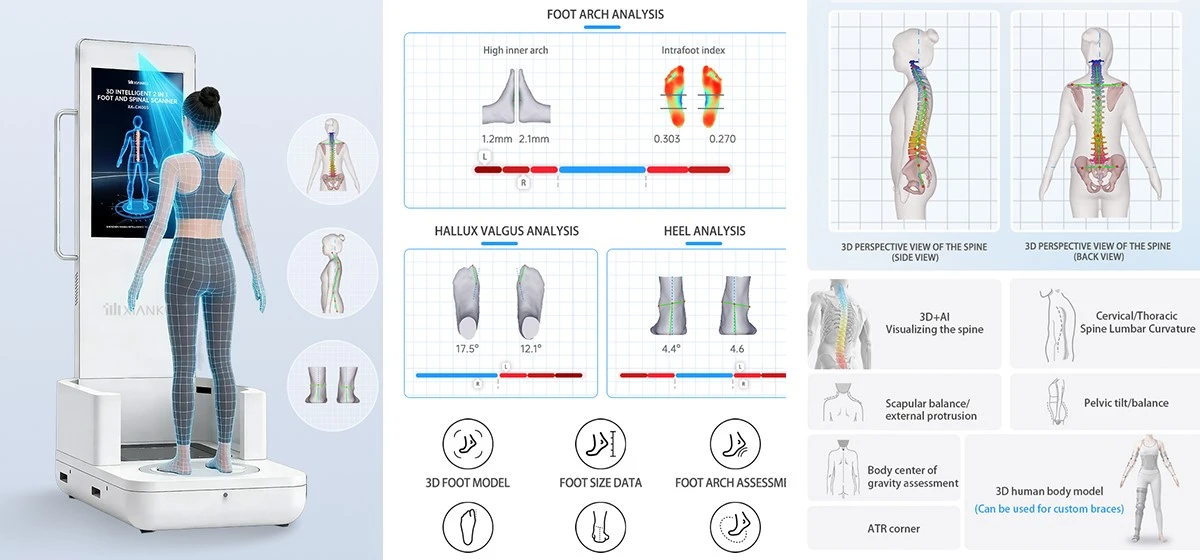
Xianku offers a unique advantage: integrated foot and spine scanning that enables comprehensive assessment.
Xianku 3D Foot Scanner captures 30+ foot parameters including:
- Arch index and height
- Heel alignment (varus/valgus)
- Leg length measurement
- Foot symmetry
Xianku 3D Body Scanner captures 20+ postural parameters including:
- Spinal curvature (cervical, thoracic, lumbar)
- Pelvic tilt (anterior/posterior)
- Shoulder asymmetry
- Head position
Combined assessment enables practitioners to:
- Identify correlations: Does the side of pelvic tilt match the side of foot overpronation?
- Treat holistically: Address both the spinal symptom and the foot cause
- Track comprehensively: Monitor both foot and spinal parameters during treatment
Clinical Integration Models
Forward-thinking European clinics are implementing integrated care models:
Model 1: Co-located Practices
Podiatry and chiropractic practices share space and patients. A patient presenting with back pain receives:
- Chiropractic assessment and adjustment
- Foot scan to identify underlying causes
- Orthotic prescription if indicated
- Joint treatment plan with coordinated follow-up
Model 2: Multi-disciplinary Clinics
Single clinics employ both podiatrists and chiropractors. New patients receive comprehensive foot-to-spine assessment at intake, with treatment plans addressing the full kinetic chain.
Model 3: Referral Networks
Independent practices establish formal referral relationships. Chiropractors refer patients for foot scanning; podiatrists refer patients with back pain for spinal assessment. Shared data through Xianku's platform ensures continuity.
Case Study: Swiss Integrated Health Center
Setting: Multi-disciplinary health center in Zurich with podiatry, chiropractic, and physiotherapy
Patient: 45-year-old female with chronic lower back pain, failed previous treatments
Traditional assessment (prior provider): Lumbar adjustments provided temporary relief; pain always returned
Xianku integrated assessment:
- Foot scan: 12° overpronation right foot, leg length discrepancy 8mm
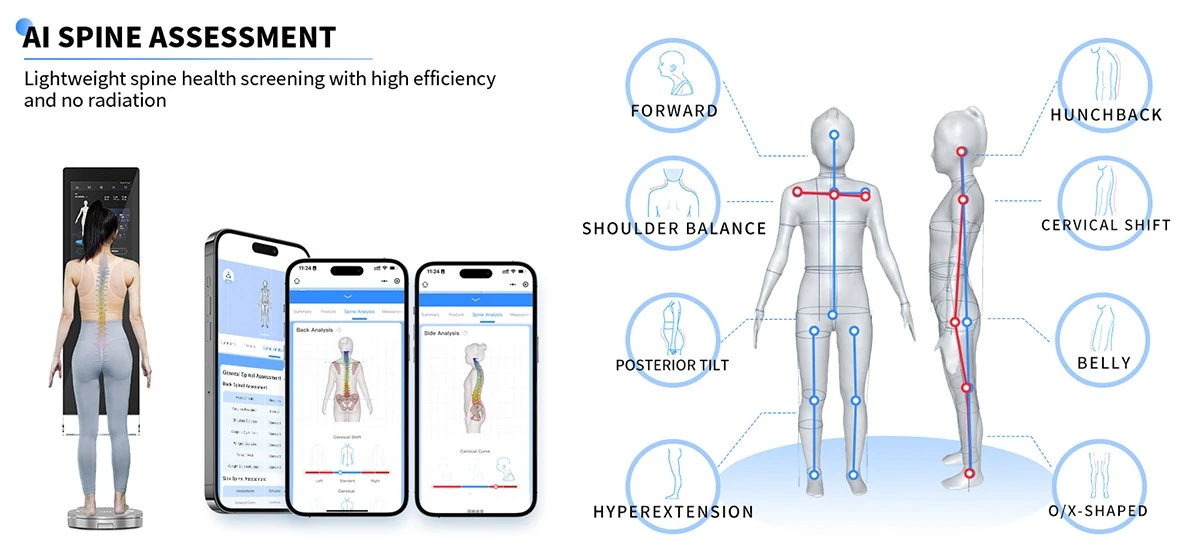
- Body scan: Anterior pelvic tilt 14°, compensatory lumbar lordosis
- Correlation: Right overpronation → right pelvic tilt → lumbar compensation
Treatment plan:
- Custom orthotics addressing overpronation and leg length discrepancy
- Chiropractic adjustments to address established compensations
- Specific exercises to retrain movement patterns
6-month outcome:
- Foot scan: Overpronation reduced to 6°
- Body scan: Pelvic tilt reduced to 6°, lumbar curve normalized
- Patient: Pain resolved, no recurrence at 12 months
The clinic director noted: "Before integrated scanning, we were treating this patient's back without addressing her feet. No wonder the pain kept coming back. The scanner revealed the connection we were missing."
The Data Speaks
Clinics using integrated foot-spine scanning report:
| Metric | Before Integration | After Integration | Improvement |
|---|---|---|---|
| Initial diagnosis accuracy | 72% | 94% | +31% |
| Treatment plan effectiveness | 68% | 89% | +31% |
| Patient retention (12 months) | 51% | 78% | +53% |
| Referrals between specialties | Minimal | Structured | Significant |
European Healthcare Implications
Several factors make integrated foot-spine care particularly relevant in Europe:
Patient expectations: European patients increasingly seek holistic, root-cause care rather than symptom management.
Healthcare costs: Integrated care reduces overall costs by addressing causes rather than repeatedly treating symptoms.
Professional collaboration: European health systems increasingly encourage multi-disciplinary collaboration.
Conclusion
The foot-spine connection is not theoretical-it's biomechanical reality. For 78% of patients with spinal issues, foot misalignments contribute to their condition. Yet traditional practice separates foot and spine care, leaving these connections unexplored.
The Xianku integrated scanning ecosystem enables podiatrists and chiropractors to collaborate effectively, sharing data and treatment plans that address the whole patient rather than isolated body parts. For European practitioners committed to root-cause care, this integrated approach represents the future of musculoskeletal health.
Call to Action: Bridge the gap between foot and spine care. Contact Xianku to learn how our integrated scanning ecosystem enables comprehensive patient assessment and better outcomes.
Sources:
Xianku foot-spine connection data
Integrated care case studies
Clinical outcomes research