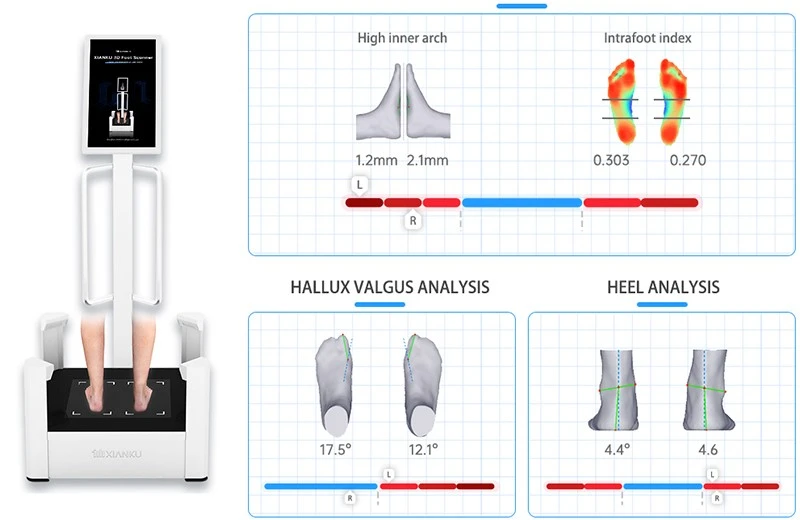
Childhood foot development sets the foundation for lifelong musculoskeletal health. Yet across Europe, millions of children develop foot problems that could have been prevented with early detection. The World Health Organization estimates that 30% of children globally are affected by foot problems linked to improper footwear. In Europe alone, this represents millions of children at risk for conditions that affect their comfort, activity levels, and long-term health.

The Critical Windows of Foot Development
Understanding when and how children's feet develop is essential for effective intervention:
| Age Range | Developmental Milestone | Screening Opportunity |
|---|---|---|
| 0-2 years | Fat pad obscures arch; foot width rapid growth | Baseline measurement |
| 3-5 years | Arch begins to form; coordination develops | Early flat foot assessment |
| 6-8 years | Arch typically completes formation | Flat foot diagnosis |
| 9-12 years | Growth spurts; foot shape stabilizes | Monitoring for changes |
| 13+ years | Near-adult foot structure | Final baseline for adulthood |
The critical insight: arch development is typically complete by age 6-8. Interventions after this window are less effective, making early childhood the optimal time for assessment and, if needed, intervention.
Common Pediatric Foot Conditions
Flat Feet (Pes Planus)
Affects nearly 30% of children at some stage. While many cases resolve naturally as the arch develops, persistent flat feet can lead to:
- Fatigue during physical activity
- Knee and hip alignment issues
- Reduced athletic participation
- Long-term biomechanical stress
Differentiating between physiological flat feet (developmental, likely to resolve) and pathological flat feet (structural, requiring intervention) requires precise measurement-something impossible with visual assessment alone.
In-toeing/Out-toeing
Parents frequently worry about their child's walking pattern. While many cases resolve spontaneously, some indicate underlying rotational issues requiring intervention. Objective measurement enables evidence-based decisions about monitoring versus treatment.
Leg Length Discrepancy (LLD)
Orthopedic studies across Germany, France, and the U.S. indicate that more than 40% of adults have at least a 5mm asymmetry, and around 10% exceed 10mm-clinically meaningful differences. Early detection enables simple interventions (heel lifts) that prevent compensatory scoliosis and joint stress.
Hallux Valgus (Bunions)
While typically associated with adults, bunions often begin in childhood or adolescence. Early detection at mild stages (15°-20°) enables conservative management with appropriate footwear, avoiding surgical necessity later.
The Xianku Advantage in Pediatric Care
Traditional pediatric foot assessment relies on:
- Visual observation (misses subtle findings)
- Paper tracings (inaccurate, no arch measurement)
- Parental concern (often focused on wrong issues)
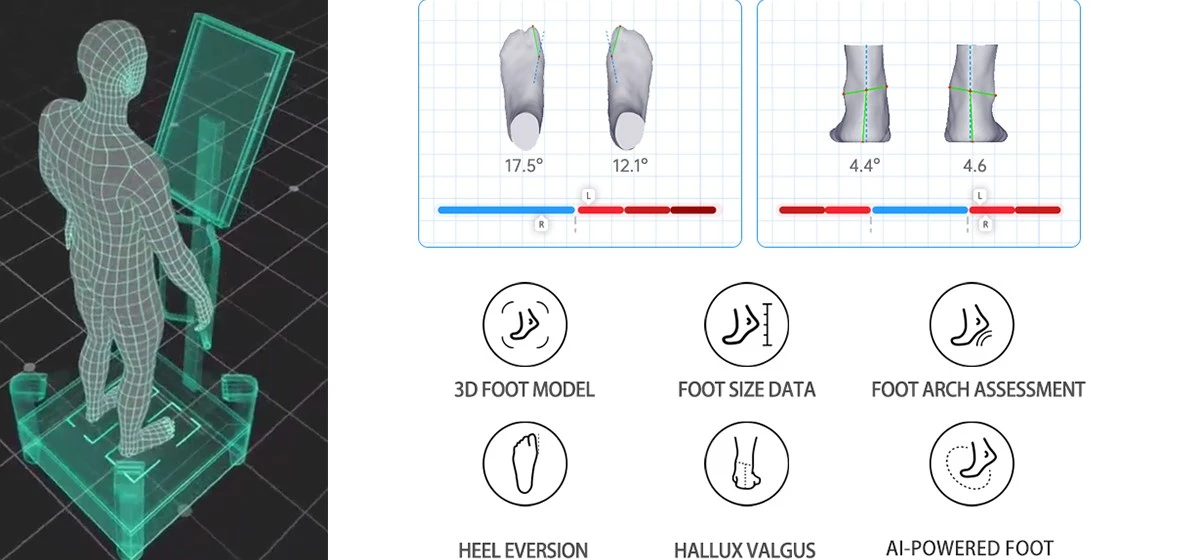
The Xianku 3D Foot Scanner transforms pediatric assessment:
1. Child-Friendly Experience
The 1-second scan requires no cooperation from wiggly children-just standing still briefly. The interactive 3D model displayed afterward engages children and makes the experience fun rather than clinical.
2. Comprehensive Measurement
The scanner captures 30+ parameters in that single second:
- Arch height and index
- Heel alignment
- Foot length and width
- Toe angles
- Symmetry between feet
- Growth rate tracking
3. Longitudinal Monitoring
Quarterly scans document growth and development, enabling:
- Tracking arch maturation
- Monitoring for asymmetry development
- Detecting rapid growth requiring shoe changes
- Objective documentation for parents
4. Parent Education
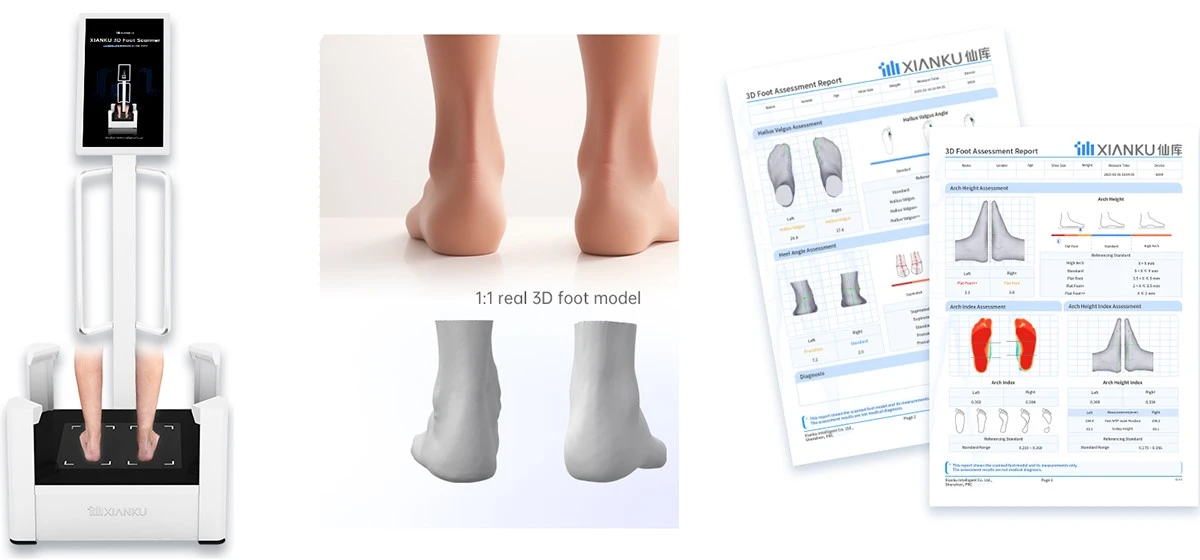
Parents want what's best for their children but often lack information. The 3D visualization and color-coded reports help parents understand:
- Whether their child's feet are developing normally
- When intervention is needed
- How prescribed treatments are working
Case Study: French Pediatric Podiatry Network
Setting: Network of 15 pediatric-focused podiatry clinics across France
Patient population: 8,000+ children annually, ages 2-16
Implementation: Xianku scanning for all new pediatric patients
Clinical Findings:
| Age Group | % with Flat Feet | % Receiving Intervention | Outcome |
|---|---|---|---|
| 2-4 years | 65% | 5% (pathological only) | Reassured parents |
| 5-7 years | 28% | 15% | Early intervention |
| 8-10 years | 18% | 12% | Monitoring |
| 11-16 years | 15% | 10% | Symptom management |
Key insight: Objective measurement prevented unnecessary treatment in 60% of children whose parents sought intervention based on visual "flat foot" concerns.
The clinical director noted: "Before scanning, parents would insist their child had flat feet based on visual appearance. After scanning, we could show them the actual arch index and explain whether it was within normal range. Parent satisfaction and trust improved dramatically."
The School Screening Opportunity
Beyond clinical practice, pediatric podiatrists can partner with schools for population screening:
Screening protocol:
- School-wide foot health education
- Optional scanning for interested parents
- Referral of at-risk children to participating clinics
- Population-level data collection
Benefits for clinics:
- Direct access to large pediatric populations
- Early identification of future patients
- Community health leadership positioning
- Research opportunities with aggregated data
European Context
Several factors make pediatric foot scanning particularly relevant in Europe:
Universal healthcare systems increasingly recognize preventive care as cost-effective. Objective screening data supports coverage decisions.
Active lifestyles are culturally valued across Europe. Children with undetected foot problems may avoid physical activity, impacting long-term health.
Parental health awareness is high in European populations. Parents actively seek information about their children's development.
Conclusion
The 30% of European children with foot problems didn't develop them overnight. They developed gradually, with warning signs visible only to those with the tools to see them. The Xianku 3D Foot Scanner provides pediatric podiatrists with those tools, enabling early detection, evidence-based intervention, and better lifelong outcomes.
Call to Action: Expand your pediatric practice with objective foot assessment. Contact Xianku to learn how our 3D scanning technology enhances care for children.
Sources:
WHO pediatric foot health data
Xianku pediatric applications
European pediatric podiatry case studies