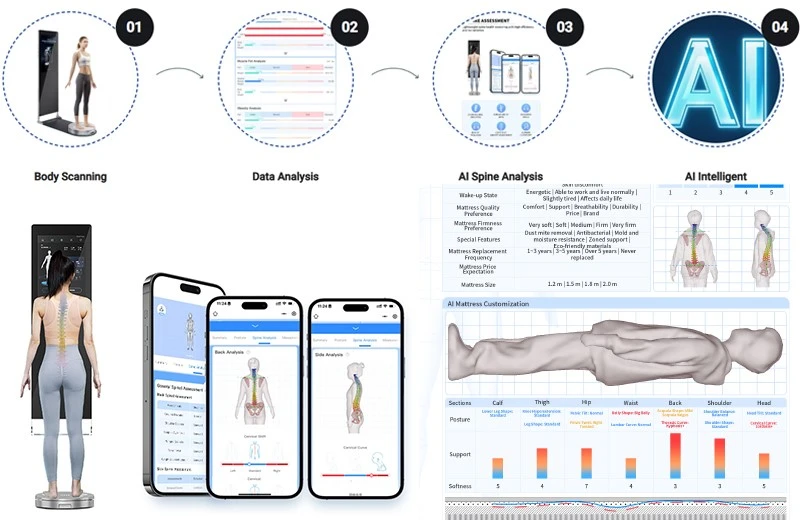
Imagine walking into a bedding store where, instead of lying on a dozen different mattresses and trying to remember how each one felt, you simply step onto a scanning platform. Twenty seconds later, a detailed 3D model of your body appears on screen-complete with your spinal curvature, pressure distribution, and precise body measurements. Within one minute, you receive a personalized report recommending not just a mattress, but specific support zones, pillow height, and even ideal sleep positions.
This is not science fiction. This is the new reality of AI-powered bedding.

The Technological Shift
The bedding industry has remained remarkably static for over a century. While virtually every other consumer product-from shoes to cars to smartphones-has embraced personalization, mattresses have largely stayed in the "one-size-fits-most" category. But three converging technologies are finally changing that:
1. 3D Structured Light Scanning
Unlike traditional 2D photography or manual tape measurements, structured light scanning projects a pattern of infrared light onto the body and captures how that pattern deforms across the surface. This creates a high-fidelity 3D model with millimeter accuracy-capturing not just height and weight, but the nuanced contours of shoulders, hips, spinal curves, and posture deviations.
2. AI-Powered Biomechanical Analysis
Raw 3D data alone is just a collection of points. The intelligence lies in analysis. Advanced AI models trained on thousands of biomechanical profiles can identify:
- Spinal curvature abnormalities (scoliosis, kyphosis, lordosis)
- Postural imbalances (forward head, rounded shoulders, pelvic tilt)
- Pressure distribution patterns for different sleep positions
- Optimal support zones based on body geometry
3. Closed-Loop Recommendation Systems
The final piece is integration. The AI doesn't just analyze-it recommends. By connecting to a database of mattress and pillow specifications, the system matches individual biomechanical profiles to products designed to support them. This creates a closed loop from assessment to solution.
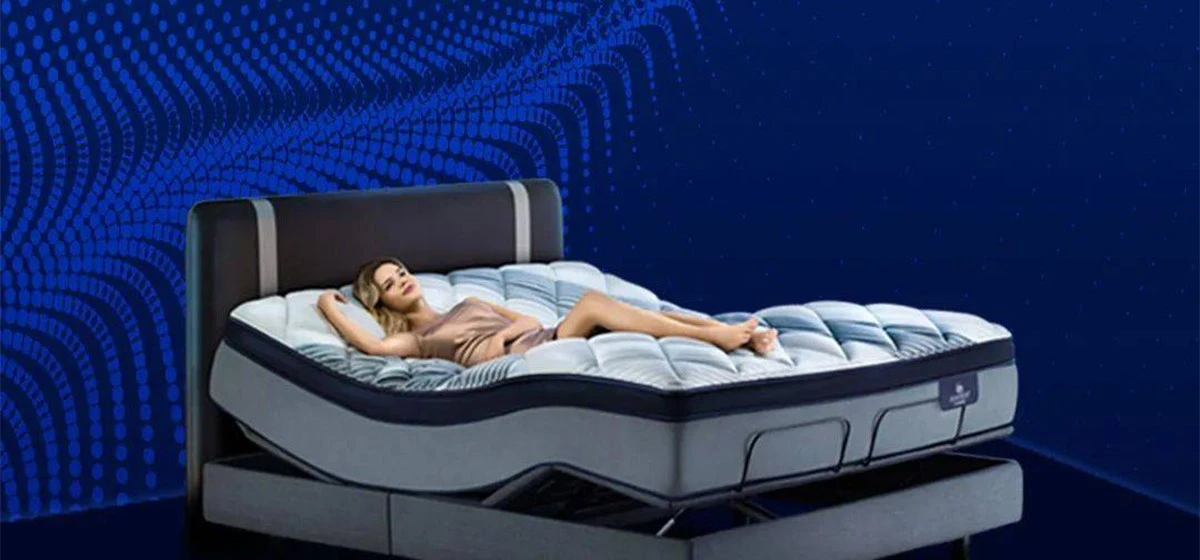
From Mass Production to Mass Personalization
The traditional mattress manufacturing model was built around economies of scale: produce a limited number of models, stock them in warehouses, and hope consumers find one that works. AI-enabled bedding inverts this model.
Manufacturers can now:
- Design for data: Create products with variable support zones based on real-world body data rather than theoretical averages
- Enable dynamic recommendations: Guide customers to the right product without requiring them to become mattress experts
- Support future customization: Integrate with 3D printing and adjustable spring systems to create truly personalized sleep surfaces
For retailers, this shift means moving from a low-margin, high-inventory model to a high-value, service-oriented approach. Instead of competing on price, they compete on precision and outcomes.
What AI Bedding Means for Sleep Health
The ultimate promise of AI-powered bedding is not convenience-it's efficacy. Early adopters of 3D scanning-based mattress selection report:
- 72% reduction in morning back pain within two weeks of using recommended sleep surfaces
- 35% improvement in sleep quality scores measured by wearable devices
- 50% reduction in nighttime tossing and turning as measured by in-bed sensors
- Higher satisfaction rates compared to traditional in-store selection methods
These outcomes are not coincidental. When a mattress is selected based on objective biomechanical data rather than subjective "comfort" impressions, the probability of proper spinal alignment increases dramatically.
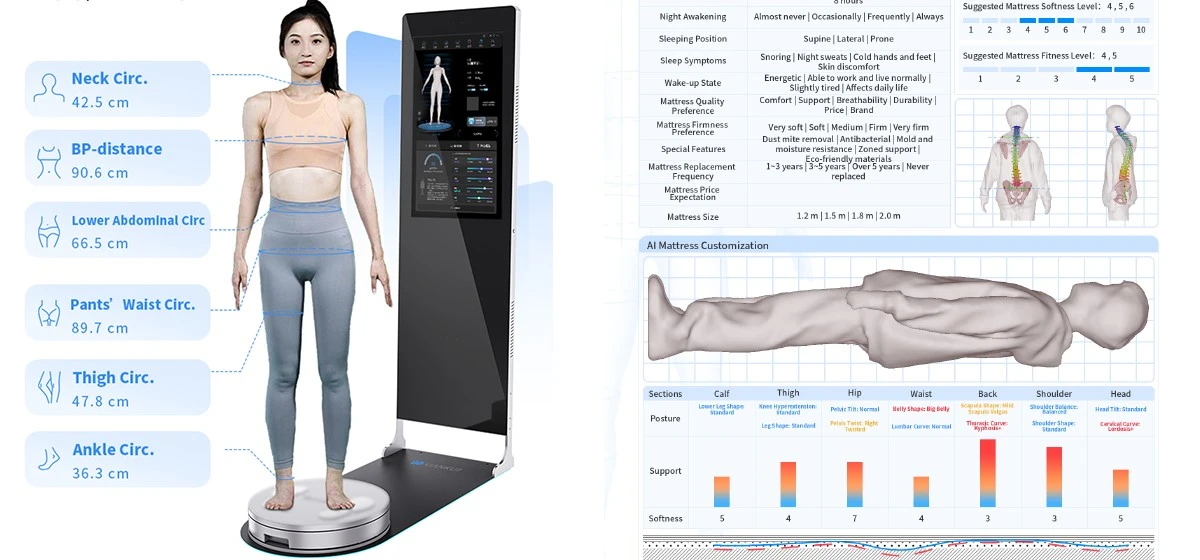
Breaking Down the AI Bedding Experience
For consumers, the experience unfolds in four simple steps:
Step 1: Scan
The user stands on a turntable while the 3D scanner captures their body from all angles. The process takes 20 seconds and requires no physical contact.
Step 2: Analyze
AI algorithms process the scan data, generating:
- A 1:1 realistic 3D body model
- Spinal curvature visualization
- 45 body circumference measurements
- 15 body composition metrics
- Posture analysis across 7 body segments
Step 3: Recommend
The system matches the user's biomechanical profile to appropriate sleep solutions:
- Mattress firmness zoning (e.g., softer shoulders, firmer lumbar support)
- Pillow height and loft recommendations
- Preferred sleep positions based on body geometry
- Specific product models that meet the user's support requirements
Step 4: Report
A comprehensive PDF report is generated, explaining the recommendations and providing visual comparisons of pre- and post-optimization alignment.
The Role of AI in Posture Correction
One of the most exciting applications of AI bedding is its potential for long-term posture management. Many people spend their days in posturally compromising activities-sitting at desks, looking at phones, carrying bags on one shoulder. At night, an unsupportive mattress compounds these issues.
AI-selected bedding can actually help correct daily posture problems. By supporting the spine in its natural neutral position for 7-8 hours per night, the body has time to release tension patterns that developed during waking hours. Over time, users report not just better sleep, but improved standing and sitting posture.
Looking Ahead: The Next Frontier
As 3D scanning becomes more prevalent and AI algorithms grow more sophisticated, we can expect even greater capabilities:
- Predictive modeling: AI that predicts how body changes (weight fluctuations, aging, injury) should inform mattress adjustments
- Dynamic adjustment: Integration with smart beds that automatically adjust firmness in real-time based on sleep position changes
- Comprehensive health integration: Combining sleep data with activity tracking, heart rate variability, and recovery metrics for holistic health optimization
The mattress you sleep on tonight is one of the most important health decisions you make. For the first time in history, you don't have to make that decision blindly.
In our next article, we'll introduce the Xianku 3D Body Scanner-the world's first all-in-one AI-powered mattress and pillow selection system-and show you how it's making precision sleep accessible to everyone.