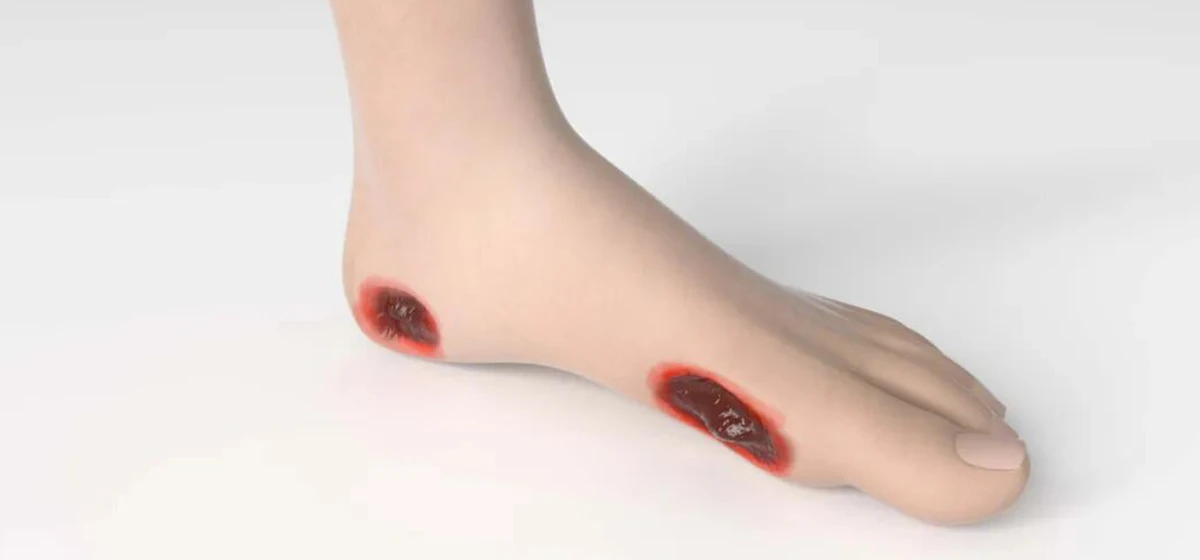
Diabetes affects over 60 million adults in Europe, with prevalence continuing to rise. Among these patients, foot complications represent one of the most serious and costly consequences. Diabetic foot ulcers affect up to 34% of diabetics during their lifetime, and 85% of diabetes-related amputations are preceded by ulcers that could have been prevented with proper intervention.
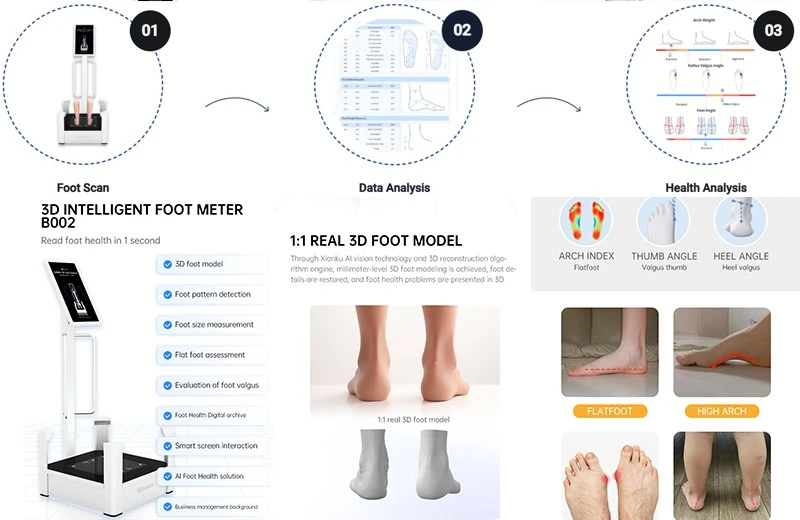
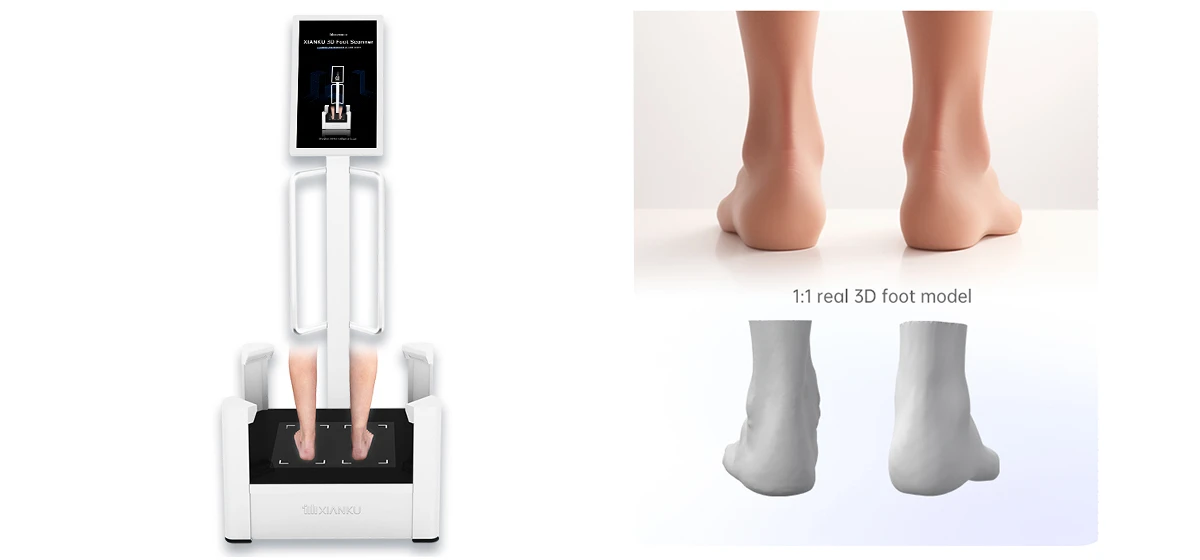
The Xianku 3D Foot Scanner offers a powerful tool for diabetic foot prevention, enabling early detection of at-risk feet and objective monitoring of intervention effectiveness.
The Diabetic Foot Cascade
Understanding why diabetic feet require special attention is essential:
| Factor | Pathophysiology | Clinical Consequence |
|---|---|---|
| Peripheral neuropathy | Loss of protective sensation | Injuries go unnoticed |
| Peripheral vascular disease | Reduced blood flow | Impaired healing |
| Foot deformity | Biomechanical changes | Pressure point formation |
| Limited joint mobility | Soft tissue changes | Increased shear forces |
These factors combine to create a "perfect storm" where minor pressure can quickly progress to ulceration and, in worst cases, amputation.
Current Screening Limitations
Most diabetic foot screening programs rely on:
- Monofilament testing for sensation loss (subjective, patient-dependent)
- Visual inspection for deformities and pressure points (misses early changes)
- Manual palpation for pulses (operator-dependent)
These methods detect problems only after they've developed, missing the opportunity for true prevention.
How Xianku Enables Proactive Care
The Xianku 3D Foot Scanner identifies at-risk feet before ulcers develop:
1. Pressure Point Mapping
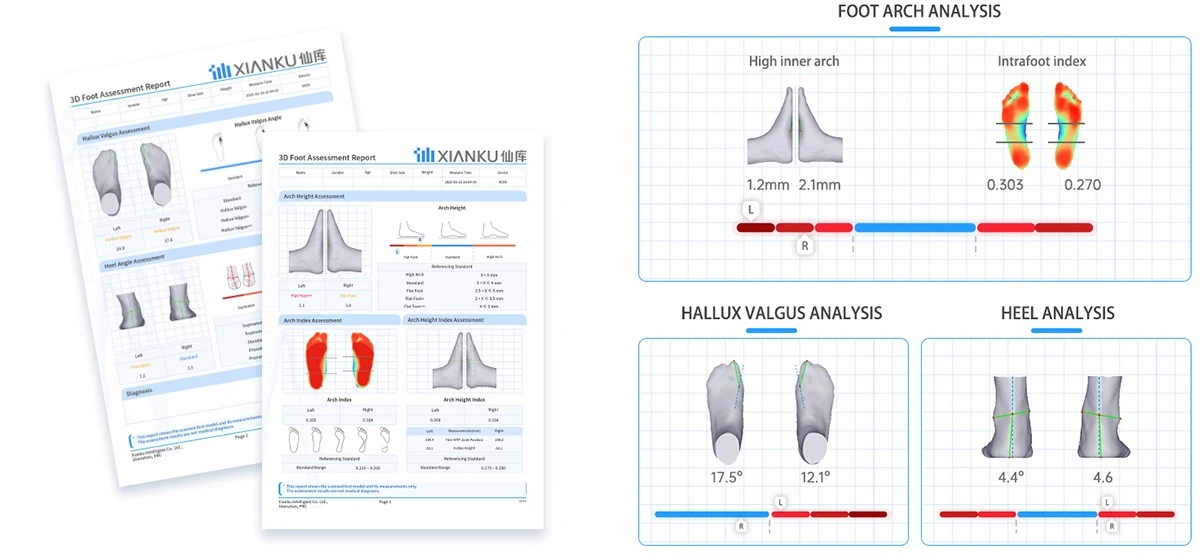
The scanner generates plantar heatmaps identifying high-pressure zones exceeding 200kPa-the threshold where tissue damage begins in neuropathic feet. These pressure points are invisible to visual inspection but represent imminent ulcer risk.
2. Deformity Quantification
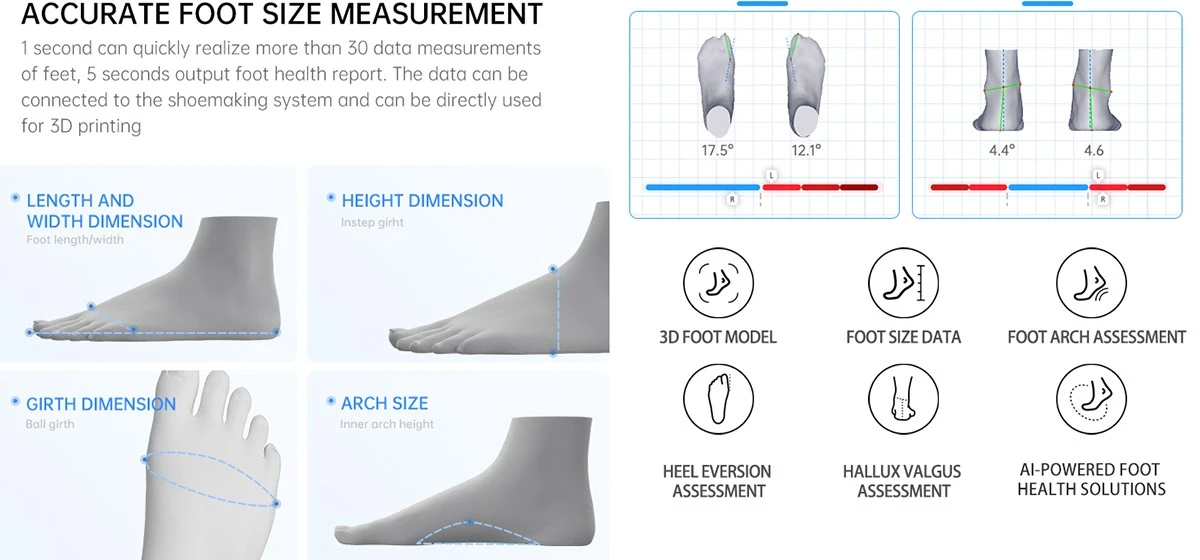
Structural changes that increase pressure are measured precisely:
- Hallux valgus progression tracking
- Metatarsal head prominence quantification
- Arch collapse monitoring
- Heel alignment changes
3. Longitudinal Comparison
Quarterly scans document subtle changes before they become clinically obvious. A 0.5mm increase in metatarsal pressure or 1° change in heel alignment triggers preventive intervention.
4. Offloading Insole Design
Scan data directly informs custom insole fabrication with targeted offloading:
- Pressure points identified
- Material density adjusted for specific zones
- Relief areas precisely positioned
- Follow-up scans verify effectiveness
Clinical Protocol Integration
European diabetic foot clinics implementing Xianku scanning typically adopt this protocol:
Baseline assessment (new diabetic patients):
- Comprehensive foot scan capturing 30+ parameters
- Pressure point identification
- Risk stratification (low/moderate/high)
- Baseline documentation for future comparison
Routine monitoring (risk-based intervals):
- Low risk: Annual scan
- Moderate risk: 6-month scan
- High risk: 3-month scan
- Post-ulcer: 1-3 month scan depending on healing
Intervention triggers:
- New pressure points >200kPa
- Arch index change >0.02
- Hallux valgus progression >3°/year
- Heel alignment change >2°
Outcome documentation:
- Scan comparison shows offloading effectiveness
- Objective evidence for treatment justification
- Patient education tool for compliance
Economic Impact
The economic case for preventive scanning is compelling:
| Cost Factor | Without Prevention | With Xianku Screening |
|---|---|---|
| Annual foot screening cost per patient | €50 (basic exam) | €75 (including scan) |
| Ulcer treatment cost per episode | €8,000-15,000 | Reduced incidence |
| Amputation cost (direct + indirect) | €40,000-60,000 | Rare with early detection |
| Quality-adjusted life years lost | Significant | Preserved |
A German diabetic clinic reported that after implementing Xianku screening for all Type 2 diabetics, ulcer incidence decreased by 47% over 18 months, with associated cost savings exceeding the technology investment by 6:1.
Case Study: Italian Diabetic Foot Clinic
Setting: Multidisciplinary diabetic foot clinic in Milan, serving 2,500 patients annually
Challenge: High ulcer rates (15% annually) despite standard screening protocols
Intervention: Xianku scanning implemented for all high-risk patients (neuropathy + deformity)
Results after 12 months:
| Metric | Before | After | Improvement |
|---|---|---|---|
| Ulcer incidence (high-risk) | 28% | 14% | 50% reduction |
| Hospital admissions | 124 | 67 | 46% reduction |
| Amputations | 12 | 5 | 58% reduction |
| Patient satisfaction | 6.2/10 | 8.9/10 | 44% improvement |
The clinic director noted: "The scanner shows patients their own pressure points-they can see the red zones where ulcers could form. For the first time, they understand why offloading insoles matter. Compliance has never been higher."
European Healthcare Context
For European diabetic foot clinics, several factors make Xianku particularly relevant:
Reimbursement pathways: Many European health systems now recognize preventive foot care as cost-effective. Objective scan data strengthens reimbursement claims.
Aging population: With Europe's elderly population growing, diabetic foot complications will increase unless preventive measures expand.
Telehealth integration: Scan data can be shared with primary care physicians, endocrinologists, and wound care specialists for coordinated care.
Conclusion
Diabetic foot ulcers are largely preventable, yet they remain a leading cause of hospitalization and amputation. The Xianku 3D Foot Scanner provides the early detection and objective monitoring capabilities that transform reactive ulcer treatment into proactive prevention. For European diabetic care providers, this technology represents a critical tool in reducing the human and economic costs of diabetic foot complications.
Call to Action: Protect your diabetic patients from preventable ulcers. Contact Xianku to learn how our 3D foot scanning technology enables early intervention and better outcomes.
Sources:
Xianku diabetic foot applications
European diabetes statistics
Clinical implementation case studies