

For decades, the mattress industry has operated on a convenient but deeply flawed premise: that one mattress can suit everyone. Walk into any bedding store, and you'll be met with a handful of options-soft, medium, firm-and expected to make a decision based on a 10-minute lie-down test. But here's the uncomfortable truth: a one-size-fits-all mattress is a compromise your spine pays for every single night.
The Hidden Cost of "Good Enough"
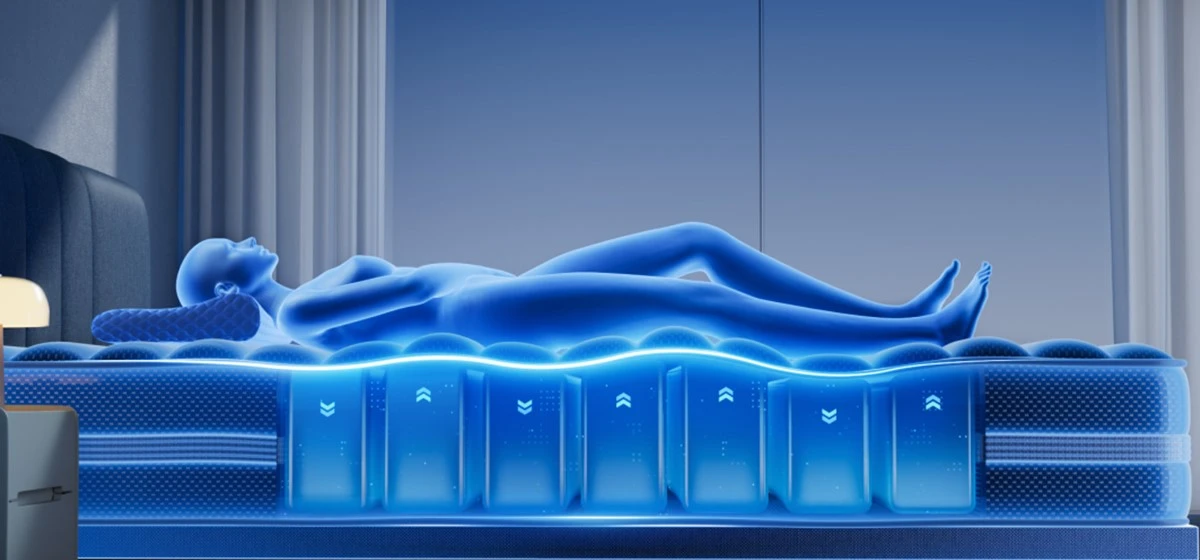
Your spine is not a straight line. It has three natural curves: cervical (neck), thoracic (upper back), and lumbar (lower back). When you sleep, your mattress should support these curves in a neutral alignment-meaning your spine maintains its natural shape without being forced into unnatural positions.
A mattress that is too soft allows your hips and shoulders to sink excessively, causing your spine to curve like a banana. A mattress that is too firm creates pressure points at the shoulders and hips, forcing your spine into an upward bow. Both scenarios lead to:
- Chronic back and neck pain
- Tossing and turning throughout the night
- Reduced deep sleep cycles
- Morning stiffness and fatigue
According to a 2023 study published in the Journal of Chiropractic Medicine, over 63% of adults report sleep-related discomfort linked to poor mattress support. Yet most consumers continue to buy mattresses based on marketing claims rather than biomechanical data.
Why Body Diversity Makes Standard Mattresses Obsolete
The problem is not just about firmness-it's about individuality. Consider these factors that vary dramatically from person to person:
| Factor | Impact on Sleep |
|---|---|
| Body weight | Determines how deeply you sink into the mattress |
| Shoulder width | Affects side-sleeping alignment |
| Hip-to-waist ratio | Influences lumbar support needs |
| Spinal curvature | Requires targeted support zones |
| Sleep position | Changes pressure distribution patterns |
A 120-pound side sleeper with narrow shoulders and a 250-pound back sleeper with broad shoulders have completely different support requirements. Yet both are often offered the same "medium-firm" mattress.
The Consequences of Misalignment
When your spine is not properly supported during sleep, the effects extend far beyond morning aches:
1. Muscular Compensation
Your muscles work overtime to stabilize your spine against an unsupportive surface. Instead of relaxing and recovering, they remain in a state of low-grade tension throughout the night.
2. Nerve Compression
Misalignment can compress spinal nerves, leading to tingling, numbness, or radiating pain in the arms and legs. This is particularly common in side sleepers with inadequate shoulder or hip support.
3. Reduced Circulation
Pressure points restrict blood flow, causing micro-awakenings you may not even remember. These disruptions fragment your sleep architecture, reducing time spent in restorative deep sleep and REM stages.
4. Long-Term Degeneration
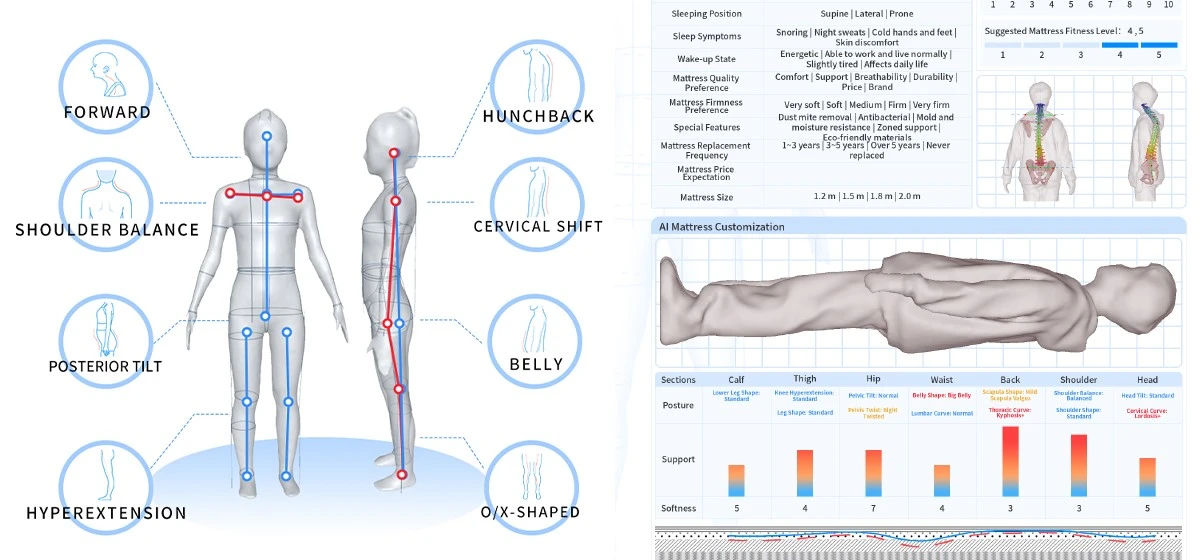
Over years, chronic sleep misalignment can contribute to accelerated disc degeneration, facet joint stress, and the development or worsening of conditions like scoliosis and kyphosis.

What Spinal Alignment Actually Looks Like
Ideal spinal alignment during sleep varies by position:
- Back sleepers: The mattress should support the natural lumbar curve without allowing the lower back to flatten or arch excessively. The head and neck should align with the thoracic spine.
- Side sleepers: The mattress must accommodate the width of the shoulders and hips while keeping the cervical spine aligned with the thoracic spine. A gap between the neck and pillow indicates insufficient support.
- Stomach sleepers: The rarest and most challenging position. The mattress should be firm enough to prevent the hips from sinking, which would hyperextend the lower back. (Stomach sleeping is generally discouraged for spinal health.)
Moving Beyond the "Lie-Down Test"
The traditional mattress selection process relies on subjective comfort perception-but comfort is not the same as support. A mattress can feel plush and comfortable while still allowing spinal misalignment. Conversely, a mattress that provides ideal support may initially feel unfamiliar to someone accustomed to poor alignment.
This is why data-driven assessment is no longer a luxury-it's a necessity. Without objective measurements of your body's unique dimensions, pressure points, and spinal curvature, you're essentially guessing.
The Xianku Difference
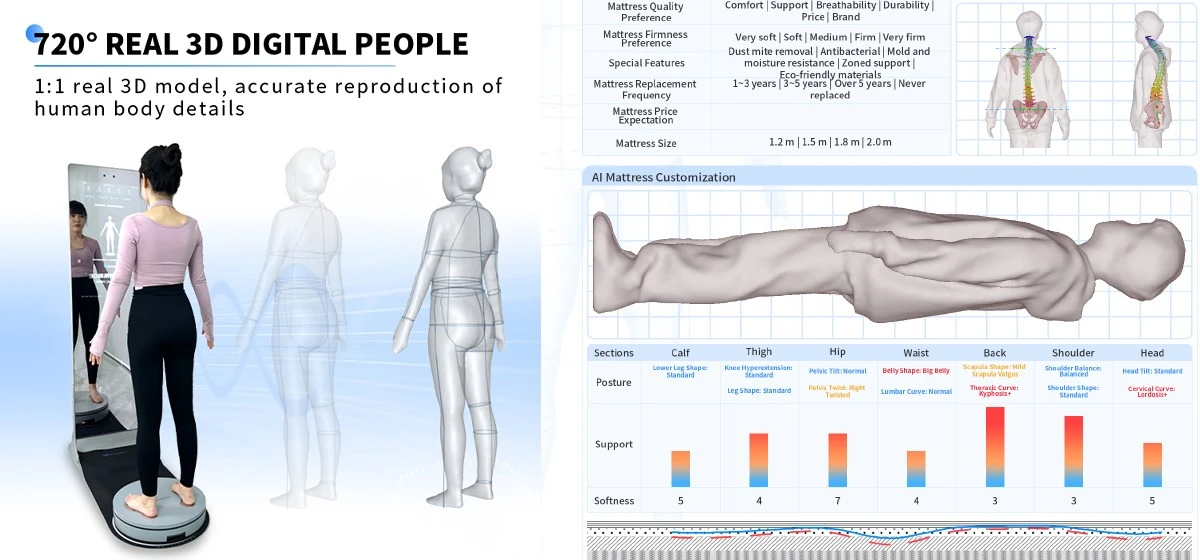
At Xianku, we believe your sleep surface should be as unique as your fingerprint. Our 3D Body Scanner captures over 128 data points across seven body segments-including detailed spinal curvature analysis, shoulder breadth, pelvic tilt, and body composition-to determine exactly how your body interacts with sleep surfaces.
We don't ask you to choose between soft, medium, or firm. Instead, our AI system calculates the precise support requirements for each region of your body, generating personalized recommendations for both mattress firmness zones and pillow height.
In our next article, we'll explore how 3D scanning technology is revolutionizing the bedding industry-moving from guesswork to precision. Because when it comes to your spine, "good enough" is never enough.
