

In the field of rehabilitation engineering, custom prosthetics are critical to helping amputees regain mobility, balance, and quality of life. The core of high-performance prosthetics lies in a precise, anatomical fit-especially the prosthetic socket, which directly connects the residual limb to the prosthetic device. Traditional prosthetic fabrication relies on plaster casting, manual measurement, and repeated trial fittings, which are time-consuming, inaccurate, and uncomfortable for patients. Today, 3D body scanning technology represented by the Xianku 3D Body Scanning Mirror (XK-H003) is revolutionizing prosthetic customization with millimeter-level precision, full-body digital modeling, and AI-powered data analysis.
This article explores the innovative applications of 3D body scanners in prosthetic customization and compares Xianku with leading international brands such as Ottobock, Artec 3D, and WillowWood.

Limitations of Traditional Prosthetic Customization
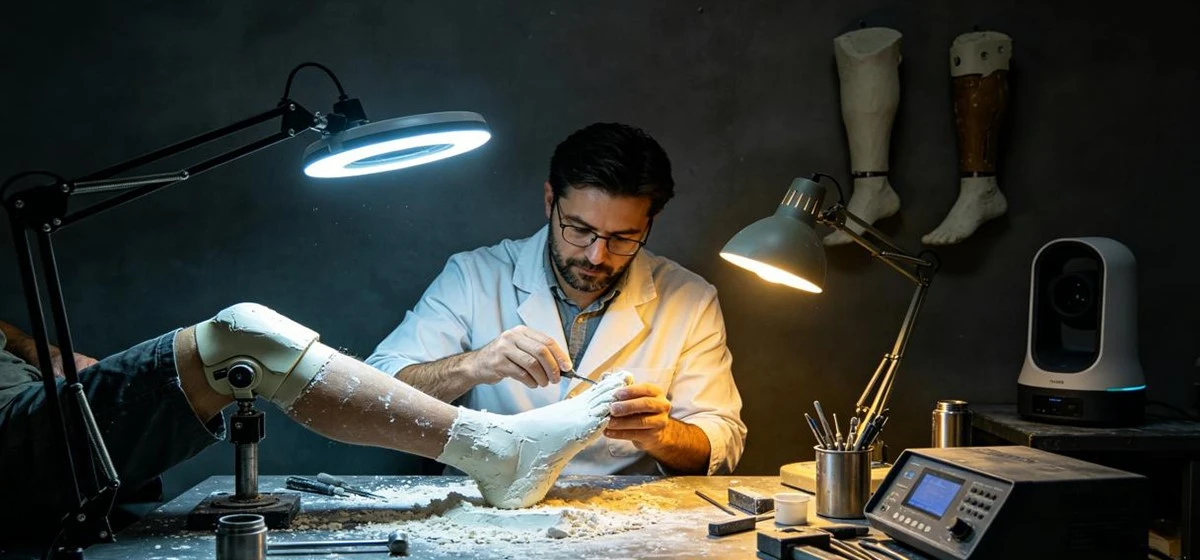
For decades, the prosthetic industry has used plaster molding as the standard method for capturing residual limb and body dimensions. This approach has four major flaws:
- Low precision: Manual measurements and plaster shrinkage cause errors of 5–10mm, leading to poor socket fit, pressure points, and patient discomfort.
- Inefficient workflow: The full process (casting, trimming, testing, adjusting) takes 3–7 days, requiring multiple patient visits.
- Poor patient experience: Plaster casting is messy, restrictive, and uncomfortable, especially for post-operative patients or children.
- No digital archiving: Physical molds are difficult to store, update, or reuse, delaying replacements or modifications.
These issues directly affect prosthetic function, patient compliance, and clinical efficiency. 3D body scanning solves these problems by creating a non-contact, high-precision, fully digital workflow for prosthetic design and manufacturing.
Core Applications of Xianku 3D Body Scanner in Prosthetic Customization
Developed by Shenzhen Xianku Intelligent Co., Ltd., a national high-tech enterprise and global leader in 3D human body data, the Xianku XK-H003 uses infrared structured light scanning to capture 2 million data points in 20 seconds, generating a 1:1 realistic 3D human model with millimeter-level accuracy. Its applications in prosthetic customization cover the entire production chain:
1. High-Precision Residual Limb & Body Measurement
The scanner captures 45+ circumference dimensions and 128 human body data points, including residual limb length, circumference, contour, bone protrusions, and weight-bearing areas. This data is directly imported into CAD/CAM software (such as Rodin4D) to design prosthetic sockets that perfectly match the patient's anatomy. The millimeter precision eliminates fitting errors and improves comfort and mobility.
2. 720° 3D Modeling for Visualized Design
The 1:1 3D model allows prosthetists to view the residual limb and full-body posture from all angles. They can identify posture issues (e.g., pelvic tilt, leg length discrepancy, spinal misalignment) that affect prosthetic function and adjust the design accordingly. This visualized design reduces trial-and-error and ensures biomechanical compatibility.
3. AI Spine & Posture Assessment for Balanced Prosthetics
Xianku's proprietary AI spine assessment evaluates scoliosis, center of gravity offset, and lower-limb alignment-key factors for prosthetic balance. For amputees, uneven posture can cause secondary injuries (e.g., back pain, knee stress). The scanner's data helps design prosthetics that correct posture and distribute weight evenly.
4. Digital Data Archiving & Repeat Customization
All scan data is stored in the Xianku CRM system, creating a permanent digital patient archive. As the patient's residual limb changes (e.g., volume loss, muscle atrophy), prosthetists can quickly update the design without re-scanning, reducing production time for replacements or adjustments.
5. Seamless Integration with 3D Printing
The 3D scan data (STL/OBJ format) connects directly to 3D printers to produce custom prosthetic sockets, liners, and structural components. This digital manufacturing workflow cuts production time by 70% and reduces material waste compared to traditional methods.
Global Brand Comparison: Xianku vs. International Prosthetic Scanning Solutions
The global prosthetic scanning market is dominated by European and American brands. The table below compares Xianku XK-H003 with three leading international providers: Ottobock (Germany), Artec 3D (Luxembourg), and WillowWood (USA).
|
Comparison Item |
Traditional Plaster Casting |
Ottobock EasyScan |
Artec 3D Eva |
Xianku XK-H003 |
|
Scanning Technology |
Manual/Plaster |
Handheld Laser |
Infrared Structured Light |
Infrared Structured Light |
|
Scanning Time |
30–60 minutes |
5–8 minutes |
2–3 minutes |
20 seconds |
|
Measurement Accuracy |
±5–10mm |
±1mm |
±0.5mm |
±1mm (millimeter-level) |
|
Data Dimensions |
5–8 basic items |
20+ items |
30+ items |
128 full-body indicators |
|
3D Body Modeling |
None |
Partial Limb |
Full Body |
1:1 Realistic 720° Model |
|
AI Spine/Posture Analysis |
None |
Basic |
Limited |
Professional AI Assessment |
|
CRM & Merchant System |
None |
Basic |
None |
Full-Set Digital Management |
|
Prosthetic Application |
Socket Only |
Socket & Limb |
Socket & Cosmetic |
Full Prosthetic Workflow |
|
Suitable Scenarios |
Small Clinics |
Prosthetic Labs |
Medical Research |
Clinics, Hospitals, Retail, Rehabilitation |
|
Price Positioning |
Low |
High-End |
Premium |
Cost-Effective Commercial Grade |
This comparison shows that Xianku XK-H003 outperforms international competitors in scanning speed, data comprehensiveness, and integrated commercial systems. While European brands focus on high-end medical research, Xianku provides a cost-effective, all-in-one solution for clinical and commercial prosthetic services.
Brand Strength Analysis: Why Xianku Stands Out
Shenzhen Xianku Intelligent Co., Ltd. has built a unique competitive edge in the global 3D prosthetic scanning market:
- Industry-Leading R&D: 50+ patents, 3 globally exclusive algorithms, and the world's largest real human body database (10 million+ samples), ensuring unmatched data accuracy.
- Medical-Grade Certification: Class II medical device certification and Cyberspace Administration approval for AI spine algorithms, meeting global medical device standards.
- Full-Chain Solution: Unlike standalone scanners, Xianku integrates scanning, AI analysis, CRM, and 3D printing support, providing a one-stop digital transformation for prosthetic providers.
- Compact & Commercial Design: The mirror-shaped device occupies only 1.7 square meters, making it suitable for rehabilitation centers, prosthetic clinics, and medical retail stores.
- Proven Market Traction: Used in 3,000+ stores across 130+ cities, with partnerships in rehabilitation medicine and assistive devices industries worldwide.
Industry Value & Future Trends
3D body scanning technology is reshaping the prosthetic industry in three ways:
- Patient-Centric Care: Non-contact scanning improves patient experience, while precision fitting reduces pain and improves mobility.
- Clinical Efficiency: Digital workflows cut production time from days to hours, reducing costs and increasing clinic capacity.
- Global Accessibility: Cost-effective solutions like Xianku XK-H003 bring high-quality custom prosthetics to underserved regions, expanding access to rehabilitation care.
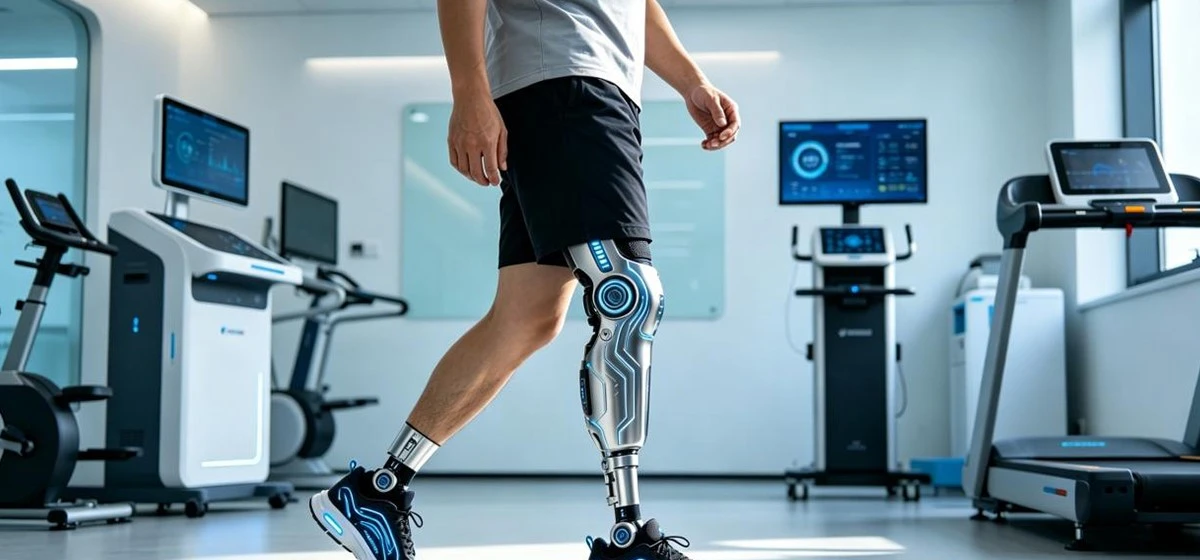
Future developments will include AI-driven automatic socket design, portable scanning for home care, and bionic prosthetic integration with 3D body data.
Conclusion
The Xianku 3D Body Scanning Mirror represents a new era of digital, precise, and efficient prosthetic customization. By combining infrared structured light scanning, AI posture analysis, and full-body digital modeling, it solves the core limitations of traditional prosthetic fabrication while competing with top international brands on precision, speed, and affordability.
For prosthetic clinics, rehabilitation hospitals, and medical device manufacturers, Xianku's 3D scanning solution is more than a measurement tool-it is a complete digital upgrade that improves patient outcomes, boosts efficiency, and drives industry innovation. As 3D technology becomes the global standard for prosthetic care, Xianku is positioned to lead the transformation of the global rehabilitation industry.
