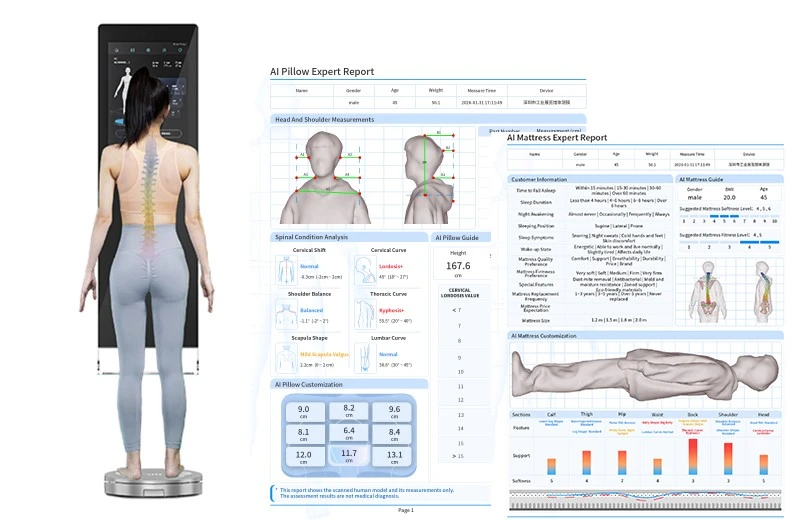
The global sleep industry is undergoing a structural transformation. What was once driven by comfort claims and material innovation is now guided by data, biomechanics, and intelligent systems. For operators, retailers, and product developers, the conversation has shifted from "soft or firm" to measurable outcomes, spinal alignment, recovery optimization, and long-term wellness.
At the center of this shift is a new strategic framework: AI-Powered Health Sleep Solutions.
For industry leaders, this is no longer a marketing phrase. It represents an operational model-integrating hardware, software, biometrics, and service design into a cohesive ecosystem. For emerging brands, it is an opportunity to bypass traditional competition and build differentiation through intelligent systems rather than scale alone.
This article explores how established global brands are deploying AI, how rising players are leveraging it to gain market share, and what customers truly expect from modern AI-Powered Health Sleep Solutions.

The Evolution of AI in Sleep Technology
AI in sleep has moved beyond simple sleep tracking. The first wave focused on monitoring-wearables measuring heart rate, motion, and REM cycles. The second wave introduced adaptive surfaces and connected mattresses. Today, the third wave is about integration: linking body assessment, environmental data, product configuration, and long-term outcome tracking into unified AI-Powered Health Sleep Solutions.
The strategic shift can be summarized below:
| Phase | Core Capability | Industry Focus | Business Impact |
|---|---|---|---|
| Sleep Tracking Era | Monitoring sleep stages | Consumer awareness | Engagement & app ecosystems |
| Smart Bedding Era | Adjustable firmness, temperature control | Hardware differentiation | Premium pricing |
| Intelligent Ecosystem Era | Data integration + biomechanical modeling | Health optimization | Service-based revenue models |
Operators who understand this evolution recognize that the real value lies not in the device itself, but in the system architecture behind AI-Powered Health Sleep Solutions.

How Leading Global Brands Apply AI
Several international brands have strategically integrated AI to strengthen product authority and service depth.
1. Sleep Number: Data-Driven Personalization
Sleep Number introduced adjustable smart beds with biometric sensors capable of tracking sleep metrics and adapting firmness throughout the night. Their AI engine analyzes longitudinal data to suggest individualized settings.
Key strategic strengths:
- Real-time pressure adjustment
- Long-term sleep score tracking
- Subscription-based ecosystem expansion
Their approach demonstrates that AI-Powered Health Sleep Solutions can extend beyond hardware into recurring digital engagement.
2. Tempur-Pedic & Smart Base Integration
While traditionally known for proprietary foam technology, Tempur-Pedic has integrated smart bases with sleep tracking and adjustable support features. AI enables gradual calibration of sleep positions based on user patterns.
The competitive advantage here lies in combining:
- Material science credibility
- Smart hardware integration
- Data-informed comfort optimization
This hybrid model shows how established brands evolve toward AI-Powered Health Sleep Solutions without abandoning their legacy strengths.
3. Eight Sleep: Thermal AI Optimization
Eight Sleep focuses on temperature regulation driven by predictive AI algorithms. By analyzing biometric signals, the system adjusts surface temperature dynamically across sleep phases.
Key differentiators include:
- Predictive temperature algorithms
- Integrated cardiovascular monitoring
- Performance recovery positioning
This reflects a performance-oriented version of AI-Powered Health Sleep Solutions, targeting athletes and bio-optimization consumers.
Emerging Brands Leveraging AI to Disrupt
Smaller brands are not competing on retail footprint or advertising scale. Instead, they embed AI deeper into diagnostics and personalization.
These emerging players focus on three pillars:
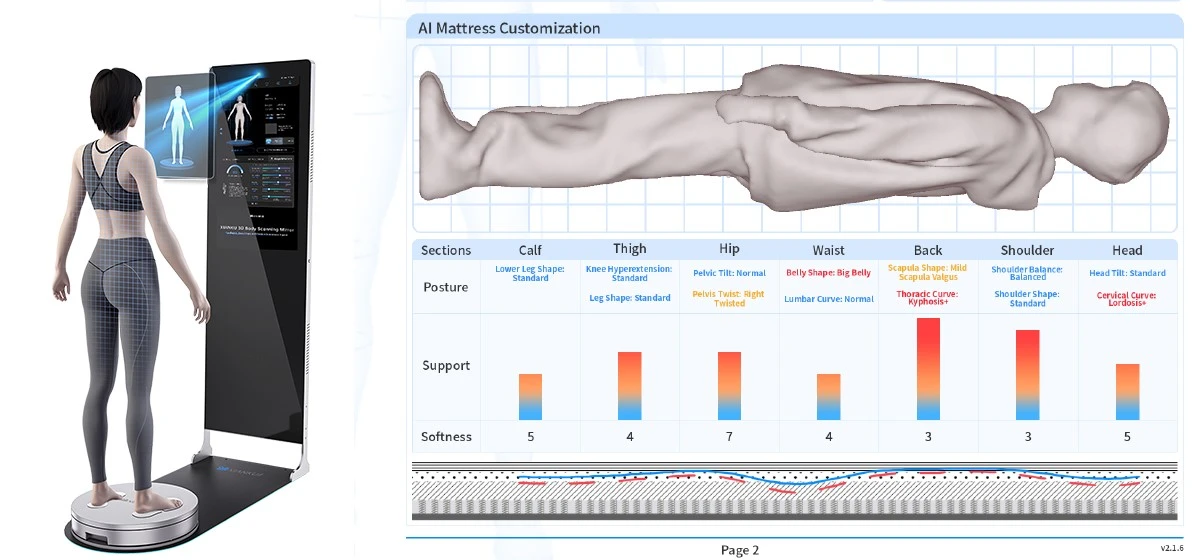
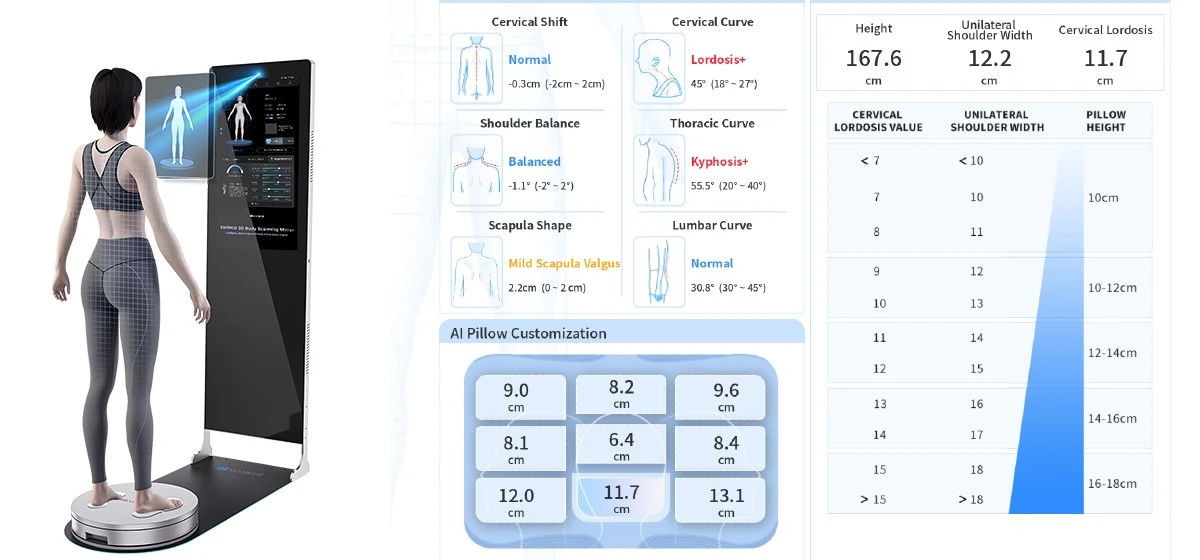
- 3D body scanning and biomechanical modeling
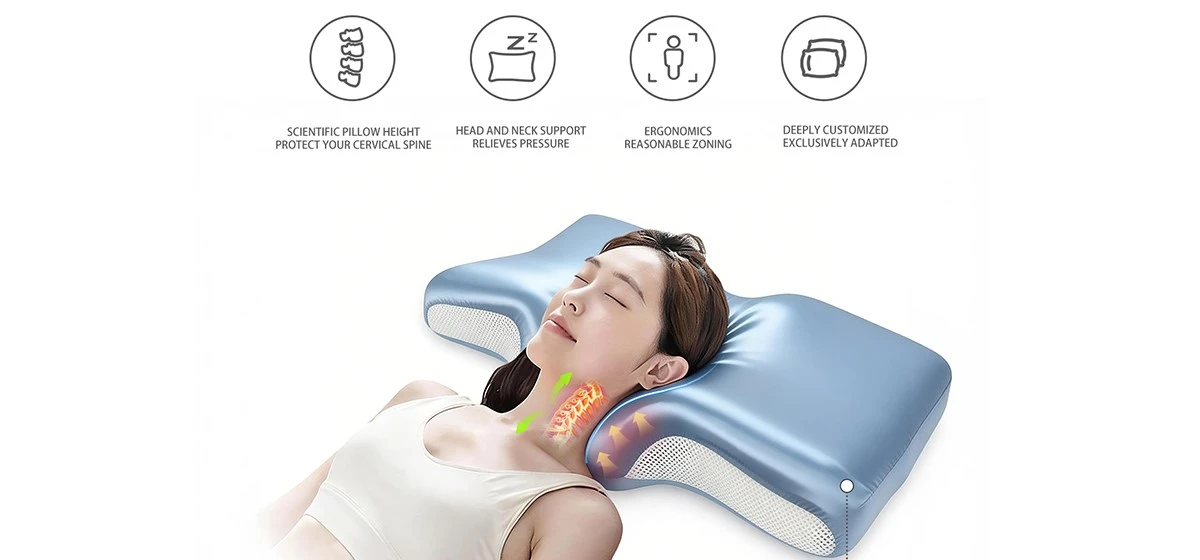
- AI-based mattress and pillow matching systems
- Digital posture and spinal alignment analysis
By integrating body data before product recommendation, they transform retail into a consultative health experience. This approach elevates AI-Powered Health Sleep Solutions from reactive comfort adjustment to proactive body alignment strategy.
For operators, this model significantly increases perceived authority and conversion rates.
Comparative Framework: Traditional vs AI-Driven Sleep Systems
| Dimension | Traditional Model | AI-Powered Health Sleep Solutions |
|---|---|---|
| Product Selection | Trial-based showroom testing | Data-driven biomechanical matching |
| Personalization | Limited firmness options | Algorithmic customization |
| Customer Retention | One-time purchase | Ongoing data engagement |
| Brand Positioning | Comfort & luxury | Health & performance science |
| Revenue Structure | Hardware-focused | Hardware + digital service ecosystem |
The table highlights a critical insight: AI-Powered Health Sleep Solutions redefine the revenue model, not just the product feature list.
What Customers Actually Want
Through retailer feedback and evolving purchasing behavior, several consistent expectations have emerged:
- Evidence-based product matching
- Clear spinal alignment explanation
- Measurable sleep improvement indicators
- Transparent personalization process
- Long-term sleep health support
Consumers are no longer satisfied with comfort claims alone. They expect proof. They expect explanation. They expect systems.
This is where well-designed AI-Powered Health Sleep Solutions create competitive insulation.
Key Components of Effective AI Integration
Not all AI implementations create value. For industry operators evaluating technology partnerships, the following structural components are essential:
| Component | Operational Role | Business Benefit |
|---|---|---|
| Body Data Acquisition | 3D scanning or pressure mapping | Accurate personalization |
| Algorithmic Matching Engine | Converts data to product specs | Reduced return rate |
| Biomechanical Modeling | Spinal alignment simulation | Medical-grade positioning |
| CRM Integration | Data continuity | Customer lifetime value growth |
| Outcome Tracking Dashboard | Long-term performance consideration | Service credibility |
Without this integration, AI risks becoming superficial marketing rather than functional infrastructure within AI-Powered Health Sleep Solutions.
Product Upgrade vs Service Upgrade
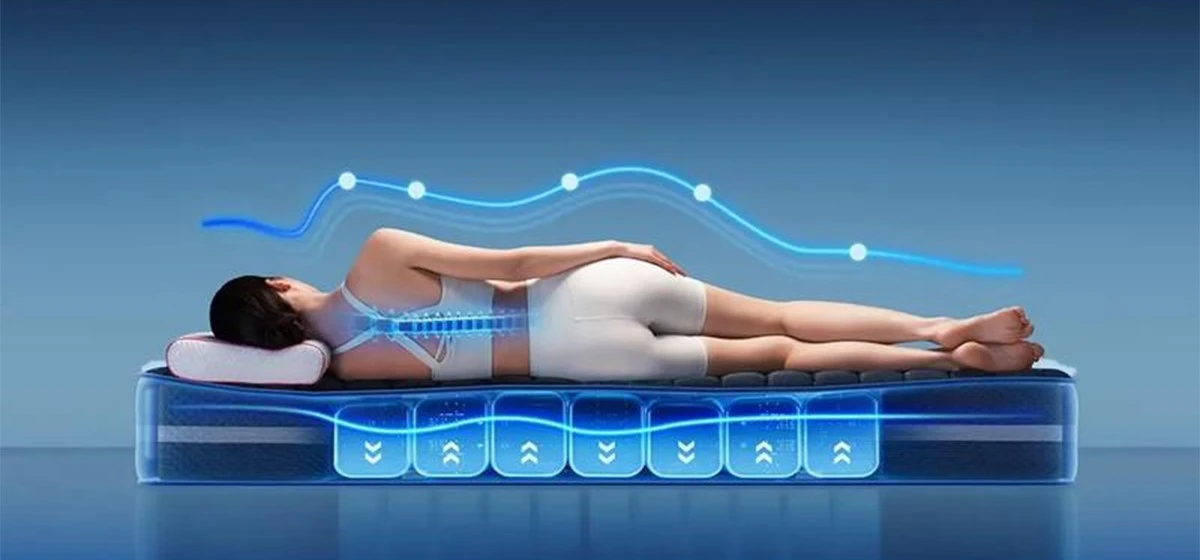
Many brands mistakenly focus AI only on product enhancement-smarter mattresses, responsive pillows, connected bases.
However, the larger opportunity lies in service upgrade.
Product Upgrade:
- Smart adjustment
- Embedded sensors
- App connectivity
Service Upgrade:
- Pre-purchase body assessment
- AI-guided recommendation consultation
- Post-purchase alignment re-evaluation
- Digital sleep health reporting
The brands that fully deploy AI-Powered Health Sleep Solutions understand that hardware is merely the delivery mechanism. The true value lies in structured, measurable, repeatable health positioning.
Risk Factors and Implementation Challenges
For industry leaders considering AI integration, several practical considerations must be addressed:
- Data privacy compliance (GDPR and regional standards)
- Staff training for consultative selling
- Integration with existing ERP/CRM systems
- Hardware reliability and calibration standards
- Clinical validation of algorithm logic
EEAT principles-Experience, Expertise, Authoritativeness, Trustworthiness-are essential. Brands must ensure that their version of AI-Powered Health Sleep Solutions is backed by transparent methodology, validated data models, and professional endorsement.
Without credibility, AI becomes noise.
Strategic Outlook for Industry Operators
The bedding industry is shifting from transactional retail to health-centered ecosystems. Operators who integrate assessment tools, biomechanical intelligence, and AI-based matching systems can achieve:
- Higher average order value
- Reduced return rates
- Increased repeat engagement
- Differentiated brand authority
Future growth will not belong to brands that simply manufacture better foam or springs. It will belong to those who design structured, data-backed AI-Powered Health Sleep Solutions aligned with measurable outcomes.
Final Perspective: Beyond Technology
AI alone is not the solution.
A mattress with sensors is not transformation.
An app without diagnostic logic is not differentiation.
True AI-Powered Health Sleep Solutions require:
- Accurate body assessment
- Algorithmic intelligence
- Product engineering alignment
- Consultative service workflow
- Long-term customer engagement
For industry operators, the question is no longer whether AI will shape the future of sleep. The question is whether your brand will architect a system that integrates AI into meaningful health outcomes.
The market is moving from comfort to clinical credibility.
From marketing claims to measurable alignment.
From product sales to performance solutions.
Those who understand how to design and deploy authentic AI-Powered Health Sleep Solutions will define the next decade of the global sleep industry.