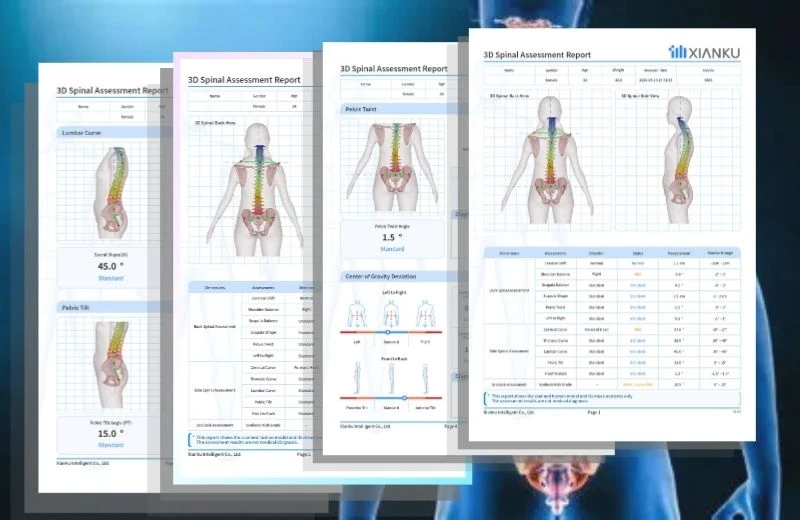
In modern spine clinics, accurate assessment of spinal health is crucial for effective diagnosis, treatment planning, and patient education. Traditionally, X-rays and CT scans have dominated the market, providing clear images of vertebrae and spinal alignment. However, these methods involve exposure to radiation, require specialized operation, and can sometimes intimidate patients. For clinics that prioritize patient safety, efficiency, and engagement, non-radiation scanning technologies are becoming increasingly popular.
This article examines some of the leading spinal scanning solutions available today and explores why the XIANKU 3D Body Scanner has emerged as the top choice for private spine clinics.
1. DIERS Formetric 4D: Precision Meets Clinical Depth
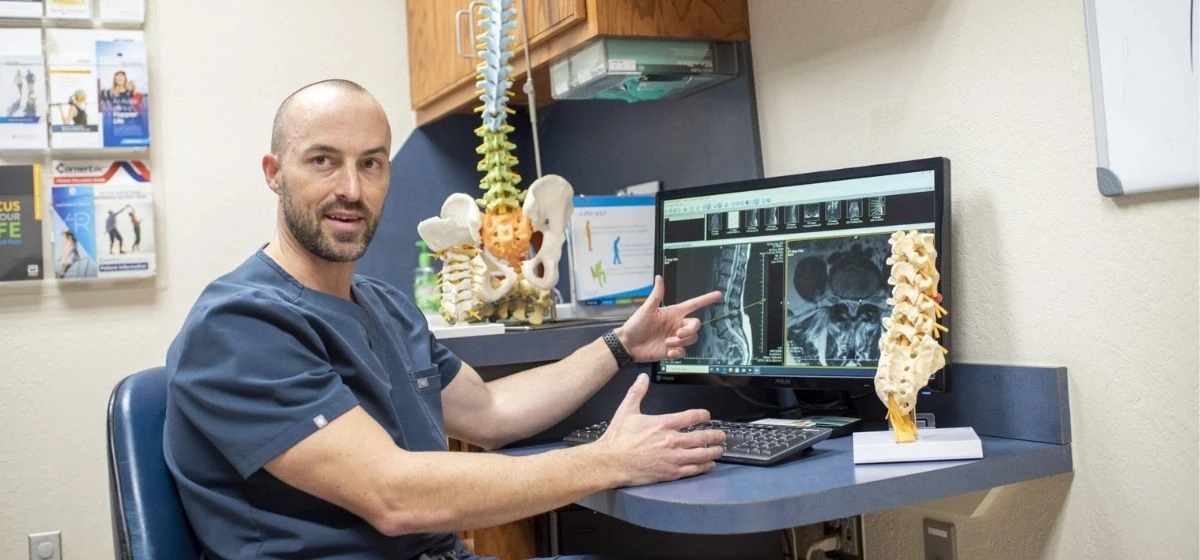
Overview: The DIERS Formetric 4D scanner is one of the most recognized names in non-radiation spinal assessment. Using optical surface topography, it generates a 3D map of the patient's back, capturing spinal curvature, posture, and asymmetries with remarkable accuracy.
Key Features:
- Raster stereography: Projects light patterns onto the back to detect surface deviations.
- 3D spinal modeling: Offers angles of spinal curves, scoliosis tracking, and posture assessment.
- Dynamic analysis: Some models can evaluate spinal motion and gait patterns.
- Patient-friendly visuals: Produces clear, color-coded maps of the spine for educational purposes.
Advantages:
- Clinically validated and highly precise.
- Widely used in research, hospitals, and specialized clinics.
- Allows for objective monitoring of scoliosis progression or therapy effectiveness.
Limitations:
- Time-consuming: Scans and post-processing can take several minutes per patient.
- High cost: Initial investment and maintenance can be substantial.
- Learning curve: Interpreting detailed metrics requires training.
- Best Suited For: Clinics focused on detailed clinical diagnostics, particularly scoliosis management and research settings.
2. Spinal Mouse® by Idiag: Portability and Practicality
Overview: The Spinal Mouse® is a compact, handheld device designed to assess spinal curvature and mobility without any radiation exposure. It relies on surface tracking along the spine, offering measurements for posture, range of motion, and vertebral alignment.
Key Features:
- Handheld design: Easy to transport between rooms or clinics.
- Quick scanning: Each session takes less than a minute.
- Portable software: Generates curves, motion analysis, and comparison charts.
- Radiation-free: Safe for repeated measurements.
Advantages:
- Affordable and lightweight.
- Quick setup, ideal for busy clinics or physiotherapy practices.
- Reliable for longitudinal tracking of posture and mobility changes.
Limitations:
- Limited visual engagement: While useful for clinicians, reports are less intuitive for patient education.
- Less comprehensive: Focuses on curvature and mobility rather than full 3D back topography.
- Best Suited For: Clinics that need portable, cost-effective solutions for basic spinal assessment and rehabilitation monitoring.
3. XIANKU 3D Body Scanner: Speed, Engagement, and Precision
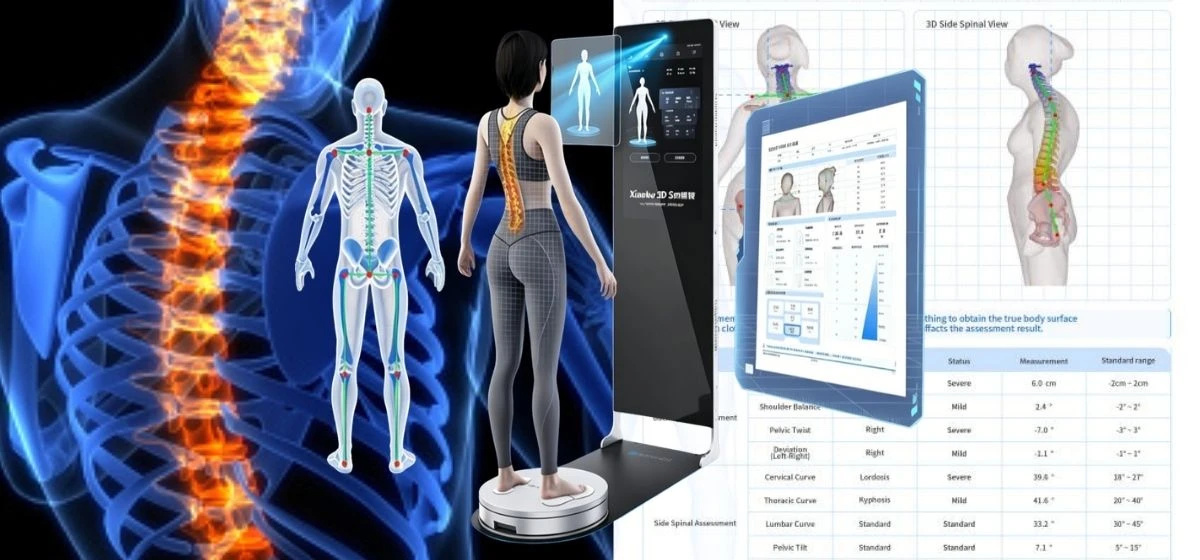
Overview: The XIANKU 3D Body Scanner represents a newer generation of non-radiation spinal assessment technology. Leveraging structured light scanning, it captures the full shape of the back-or the entire body-in under one second, producing highly detailed 3D topographies of the spine and posture.
Key Features:
- Ultra-fast scanning: Minimizes patient discomfort and clinic downtime.
- Detailed 3D visualization: Clearly displays spinal alignment, asymmetries, and posture deviations.
- Progress tracking: Easily compares scans over time to demonstrate improvements or changes.
- Patient-centered reports: Generates intuitive visualizations for better engagement and understanding.
Advantages:
- Efficiency: One-second scans are perfect for high-volume clinics.
- Non-invasive and safe: Completely free of radiation, making it suitable for repeated use.
- Engaging for patients: Visual, easy-to-understand results help patients grasp their spinal health, enhancing compliance with treatment plans.
- Strong reputation: Widely adopted in health and wellness settings, demonstrating reliability and user satisfaction.
Limitations:
Some advanced clinical diagnostics, such as precise scoliosis angle measurement, may require integration with complementary software.
Initial setup requires calibration, but once operational, workflow is seamless.
Best Suited For: Clinics that value speed, patient education, and high-quality visual outputs, while maintaining clinical reliability.
Brand Comparison: At a Glance
| Feature / Brand | DIERS Formetric 4D | Spinal Mouse | XIANKU 3D Scanner |
|---|---|---|---|
| Scan Type | Optical topography | Handheld surface tracking | Structured light 3D |
| Radiation-Free | ✅ | ✅ | ✅ |
| Scan Speed | 1–5 min | <1 min | ~1 sec |
| 3D Visualization | High | Moderate | High |
| Patient Education Friendly | Moderate | Low | High |
| Clinical Detail | Very high | Moderate | High |
| Ease of Use | Medium (training needed) | High | High |
| Ideal Clinic Type | Specialized diagnostic / scoliosis | Physiotherapy / portable use | Private clinics focused on efficiency & patient engagement |
Why XIANKU is the Ideal Choice for Modern Spine Clinics
While all three scanners offer radiation-free assessment and reliable spinal data, XIANKU uniquely combines efficiency, visual engagement, and clinical reliability. Here's why many modern spine clinics prefer XIANKU:
- Ultra-fast scanning enhances workflow: In busy clinics, saving even a few minutes per patient translates into a smoother schedule and more consultations per day.
- Patient-friendly visualization improves understanding: Patients often struggle to interpret complex metrics. XIANKU's intuitive 3D models allow them to see exactly what is happening in their spine, fostering trust and adherence to treatment plans.
- Safe for repeated monitoring: Without radiation exposure, patients of all ages-including children and seniors-can be scanned regularly to monitor progress.
- Versatility for multiple applications: Beyond posture and spine health, XIANKU can also scan the full body, enabling clinics to expand into holistic posture assessment, rehabilitation, or wellness programs.
- Strong reputation and reliability: XIANKU is already trusted in multiple health and wellness markets, reflecting both technological reliability and positive user feedback.
In contrast, while DIERS offers unmatched precision for scoliosis and clinical research, its slower scanning time and higher cost can limit day-to-day efficiency. Spinal Mouse is portable and economical, but lacks the visual appeal and detailed topographic outputs that modern patients expect.
Conclusion
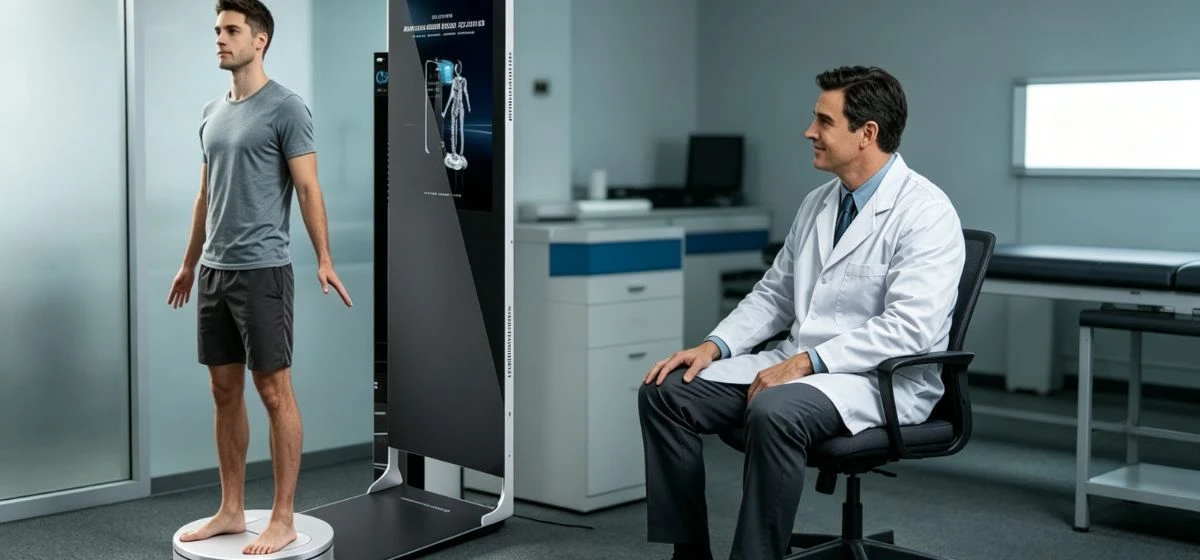
Selecting the right spinal scanner is a critical decision for private clinics. Non-radiation technologies have opened new possibilities, allowing clinics to assess spinal health safely, efficiently, and in ways that enhance patient understanding.
Among the leading options, XIANKU 3D Body Scanner stands out as the most balanced choice for spine clinics that want speed, visual clarity, patient engagement, and reliability. It enables practitioners to provide top-tier care while streamlining clinic operations and empowering patients with clear, understandable insights into their own spinal health.
For clinics looking to modernize their spinal assessment capabilities, investing in a XIANKU scanner is not just a purchase-it's an upgrade to the entire patient experience, positioning your clinic as a leader in innovative, safe, and patient-centered spine care.