The Most Memorable Hotel Stay Had Nothing to Do With Location
Two months ago, I traveled to an ancient city famous for its centuries-old architecture and bustling night markets.
When choosing a hotel, I noticed something unusual.
The property wasn't located in the best area.
It wasn't the newest hotel either.
Its rooms looked comfortable but not exceptionally luxurious.
Yet one thing stood out:
Its online reviews were nearly perfect when it came to sleep quality.

Guest after guest wrote comments like:
"Best sleep I've had in years."
"The pillow felt made just for me."
"I woke up without neck pain for the first time during a business trip."
Curiosity won.
I booked the room.
Upon arrival, while checking in, I asked the front desk:
"Why are your sleep scores so high? What kind of pillows do you use? Are they extra high? Extra soft?"
The receptionist smiled mysteriously.
Then she replied:
"Actually, every room has a different pillow."
That answer immediately caught my attention.
A few moments later, the hotel owner walked over and joined the conversation.
After nearly ten years in the hospitality business, he revealed what he called his biggest headache:
"One bed and one pillow can never satisfy everyone."
- Some guests complained pillows were too high.
- Others said they were too flat.
- Some suffered from neck stiffness.
- Others experienced shoulder discomfort.
No matter how many pillow options the hotel provided, complaints kept appearing in reviews.
The owner explained:
"You can put two pillows, four pillows, or an entire pillow menu in the room. Someone will still be unhappy."
Then everything changed.
Today, when guests book a room, they receive a text message before arrival:
'Spend two minutes at our lobby body-scanning station and we'll prepare a personalized pillow before you enter your room.'
Intrigued, I followed the process.
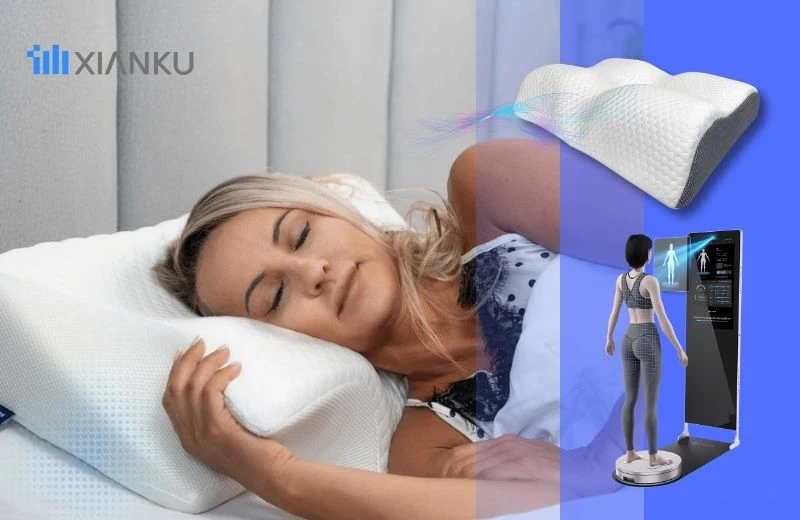
In the hotel lobby stood a futuristic body-scanning mirror.
Guests simply stepped onto a rotating platform.
Within seconds, the system analyzed their posture, body dimensions, shoulder width, neck alignment, and spinal characteristics.
By the time guests reached their room, a personalized pillow had already been prepared.
Not a standard pillow.
Not a luxury pillow.
A pillow designed specifically for them.
The hotel owner laughed and said:
"The amazing thing is that once guests sleep well, they stop noticing our location isn't perfect."
And just like that, I was introduced to a hospitality innovation that may redefine guest experience in the coming decade:
3D Printed Custom Pillows
The Most Expensive Hotel Problem Isn't Decoration-It's Sleep
The hotel owner's insight reflects a growing reality across the global hospitality industry.
In 2026, competition among hotels, resorts, and vacation rentals has reached unprecedented levels.
Most operators continue investing heavily in:
- New lobby designs
- Luxury furniture
- Smart room controls
- Decorative upgrades
- Social-media-friendly aesthetics
Yet many overlook the one experience guests remember most:
Sleep.
Think about it.
A guest may spend:
- 10 minutes admiring the lobby
- 5 minutes checking in
- 30 minutes enjoying hotel facilities
But they spend:
6–9 hours sleeping.
If that experience fails, everything else becomes secondary.
Poor sleep often leads to reviews mentioning:
- Neck pain
- Shoulder stiffness
- Poor mattress comfort
- Restlessness
- Fatigue the next morning
And these comments directly impact:
- OTA rankings
- Booking conversion rates
- Premium room pricing
- Guest retention
The owner summarized it perfectly:
"You can decorate a hotel beautifully, but if guests don't sleep well, they'll leave a bad review. Let them sleep well, and they'll forgive almost everything else."
In today's hospitality economy, investing in digital sleep personalization often generates a significantly higher ROI than another round of cosmetic renovations.

The Technology Behind the Experience: XIANKU's AI-Powered Body Scanning Ecosystem
The real magic begins long before the guest falls asleep.
Behind the lobby experience lies a sophisticated technology platform developed by XIANKU Intelligence.
Step 1: Non-Radiation 3D Body Scanning
The hotel deploys a XIANKU 3D Body Scanner (Body Scanning Mirror) in the lobby.
Using:
- Non-radiation 3D structured light scan technology
- Infrared imaging
- AI skeletal reconstruction
- Millimeter-level measurement accuracy
the system rapidly creates:
1:1 Realistic 3D human body models
Unlike traditional questionnaires or pillow preference forms, the scanner captures objective physical data directly.
Step 2: AI Sleep Assessment
Within approximately 20 seconds, the scanner analyzes:
- Head dimensions
- Neck curvature
- Shoulder width
- Shoulder balance
- Cervical alignment
- Upper spinal posture
- Center-of-gravity distribution
The platform automatically collects and processes:
45 body circumference data points
combined with advanced:
- AI spinal evaluation
- Postural assessment
- Skeletal alignment analysis
This creates a detailed sleep-support profile unique to each guest.
Step 3: AI Intelligent Recommendation System
After body analysis, XIANKU's:
AI intelligent recommendation system
calculates the ideal pillow configuration.
The algorithm determines:
- Pillow height
- Support density
- Cervical support zones
- Shoulder relief areas
- Side-sleeping optimization
- Back-sleeping optimization
The result is a nine-zone customized support blueprint specifically matched to the guest's anatomy.
Step 4: 3D Printed Custom Pillow Manufacturing
The generated data is transmitted directly into a digital production workflow.
Using additive manufacturing technologies, a personalized pillow is produced with support structures precisely tuned to the user's measurements.
This transforms sleep products from:
One-size-fits-all
into
One-person-one-pillow.
Step 5: Cloud-Based Customer Asset Management
Perhaps the most exciting innovation lies beyond a single hotel stay.
All measurement data is stored securely within a:
3D Body Measurement CRM system
and cloud-based customer profile.
Once scanned, guests no longer need to repeat the process.
Imagine arriving at another property within the same hotel group.
Before check-in, the system already knows:
- Your preferred pillow profile
- Your neck support requirements
- Your shoulder geometry
- Your sleep posture preferences
Your customized pillow is waiting in the room before you arrive.
This transforms guest data into one of the hospitality industry's most valuable long-term assets.
Traditional Hotel Pillow Programs vs AI-Driven 3D Printed Custom Pillows
| Dimension | Traditional Double-Pillow Setup | XIANKU AI-Driven 3D Printed Custom Pillow |
|---|---|---|
| OTA Review Conversion | Highly inconsistent | Consistently optimized guest comfort |
| Neck Fatigue Relief | Generic support | Personalized cervical support |
| Cross-Property Data Integration | Not available | Cloud-based guest profile synchronization |
| Return on Investment | Limited differentiation | High-value premium sleep experience |
| Customer Loyalty & Repeat Stays | Moderate | Strong emotional attachment and retention |
The difference is no longer incremental.
It is transformational.

Beyond Boutique Hotels: A Massive Market Opportunity
The implications extend far beyond a single independent hotel.
Luxury Hotel Groups
Premium hospitality brands can establish proprietary sleep ecosystems that differentiate them globally.
Wellness Resorts
Personalized recovery and restorative sleep become core wellness offerings.
High-End Maternity & Postnatal Centers
Customized support pillows can improve comfort during critical recovery periods.
Smart Apartments and Long-Stay Residences
Residents can benefit from persistent sleep profiles and ongoing comfort optimization.
Corporate Executive Housing
Frequent travelers gain consistency across cities and countries.
Wherever sleep quality influences customer satisfaction, this model creates measurable value.
The Future of Hospitality Will Be Measured in Better Sleep
The hospitality industry has spent decades competing through:
- Architecture
- Location
- Décor
- Amenities
But a new era is emerging.
Guests increasingly value experiences that improve their health and well-being.
And nothing impacts well-being more consistently than sleep.
Hotels that embrace AI-driven personalization are no longer selling rooms.
They are selling recovery.
They are selling comfort.
They are selling better mornings.
The winners of the next hospitality cycle will not necessarily be the hotels with the largest lobbies or the most expensive chandeliers.
They will be the hotels that understand human data.
They will be the hotels that turn technology into comfort.
They will be the hotels that transform sleep into a competitive advantage.
Frequently Asked Questions (FAQ)
Q1: How does 3D body scanning help hotels lower turnover and increase premium room rates?
By improving sleep quality and guest satisfaction, hotels can generate stronger OTA reviews, increase repeat bookings, reduce complaint handling costs, and justify higher room pricing through differentiated wellness experiences.
Q2: Can personalized pillows really improve guest reviews?
Yes. Sleep quality directly influences guest perception of comfort, recovery, and overall stay satisfaction. Personalized support can significantly reduce complaints related to neck pain, shoulder tension, and poor sleep.
Q3: How does the 3D Body Measurement CRM system create long-term value for hotel groups?
Once guests are scanned, their body and sleep-support profiles can be synchronized across all participating properties, allowing seamless personalized service, stronger brand loyalty, and highly differentiated guest experiences.