Not long ago, Instagram introduced "Your Algo," a feature that gives users greater control over the algorithm shaping their content recommendations. Instead of serving the same content to millions of people, platforms are increasingly learning what makes each individual unique.
The idea behind "Your Algo" is simple:
Your digital experience should reflect who you are-not who everyone else is.

Every click, every like, every search, and every interaction teaches the algorithm something new. The result is a personalized digital world where no two users experience exactly the same feed.
But this shift isn't just changing social media.
It's changing consumer expectations.
Today's consumers no longer want products designed for the average person. They expect products, services, and experiences that understand their individual preferences, habits, and lifestyles.
The era of mass production is gradually giving way to the era of mass personalization.
And one of the industries undergoing the most significant transformation may be footwear.
If Your Feed Is Personalized, Why Aren't Your Shoes?
Streaming platforms recommend movies you'll probably enjoy.
Music apps build playlists around your listening habits.
AI assistants generate responses based on your questions.
Even online shopping platforms display products uniquely selected for you.
Digital technology has taught consumers to expect personalization everywhere.
Yet when it comes to one of the most important products we use every day, the experience remains surprisingly unchanged.
Walk into almost any shoe store, and you'll still hear the same question:
"What size do you wear?"
For decades, shoe size has been treated as the most important measurement.
But shoe size tells only a small part of the story.
Human feet are incredibly unique.
No two people have exactly the same feet.
Even your own left and right foot are rarely identical.
They differ in:
- Foot length
- Foot width
- Arch height
- Heel shape
- Instep height
- Pressure distribution
- Walking mechanics
Yet billions of shoes continue to be manufactured according to standardized sizing systems developed during the industrial era.
In a world driven by personalized algorithms, standardized footwear suddenly feels outdated.
The Next Generation of Personalization Isn't Digital-It's Physical
The first wave of AI transformed digital experiences.
Algorithms learned what we wanted to watch, read, and buy.
The next wave of AI is beginning to transform the physical world.
Instead of asking:
"What content do you like?"
Technology is asking:
"What does your body actually need?"
Healthcare is becoming personalized.
Fitness is becoming personalized.
Nutrition is becoming personalized.
Now, footwear is following the same path.
The future of shoes is no longer about producing millions of identical products.
It's about producing millions of different products-efficiently.
Every Personalized Product Starts with Data
Just as recommendation algorithms rely on user data, personalized footwear relies on body data.
Without accurate information, true personalization is impossible.
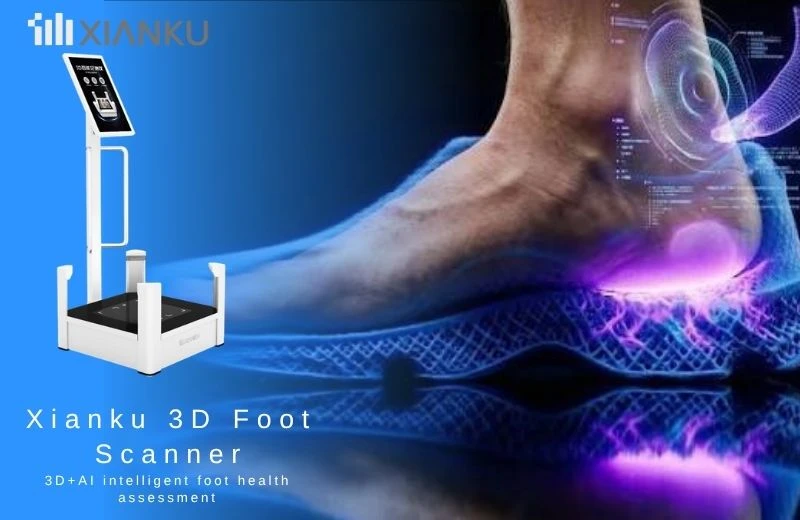
This is where the 3D Foot Scanner becomes the foundation of the entire process.
Rather than recording only a shoe size, a 3D Foot Scanner captures a complete digital model of the foot within seconds.
Advanced systems can analyze more than thirty key foot parameters, including:
- Foot dimensions
- Arch characteristics
- Heel alignment
- Foot symmetry
- Pressure distribution
- Biomechanical features
Instead of guessing how a shoe should fit, manufacturers can design products based on precise digital measurements.
Every scan creates a unique digital identity for every foot.
Just as every Instagram feed is different, every foot profile is different.

AI Turns Foot Data into Personalized Design
Collecting data is only the beginning.
Artificial intelligence transforms raw measurements into actionable insights.
Using digital foot models, AI can automatically analyze foot structure and recommend optimized support solutions.
Within seconds, algorithms can generate customized designs that previously required experienced technicians and lengthy manual work.
The process becomes faster, more consistent, and significantly more scalable.
Rather than replacing human expertise, AI allows personalized design to reach far more people than traditional methods ever could.
3D Printing Makes Mass Personalization Possible
For many years, customized footwear was considered a luxury.
Every pair required manual measurements, handcrafted adjustments, and labor-intensive manufacturing.
The result was excellent personalization-but poor scalability.
Today, 3D printing is changing that equation.
Instead of producing thousands of identical insoles, manufacturers can produce thousands of completely different insoles with nearly the same production workflow.
Each product can be individually optimized while maintaining manufacturing efficiency.
This represents one of the biggest shifts in modern footwear manufacturing.
Customization is no longer the opposite of scale.
Customization has become scalable.
Beyond Comfort: Personalizing Both Function and Identity
The value of 3D printing extends beyond biomechanics.
Inside the shoe, personalization focuses on health and performance.
Customized 3D printed insoles can be designed to match each individual's foot structure, helping improve comfort, support, pressure distribution, and overall walking experience.
Outside the shoe, personalization becomes an expression of identity.
Consumers increasingly want footwear that reflects who they are.
With digital manufacturing, brands can offer customized:
- Colors
- Patterns
- Logos
- Team graphics
- Brand collaborations
- Limited-edition designs
- Personal names or initials
The inside of the shoe supports your body.
The outside of the shoe expresses your personality.
For the first time, footwear can be personalized both functionally and emotionally.
From Foot Scan to 3D Printing Farm
Perhaps the most exciting innovation is not the scanner or the printer alone.
It is the digital ecosystem connecting them.
Imagine a customer visiting a footwear retailer, sports store, clinic, or health center.
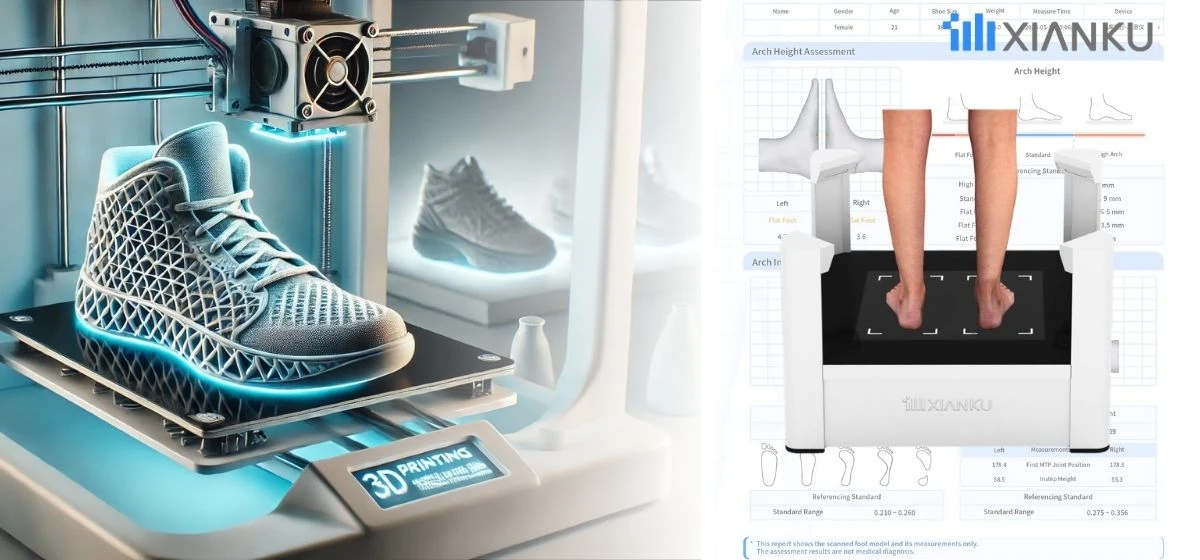
A 3D Foot Scanner captures the customer's foot in seconds.
The scan data is uploaded securely to the cloud.
AI automatically analyzes the foot structure and generates a personalized insole design.
The digital design is then transmitted directly to XIANKU's centralized 3D Printing Farm, where customized insoles-or even personalized footwear components-can be produced at scale with consistent quality.
This model creates a completely new manufacturing workflow:
Scan locally. Manufacture centrally. Deliver globally.
Retailers no longer need to invest in expensive 3D printing equipment or maintain complex production capabilities.
They simply capture high-quality foot data.
The cloud platform, AI design engine, and large-scale 3D printing infrastructure handle the rest.
This allows businesses of all sizes to offer personalized products without sacrificing efficiency.
The Future of Footwear Is Built on Mass Personalization
For more than one hundred years, success in footwear manufacturing meant producing more identical products at lower cost.
The next generation of manufacturing is built on a different idea.
Success will belong to companies capable of producing millions of unique products with the efficiency once reserved for mass production.
That is the true meaning of personalization at scale.
The journey begins with a digital foot scan.
It continues through AI-powered design.
It becomes reality through 3D printing.
And ultimately, it delivers footwear that is designed not for everyone-but for one person.
You.
As consumers continue to embrace personalized digital experiences through technologies like "Your Algo," their expectations for physical products will continue to evolve.
Tomorrow's customers won't simply ask whether a shoe looks good.
They'll ask whether it was made specifically for them.
And increasingly, the answer will be yes.