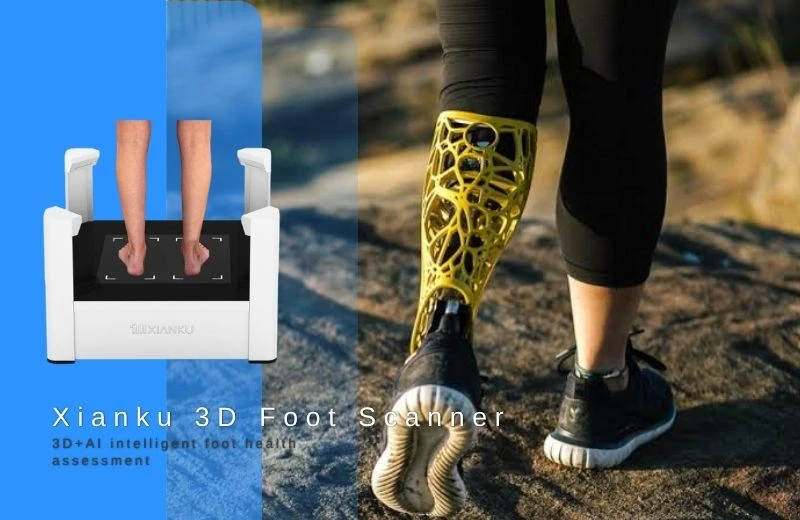
For thousands of years, replacing a missing limb has been one of the greatest challenges in medical science.
A prosthetic limb is not just a device.
- It becomes part of a person's daily life.
- It helps them walk.
- It helps them regain independence.
- It helps them return to work, sports, and normal activities.
However, traditional prosthetic solutions have always faced one major challenge:
Every human body is different, but many prosthetics were created using standardized methods.
A prosthetic that works well for one person may not provide the same comfort, stability, or performance for another.
So, how can modern technology create prosthetics that are truly designed for each individual?
The answer begins with understanding the human body through digital data.

The Problem With Traditional Prosthetic Manufacturing
Traditional prosthetic production often depends heavily on manual measurements and physical adjustments.
A prosthetist usually evaluates:
- Limb shape
- Patient movement
- Pressure points
- Walking patterns
- Comfort feedback
This process requires experience and multiple adjustments.
But the human body is complex.
A small difference in structure can influence the entire movement system.
For example:
- Different foot widths can affect stability.
- Different arch structures can change weight distribution.
- Different pressure points can cause discomfort.
- Different walking patterns can influence posture.
When a prosthetic does not match the patient's body structure, it may lead to problems such as:
- Skin irritation
- Uneven pressure distribution
- Reduced walking efficiency
- Discomfort during long-term use
The challenge is simple:
A human body is unique. A standard solution cannot always provide a perfect match.
The Future of Prosthetics Starts With Accurate Body Data
Modern healthcare is moving from experience-based solutions toward data-driven personalization.
Before creating a customized prosthetic, the first step is understanding the patient's body accurately.
This is where digital scanning technology is changing the industry.
A 3D Foot Scanner can capture detailed information about a patient's foot structure within seconds.
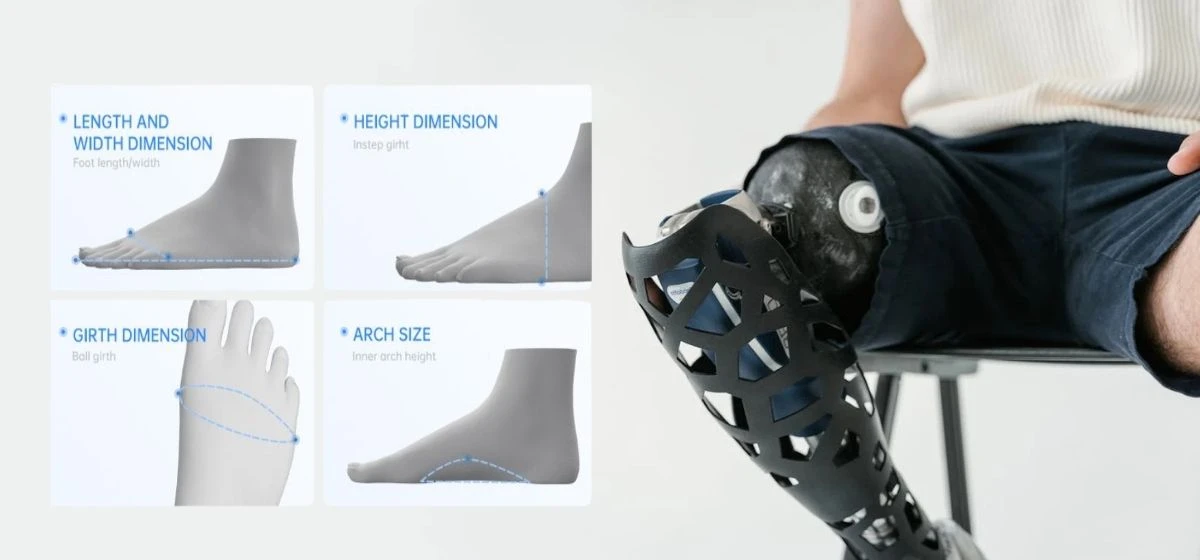
Instead of relying only on manual measurements, healthcare professionals can collect digital data including:
- Foot length
- Foot width
- Arch height
- Foot shape
- Pressure distribution
- Weight-bearing characteristics
This creates a complete digital representation of the patient's foot.
The patient's body is no longer just measured.
It is digitally understood.
Step 1: Digital Foot Scanning Creates a Precise 3D Model
Every customized prosthetic begins with accurate information.
A 3D foot scanner uses advanced optical scanning technology to capture the shape and structure of the patient's foot.
Unlike traditional measurement methods, digital scanning provides:
- Fast data collection
- Non-contact measurement
- High precision
- Repeatable results
The scanning process is simple.
The patient places their foot on the scanning platform.
Within seconds, the system captures thousands of data points and generates a digital 3D model.
This model provides healthcare professionals with a clearer understanding of the patient's unique anatomy.
Step 2: AI and Digital Analysis Identify Patient Needs
Collecting data is only the beginning.
The real value comes from analyzing that information.
Modern AI-powered systems can help evaluate:
- Foot alignment
- Pressure distribution
- Structural imbalance
- Abnormal loading areas
- Support requirements
For patients using prosthetics, these details are extremely important.
A prosthetic is not only about replacing a missing part.
It must work together with the remaining body structure.
The goal is not simply:
"Make something that fits."
The goal is:
"Create something that supports the patient's natural movement."

Step 3: Personalized Design Replaces Standardized Manufacturing
After collecting and analyzing the patient's data, designers can create a customized digital model.
This means the prosthetic can be adjusted according to:
- Individual anatomy
- Lifestyle requirements
- Activity level
- Movement patterns
For example:
A patient who spends most of their time walking may need different support compared with someone who participates in sports.
A younger patient may require different design considerations compared with an elderly patient.
Personalization allows healthcare providers to create solutions based on real patient needs.
Step 4: 3D Printing Makes Personalized Healthcare Possible
The development of 3D printing technology has transformed medical manufacturing.
Traditional manufacturing often requires molds, manual adjustments, and longer production cycles.
3D printing allows digital designs to become physical products more efficiently.
The process is:
3D Scan → Digital Model → AI Analysis → Customized Design → 3D Printing
This digital workflow creates new possibilities for:
- Custom prosthetic components
- Orthotic devices
- Personalized support products
- Patient-specific medical solutions
Each product can be based on the patient's own body data.
Why Personalization Matters in Prosthetic Care
A prosthetic is not just a medical device.
It affects a person's confidence, mobility, and quality of life.
A well-designed prosthetic can help patients:
Improve comfort
Better matching reduces unnecessary pressure and discomfort.
Improve stability
A personalized design can better support natural movement.
Increase confidence
When patients feel comfortable moving, they can participate more actively in daily life.
Reduce adjustment time
Accurate digital data can help reduce repeated modifications.
From Measuring Feet to Understanding Human Movement
The role of foot scanning technology is expanding.
A foot scanner is no longer just a tool for measuring shoe size.
It is becoming a gateway to understanding the relationship between:
- Feet
- Posture
- Balance
- Movement
- Overall body alignment
The feet are the foundation of the human body.
Every step creates a chain reaction throughout the body.
By understanding foot structure, healthcare professionals can gain valuable insights into movement patterns and create more effective solutions.
The Future of Personalized Healthcare Has Arrived
The future of prosthetics is not about producing more products.
It is about creating better solutions for individuals.
The combination of:
- 3D scanning technology
- Artificial intelligence
- Digital modeling
- 3D printing
is transforming how medical devices are designed and manufactured.
In the future, patients will no longer receive solutions based mainly on average measurements.
They will receive solutions created from their own body data.
Because every patient is different.
Every movement is different.
And every body deserves a solution designed specifically for them.
Final Thoughts
For decades, healthcare has been searching for ways to make medical solutions more comfortable, accurate, and personalized.
Today, digital technology is making that possible.
A simple scan can become the foundation for a complete personalized healthcare journey.
From capturing foot data to creating customized prosthetics, the future of medical innovation begins with one important step:
Understanding the individual behind the patient.
Measure the body. Understand the movement. Create a solution made for them.