

Quick Answer: Can Carrying a Bag on One Shoulder Affect Your Posture?
Yes, carrying a bag on one shoulder for extended periods may contribute to changes in shoulder balance and overall posture. When the body repeatedly experiences uneven weight distribution, it naturally tries to compensate in order to maintain stability.
These compensation patterns may influence:
- shoulder height differences
- muscle balance between both sides of the body
- upper body alignment
- neck and spine posture
However, shoulder imbalance is usually not caused by a single factor. Daily habits, sitting posture, physical activity, muscle strength, and body structure all play important roles.
The challenge is that many posture changes happen gradually. People often do not notice small differences until they become part of their everyday movement patterns.
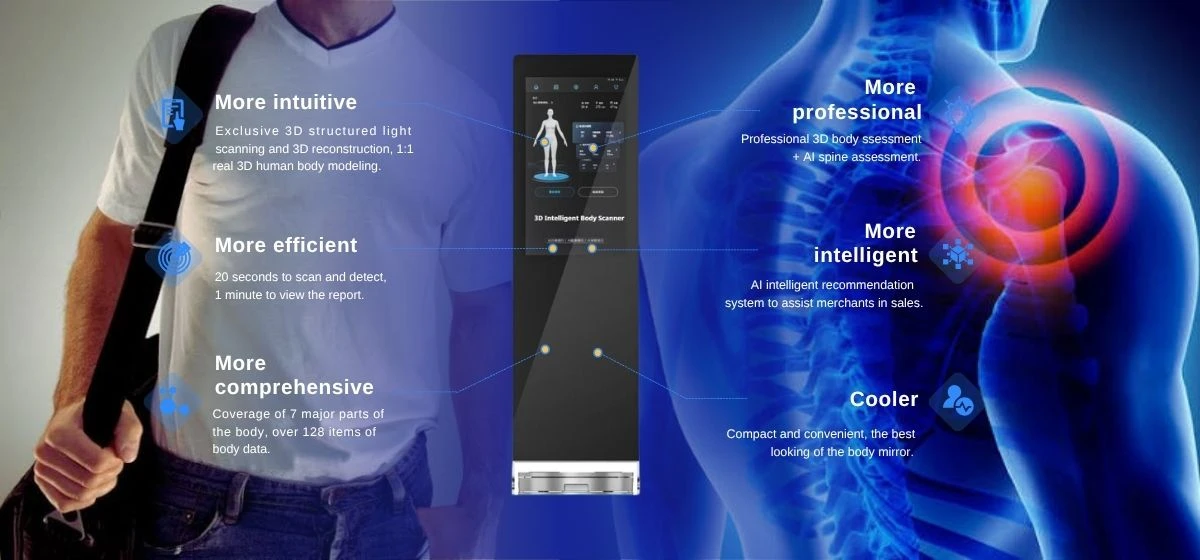
With the development of 3D Body Scanning Technology, posture assessment is becoming more accurate and data-driven. A 3D Body Scanner can create a digital model of the human body and analyze body symmetry, shoulder alignment, and posture characteristics to help people better understand their physical condition.

Your Daily Bag Habit May Be Quietly Changing Your Body
For millions of people, carrying a bag on one shoulder is part of everyday life.
A student carries a backpack over one shoulder while walking to class.
A professional carries a laptop bag on the same side during daily commuting.
A traveler places a heavy shoulder bag on the side that feels most comfortable.
At first, this habit seems harmless.
The weight may not feel heavy, and the body may quickly adapt.
But the human body is constantly adjusting to repeated movements and external forces.
When one side of the body receives more pressure every day, the muscles, joints, and posture system may gradually create new movement patterns to maintain balance.
Your body is always trying to answer one question:
How can I stay balanced under this condition?
Sometimes, the answer is compensation.
How Does One-Sided Carrying Affect Shoulder Balance?
The human body is an interconnected structure.
Your shoulders, neck, spine, pelvis, and legs are not independent systems. They work together to maintain posture and movement.
When one area changes, other parts may respond.
1. Uneven Shoulder Height
One of the most common signs of shoulder imbalance is different shoulder height.
When carrying a bag on one side, many people unconsciously raise that shoulder to prevent the strap from falling.
This small movement may happen hundreds or thousands of times.
Over time, repeated muscle activation on one side may influence how the shoulders naturally rest.
One shoulder may appear higher, while the opposite shoulder may appear lower or more relaxed.
Although the difference may be difficult to notice at first, small asymmetries can become part of your regular posture.
2. Different Muscle Activation Patterns
Your muscles adapt according to how they are used.
The shoulder carrying the bag may experience:
- increased muscle activation
- repeated tension
- greater workload
Meanwhile, muscles on the opposite side may perform different functions to maintain balance.
This creates different movement patterns between the left and right sides of the body.
Over time, these differences may affect:
- shoulder stability
- upper back posture
- neck positioning
- body coordination
This is why posture is not only about appearance. It reflects how your body functions as a whole.
3. The Body Creates Compensation
A common misunderstanding is that posture problems only affect one area.
In reality, the body works like a chain.
When shoulder balance changes, the body may adjust other areas to keep the center of gravity stable.
Possible compensation areas include:
- neck position
- upper spine alignment
- chest position
- pelvic balance
- walking patterns
This explains why someone may notice shoulder imbalance while the actual cause involves multiple parts of the body.

Why Is It Difficult to Detect Shoulder Imbalance by Yourself?
One reason posture problems are often overlooked is that they develop slowly.
Your brain becomes familiar with your everyday posture.
A position that was originally an adjustment can eventually feel completely normal.
Many people only discover posture differences when:
- someone points them out
- they compare photos
- they receive a professional assessment
- discomfort appears
A traditional mirror check can help identify obvious differences, but it cannot accurately measure small changes in body symmetry.
For example, a person may not know:
whether one shoulder is slightly higher
whether the body leans to one side
whether posture alignment has changed over time
This is where digital body analysis becomes valuable.
Why Traditional Posture Assessment Is Changing
Traditional posture evaluation often depends on:
- visual observation
- manual measurement
- professional experience
These methods are useful, but they may have limitations when analyzing small body differences.
Modern healthcare and wellness industries are moving toward a more personalized and measurable approach.
Instead of only asking:
"Does my posture look normal?"
People can now ask:
"What does my body data tell me?"
How Does a 3D Body Scanner Analyze Shoulder Balance?
A 3D Body Scanner uses non-contact structured light technology to capture detailed body surface information and create a digital body model.
Unlike traditional measurement methods, 3D scanning can analyze the body from multiple dimensions and provide objective data.
A posture analysis system powered by 3D scanning technology can evaluate:
Shoulder Symmetry
Compare the position and balance between the left and right shoulders.
Body Alignment
Understand how different body areas relate to each other.
Posture Characteristics
Identify body patterns that may require attention.
Body Proportions
Measure individual body features for personalized analysis.
By converting the human body into digital data, professionals can better understand posture patterns instead of relying only on visual judgment.
From Posture Analysis to Personalized Solutions
Every person's body is unique.
The same backpack, the same sitting position, or the same daily habit may affect different people in different ways.
A personalized approach considers:
- individual body structure
- lifestyle habits
- movement patterns
- posture data
With accurate information from 3D body scanning, professionals in different industries can provide more targeted services.
Applications include:
Fitness and Personal Training
Fitness professionals can use posture data to better understand body balance and design more suitable training programs.
Rehabilitation and Physical Therapy
Clinics can use digital body analysis as part of posture evaluation and progress tracking.
Wellness and Health Management
Wellness centers can provide customers with deeper insights into their body condition through measurable data.
Ergonomic Solutions
Businesses can use body data to improve personalized workplace and lifestyle recommendations.
The Future of Posture Health: From Guessing to Understanding
Your body records every habit.
The way you sit, stand, walk, and carry objects all creates patterns over time.
The problem is that many of these changes are difficult to see with the human eye.
3D Body Scanning Technology provides a new way to understand the body through measurable information.
Instead of discovering posture problems after they become noticeable, people can take a more proactive approach by understanding their body balance earlier.
The future of posture health is moving from simple observation to digital analysis.
Not guessing.
Not assumptions.
But real body data.
Frequently Asked Questions About Shoulder Imbalance and 3D Body Scanning
Can carrying a bag on one shoulder make my shoulders uneven?
Long-term one-sided carrying may contribute to shoulder imbalance because of repeated uneven loading and body compensation. However, other factors such as muscle condition, lifestyle habits, and body structure can also influence shoulder symmetry.
How can I know if I have shoulder imbalance?
You can check for visible differences in a mirror, but professional posture assessment tools such as 3D Body Scanners can provide more detailed information about shoulder symmetry and body alignment.
What is a 3D Body Scanner used for?
A 3D Body Scanner is used to capture body measurements, create a digital body model, and analyze body characteristics such as posture, symmetry, and alignment.
Why is posture assessment important?
Posture assessment helps people understand how their body is positioned and provides useful information for fitness, wellness, rehabilitation, and personalized health solutions.
Who needs 3D posture analysis?
3D posture analysis can benefit:
- fitness centers
- rehabilitation clinics
- wellness facilities
- sports organizations
- health management companies
- individuals interested in preventive health
Final Thoughts
Your daily habits shape your body more than you realize.
A simple action like carrying a bag on the same shoulder every day may become part of your posture pattern.
With 3D Body Scanning Technology, invisible changes can become visible data.
By understanding your body's balance, you can make smarter decisions for a healthier posture and better quality of life.
Your body already tells the story. 3D scanning helps you read it.
