Posture Is Health: Why Lower-Limb Alignment Should Not Be Ignored
Posture is health. The way the body stands, walks, balances, and distributes pressure reflects how the whole musculoskeletal system works together.
For many children, teenagers, and adults, knee hyperextension, O-shaped legs, X-shaped legs, false hip width, pelvic tilt, and uneven lower-limb force lines are not only cosmetic concerns. They may influence joint loading, movement efficiency, long-term knee health, and body balance.
Pain in the neck, lower back, hips, knees, or ankles is often connected to skeletal misalignment and body center of gravity deviation. When the knees lock backward, when the legs rotate inward or outward, or when the pelvis compensates for lower-limb imbalance, pressure may accumulate across the knee joint, hip joint, lumbar spine, and foot structure.
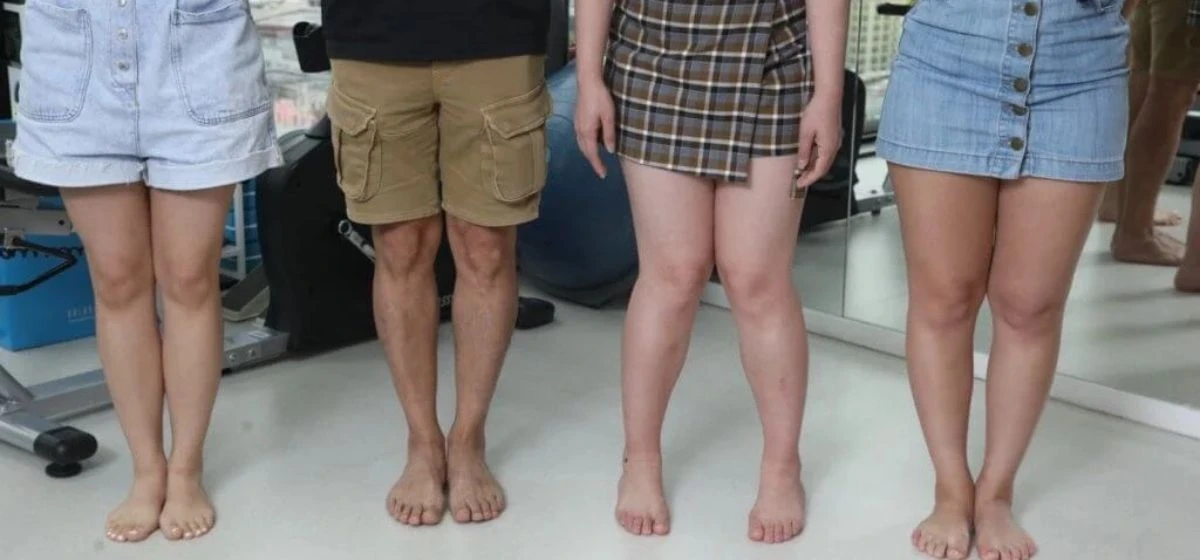
A traditional body fat scale can only measure composition. It cannot assess skeletal posture, pelvic tilt, knee alignment, lower-limb force lines, or body center of gravity. A 2D photo may show visible leg shape, but it cannot provide a true three-dimensional understanding of body posture.
This is why knee hyperextension and O/X-shaped leg correction tracking needs a more advanced digital assessment approach.
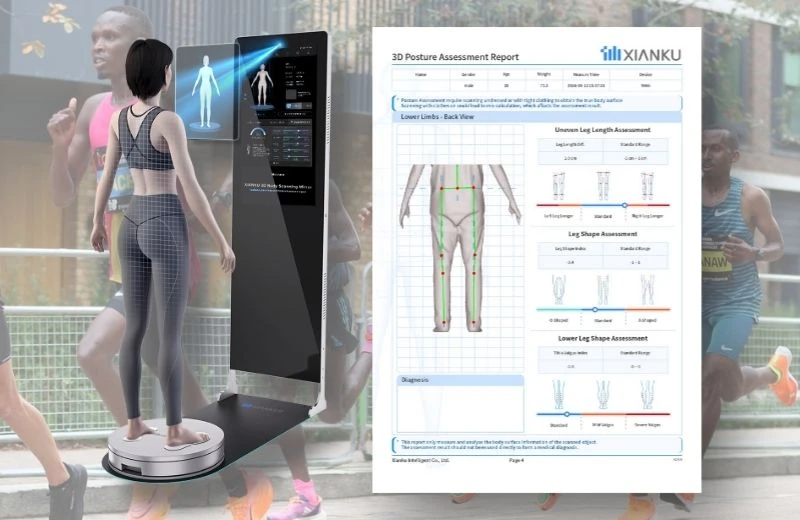
XIANKU 3D Body Scanner provides a three-in-one health assessment model:
- Body composition analysis
- Digital precision body measurement
- AI spinal and posture assessment
- 1:1 Realistic 3D model reconstruction
- AI visualized skeleton display
- Body center of gravity assessment
- Body trend comparison
- CRM-based client management
For parents, schools, children's orthopedic clinics, and posture correction centers, this creates a smarter way to screen, explain, monitor, and track lower-limb alignment over time.
Why Knee Hyperextension and O/X-Shaped Legs Matter
Knee hyperextension refers to a posture pattern where the knee extends beyond its neutral alignment. O-shaped legs and X-shaped legs describe visible changes in lower-limb alignment, where the knees or ankles may not align naturally when standing.
These conditions can be related to:
- Growth and development patterns
- Poor standing habits
- Muscle imbalance
- Pelvic alignment issues
- Foot posture problems
- Ligament laxity
- Sports movement habits
- Long-term compensation from the hips, knees, or ankles
Lower-limb force line abnormalities may increase pressure on specific joint areas. Over time, this may contribute to:
- Knee discomfort
- Hip compensation
- Lower back pressure
- Ankle instability
- Poor walking posture
- Uneven muscle activation
- Early joint stress
- Reduced sports performance
- Postural fatigue
For children and teenagers, early identification is especially important because the body is still developing. For adults, correction tracking can help evaluate whether exercise, rehabilitation, or posture programs are actually improving alignment.
What Is Knee Hyperextension and O/X-Shaped Leg Correction Tracking?
Knee hyperextension and O/X-shaped leg correction tracking is a digital posture management process that evaluates lower-limb alignment, monitors correction progress, and compares body posture changes over time.
A modern tracking system should answer questions such as:
- Is the knee joint overextended when standing?
- Are the legs showing O-shaped or X-shaped alignment patterns?
- Is the pelvis compensating for lower-limb imbalance?
- Is the body center of gravity shifted?
- Are shoulders, spine, hips, knees, and ankles aligned as a whole chain?
- Is the correction program producing visible improvement?
- Can parents or clinicians compare before-and-after body models clearly?
The goal is not simply to label a leg shape. The goal is to understand the full-body biomechanical pattern behind it.
This is where 3D scanning offers major advantages over visual observation alone.
XIANKU 3D Body Scanner: A Digital Assessment System for Lower-Limb Alignment
The XIANKU 3D Body Scanner uses industry-leading 3D infrared structured light scanning and 3D human body reconstruction technology. It performs a contactless scan in approximately 20 seconds and allows users to view a complete report within 1 minute.
The system creates a 1:1 Realistic 3D model, rather than relying on ordinary 2D photos or formula-based body estimation. This gives professionals and families a more intuitive view of the body's real posture and lower-limb alignment.
Core technology features include:
- Non-radiation 3D structured light
- 20-second contactless scanning
- 1-minute report generation
- 1:1 Realistic 3D human body models
- 720° real 3D body visualization
- 15 body composition reports
- 45+ body circumference data
- 20 physical health reports
- AI visualized skeleton display
- Body center of gravity assessment
- Chest health diagnosis
- Body trend comparison
- AI intelligent recommendation system
- CRM customer management system
For children's orthopedic clinics, school health screening programs, and posture correction centers, this provides a digital foundation for lower-limb health management.
Why Lower-Limb Alignment Requires Whole-Body Assessment
Knee hyperextension and O/X-shaped legs should not be assessed as isolated knee problems.
The lower limbs are part of a full-body chain:
The feet affect ankle and knee loading.
The knees affect hip and pelvic position.
Pelvic tilt affects lumbar posture.
Spinal balance affects shoulder and head position.
Body center of gravity affects pressure distribution.
Poor posture in one area may create compensation in another area.
For example:
Knee hyperextension may shift the body's center of gravity backward.
X-shaped legs may increase medial or lateral stress around the knee.
O-shaped legs may alter walking mechanics.
Pelvic forward tilt may make the knees lock more easily.
False hip width may be related to pelvic position, hip rotation, or lower-limb alignment.
Foot instability may increase knee compensation during standing or walking.
This is why XIANKU's whole-body assessment approach is valuable. It does not only measure leg shape. It evaluates the relationship between posture, skeletal alignment, body circumference, body composition, and movement-related body structure.
AI Visualized Skeleton Display: Seeing the Force Line More Clearly
One of the most important features for lower-limb correction is the AI visualized skeleton display.
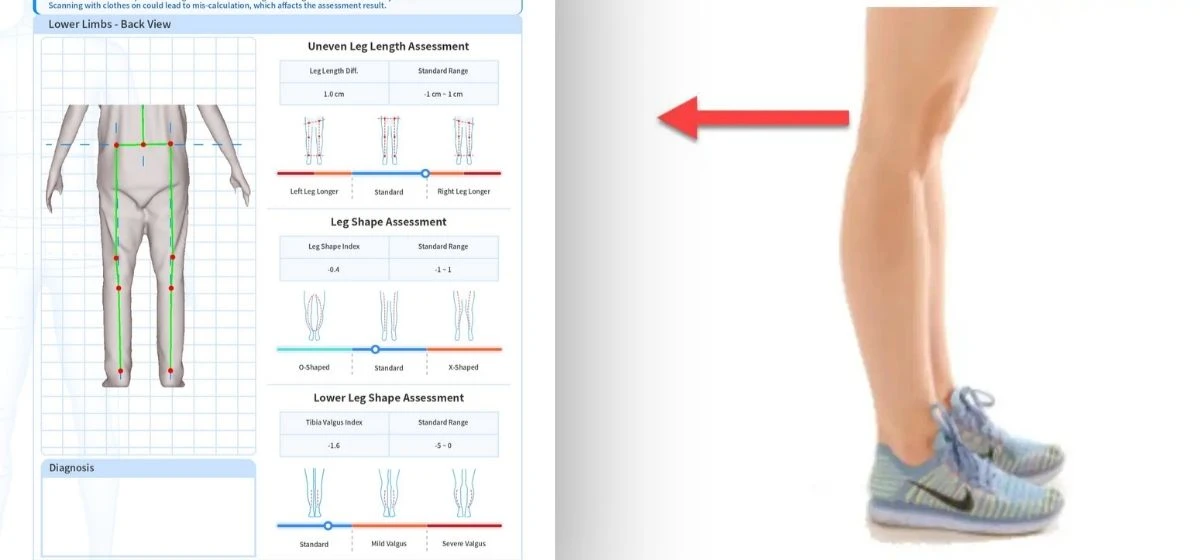
Instead of only showing surface appearance, the system helps visualize posture and skeletal alignment indicators. This supports better understanding of:
- Knee hyperextension
- O-shaped leg tendency
- X-shaped leg tendency
- Pelvic forward tilt
- Pelvic backward tilt
- Shoulder balance
- Spinal curvature
- Body center of gravity deviation
- Lower-limb posture asymmetry
For parents and clients, this makes the problem easier to understand. Instead of simply hearing "your child has poor leg alignment," they can see a visual representation of the body structure and posture pattern.
For clinicians and correction specialists, this improves communication and helps build a clearer correction plan.
20 Physical Health Reports: From Knee Shape to Posture Chain
XIANKU's AI posture assessment includes 20 physical health reports, covering multiple body regions and alignment indicators.
For knee hyperextension and O/X-shaped leg correction, relevant indicators include:
- Knee hyperextension
- O-shaped legs
- X-shaped legs
- Pelvic forward tilt
- Pelvic backward tilt
- Hunchback posture
- High and low shoulders
- Rounded shoulders
- Neck extension
- Scoliosis risk assessment
- Spinal curvature health assessment
- Body center of gravity assessment
These reports help explain whether lower-limb issues may be connected to other posture patterns.
For example:
- A child with X-shaped legs may also show pelvic compensation.
- A teenager with knee hyperextension may also show lumbar posture stress.
- An adult with false hip width may also have pelvic tilt and hip rotation patterns.
- A student with long-term poor standing habits may show both lower-limb and upper-body posture imbalance.
This multi-dimensional view is more valuable than checking the knees alone.

45+ Body Circumference Data: Tracking Shape and Symmetry
Correction tracking is not only about angles and posture. Body shape and symmetry also matter.
XIANKU provides 45+ body circumference data, helping professionals monitor changes in body proportion, circumference, and asymmetry.
Relevant data may include:
- Leg circumference
- Knee circumference
- Waist and hip-related measurements
- Shoulder width
- Shoulder tilt
- Back length
- Neck circumference
- Upper and lower abdominal circumference
- Body proportion indicators
- For lower-limb correction, these data can support:
- Symmetry observation
- Growth tracking for children and teenagers
- Posture correction progress review
- Exercise program adjustment
- Digital health file creation
- Before-and-after comparison
When combined with a 1:1 Realistic 3D model, circumference data becomes easier to understand visually.
Body Center of Gravity Assessment: Understanding Joint Loading
The article's key focus is lower-limb force line abnormality and joint wear risk. This is where Body center of gravity assessment becomes especially important.
When the body's center of gravity shifts, the knees may experience uneven loading. Over time, poor loading patterns may contribute to discomfort or increased joint stress.
A shifted center of gravity may influence:
- Knee pressure
- Hip alignment
- Ankle stability
- Walking posture
- Standing balance
- Pelvic compensation
- Lower back comfort
- Sports movement control
For O/X-shaped legs and knee hyperextension correction, center of gravity assessment helps professionals better understand whether the body is distributing pressure evenly.
This is useful for:
- Children's orthopedic clinics
- School posture screening
- Sports injury prevention
- Posture correction centers
- Parent-child health programs
- Long-term growth monitoring
The value is not only detecting a posture issue. The value is understanding how the issue may affect the whole kinetic chain.
AI Intelligent Recommendation System: Matching Personalized Corrective Exercises
Assessment is only the first step. The next step is helping users take action.
XIANKU's AI intelligent recommendation system can connect body measurement results with suitable programs, services, or product recommendations configured by the institution.
For knee hyperextension and O/X-shaped leg correction, clinics or centers may use assessment tags to recommend:
- Corrective exercise programs
- Lower-limb alignment training
- Pelvic stability training
- Core activation exercises
- Foot and ankle strengthening
- Posture education courses
- Pediatric orthopedic follow-up
- Sports movement correction
- Personalized rehabilitation plans
For example:
If the report shows knee hyperextension and pelvic forward tilt, the system may recommend lower-limb control training and pelvic stability exercises.
If the report shows X-shaped leg tendency and body center of gravity deviation, the system may recommend corrective movement assessment and lower-limb alignment training.
If a student shows O-shaped leg posture and asymmetrical lower-limb data, the school or clinic may recommend follow-up screening.
This creates a closed-loop workflow:
- Body scanning
- Data analysis
- AI posture assessment
- Correction recommendation
- Progress tracking
- CRM follow-up
For B2B institutions, this improves service professionalism, client engagement, and long-term management.
Body Trend Comparison: Making Correction Progress Visible
Lower-limb correction takes time. Parents, children, and clients often need visual motivation to stay consistent.
XIANKU's body trend comparison system allows professionals to compare two 3D body models from different time points. This makes progress easier to understand.
The system can support:
- First-visit baseline assessment
- Monthly correction progress review
- School health screening follow-up
- Before-and-after posture comparison
- Parent communication
- Exercise program adjustment
- Long-term digital health records
- CRM-based client management
For example, after 8 to 12 weeks of corrective exercise, a clinic may compare the previous and current 3D models to see whether:
- Knee posture has improved
- Pelvic tilt has changed
- Body center of gravity is more balanced
- O/X-shaped leg posture appears reduced
- Shoulder and spinal compensation has improved
- Body symmetry has become more stable
This turns correction from a subjective feeling into a visual, data-driven process.
Application Value for Parents, Schools, and Children's Orthopedic Clinics
For Parents
Parents can use 3D posture screening to better understand their child's leg alignment and growth patterns.
Benefits include:
- Clear visual explanation of lower-limb posture
- Early awareness of knee hyperextension or O/X-shaped legs
- Better understanding of correction needs
- Progress tracking over time
- More confidence in professional guidance
For Schools
Schools can use digital screening to support student posture health programs.
Benefits include:
- Efficient non-contact screening
- Visual health reports
- Group posture monitoring
- Early identification of lower-limb issues
- Parent communication support
- Long-term student health archives
For Children's Orthopedic Clinics
Clinics can use XIANKU 3D Body Scanner to improve assessment efficiency and service quality.
Benefits include:
- Objective digital posture assessment
- AI visualized skeleton display
- 20 physical health reports
- Body center of gravity assessment
- Personalized corrective exercise recommendation
- CRM-based follow-up management
- Before-and-after 3D model comparison
For Correction Centers
Posture correction and rehabilitation centers can use the system to create structured service programs.
Benefits include:
- Better consultation conversion
- More professional client education
- Personalized training plan support
- Visual correction progress
- Digital client file management
- Higher long-term retention
FAQ: Knee Hyperextension and O/X-Shaped Leg Correction Tracking
What is knee hyperextension and O/X-shaped leg correction tracking?
It is a digital posture management process that evaluates knee alignment, O-shaped or X-shaped leg posture, body center of gravity, pelvic balance, and whole-body compensation patterns. It helps professionals track correction progress over time using 3D body models and posture reports.
How does a 3D body scanner assess knee hyperextension and O/X-shaped legs?
A 3D body scanner uses non-radiation 3D structured light to capture the body surface and reconstruct a 1:1 Realistic 3D model. AI posture analysis then evaluates physical health indicators such as knee hyperextension, O/X-shaped legs, pelvic tilt, spinal posture, and body center of gravity.
Can 3D body scanning replace an orthopedic diagnosis?
No. A 3D body scanner is a screening, assessment, and tracking tool. It helps visualize posture and alignment risks, but it does not replace clinical diagnosis, medical imaging, or professional orthopedic evaluation. If serious symptoms or structural concerns are suspected, a qualified healthcare provider should be consulted.
Why is body center of gravity important for O/X-shaped legs?
Body center of gravity affects how pressure is distributed through the hips, knees, ankles, and feet. If the center of gravity shifts, the knees may experience uneven loading. This may contribute to compensation, discomfort, or poor movement patterns over time.
How does AI help recommend corrective exercises?
XIANKU's AI intelligent recommendation system can connect assessment results with institution-configured programs or services. Based on posture tags such as knee hyperextension, pelvic tilt, O/X-shaped legs, or center of gravity deviation, the system can help recommend personalized correction exercises or follow-up plans.
Why is body trend comparison useful for correction programs?
Correction takes time. Body trend comparison allows professionals and families to compare before-and-after 3D body models, making progress visible. This helps improve motivation, program adherence, and communication between clinics, schools, parents, and clients.
What is the difference between a 3D body scanner and a traditional BIA body fat scale?
A traditional BIA body fat scale mainly measures body composition. It cannot visualize skeletal posture, lower-limb force lines, pelvic tilt, O/X-shaped leg posture, or body center of gravity. XIANKU integrates body composition, posture assessment, and 45+ body circumference data in one digital platform.
Conclusion: Lower-Limb Correction Needs Data, Visualization, and Long-Term Tracking
Knee hyperextension, O-shaped legs, X-shaped legs, false hip width, and lower-limb force line abnormalities should not be treated as simple appearance issues. They are closely connected to joint loading, posture compensation, body center of gravity, and long-term movement health.
Knee hyperextension and O/X-shaped leg correction tracking helps parents, schools, children's orthopedic clinics, and correction centers move beyond visual judgment toward a more digital, structured, and whole-body approach.
With non-radiation 3D structured light, 1:1 Realistic 3D model reconstruction, AI visualized skeleton display, 45+ body circumference data, 20 physical health reports, Body center of gravity assessment, AI intelligent recommendation system, and body trend comparison, XIANKU 3D Body Scanner provides a more complete foundation for lower-limb alignment management.
It helps institutions identify posture risks earlier, recommend more personalized corrective programs, and track progress with clear visual evidence.
Experience Digital 3D Lower-Limb Health Screening
Build a personalized digital health file for every child, student, or correction client.
With XIANKU 3D Body Scanner, schools, parents, children's orthopedic clinics, and posture correction centers can make lower-limb alignment assessment faster, clearer, and more actionable-turning knee hyperextension and O/X-shaped leg correction into a visible, measurable, and long-term digital health journey.