Orthotic Insoles and 3D-Printed Shoes: How 3D Scanning +AI and Additive Manufacturing Are Transforming Foot Health and Footwear Retail

Introduction
The footwear industry is undergoing one of the most significant technological transformations in its history. For decades, shoe sizing systems have relied on standardized measurements that often fail to account for the unique anatomical characteristics of individual feet. As a result, millions of people continue to experience discomfort, foot pain, poor biomechanics, and preventable musculoskeletal issues.Today, advances in 3D scanning, digital foot modeling, artificial intelligence, and additive manufacturing are creating a new paradigm. Instead of designing products around average foot shapes, brands can now design products around the individual.
This shift is particularly evident in the rapid growth of Orthotic insoles and 3D-printed shoes, two categories that are reshaping both foot health management and modern footwear retail.
From podiatry clinics and orthopedic centers to running stores and premium footwear brands, businesses are increasingly integrating digital foot assessment and customized manufacturing into their service offerings.
This article explores how Orthotic insoles and 3D-printed shoes are changing the future of foot care, retail, and personalized footwear production.
Why Traditional Shoe Sizing Is No Longer Enough
Conventional shoe sizing was designed for mass manufacturing.While efficient, traditional sizing systems have several limitations:
- Foot width differences are often ignored.
- Arch height variations are rarely considered.
- Left and right feet are commonly assumed to be symmetrical.
- Biomechanical abnormalities remain undetected.
- Foot shape changes over time due to aging, weight fluctuations, and activity levels.
Research consistently shows that a large percentage of consumers wear incorrectly fitted footwear. Poor fit can contribute to:
- Plantar fasciitis
- Flat feet
- High arches
- Hallux valgus (bunions)
- Heel pronation and supination
- Achilles tendon stress
- Knee and hip alignment issues
This growing awareness has accelerated demand for Orthotic insoles and 3D-printed shoes, both of which rely heavily on accurate foot data collection.
The Foundation: Modern Foot Health Assessment
Before customized products can be manufactured, a comprehensive understanding of foot structure is required.Modern foot health evaluation generally combines multiple assessment methods.
Method 1: Footprint and Pressure Analysis
Footprint assessment remains one of the most widely used techniques.It helps evaluate:
- Arch type
- Weight distribution
- Foot pressure concentration
- Walking patterns
Advantages
Limitations
- Only captures plantar surface information
- Cannot fully represent 3D anatomy
Method 2: Clinical Biomechanical Assessment
Performed by podiatrists, orthotists, or rehabilitation professionals.Evaluates:
- Gait mechanics
- Joint mobility
- Muscle imbalances
- Alignment abnormalities
Common Findings
Assessment Area | Potential Finding | Clinical Significance |
|---|---|---|
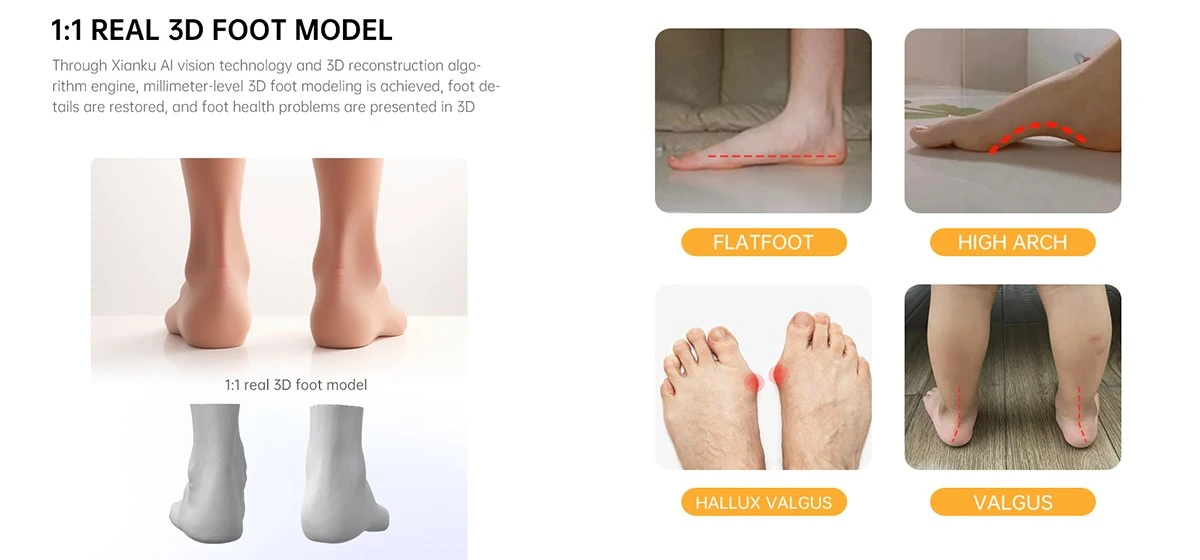
Arch Structure | Flat Foot | Increased overpronation |
Heel Alignment | Calcaneal Valgus | Instability risk |
Toe Position | Hallux Valgus | Forefoot overload |
Gait Pattern | Asymmetry | Injury risk |
Clinical evaluation remains essential when prescribing advanced Orthotic insoles.
Method 3: 3D Foot Scanning
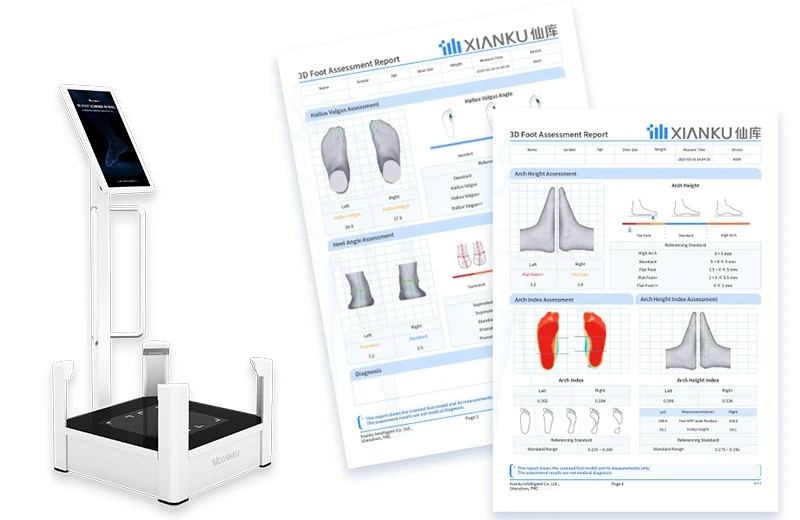
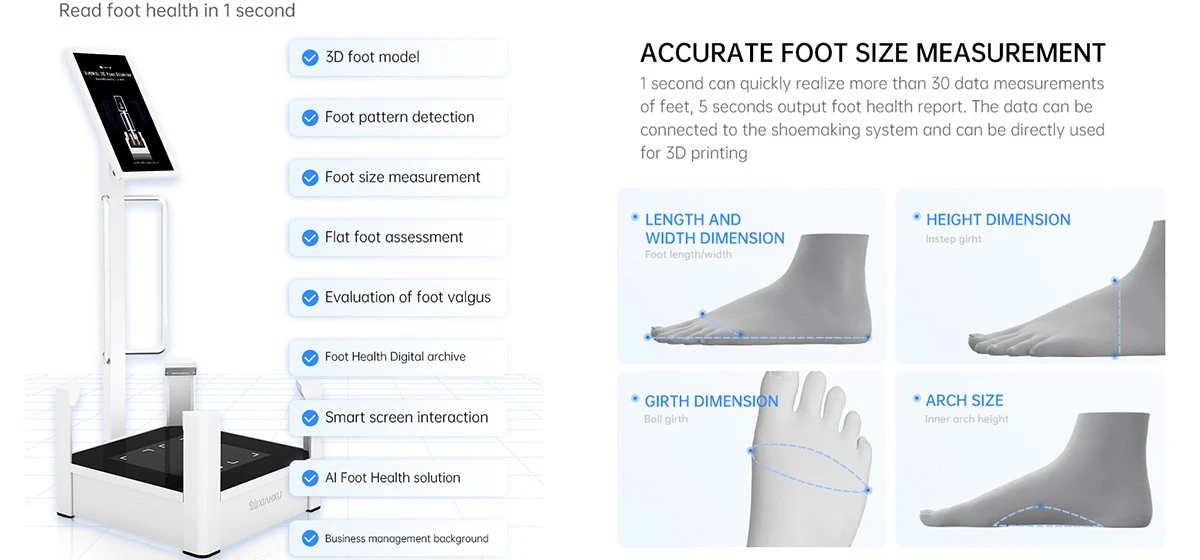
The most advanced assessment approach today is 3D foot scanning.Using structured-light or infrared scanning technology, systems can create a complete digital representation of the foot in seconds.Modern scanners can capture:
- Foot length
- Foot width
- Arch height
- Instep height
- Heel width
- Girth measurements
- Hallux valgus angle
- Heel inclination angle
Many systems generate over 30 measurement parameters while simultaneously producing a realistic 3D foot model.
This technology serves as the foundation for both Orthotic insoles and 3D-printed shoes.
Three Major 3D Modeling Methods Used in Footwear
Accurate customization depends on high-quality digital models.
1. Structured-Light 3D Reconstruction
Structured-light systems project patterns onto the foot surface and reconstruct geometry from distortions.Benefits include:
- High precision
- Fast scanning
- Safe and non-contact operation
This method is commonly used in retail and clinical environments.
2. Photogrammetry-Based Modeling
Multiple images are captured from different angles and converted into a 3D model.Advantages:
- Lower equipment cost
- Portable
Limitations:
- Reduced accuracy
- Sensitive to lighting conditions
3. Infrared Depth Scanning
Infrared scanning captures depth information and reconstructs detailed foot geometry.Advantages:
- Millimeter-level accuracy
- Rapid processing
- High repeatability
This approach is increasingly used for manufacturing customized Orthotic insoles and 3D-printed shoes.
Orthotic Insoles: The Fastest Growing Segment of Personalized Footwear
The market for Orthotic insoles has expanded rapidly as consumers seek solutions for pain relief, injury prevention, and performance enhancement.
Unlike generic inserts, customized Orthotic insoles are designed around an individual's foot anatomy and biomechanics.
Key Functional Goals
Arch Support
Customized Orthotic insoles can support:
- Flat feet
- Flexible flat feet
- High arches
- Collapsed arches
Heel Stabilization
Deep heel cup structures improve:
- Rearfoot control
- Balance
- Walking stability
Pressure Redistribution
Customized lattice structures help:
- Reduce localized pressure
- Improve comfort
- Enhance long-term wearability
Gait Correction
Advanced Orthotic insoles can assist with:
- Overpronation
- Oversupination
- Functional leg length discrepancies
Workflow for Manufacturing Orthotic Insoles
Step | Process | Output |
1 | 3D Foot Scan | Digital Foot Model |
2 | Foot Health Analysis | Risk Assessment |
3 | CAD Design | Personalized Insole Model |
4 | 3D Printing | Physical Product |
5 | Fitting & Adjustment | Final Delivery |
This workflow allows businesses to provide highly personalized solutions with significantly improved precision.
The Rise of 3D-Printed Shoes
While customized insoles are already mainstream, 3D-printed shoes represent the next frontier.
Instead of modifying a standard shoe, manufacturers can customize the entire footwear structure.
The global interest in 3D-printed shoes continues to grow among:
- Running brands
- Luxury footwear companies
- Orthopedic footwear providers
- Sports performance manufacturers
What Makes 3D-Printed Shoes Different?
Traditional shoe production requires molds, tooling, and large inventory commitments.
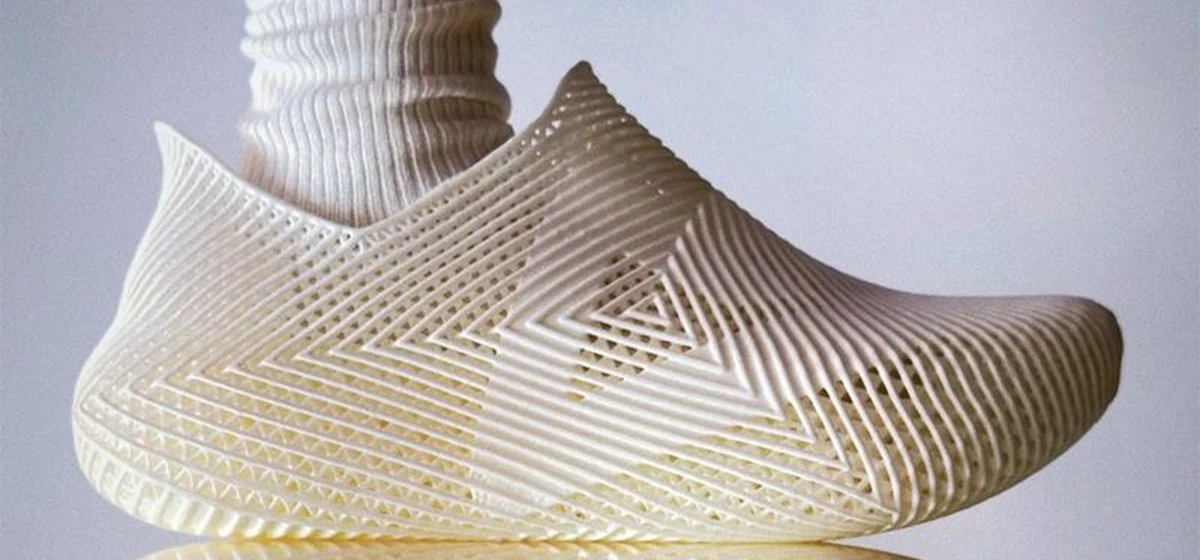
By contrast, 3D-printed shoes enable:
- On-demand production
- Digital inventory
- Mass customization
- Reduced waste
Key Benefits of 3D-Printed Shoes
Benefit | Traditional Shoes | 3D-Printed Shoes |
Custom Fit | Limited | Excellent |
Inventory Requirement | High | Low |
Personalization | Minimal | Extensive |
Design Freedom | Moderate | Very High |
Production Flexibility | Fixed | On-Demand |
How Footwear Retailers Benefit
The impact of Orthotic insoles and 3D-printed shoes extends beyond product innovation.
They are transforming retail economics.
Improved Customer Experience
Consumers enjoy:
- Personalized assessments
- Better fitting products
- Greater confidence in purchases
Reduced Return Rates
Incorrect sizing remains one of the largest causes of footwear returns.3D foot assessment can significantly improve fit accuracy and reduce costly exchanges.
Higher Average Order Value
Customers receiving personalized recommendations are more likely to purchase:
- Premium footwear
- Orthotic insoles
- Foot health services
- Membership programs
Data-Driven Retail
Digital foot scanning creates valuable datasets that help brands:
- Optimize sizing systems
- Improve product development
- Reduce inventory inefficiencies
- Identify emerging consumer needs
The Future of Orthotic Insoles and 3D-Printed Shoes
The future footwear ecosystem will likely combine:
- AI-powered foot analysis
- Cloud-based digital foot profiles
- Automated product recommendation engines
- Customized Orthotic insoles
- Fully personalized 3D-printed shoes
Consumers may eventually maintain a permanent digital foot passport that allows footwear purchases to be customized instantly across multiple brands.
As additive manufacturing becomes faster and more cost-efficient, Orthotic insoles and 3D-printed shoes are expected to move from niche products into mainstream retail channels.
Conclusion
The convergence of 3D scanning, biomechanical assessment, digital modeling, and additive manufacturing is reshaping the global footwear industry.Modern foot health evaluation methods-including footprint analysis, clinical biomechanical assessment, and 3D foot scanning-provide unprecedented insights into individual anatomy and movement patterns.
These advancements enable the creation of highly personalized Orthotic insoles that improve support, comfort, and biomechanical alignment, while also laying the foundation for next-generation 3D-printed shoes that redefine footwear customization.
For podiatry clinics, orthopedic centers, rehabilitation facilities, footwear retailers, and innovative shoe brands, the combination of digital foot assessment and personalized manufacturing is no longer a future concept-it is becoming a competitive necessity.
Businesses that embrace Orthotic insoles, 3D-printed shoes, and data-driven foot health solutions today will be better positioned to meet the growing demand for personalized, health-focused footwear tomorrow.
References & Industry Sources
The information presented in this article is based on a combination of foot biomechanics research, orthotic manufacturing practices, digital footwear technologies, and emerging additive manufacturing trends.
Key Areas Referenced
Foot Health Assessment
Modern foot health assessment commonly includes:
- Plantar pressure and footprint analysis
- Clinical biomechanical examination
- Gait and movement analysis
- Three-dimensional foot scanning
- Foot arch evaluation
- Hallux valgus assessment
- Heel alignment assessment
- Digital foot morphology analysis
These assessment methods help healthcare professionals and footwear specialists better understand foot structure, load distribution, and movement patterns before recommending Orthotic insoles or customized footwear solutions.
Digital Foot Modeling Technologies
The development of Orthotic insoles and 3D-printed shoes relies heavily on advanced digital modeling technologies, including:
- Structured-light 3D scanning
- Infrared depth scanning
- Photogrammetry-based reconstruction
- CAD-based footwear design
- Parametric lattice engineering
- AI-assisted biomechanical analysis
These technologies enable accurate digital representation of the foot and provide the foundation for personalized product design.
Additive Manufacturing in Footwear
Recent developments in additive manufacturing have accelerated the adoption of:
- Customized Orthotic insoles
- 3D-printed shoes
- Digital shoe lasts
- Personalized midsoles
- Sports performance footwear
- Orthopedic footwear solutions
The combination of digital scanning and additive manufacturing allows manufacturers to reduce waste, improve fit accuracy, and offer individualized footwear solutions at scale.
Industry Applications
The technologies discussed in this article are increasingly used in:
- Podiatry clinics
- Orthopedic centers
- Rehabilitation facilities
- Running and sports performance stores
- Footwear retail chains
- Custom footwear manufacturers
- Sports medicine organizations
- Preventive health programs
Further Reading
Readers interested in learning more about digital foot assessment, footwear customization, Orthotic insoles, and 3D-printed shoes may explore research and publications from:
Technology Note
Modern 3D foot scanning systems can capture detailed anatomical measurements including foot length, foot width, arch height, instep height, heel width, hallux valgus angle, and heel inclination. Combined with digital modeling and additive manufacturing workflows, these datasets provide the foundation for next-generation Orthotic insoles and 3D-printed shoes that deliver greater personalization, comfort, and biomechanical support.