When a parent walks into your store with two kids and tries to guess their shoe sizes with the old thumb-press trick, you're not just risking a poor fit. You're risking a return. You're risking a lost customer. And you're risking a child's long-term foot health.
Let's talk about a problem that's quietly draining margins across the children's footwear industry: inaccurate, inconsistent, and guesswork-based sizing. Then let's talk about the fix.
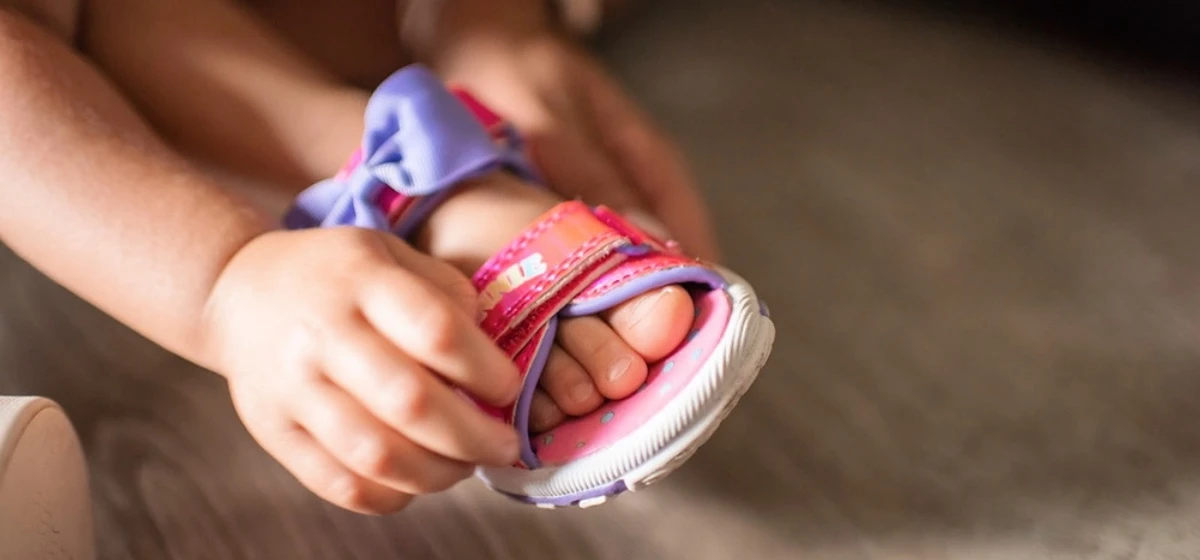
The Market Doesn't Wait for Guesswork
The global kids footwear market was valued at 50.83 billion in 2025 and is projected to hit 50.83 billion in 2025 and is projected to hit 102.96 billion by 2034, growing at a CAGR of 8.3% . In the U.S. alone, the kids wear market-footwear included-will grow from 6.9 billion in 2025 to 6.9 billion in 2025 to 12.7 billion by 2033. That's serious growth. But growth doesn't automatically mean profit.
Right now, U.S. footwear shoppers are under pressure. Eighty percent of consumers expect to pay more for children's shoes this year due to tariff-driven price increases, and 77% said the absolute lowest price is a major factor in choosing where to buy . Parents are hunting for value-and if they can't trust your sizing, they'll go elsewhere.
At the same time, retailers face a dramatic shift in consumer behavior. Daily online shopping dropped from 21% to 9% in the past year, and 60% of shoppers now find new products in physical stores-surpassing online marketplaces. Physical retail is back in the driver's seat. But parents arriving at your store are more skeptical, more price-conscious, and less patient than ever.
The Real Cost of "Close Enough"
Here's where many children's footwear retailers bleed money without realizing it.
Poor fit accounts for 20% to 40% of all e-commerce returns, concentrated heavily in footwear and apparel. Online shoe return rates typically run between 25% and 35%. And 61% of consumers cite poor fit as the top reason for returning items.
That's not just a logistics problem. That's a margin-eating machine.
Chart 1: Root Causes of Footwear Returns
Data compiled from Rithum 2025 Global Returns Report and industry analysis
| Cause of Return | Percentage |
|---|---|
| Poor fit / wrong size | 61% |
| Doesn't match online description/images | 33% |
| Quality expectations not met | <20% |
Source: Rithum 2025 Global Returns & Profit Impact Report (n>6,000 consumers)
Each return incurs shipping costs, restocking labor, inspection time, and often a margin-eating discount to resell the returned pair. For specialty children's footwear retailers, where average order values are moderate and margins are tight, this adds up fast.
And returns shape customer loyalty. 47% of consumers have stopped shopping with a retailer because the return policy didn't meet their expectations . Meanwhile, 82% of consumers say free returns are an important factor when deciding where to shop. You're caught between offering a costly service and losing customers if you don't.
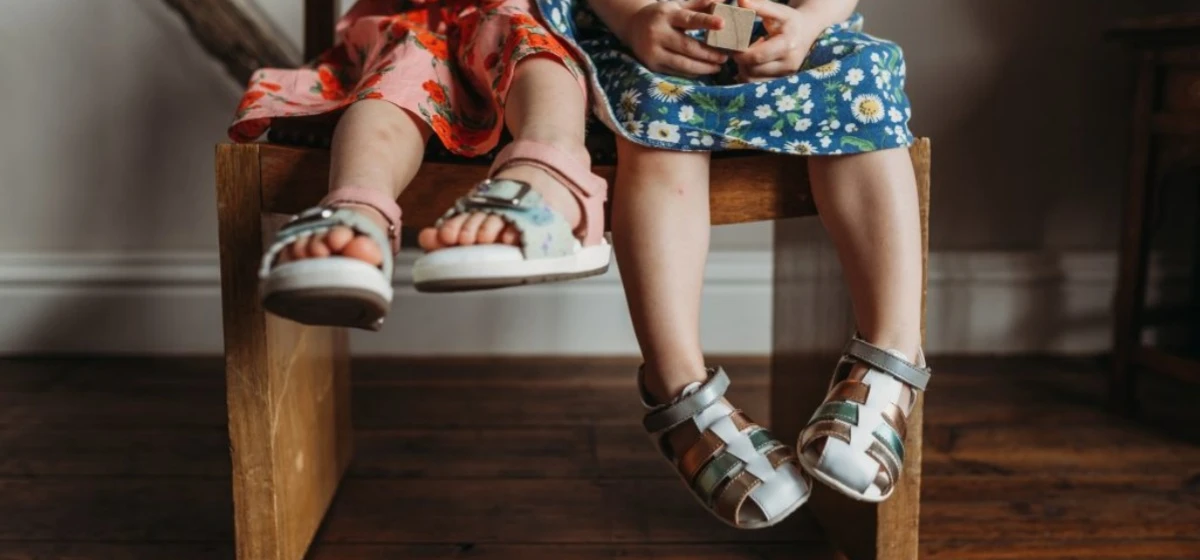
What Happens When Kids Wear the Wrong Size
The business case for precision sizing is clear. But the case for children's foot health is even more urgent-and young parents today are paying attention.
Research from Poland's Jan Kochanowski University, published in Medical Studies in 2025, examined 1,225 school-age children and found that over 50% of children were wearing footwear that was ill-fitting in length. The trend: children generally wear shoes one size larger than their actual foot length would suggest. You'd think parents would err on the side of too small to save money. They actually do the opposite-buying larger "to grow into"-and still get it wrong.
Other studies paint an even starker picture. Research cited in the industry indicates that nearly 70% of children end up wearing shoes that don't fit right, which can cause discomfort or lead to long-term foot issues. And according to a study referenced by the American Podiatric Medical Association, nearly 60% of kids wear shoes that are way too small.
Ill-fitting footwear during childhood can hinder proper foot development and optimal mobility, negatively impacting gait acquisition and potentially leading to deformities and muscular dysfunctions. In a market where parents are increasingly aware of this-with 60.40% of consumers citing ankle support and 60.25% citing arch support as top priorities for children's footwear-offering the right fit isn't just a convenience. It's a core value proposition.
Chart 2: Children's Footwear Fit Statistics
| Statistic | Percentage |
|---|---|
| Children wearing improperly fitted shoes | 70% |
| Children wearing shoes one size too large | >50% |
| Children wearing shoes too small | ~60% |
*Sources: Academic study of 1,225 school-age children (Medical Studies 2025); Crossleap industry research; APMA-referenced data*
These figures aren't just alarming for parents-they're an opportunity for you. Every parent who walks into your store wants to avoid being part of that 70%. The brand that helps them succeed keeps their loyalty.
From Guessing to Knowing: The Xianku 3D Foot Scanner
So how do you move from sizing guesswork to sizing certainty?
The Xianku 3D intelligent foot scanner uses advanced 3D structured light scanning technology to capture a child's foot in just one second. It produces millimeter-precision 3D models containing millions of point cloud data points and captures over 20 key biomechanical dimensions-not just length and width, but arch height, instep girth, heel width, and foot volume metrics that traditional Brannock devices simply cannot measure.
This isn't a "close enough" tool. This is precision at scale.
The system's AI-driven bike calculation engine analyzes the captured data against the shoe last dimensions of your specific inventory, delivering real-time, model-specific size recommendations. When a child steps on the scanner, in seconds you know:
- Which size fits their foot shape-not just length
- Whether the shoe's last matches their arch profile
- How width variations across brands affect the fit
- Exactly which product from your shelf is most likely to result in a satisfied, return-free sale
Turning Sizing Into Your Competitive Advantage
Children's footwear retailers who adopt 3D scanning technology are already seeing the results.
Reima, a global children's outdoor brand, cut returns by 38% after implementing 3D foot scanning. A major sports retailer introduced AR shoe-fitting tools and saw a 20% reduction in size-related returns within six months. Tecovas, a boot brand leveraging AI for inventory intelligence, saw a 9.6% revenue lift and a 2% in-stock improvement across AI-managed categories compared to human-managed ones.
Those aren't incremental improvements. Those are margin-transforming shifts.
Chart 3: Potential Savings from 3D Foot Scanning Implementation
| Metric | Without 3D Scanning | With 3D Scanning | Estimated Improvement |
|---|---|---|---|
| Size-based return rate | 25–35% | 15–18% | 40–50% reduction |
| Average return processing cost (per item) | 10–10–65 | 10–10–65 | Reduced total volume |
| Customer trust in size recommendation | Moderate | High | Increased loyalty/retention |
Source: Returnista case studies; Reima results (38% return reduction)
Here's the overlooked benefit: reduced returns also reduce the reverse logistics burden on your inventory staff. Fewer returns means more time for associates to engage with customers, drive add-on sales, and deliver the service experience that keeps families coming back. In today's retail environment, where physical stores are regaining prominence as trusted discovery channels, that operational efficiency translates directly to improved customer experience.
Why It Matters for Your Brand
Implementing Xianku's 3D foot scanning technology isn't just about reducing returns. It's about:
- Building trust. Parents who see a 3D model of their child's foot and receive an AI-driven size recommendation trust that recommendation far more than a sales associate's guess. Trust drives purchases, reduces second-guessing, and minimizes post-purchase regret.
- Differentiating your store. Only a fraction of children's footwear retailers currently offer precise 3D scanning. Being the one in your market that does positions you as the expert-the place parents know to go for a perfect fit, every time.
- Creating a seamless experience. The Xianku scanner generates a 3D foot model that integrates directly with your point-of-sale and CRM systems. That model can guide future purchases, support e-commerce buying decisions, and build a customer data asset that grows in value with every scan.
- Safeguarding children's health. When you sell the right-sized shoe, you're not just selling a product. You're protecting a child's developing foot-a message that resonates strongly with today's health-conscious parents.
The Bottom Line
The children's footwear market is growing. Consumer behavior is shifting back to physical stores, but price sensitivity is higher than ever. Parents are more informed about foot health risks-and more demanding about fit accuracy. Returns from poor sizing are bleeding margins across the industry, and customers are quick to abandon brands that don't get it right.
There's only one long-term solution: stop guessing, start measuring.
The Xianku 3D foot scanner transforms sizing from a source of risk into a source of revenue. One-second scans. Millimeter precision. AI-driven recommendations. Reduced returns. Increased customer confidence. And a healthier bottom line.
Your customers-and their children's feet-are waiting.