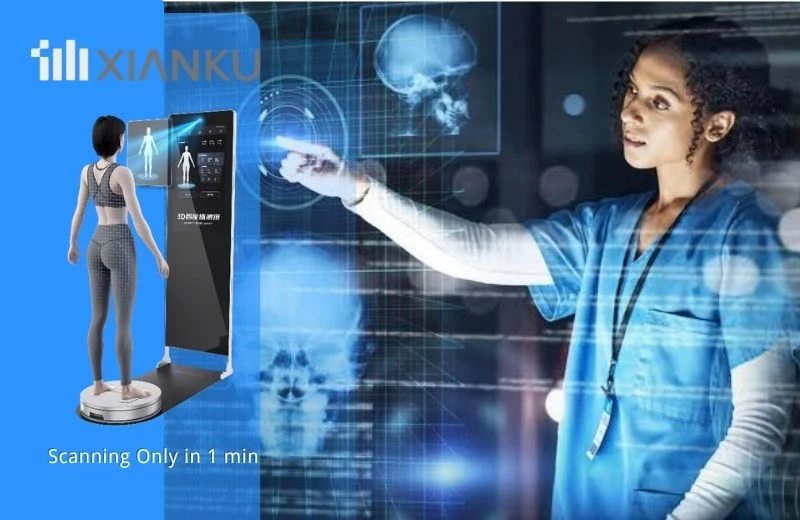
How 3D Body Scanning Is Creating a New Entry Point for Preventive Healthcare
For decades, healthcare has operated around two familiar models.
The first is the traditional medical system:
People seek medical care when something goes wrong.
Pain appears.
Symptoms develop.
A condition begins affecting daily life.
Only then do most people enter the healthcare system.
This approach is essential for treating diseases, but it also reveals a fundamental limitation: many health problems are not created overnight. Before discomfort appears, the human body often experiences gradual changes that are difficult to notice.
- Changes in posture.
- Changes in body balance.
- Changes in movement patterns.
- Changes in physical structure.
However, most people do not have a simple and accessible way to understand these changes.
The second model is high-end preventive healthcare.
Comprehensive physical examinations, advanced imaging, and personalized health assessments provide deeper insights into the human body.
But these services often come with significant barriers:
- High costs.
- Limited availability.
- Complex processes.
For many people, they remain an occasional experience rather than a continuous health management solution.
Between these two extremes, there has always been a massive market gap.
A space for people who are not sick enough to visit a hospital, but who still want to understand their bodies before problems appear.
This is the missing layer of modern healthcare:
Accessible, continuous, and data-driven preventive health management.
Healthcare Has Always Focused on Problems. The Future Will Focus on Understanding.
Traditional healthcare is designed around one key question:
"What problem does the patient have?"
But the next generation of healthcare may begin with a different question:
"What is happening inside the body before a problem appears?"
This shift represents a move from reactive healthcare to proactive healthcare.
Instead of waiting for pain, people can begin monitoring changes earlier.
Instead of discovering problems after they become serious, individuals can understand their physical condition continuously.
But preventive healthcare requires one essential foundation:
Data.
Without measurable information, health management is often based on assumptions.
People know their weight.
They know their height.
Some track their heart rate or daily steps.
But many people do not know:
Is their posture balanced?
Are their shoulders aligned?
Has their body symmetry changed?
Are there hidden structural issues affecting their movement?
The human body is constantly changing.
Yet most people lack a clear way to see those changes.
The Challenge: The Human Body Is Complex, But Health Data Is Limited
The human body is one of the most complex systems in the world.
It is not defined by one measurement.
Two people can have the same height and weight but completely different body structures.
One person may have better posture.
Another may have muscular imbalance.
One person may experience discomfort because of movement patterns that have developed over years.
However, traditional health measurement often captures only limited information at a specific moment.
A medical examination may identify a disease.
A fitness device may track activity.
But between these two points exists a large amount of missing information:
How does the body change over time?
How does posture develop?
How does physical structure influence comfort and movement?
This is where 3D Body Scanning creates a new possibility.
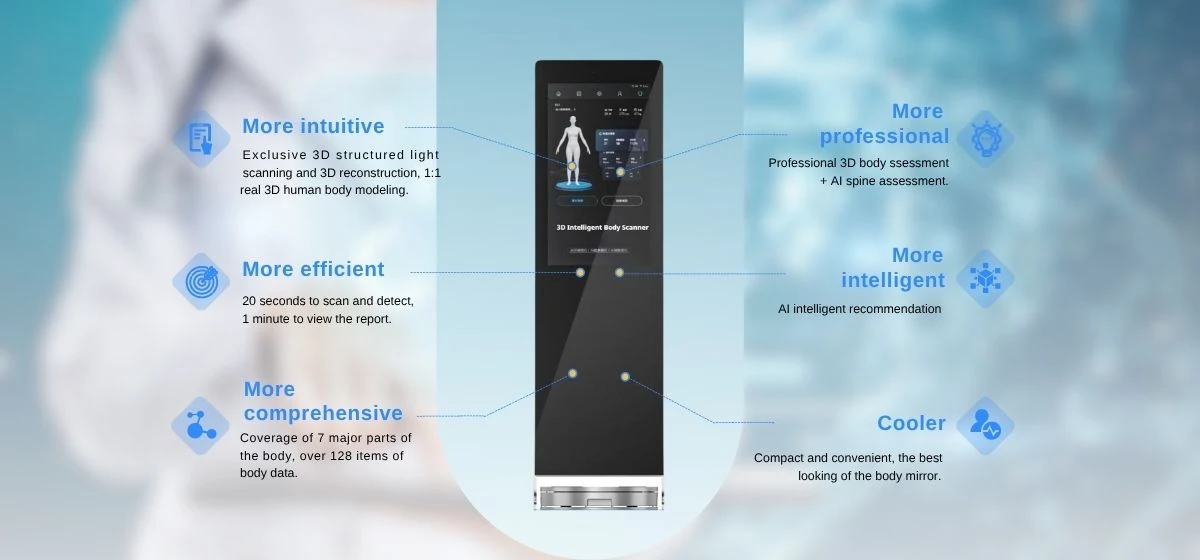
3D Body Scanner: Turning the Human Body Into Digital Data
A 3D Body Scanner does not simply capture an image of the human body.
It creates a digital representation of physical structure.
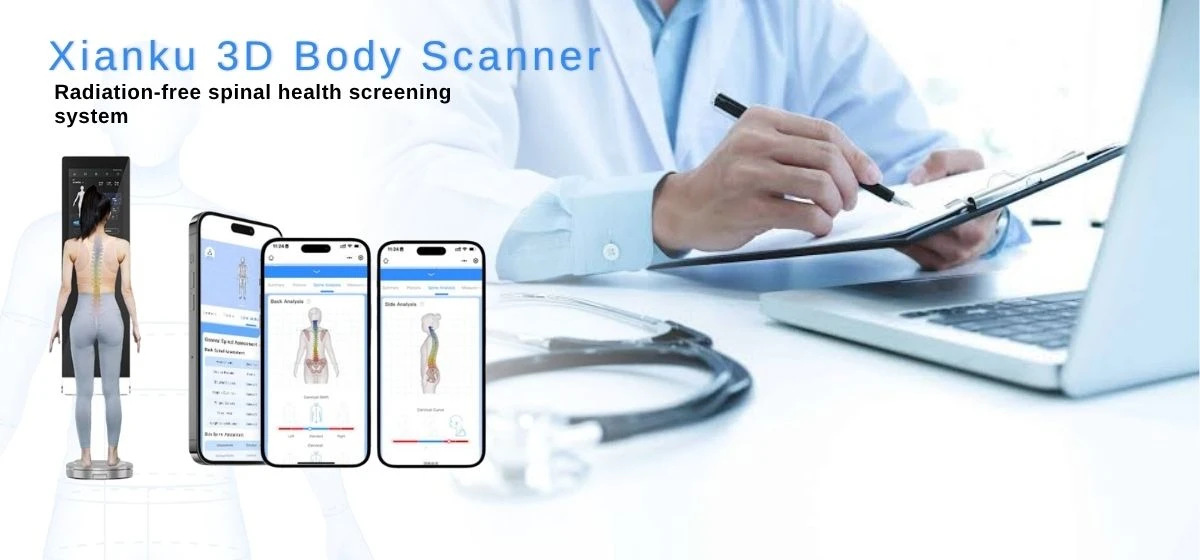
Through non-contact scanning technology, the system can capture important body information, including:
- Body proportions
- Posture alignment
- Shoulder balance
- Body symmetry
- Physical shape changes
The significance is not only measurement.
It is visualization.
For the first time, people can see their body from a data perspective.
A person may feel discomfort but cannot explain why.
A professional may identify a potential issue but struggle to communicate it clearly.
With digital body visualization, invisible problems become easier to understand.
Instead of saying:
"Your posture may need improvement."
A professional can show:
"This is your current body alignment, and this is how it changes after intervention."
From "Trust Me" to "Let Me Show You"
One of the biggest challenges in healthcare is not always treatment itself.
It is trust.
Patients often receive professional advice, but many questions remain:
Is the treatment working?
Has my condition improved?
What has actually changed?
This communication gap affects patient confidence and long-term engagement.
3D Body Scanning introduces a new way of communication:
Visual evidence.
Before treatment:
Patients can understand their current physical condition.
During treatment:
Professionals can track changes.
After treatment:
Patients can see measurable improvements.
Healthcare moves from explanation-based communication toward data-based communication.
The relationship changes from:
"Trust me."
to:
"Let me show you."
Beyond Diagnosis: The Rise of Personalized Health Solutions
The value of body data is not limited to identifying problems.
Its greater potential lies in personalization.
For decades, many health-related products have been designed using average measurements.
- A standard pillow.
- A standard mattress.
- A standard shoe.
- A standard insole.
But the human body is not standard.
Different people require different support.
- A pillow suitable for one person's neck curve may not work for another.
- A shoe comfortable for one foot structure may create pressure for another.
- A recovery solution effective for one body type may not be suitable for another.
The future of wellness is moving toward a new principle:
Products should adapt to people, not people adapt to products.
From 3D Body Data to Personalized Foot Health
The human body is an interconnected system.
One of the most important foundations of movement begins with the feet.
Every step creates a chain reaction through:
- Ankles
- Knees
- Hips
- Spine
However, foot health has traditionally been simplified into one question:
"What shoe size do you wear?"
But foot structure is far more complicated.
Two people wearing the same shoe size may have completely different:
- Arch heights
- Foot widths
- Pressure distribution
- Structural needs
This is why 3D Foot Scanning becomes an important extension of body data.
A 3D Foot Scanner can create a detailed digital model of the foot and identify different structural characteristics, such as:
- Normal arches
- Flat feet
- Severe flat feet
- High arches
The result is a transition from guessing to understanding.
AI + 3D Printing: Turning Data Into Personalized Solutions
Collecting body data is only the beginning.
The next challenge is transforming information into solutions.
This is where artificial intelligence and 3D printing create a powerful combination.
The future workflow becomes:
3D Scan
↓
Digital Body Model
↓
AI Analysis
↓
Personalized Recommendation
↓
3D Manufacturing
For foot health, this means a person's unique foot structure can directly influence the creation of:
- Customized insoles
- Personalized support structures
- 3D printed footwear
A 3D printed insole is not simply another product.
It is the physical result of personal data.
Instead of producing millions of identical products and hoping they fit, manufacturers can create solutions based on individual needs.
The Business Opportunity: From Selling Products to Providing Health Solutions
The emergence of 3D Body Scanning is also changing how businesses interact with customers.
Traditional retail focuses on products:
- Which pillow?
- Which shoe?
- Which insole?
Future health-oriented businesses may focus on understanding:
What does this individual actually need?
For clinics, body scanning can improve communication and patient trust.
For retailers, it creates a more personalized customer experience.
For wellness brands, it provides a bridge between products and health concepts.
The value is no longer only in selling a product.
The value is in providing a data-driven solution.
The Future of Healthcare Is Not More Tests. It Is Continuous Understanding.
The biggest change in healthcare may not come from replacing doctors or creating more complicated examinations.
It may come from giving people a better understanding of their own bodies.
The future lies between disease treatment and expensive checkups.
It lies in continuous, accessible, and personalized health awareness.
3D Body Scanner creates the digital foundation.
AI transforms body data into meaningful insights.
3D printing turns those insights into personalized solutions.
Together, these technologies are building a new healthcare layer:
- A future where people do not wait until problems appear.
- A future where understanding the body becomes the first step toward protecting it.
alized footwear.