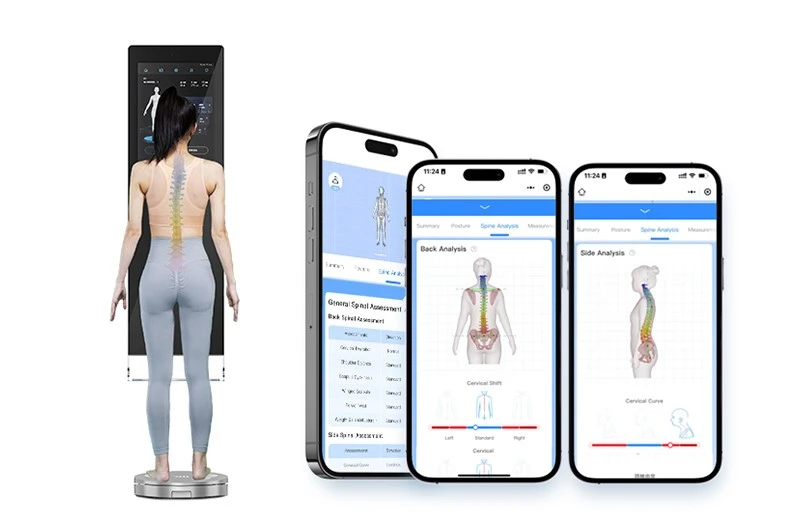
Your spine is the central pillar of your body-literally. It houses your spinal cord, supports your head, anchors your ribs, and transfers load from your upper body to your pelvis. When your spine is properly aligned, you move efficiently, breathe fully, and recover effectively during sleep. When it's misaligned, everything suffers.
Yet most people have never had a comprehensive spinal assessment. They may know they have "bad posture" or occasional back pain, but they lack the quantitative data to understand the root cause-or the solution.
Xianku's 3D Body Scanner changes that. By combining high-resolution surface scanning with AI-powered skeletal reconstruction, the system delivers a complete spinal health assessment in under one minute.
The Spinal Column: Complexity in Curves
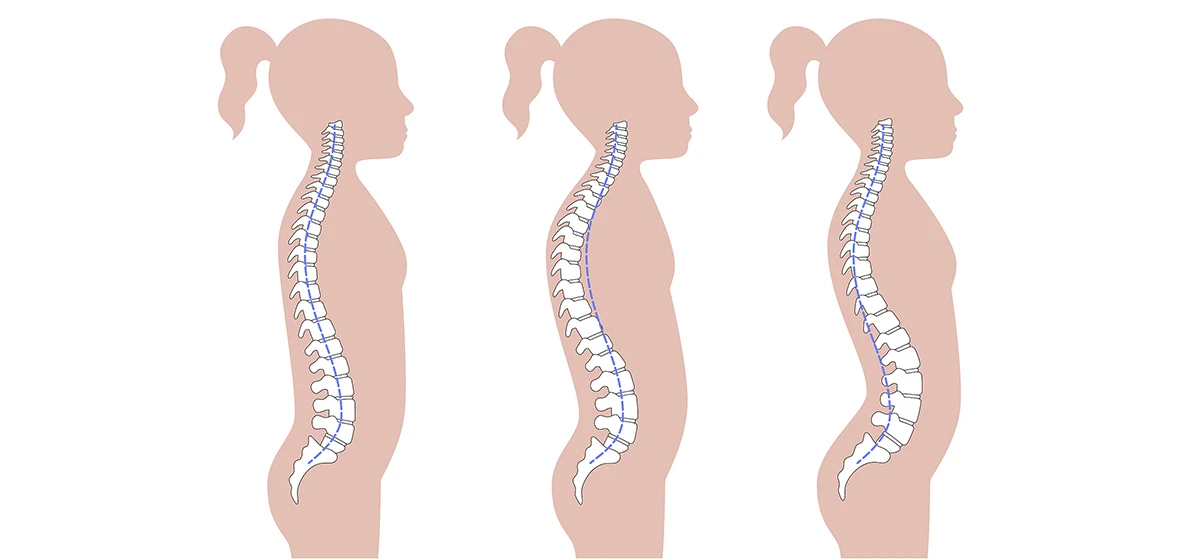
The adult spine consists of 33 vertebrae arranged in four natural curves:
| Region | Vertebrae | Natural Curve | Function |
|---|---|---|---|
| Cervical | 7 | Lordosis (inward) | Supports head; allows rotation |
| Thoracic | 12 | Kyphosis (outward) | Anchors ribs; protects heart/lungs |
| Lumbar | 5 | Lordosis (inward) | Bears body weight; allows flexion |
| Sacral | 5 (fused) | Kyphosis | Transfers load to pelvis |
Deviations from these natural curves-either excessive or insufficient curvature-create biomechanical stress. Over time, this stress leads to pain, degenerative changes, and functional limitations.
Scoliosis: The Lateral Curve
Scoliosis is a lateral (sideways) curvature of the spine, often accompanied by vertebral rotation. It affects an estimated 2-3% of the population-approximately 7 million people in the United States alone.
Types of Scoliosis
- Idiopathic scoliosis: Most common; cause unknown; typically appears in adolescence
- Degenerative scoliosis: Develops in adulthood due to asymmetric disc degeneration
- Functional scoliosis: Caused by leg length discrepancy or muscular imbalance; resolves when underlying cause is addressed
Cobb Angle Measurement
The Cobb angle is the gold standard for quantifying scoliosis severity:
- < 10°: Not considered scoliosis
- 10°-25°: Mild scoliosis; monitor for progression
- 25°-40°: Moderate scoliosis; may require bracing
- 40°: Severe scoliosis; may require surgical intervention
Xianku's Scoliosis Assessment
Using the 3D surface model and reconstructed skeleton, Xianku's AI:
- Identifies the spinal midline from C7 to S1
- Calculates Cobb angles for thoracic and lumbar curves
- Detects vertebral rotation indicators
- Assesses shoulder height asymmetry (a common scoliosis indicator)
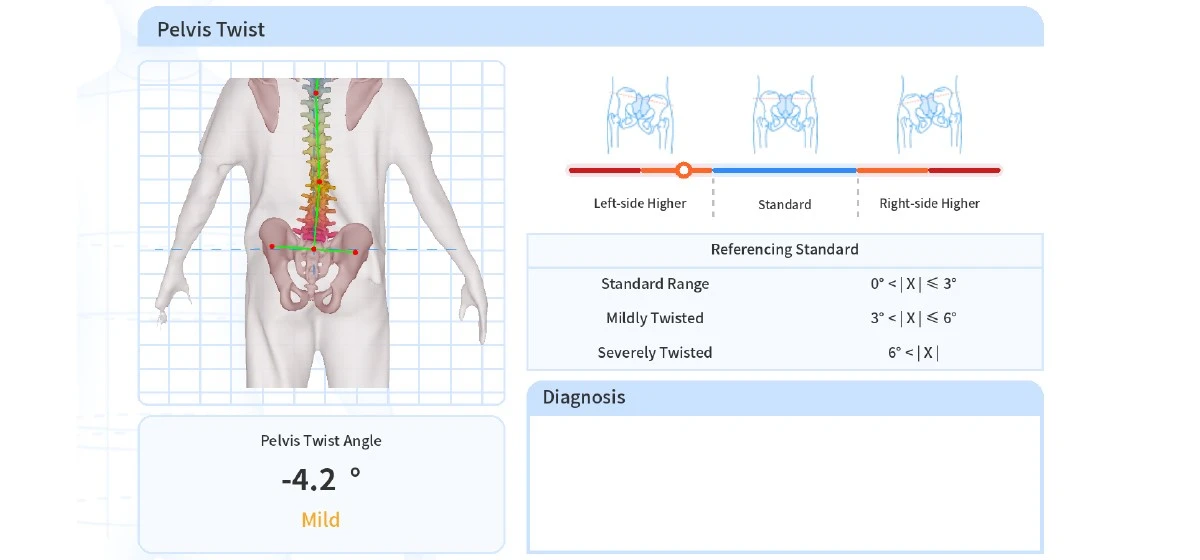
- Evaluates pelvic tilt and trunk shift
The system outputs a clear visual representation of the curve pattern along with quantitative measurements. This allows users to track changes over time and provides clinicians with objective data for treatment planning.
Kyphosis: The Upper Back Curve
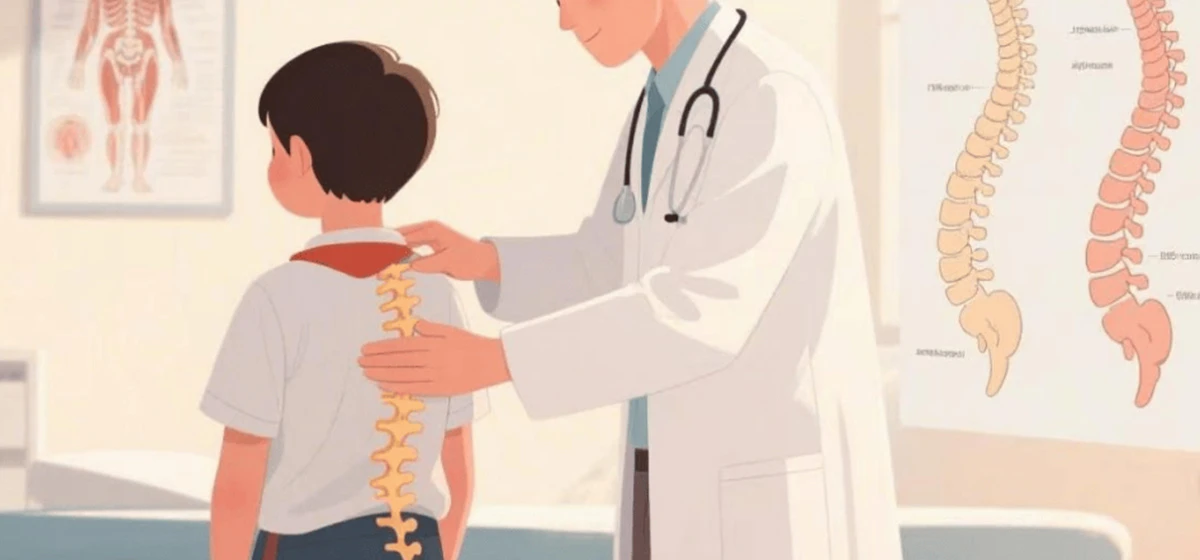
Kyphosis refers to excessive outward curvature of the thoracic spine. A normal thoracic kyphosis ranges from 20° to 45°. Measurements above 50° indicate hyperkyphosis-commonly known as "hunchback" or "round back."
Causes of Hyperkyphosis
- Poor posture (postural kyphosis)
- Scheuermann's disease (structural kyphosis in adolescents)
- Osteoporotic compression fractures (common in older adults)
- Degenerative disc disease
Sleep Implications
- Hyperkyphosis creates unique challenges for sleep:
- The upper back may not contact the mattress surface, creating a gap that strains the cervical and lumbar regions
- Side sleeping may be difficult due to reduced thoracic flexibility
- Pillow requirements become critical; too low or too high can exacerbate the curve
Xianku's Kyphosis Assessment
The AI calculates thoracic kyphosis angle by fitting a curve to the thoracic spine and measuring the angle between the upper and lower segments. The result is displayed with visual overlays showing the deviation from normal range.
Lordosis: The Lower Back Curve
Lordosis is the inward curve of the cervical and lumbar spine. While some lordosis is normal, excessive lumbar lordosis (swayback) creates mechanical stress on the posterior spinal structures and often contributes to lower back pain.
Causes of Hyperlordosis
- Weak abdominal muscles
- Tight hip flexors
- Obesity (particularly abdominal)
- Pregnancy
- Ankylosing spondylitis
Sleep Implications
Excessive lumbar lordosis requires targeted support during sleep:
- Back sleeping requires firm support under the lumbar region to prevent the curve from flattening
- Side sleeping may be compromised if the mattress allows the pelvis to sink, increasing the lordotic curve
- Stomach sleeping is generally contraindicated as it tends to increase lordosis
Xianku's Lordosis Assessment
The AI calculates lumbar lordosis angle by measuring the curve between L1 and S1. The system flags measurements outside the normal range (20°-45°) and recommends appropriate sleep support strategies.
Pelvic Tilt: The Foundation
The pelvis is the foundation of the spine. Pelvic tilt-anterior (forward) or posterior (backward)-directly influences lumbar curvature and overall spinal alignment.
Anterior Pelvic Tilt
The front of the pelvis drops forward while the back rises. This increases lumbar lordosis and creates the appearance of a "swayback" with a protruding abdomen.
Posterior Pelvic Tilt
The front of the pelvis rises while the back drops. This flattens the lumbar curve and often accompanies a "slouched" posture.
Sleep Implications
Pelvic tilt significantly affects mattress requirements:
- Anterior tilt: Requires firm lumbar support to prevent the pelvis from rotating further forward during sleep
- Posterior tilt: Requires medium support that doesn't encourage further flattening of the lumbar curve
Xianku's Pelvic Assessment
The AI identifies the anterior superior iliac spines (ASIS) and posterior superior iliac spines (PSIS) to calculate pelvic tilt angle. The result is displayed with visual representation of the pelvic orientation relative to the horizontal plane.
Shoulder and Neck: The Cervical Connection
The cervical spine supports the head and maintains the airway during sleep. Shoulder and neck posture directly impact pillow requirements.
Forward Head Posture
The head sits forward of the shoulders rather than aligned over the body. This increases cervical lordosis and places chronic strain on the neck extensors.
Rounded Shoulders
The shoulders roll forward and upward, often accompanying forward head posture. This reduces the effective shoulder breadth and affects side-sleeping alignment.
High/Low Shoulders
Shoulder height asymmetry (one shoulder higher than the other) is common and may indicate scoliosis, muscular imbalance, or habitual postures.
Xianku's Cervical Assessment
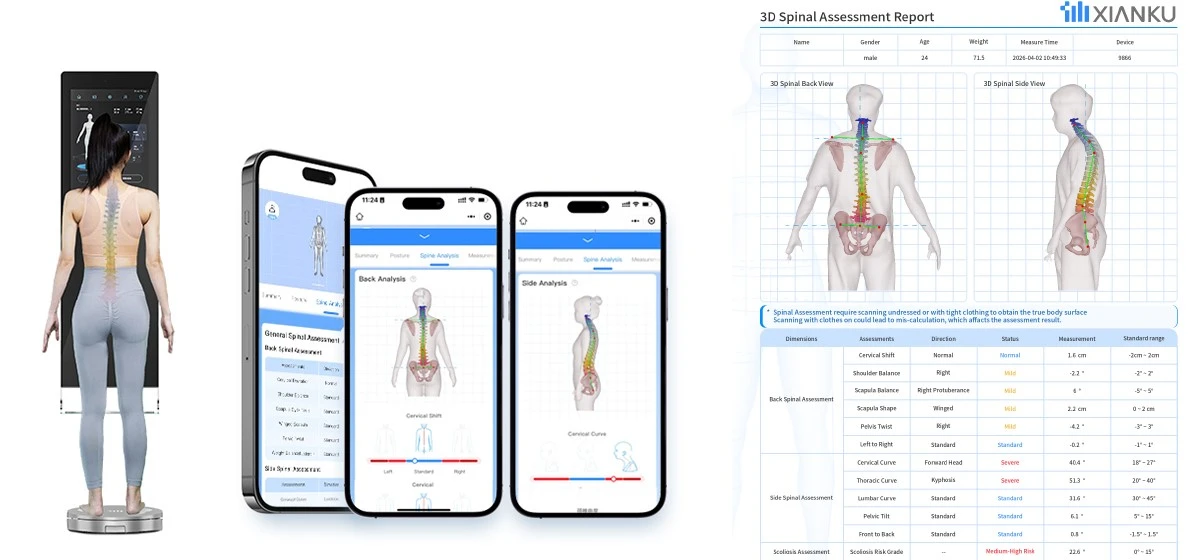
The system measures:
- Forward head posture (angle between C7 and tragus)
- Shoulder protraction (rounded shoulders)
- Shoulder height asymmetry (millimeters difference)
These measurements directly inform pillow height recommendations-ensuring the neck is properly supported regardless of the user's posture.
Leg and Knee Alignment
While not directly spinal, leg and knee alignment affects the pelvis, which affects the spine.
Knee Hyperextension
The knee bends backward beyond neutral. This can indicate ligamentous laxity and affects standing posture.
O/X-Shaped Legs
Varus (O-shaped) or valgus (X-shaped) alignment affects gait and weight distribution, potentially influencing pelvic tilt during sleep.
Xianku's Lower Extremity Assessment
The AI evaluates:
- Knee extension angle
- Varus/valgus alignment
- Ankle position
This data contributes to the complete biomechanical profile used for mattress and pillow recommendations.
From Assessment to Action
A spinal assessment has value only if it leads to actionable insights. Xianku's system connects assessment to intervention:
For Consumers
- Clear visual understanding of their posture
- Specific sleep recommendations based on their spinal profile
- Mattress and pillow selections designed to support their unique curves
For Clinicians
- Objective baseline measurements for treatment planning
- Ability to track progress over time
- Documentation for insurance and patient records
For Retailers
- Data-driven justification for product recommendations
- Ability to address customer concerns about spinal health
- Differentiation from competitors still using guesswork
The Clinical Validation
Xianku's spinal assessment technology is not a replacement for medical imaging-X-rays, CT, and MRI remain the gold standard for diagnosing spinal pathology. However, for posture assessment, curve measurement, and tracking changes over time, 3D surface scanning offers a safe, radiation-free alternative that can be deployed at scale.
In clinical studies, Xianku's spinal measurements show strong correlation with radiographic measurements for Cobb angle assessment in scoliosis patients. This validation makes the system a valuable tool for screening, monitoring, and patient education.
Sleep as Spinal Therapy
Your spine spends 7-8 hours per night on your sleep surface. During that time, it has an opportunity to recover from the stresses of daily life-or to worsen existing imbalances.
By providing a comprehensive spinal assessment and matching that assessment to optimal sleep surfaces, Xianku transforms sleep from a passive activity into an active therapy for spinal health.
In our next article, we'll explore the 45 body circumference measurements that complement the spinal assessment, revealing how body shape and composition affect sleep quality.