How Contactless Technology Is Redefining Everyday Life-and Why 3D Body and Foot Scanning Could Become the Future of Preventive Healthcare
Imagine a normal day in the near future.
You walk into a store.
A camera recognizes you.
- You select what you need.
- You leave without waiting in line.
- Your payment is completed automatically.
Later, you enter a healthcare center.
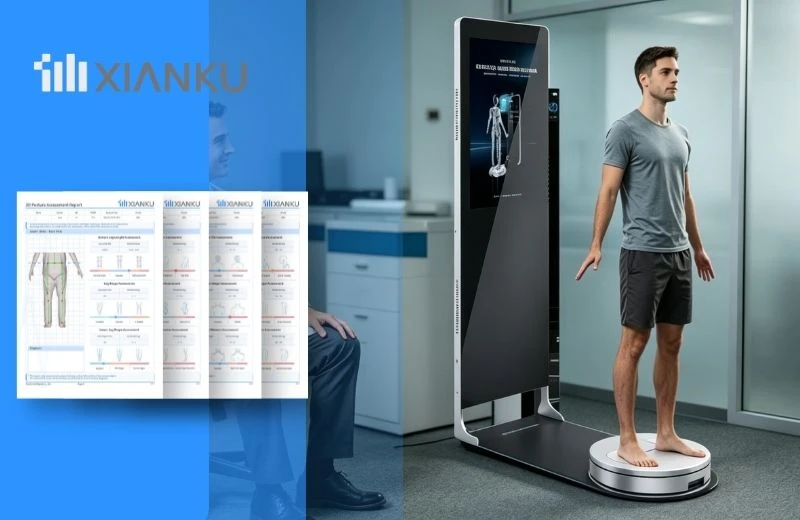
Instead of filling out endless forms and waiting for manual measurements, you simply stand in front of a scanner.

Within seconds, a digital model of your body is created.
- Your posture.
- Your body balance.
- Your physical measurements.
- Your foot structure.
All captured without touching anything.
This may sound futuristic.
But the first part of this experience is already happening today.
The world is rapidly moving toward a contactless future.
- We pay without touching cash.
- We unlock devices without passwords.
- We shop without traditional checkout.
- We control technology through voice and gestures.
Contactless technology has already transformed the way we interact with products, services, and information.
But one question remains:
Why has healthcare been slower to adopt the contactless revolution?
If technology can make shopping faster, banking easier, and communication more convenient, shouldn't it also help us understand and manage our own health more efficiently?
The next major transformation of contactless technology may not happen in retail.
It may happen in healthcare.
The Contactless Revolution Has Already Changed Everyday Life
A decade ago, many daily activities required direct physical interaction.
People carried wallets filled with cash and cards.
Customers waited in checkout lines.
Employees manually recorded information.
Today, many of these processes have become digital.
Contactless payments allow people to complete transactions with a simple tap.
Smart devices recognize users instantly.
Automated stores reduce the need for traditional checkout processes.
Artificial intelligence helps people search, communicate, and make decisions.
Behind all of these changes is the same principle:
Technology removes unnecessary friction.
The goal of contactless technology is not simply avoiding physical touch.
It is creating experiences that are:
- Faster
- Simpler
- More personalized
- More efficient
Consumers have become accustomed to this level of convenience.
They expect technology to understand their needs and provide solutions quickly.
Healthcare is now facing the same expectation.
People no longer want complicated processes if technology can provide a better experience.
Why Healthcare Needs a Contactless Transformation
Healthcare is one of the most important industries in the world.
Yet many assessment processes still depend heavily on traditional methods.
A patient visits a clinic.
A professional observes symptoms.
Measurements are taken manually.
Information is recorded.
A treatment plan is developed.
This approach has value because human expertise remains essential.
However, modern healthcare faces new challenges.
The global population is aging.
Chronic conditions are increasing.
People are becoming more interested in preventive health.
Healthcare systems need ways to serve more people while maintaining quality.
Traditional assessment methods can become limited because they often require:
- More time
- More staff involvement
- Physical interaction
- Repeated manual measurements
The future of healthcare requires technology that can support professionals while improving the patient experience.
This is where contactless scanning technology becomes increasingly important.
Healthcare Is Moving From Treatment to Prevention
For many decades, healthcare followed a reactive model.
People visited professionals when something was already wrong.
Pain appeared.
Movement became limited.
A problem became noticeable.
Then treatment began.
But modern healthcare is moving toward prevention.
The question is changing from:
"How do we treat this problem?"
to:
"How can we understand risk earlier?"
Preventive healthcare depends on one important factor:
Information.
You cannot improve what you cannot measure.
You cannot personalize recommendations without understanding individual differences.
Every person's body is unique.
Everyone has different:
- Body proportions
- Posture habits
- Movement patterns
- Foot structures
- Lifestyle influences
The future of healthcare requires moving beyond general assumptions toward personalized understanding.

The Human Body Deserves Better Measurement
The human body is a complex three-dimensional system.
However, many traditional measurements only capture limited information.
A person's height is one number.
Weight is one number.
But the body is much more than numbers on a scale.
Important health information can exist in:
- Body symmetry
- Shoulder alignment
- Posture patterns
- Body proportions
- Foot structure
Small changes may develop gradually over years.
- A slight posture imbalance.
- A change in movement habits.
- A shift in body alignment.
These changes may be difficult to recognize through everyday observation.
This creates a major opportunity for digital health technology:
Helping people see what was previously invisible.
3D Body Scanner: Turning the Human Body Into Digital Data
A 3D Body Scanner represents a new generation of contactless health assessment.
Instead of using traditional physical measurement methods, the technology captures the external structure of the body through scanning.
The process is simple:
- Stand naturally.
- Complete the scan.
- Generate a digital body model.
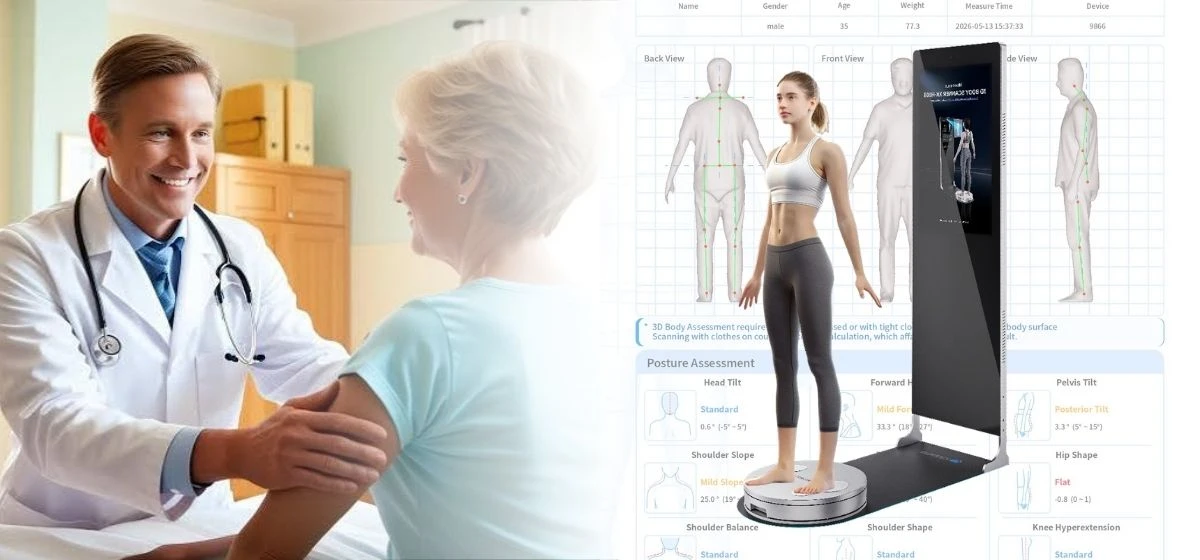
The result is a detailed representation that can help analyze:
- Body dimensions
- Body symmetry
- Shoulder balance
- Postural characteristics
- Physical proportions
This creates a new way of understanding the human body.
Instead of relying only on descriptions:
"My shoulder feels uncomfortable."
"My posture seems different."
"My body feels unbalanced."
Professionals can use visual data to better understand the situation.
Why Visualization Creates Better Healthcare Experiences
One of the biggest challenges in healthcare is communication.
Professionals understand anatomy.
Patients understand their own experiences.
Sometimes these two perspectives do not connect easily.
A doctor or therapist may explain:
"Your posture shows imbalance."
But the patient may ask:
"Where exactly is the problem?"
Visualization changes this conversation.
When people can see their own body data, they can better understand:
What is happening
Why it matters
How improvement happens
This creates stronger communication between professionals and patients.
Trust grows when people can see progress.
Contactless Foot Scanning: Understanding the Foundation of Movement
While the upper body receives significant attention, the feet play a critical role in human health.
Every step begins with the feet.
The feet support the entire body and influence movement patterns throughout the lower body.
However, most people know only one thing about their feet:
Their shoe size.
But shoe size does not tell the complete story.
It does not reveal:
- Arch height
- Foot shape
- Foot width
- Left-right differences
- Structural characteristics
This is where 3D Foot Scanning creates another opportunity for contactless healthcare.
A foot scanner can capture detailed information about the foot structure without complicated physical measurement.
It can help identify:
- Normal arches
- Flat feet
- High arches
- Individual foot characteristics
This information can support better decisions for:
- Footwear selection
- Insoles
- Sports performance
- Foot health management
From Standard Products to Personalized Solutions
The contactless revolution is closely connected with another major trend:
Personalization.
Consumers increasingly expect products designed around them.
Streaming platforms recommend entertainment based on individual preferences.
Online shopping platforms recommend products based on personal behavior.
Fitness technology creates personalized training plans.
Healthcare is moving in the same direction.
The future will not be:
- One treatment for everyone.
- One shoe for everyone.
- One support solution for everyone.
Instead:
Personalized solutions based on individual data.
3D Body Scanning and 3D Foot Scanning provide the foundation for this transformation.
They help connect personal anatomy with personalized recommendations.
The Future Clinic Will Not Only Treat Problems. It Will Understand People.
The role of healthcare providers is changing.
Future clinics will not only provide treatment.
They will provide understanding.
A patient will not simply hear:
"You have a posture issue."
They may see:
"Here is your body data."
They will not simply hear:
"You need better foot support."
They may see:
"Here is your foot structure and recommended solution."
This creates a more transparent and engaging healthcare experience.
Technology does not replace human expertise.
It strengthens it.
The Next Contactless Revolution Is Inside Our Bodies
The world has already embraced contactless experiences.
- We pay without touching.
- We shop without waiting.
- We interact with technology in new ways every day.
The next step is helping people understand their own bodies with the same level of convenience.
The future of healthcare will not begin only when problems appear.
It will begin earlier.
- With better measurement.
- Better understanding.
- Better prevention.
3D Body Scanning and 3D Foot Scanning represent an important step toward this future.
Because the most important information we need may not be stored in a document, a device, or a database.
It is already with us.
It is our body.
And the first step toward better health is learning how to truly see it.