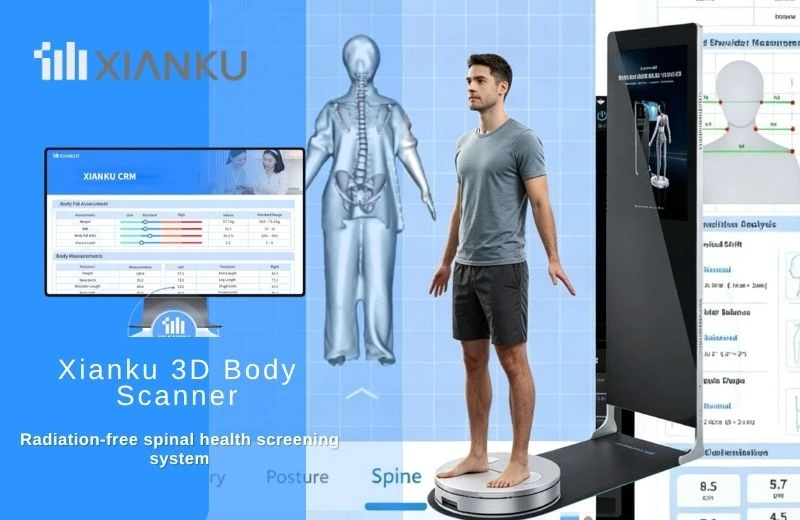
What the Rise of Neko Health Says About the Future of Preventive Healthcare
For years, preventive healthcare has been discussed primarily within hospitals, research institutions, and public health organizations. While governments encouraged regular screenings and physicians emphasized early detection, most people still associated healthcare with one thing:
treating illness after symptoms appeared.
That perception is beginning to change.
Earlier this year, Swedish health technology company Neko Health once again attracted international attention after announcing its expansion into the U.S. market. Founded by Spotify co-founder Daniel Ek, the company has become one of the most closely watched names in digital health, attracting significant investment and generating widespread discussion across the healthcare and technology industries.
Interestingly, what captured people's attention wasn't simply another AI startup.
It was the experience.
A fast, non-invasive health assessment powered by advanced scanning technology and artificial intelligence. An appointment measured in minutes rather than hours. A process designed around understanding health before disease becomes visible.
Whether or not Neko ultimately reshapes healthcare isn't the most important question.
The more important question is:
Why has the idea of a full-body scan suddenly become so compelling?
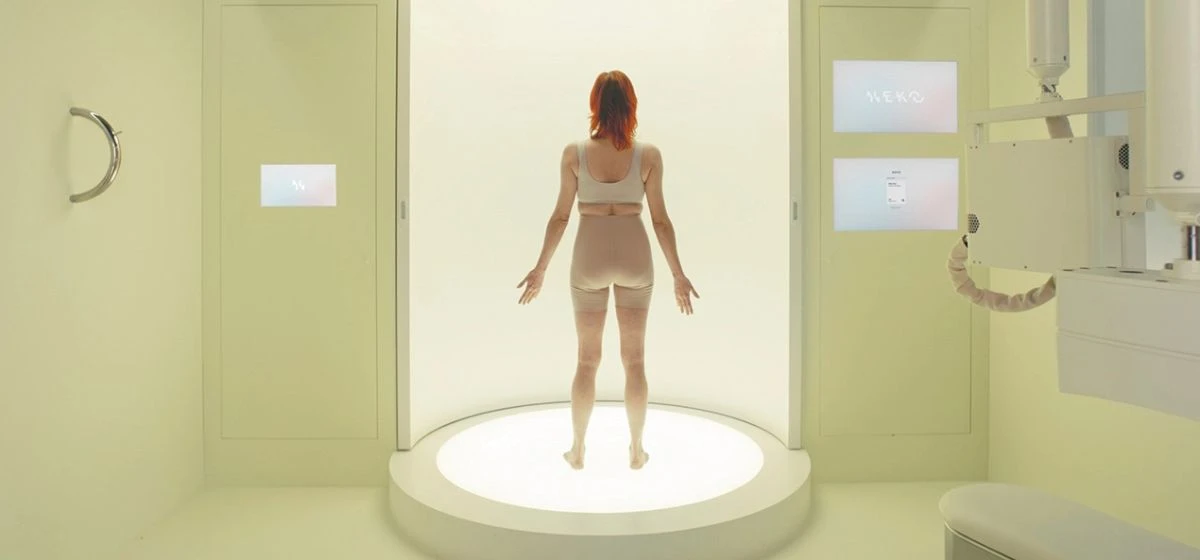
The answer lies in a much larger transformation-one that extends far beyond a single company or technology.
Healthcare is entering the era of prevention, personalization, and continuous health intelligence.
Preventive Healthcare Is Becoming the New Standard
For decades, healthcare systems around the world have been built around diagnosing and treating disease.
Patients develop symptoms.
They schedule appointments.
Doctors investigate the cause.
Treatment begins.
This model has undoubtedly saved countless lives, yet it is becoming increasingly difficult to sustain.
Populations are aging.
Chronic diseases continue to rise.
Healthcare costs are climbing faster than ever.
According to the World Health Organization, many chronic conditions-including cardiovascular disease, diabetes, and musculoskeletal disorders-are strongly influenced by lifestyle, movement, and long-term physical changes rather than sudden medical events.
These conditions rarely appear overnight.
Instead, they develop gradually through years of accumulated habits, subtle physical adaptations, and unnoticed changes in the body.
The challenge is that most of those changes remain invisible.
By the time pain appears, posture has often been deteriorating for years.
By the time mobility decreases, movement patterns may already have changed significantly.
By the time people decide to "get healthier," their bodies have often been compensating for hidden problems for far longer than they realize.
This growing awareness is changing how both healthcare providers and consumers think about prevention.
Instead of asking,
"How do we diagnose disease?"
the industry is beginning to ask,
"How do we understand health before disease develops?"
That single shift is redefining the role of health technology.
The Traditional Annual Checkup Is No Longer Enough
For many people, annual physical examinations remain the foundation of preventive care.
- Blood pressure.
- Blood tests.
- Heart rate.
- Electrocardiograms.
- Ultrasound imaging.
These assessments remain incredibly valuable and will continue to play an essential role in modern medicine.
However, they were never designed to tell the complete story.
Health is not only reflected in blood chemistry.
It is also reflected in how we stand.
How we move.
How our body changes over time.
How our muscles develop.
How our posture adapts to years of work, exercise, or inactivity.
How our physical balance gradually shifts with age.
Many of these changes occur slowly enough that neither patients nor clinicians notice them during routine visits.
Yet they often influence comfort, mobility, athletic performance, rehabilitation outcomes, and long-term quality of life.
This is why healthcare is expanding beyond traditional laboratory indicators.
It is beginning to incorporate structural health data-objective measurements that describe how the human body looks, moves, and changes over time.
Rather than replacing conventional medical examinations, these additional data points help create a more comprehensive understanding of physical health.
From Reactive Medicine to Continuous Health Intelligence
Perhaps the most significant change occurring today is not technological.
It is philosophical.
Historically, healthcare has been event-driven.
A patient experiences pain.
A clinician investigates.
A diagnosis is made.
A treatment plan follows.
Digital health is gradually introducing a different model.
Instead of isolated medical events, healthcare is becoming an ongoing process of observation.
Rather than collecting information once a year, organizations increasingly recognize the value of monitoring changes over months and years.
This concept-often described as continuous health intelligence-is becoming one of the defining characteristics of next-generation healthcare.
Just as wearable devices transformed how people monitor heart rate and physical activity, new generations of body scanning technologies are expanding what can be measured beyond physiological signals alone.
The goal is no longer simply collecting more data.
It is collecting better data-data that reveals patterns, tracks progress, supports early intervention, and enables more personalized recommendations.
For healthcare providers, this creates opportunities to improve patient engagement and long-term outcomes.
For businesses operating in health, wellness, rehabilitation, sports performance, and preventive care, it represents an entirely new way to deliver value.
The conversation is no longer centered on treating illness.
It is increasingly focused on maintaining health.
And that subtle difference is transforming the healthcare industry itself.
Why Businesses Are Paying Attention
The rise of companies like Neko Health has also captured the attention of healthcare investors, clinic operators, and enterprise decision-makers for another reason.
Consumers are changing.
People today expect healthcare experiences that are faster, more personalized, and easier to understand.
They are accustomed to real-time information in nearly every aspect of life-from finance and transportation to fitness and sleep tracking.
Healthcare is beginning to face those same expectations.
Organizations that can combine advanced technology with intuitive user experiences are becoming increasingly attractive-not simply because they improve operational efficiency, but because they help patients become active participants in their own health.
For enterprise buyers, this signals a broader shift.
The question is no longer whether digital health technologies will become part of healthcare services.
The question is which technologies will deliver measurable value for both providers and patients.
That is why full-body scanning has become such an important topic.
It represents more than a new device.
It represents a new philosophy of understanding health-one built on visibility, measurable data, and continuous improvement rather than reactive treatment alone.
And this is only the beginning.
Not All Full-Body Scans Are Created Equal
As public interest in full-body scanning continues to grow, one important misconception deserves clarification.
Not every "full-body scan" is designed to do the same job.
For many consumers, the term immediately brings to mind CT scanners or MRI systems used in hospitals. These technologies are indispensable for diagnosing internal diseases and medical conditions, providing clinicians with highly detailed images of organs, bones, and soft tissues.
However, a new generation of body scanning technologies is emerging with a very different purpose.
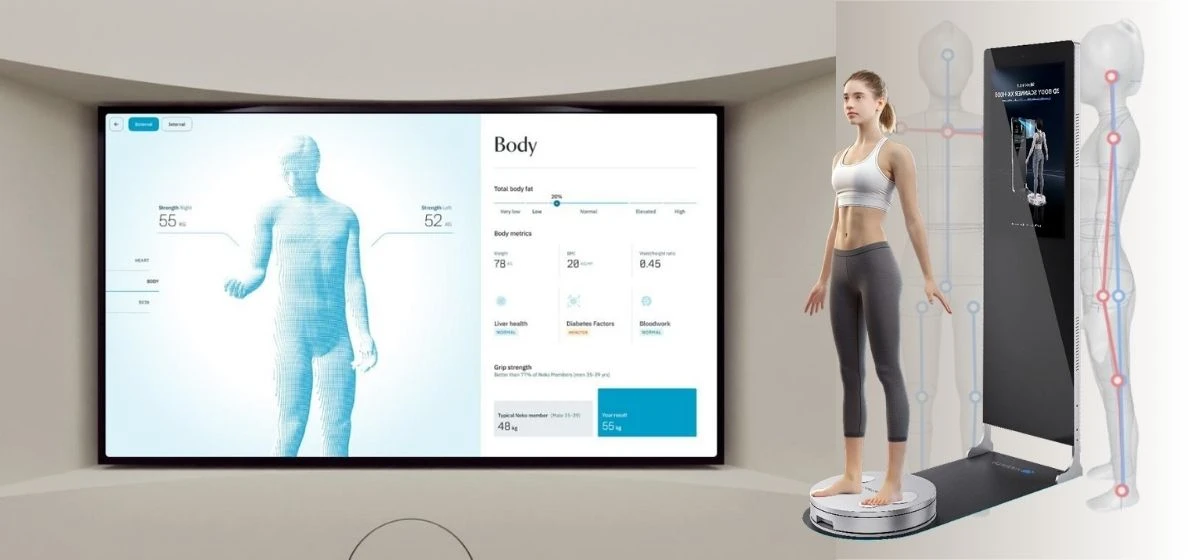
Rather than searching for disease inside the body, these systems focus on understanding the body's external structure-capturing precise three-dimensional measurements that reveal posture, symmetry, body composition, movement patterns, and physical alignment.
The distinction is important.
One technology helps physicians diagnose illness.
The other helps healthcare professionals, therapists, sports scientists, and wellness providers better understand how the body functions before clinical symptoms develop.
They are complementary rather than competitive.
As preventive healthcare expands, both forms of assessment will become increasingly valuable.
Why External Body Data Matters More Than Ever
Our bodies are constantly changing, even when we don't notice it.
Hours spent working at a desk gradually pull the shoulders forward.
Long-term standing can alter weight distribution.
Muscle imbalances slowly change posture.
Weight fluctuations reshape body proportions.
Sports injuries often lead to unconscious compensation patterns that persist long after the pain disappears.
None of these changes happen overnight.
They accumulate silently over months or years.
Unfortunately, the human eye is remarkably poor at detecting gradual change.
Most people only recognize a problem after discomfort begins-or when someone else points it out.
Objective measurement changes that.
A three-dimensional body scan creates a digital baseline of the body at a specific moment in time. Every future scan can then be compared against that baseline, allowing subtle physical changes to become visible.
Has shoulder symmetry improved after rehabilitation?
Is pelvic alignment becoming more balanced?
Has body composition changed following a fitness program?
Is posture gradually improving after months of corrective exercise?
These are no longer subjective observations.
They become measurable outcomes supported by consistent data.
For healthcare providers, this improves clinical communication.
For patients, it transforms abstract advice into something they can actually see.
And for businesses, it creates a new way to demonstrate value through evidence rather than opinion.
AI Doesn't Replace Healthcare Professionals-It Amplifies Good Data
Artificial intelligence has become one of the most discussed technologies in healthcare.
From medical imaging to clinical documentation, AI is already helping professionals work more efficiently.
Yet one truth is often overlooked:
Artificial intelligence is only as powerful as the information it receives.
Even the most sophisticated algorithms cannot generate meaningful insights from incomplete or inconsistent data.
This is why high-quality data collection is becoming one of the most important investments in digital healthcare.
Three-dimensional body scanning provides structured, repeatable, and standardized measurements that AI can analyze over time.
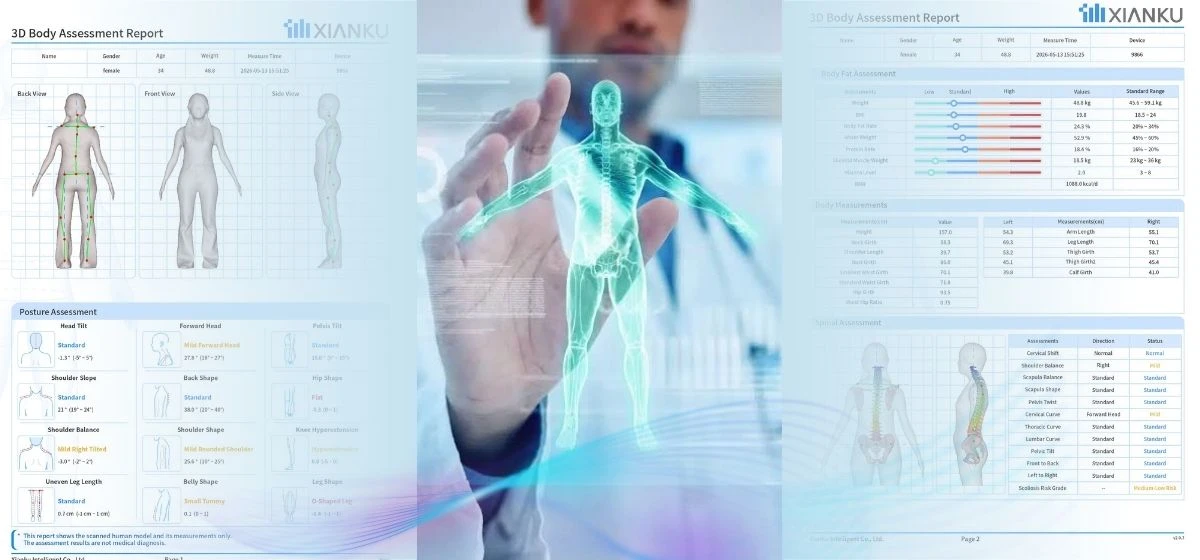
Instead of relying solely on isolated numbers, intelligent software can identify long-term trends, highlight subtle changes, and generate personalized reports that support clinical decision-making.
Importantly, AI should not be viewed as replacing healthcare professionals.
Doctors, physiotherapists, podiatrists, chiropractors, and rehabilitation specialists bring clinical judgment, experience, and human understanding that technology cannot replicate.
AI simply helps those professionals work with better information.
In many ways, the future of healthcare is not about artificial intelligence replacing expertise.
It is about artificial intelligence making expertise more effective.
Five Industries Ready for the Next Generation of Body Scanning
The impact of preventive body scanning extends well beyond hospitals.
Across multiple industries, organizations are discovering new ways to use objective body data to improve services, strengthen customer relationships, and create measurable outcomes.
Rehabilitation and Physical Therapy
Progress is often difficult to communicate using words alone.
Visual reports and repeatable measurements help therapists demonstrate improvements in posture, alignment, and functional recovery throughout treatment.
Sports Performance
Elite athletes have long relied on biomechanical analysis to optimize performance.
Today, similar technologies are becoming increasingly accessible for sports academies, training centers, and fitness professionals seeking objective movement assessments.
Wellness and Preventive Health Clinics
Consumers are becoming more proactive about their health.
Body scanning enables clinics to establish measurable baselines, support personalized wellness programs, and encourage long-term engagement through continuous monitoring rather than one-time consultations.
Footwear and Orthotic Retail
Modern consumers expect products tailored to their individual needs.
Three-dimensional foot and body measurements can support personalized footwear recommendations, custom orthotics, and more accurate sizing experiences while strengthening customer trust.
Corporate Wellness Programs
Employee wellbeing is becoming a strategic priority for organizations worldwide.
Objective health assessments provide companies with opportunities to encourage healthier lifestyles, improve engagement, and support long-term workforce wellbeing through data-driven wellness initiatives.
Across every industry, one principle remains consistent:
Better data leads to better conversations.
Better conversations lead to better decisions.
Looking Beyond the Technology
The excitement surrounding companies like Neko Health is not really about scanners.
Nor is it simply about artificial intelligence.
It reflects a broader change in how society defines healthcare itself.
For decades, healthcare has focused primarily on identifying disease.
The next chapter will focus on understanding people.
That means measuring change before symptoms become obvious.
It means helping individuals visualize their health rather than simply describing it.
It means replacing assumptions with objective evidence.
Technologies such as contactless 3D body scanning are becoming an important part of this transformation-not because they replace traditional medicine, but because they enrich it with new layers of measurable information.
For healthcare providers, they support more informed decision-making.
For businesses, they create opportunities to deliver higher-value, data-driven services.
And for individuals, they encourage something perhaps even more important:
Greater awareness of their own health.
Neko Health may have helped bring full-body scanning into the global spotlight.
But the real story is much bigger than one company.
The future of preventive healthcare will not be defined by who builds the most advanced scanner.
It will be defined by who helps people better understand their bodies-and empowers them to take action before problems arise.
Because the future of healthcare isn't about doing more tests.
It's about making every piece of health data more meaningful.