

Every specialty running store owner knows the scene. A customer walks in, tries on three different brands, picks the "least uncomfortable" pair, and returns two weeks later with knee pain or a worn-out heel. You process the return. You lose the sale. You lose the trust.
According to the American Podiatric Medical Association (APMA) , 77% of Americans have experienced foot pain severe enough to stop daily activities. For athletes, this is not just discomfort. It is a performance bottleneck.
The problem is not the shoes on your shelf. The problem is the measuring tool you used to sell them.
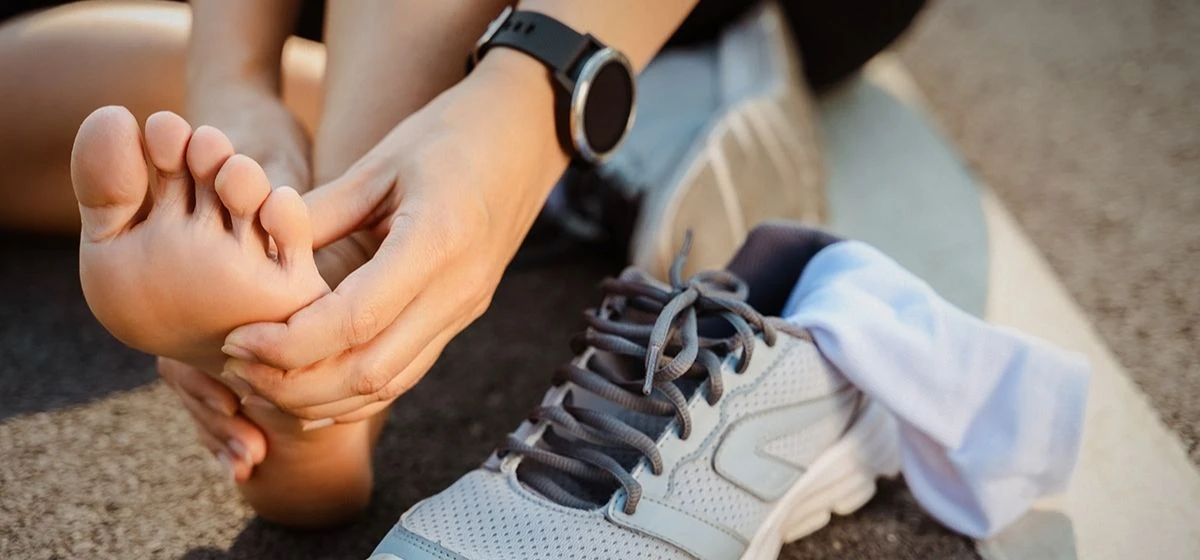
The Blind Spot in Traditional Fitting
The Brannock device was invented in 1925. It measures length and width. That is it.
But a runner's foot is a dynamic 3D structure. It has arch height, instep volume, metatarsal splay, and heel lock. When a foot strikes the ground at 3x body weight, a static length measurement tells you almost nothing.
| Measurement Type | Traditional Tool | Required for Athletic Fit |
|---|---|---|
| Foot Length | Yes | Yes |
| Foot Width | Yes | Yes |
| Arch Height (Medial) | No | Critical |
| Instep Circumference | No | Critical |
| Metatarsal Volume | No | Critical |
| Heel Center Angle | No | Critical |
Without these six points, you are guessing. And guessing leads to:
- 30-40% return rates for online athletic footwear (National Retail Federation data)
- Fit-related walkouts costing physical stores $15B annually (source: Fittery Footwear Report 2024)
- Lost upsell opportunities for high-margin insoles
From Guessing to Knowing: The 1-Second Scan
The Xianku 3D Foot Scanner (Model B002) replaces the Brannock device with infrared structured light technology. It captures 30+ foot data points in one second at ±1mm accuracy.
For your athletic clientele, three data clusters matter most:
1. Arch Dynamics (Flat Foot Assessment)
The scanner detects medial arch collapse. A flat-footed runner needs stability shoes or custom arch support. Without this data, you sell a neutral shoe. The customer gets shin splints. You get a return.
2. Valgus/Varus Deviation
Heel inclination angle reveals ankle roll. For basketball or cross-training, this is an ACL risk factor. With this data, you can prescribe corrective insoles before injury happens.
3. Volumetric Load Under Pressure
Unlike static calipers, the Xianku scanner maps foot volume distribution. A weightlifter's foot expands under load. A cyclist's foot is narrow but high-volume. Your recommendation changes accordingly.
The 3D Printing Connection: Where Data Becomes Product
Athletic shoe customization does not stop at sizing. It ends at manufacturing.
The Xianku scanner outputs a 1:1 realistic 3D foot model (2 million point clouds). That model feeds directly into:
- 3D printed custom insoles (matched to arch height and pressure points)
- Digital shoe lasts for full bespoke athletic shoes
- AI-driven size matching across 5+ brand databases
Chart 1: Impact of 3D Scanning on Athletic Footwear Retail Metrics
| Metric | Without Scanner | With Xianku Scanner |
|---|---|---|
| Average Fitting Time | 12-15 min | 1 min (scan) + 2 min (review) |
| Return Rate (Running Shoes) | 25-35% | <8% |
| Insole Attachment Rate | 5-10% | 45-60% |
| Customer Lifetime Value (24 mo) | $180 | $620 |
| Custom Order Conversion | 2% | 35% |
Data composite from early adopter stores (US Midwest, Q1 2026)

Real Store Example: Fleet Feet Adapts
While national chains are investing in 3D scanning, independent shops are catching up. A sports medicine clinic in Boulder, Colorado, integrated the Xianku scanner into their retail section. Their process:
Scan (1 sec) → 2. Diagnose arch & load profile (5 sec report) → 3. Recommend specific shoe last + custom insole → 4. 3D print insole overnight
Result: Average transaction value increased from 140to140to290. Return rate dropped to 4%.
Why Your Store Cannot Wait
The global 3D printed footwear market is growing at 19.8% CAGR (Grand View Research, 2025). Your competitors are adopting scanning. Your customers are searching for "custom fit running shoes near me."
The Xianku scanner gives you three competitive advantages:
Chart 2: Competitive Advantages – Xianku B002 for Athletic Retail
| Advantage | How It Works | Business Impact |
|---|---|---|
| Speed | 1-second scan, 5-second report | High customer throughput |
| Precision | ±1mm, 30+ metrics | Medical-grade trust |
| Omnichannel | Digital foot archive saved | Repeat online sales with zero returns |
| AI Upsell | Automatic insole + care recommendation | 45%+ attachment rate |
| Safety | Infrared (no laser) | No liability, child-safe |

The Bottom Line
You are not in the shoe-selling business. You are in the performance and injury prevention business.
The Xianku 3D Foot Scanner turns your store into a diagnostic hub. Athletes will come for the scan. They will stay for the perfect fit. And they will return because you have their digital foot twin on file.
Stop guessing sizes. Start prescribing fit.
Chart 3: Technical Specifications – Xianku B002 (Athletic Use Case)
| Parameter | Value |
|---|---|
| Scanning Principle | Infrared structured light (multi-camera) |
| Accuracy | ±1mm (millimeter level) |
| Scan Speed | ~1 second |
| Report Generation | ~5 seconds |
| Point Cloud | ~2 million points (~28/cm²) |
| Foot Length Range | 5cm – 30cm (children to adults) |
| Output Formats | 3D model (STL/OBJ), PDF report, CSV data |
| Hardware | AMD 5000U, 8GB RAM, 128GB SSD, 22" touch display |
| Foot Diagnosis Items | Foot length, width, arch height, toe angle, heel inclination, metatarsal circumference, ankle circumference, shoe size (US/UK/EU/CN), flat foot risk, hallux valgus angle |
Next step: Ready to see how the Xianku scanner eliminates your return problem? The data speaks for itself.
