When golfers work on improving their swing, they often focus on the obvious: grip, posture, shoulder rotation, hip movement, and club path. But there is another part of the body that plays a fundamental role in every swing-the feet.
Your feet are your connection to the ground. They help maintain balance, absorb forces, and support the weight transfer that occurs throughout the golf swing. When foot structure, mobility, or stability is compromised, it may influence how efficiently the rest of the body moves.
This raises an important question for golfers and golf professionals:
Could a foot problem be affecting your golf performance?

Why Do Your Feet Matter During a Golf Swing?
A golf swing is not an isolated movement of the arms and shoulders. It is a coordinated sequence that begins with interaction between the body and the ground.
During a swing, golfers need to:
- Maintain a stable stance
- Shift weight between the feet
- Rotate through the hips and torso
- Maintain balance during the backswing and downswing
- Generate and transfer force efficiently
The feet contribute to all of these movements.
If one foot is less stable, one ankle has limited mobility, or the two feet have significant structural differences, the golfer may unconsciously compensate elsewhere in the body.
Over time, these compensations can affect swing consistency and potentially contribute to discomfort.
Common Foot Problems That May Affect Golf Performance
1. Flat Feet
Flat feet can change how the foot distributes pressure against the ground. In some people, excessive foot rolling may also influence the alignment and movement of the ankle, knee, and hip.
For golfers, changes in lower-limb alignment may make it more difficult to maintain consistent balance and weight transfer.
However, having flat feet does not automatically mean a golfer will have poor performance. The important consideration is how the individual's foot structure functions during movement.
2. High Arches
Golfers with high arches may experience different pressure distribution under the foot.
A high arch can sometimes reduce the amount of surface area contacting the ground and may contribute to increased pressure in certain areas of the foot.
For golfers who spend several hours practicing or playing, understanding these pressure and structural characteristics can be useful when evaluating comfort and stability.
3. Plantar Fasciitis and Heel Pain
Heel pain can make golfers unconsciously change how they stand or transfer weight.
Instead of loading the foot naturally, a golfer may shift pressure away from the painful area. That compensation can affect stance, balance, and movement throughout the swing.
The problem may become especially noticeable during long rounds when repeated loading places additional stress on the feet.
4. Ankle Instability or Limited Ankle Mobility
The ankle needs both stability and mobility during athletic movement.
Limited ankle mobility can affect how the body moves over the foot, while instability may make it harder to maintain a consistent base.
For golfers, this can become relevant during weight transfer and rotation.
5. Big Toe and Forefoot Problems
The big toe plays an important role in foot stability and propulsion.
Problems such as hallux valgus, forefoot discomfort, or reduced big-toe mobility may change how a golfer loads the front of the foot.
Even relatively small changes can become noticeable when the same movement is repeated hundreds of times during practice and play.
Your Feet Don't Work Alone
One of the most important concepts in sports movement is the kinetic chain.
Your feet interact with the ankles, knees, hips, pelvis, spine, and upper body. A change at one point in this chain can influence movement elsewhere.
This does not mean that every golf swing problem originates in the feet. Golf performance is influenced by technique, strength, mobility, equipment, experience, and many other factors.
But the feet are an important part of the foundation.
If your swing suddenly feels inconsistent, your balance changes, or you repeatedly experience discomfort during or after playing, your feet may deserve more attention.
How Can Golfers Better Understand Their Feet?
Simply looking at someone's feet may not reveal important differences in foot dimensions and structure.
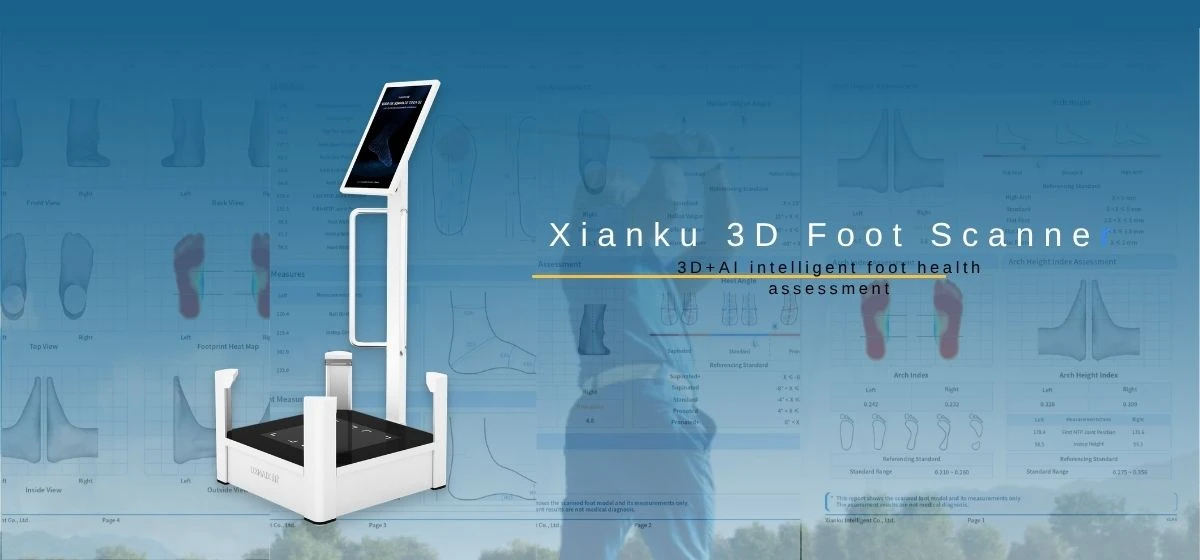
A 3D Foot Scanner can provide a more detailed view of the feet by capturing three-dimensional foot data.
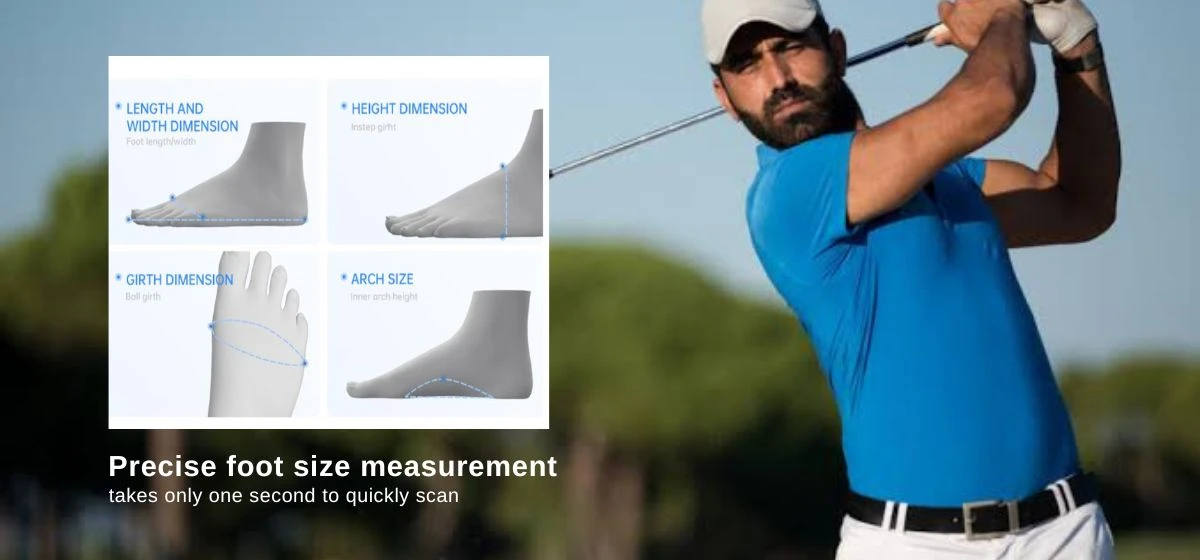
Depending on the system, a scan can help visualize measurements and characteristics such as:
- Foot length
- Foot width
- Arch characteristics
- Forefoot shape
- Heel dimensions
- Left-right foot differences
This information can give golfers, coaches, and foot-health professionals a more objective starting point for understanding an individual's foot structure.
For example, two golfers may wear the same shoe size but have noticeably different foot shapes. Their comfort, pressure distribution, and stability needs may therefore be different.
From Foot Data to Better Golf Performance
A foot scan does not automatically improve a golfer's swing, nor should it be treated as a medical diagnosis.
Its value is in providing additional information.
By understanding foot structure, golfers and professionals can make more informed decisions about areas such as footwear, support, training, and when professional assessment may be appropriate.
For golf facilities, sports performance centers, physical therapy practices, and healthcare professionals, foot scanning can also become part of a broader movement assessment process.
The goal is simple:
Understand the foundation before trying to optimize the movement built on top of it.
A Better Way to Look at Golf Performance
Golfers often analyze their swing from the top down-hands, arms, shoulders, hips, and finally the feet.
But the body interacts with the ground from the bottom up.
Your feet provide the foundation for balance and movement. When that foundation is uncomfortable, unstable, or poorly understood, it may influence everything that happens above it.
So the next time your golf swing feels inconsistent, don't only ask:
"What's wrong with my swing?"
Also ask:
"What are my feet doing?"
A better understanding of foot structure can be the first step toward a more complete approach to golf performance, movement, and long-term foot health.