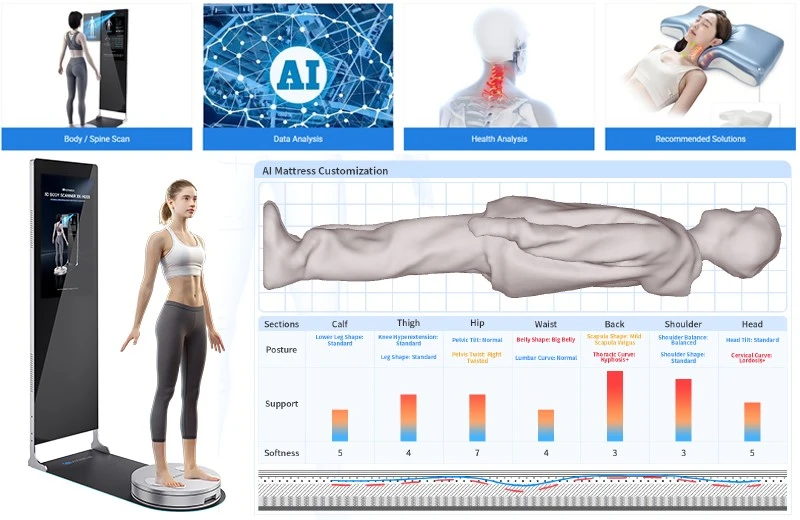

As we move through 2026, the mattress industry stands at the threshold of its most significant transformation since the introduction of memory foam. The driving force? Personalization powered by 3D body scanning technology. This article examines the trends shaping the future of sleep retail and why data-driven personalization is becoming the new standard.
Trend 1: The Death of the "Average" Mattress
For decades, mattress manufacturers designed for the "average" consumer-a statistical fiction that represents almost no one. The result has been a market full of products that fit some people reasonably well and most people only approximately.
This is changing rapidly. Consumers increasingly understand that their bodies are unique and that one-size-fits-all products are inherently compromised. The success of companies like Sleep Number, which offers adjustability, demonstrated that consumers value personalization. The next evolution is true customization based on individual biomechanical data.
Market Data Supporting Personalization:
| Metric | 2020 | 2023 | 2026 (Projected) |
|---|---|---|---|
| Consumers who expect personalized products | 54% | 68% | 78% |
| Willing to pay premium for personalization | 32% | 41% | 49% |
| Mattress purchases involving some personalization | 8% | 15% | 28% |
Source: Sleep Technology Association Annual Survey

Trend 2: The Rise of "Sleep Health" Over "Mattress Features"
Consumers are increasingly viewing sleep through a health lens rather than a comfort lens. This shift mirrors what happened in fitness, where activity trackers transformed exercise from a hobby to a health metric. Key drivers include:
- Growing awareness of sleep's impact on everything from immune function to mental health
- Proliferation of sleep tracking devices that make sleep measurable
- Aging population seeking solutions for age-related sleep issues
The Xianku 3D Body Scanner aligns perfectly with this trend. It doesn't just help customers find a comfortable mattress-it provides a "postural health assessment" that identifies issues affecting sleep quality . This positions the purchase as a health investment rather than a household expense.
Trend 3: Integration of Biometric Data Across the Sleep Ecosystem
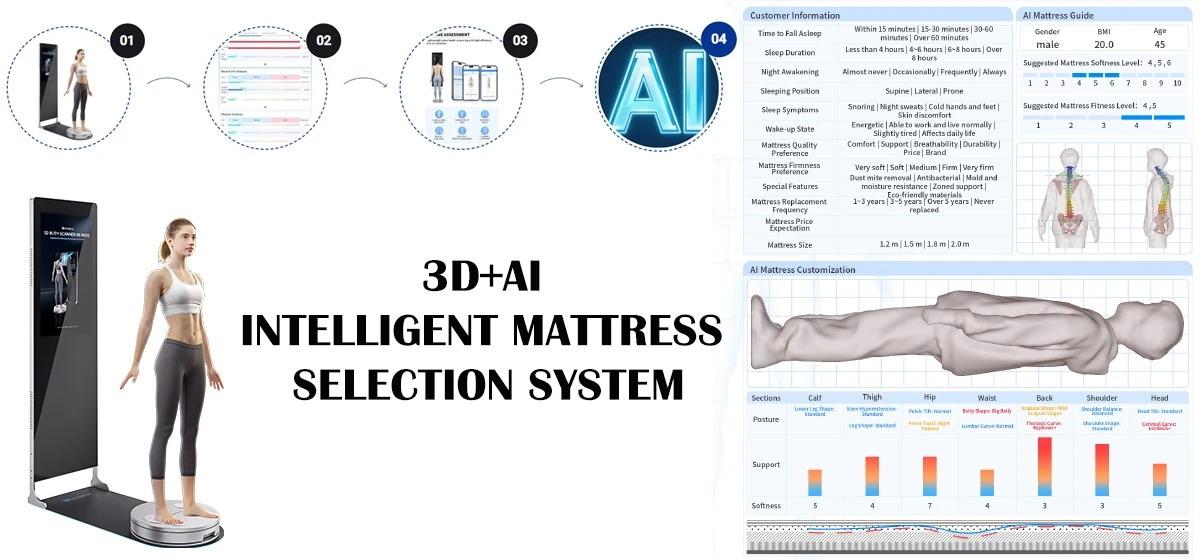
The future of sleep isn't just a mattress-it's an interconnected ecosystem of products and services all working from the same biometric data. Consider how a customer's Xianku scan data can be used:
- Mattress selection: Initial match based on body data
- Pillow matching: Specific loft and firmness for cervical support
- Adjustable base programming: Optimal elevation angles for sleep position
- Smart bedding: Temperature and firmness adjustments based on body composition
- Sleep tracking integration: Baseline data for interpreting sleep quality metrics
This integrated approach creates what industry experts call "stickiness"-customers invest in an ecosystem, not just a product, making them less likely to switch brands.
Trend 4: From Transactional to Longitudinal Customer Relationships
Traditional mattress retail is transaction-focused. A customer buys every 7-10 years, and in between, there's minimal contact. This model is inefficient and leaves money on the table.
The Xianku system enables a longitudinal relationship:
| Life Stage | Application of Scan Data |
|---|---|
| Initial purchase | Match to first mattress |
| Post-purchase follow-up | Sleep tips based on body type |
| 1-2 years | Check-in on satisfaction, potential pillow upgrades |
| 3-5 years | Body changes? Pregnancy, weight changes, aging-recommend re-scan |
| 6-8 years | Prepare for replacement with updated data |
| Ongoing | Content marketing based on sleep health interests |
Retailers using this model report customer lifetime values 50-100% higher than traditional approaches .
Trend 5: Data-Driven Product Development
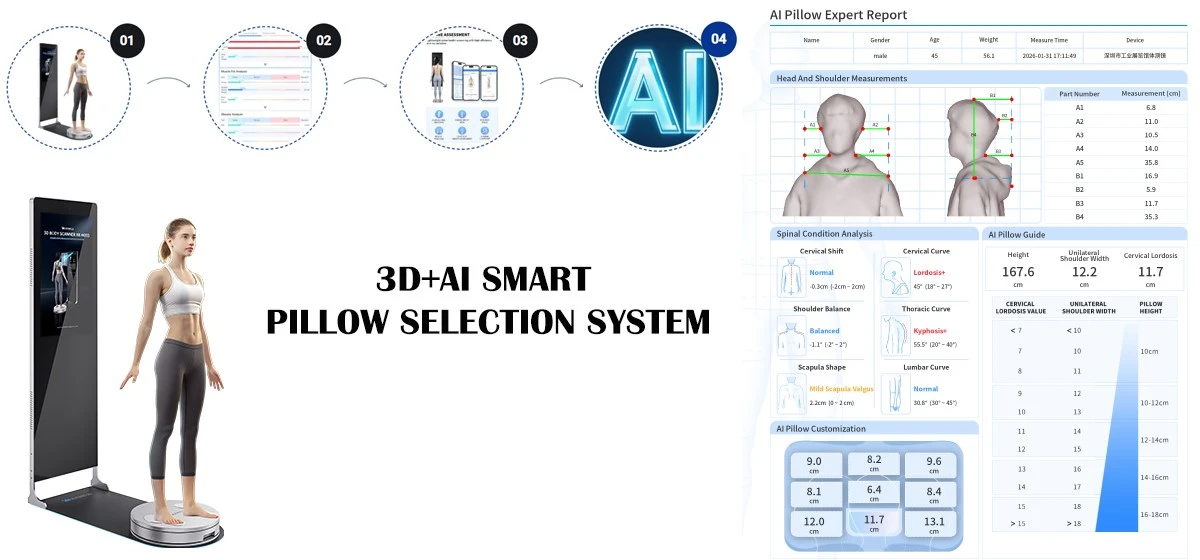
The aggregated data from thousands of scans is itself a valuable asset. Mattress manufacturers can analyze real-world body data to identify:
- Prevailing postural issues in different demographics (e.g., anterior pelvic tilt in 30-45 age group)
- Regional variations in body types and sleep needs
- Trends over time as population health changes
This data enables evidence-based product development rather than guesswork. If the data shows that 40% of customers have measurable cervical flattening, manufacturers can develop pillows specifically addressing that need.
Trend 6: The Blurring Lines Between Retail and Healthcare
As mattress selection becomes more data-driven and health-focused, the distinction between retail and healthcare blurs. Some mattress retailers are partnering with:
- Chiropractic clinics: Cross-referrals and shared patient data
- Physical therapy practices: Mattress recommendations as part of treatment plans
- Sleep medicine centers: Non-clinical screening for sleep apnea risk factors
This positions mattress retailers as part of the healthcare ecosystem rather than just furniture sellers, elevating their status and enabling new referral channels.
Trend 7: Sustainability Through Personalization
One of the sleep industry's dirty secrets is the environmental impact of returns. Each returned mattress often ends up in a landfill, and the logistics of returns generate significant carbon emissions. The 5-12% return rate in online mattress sales represents not just economic waste but environmental waste .
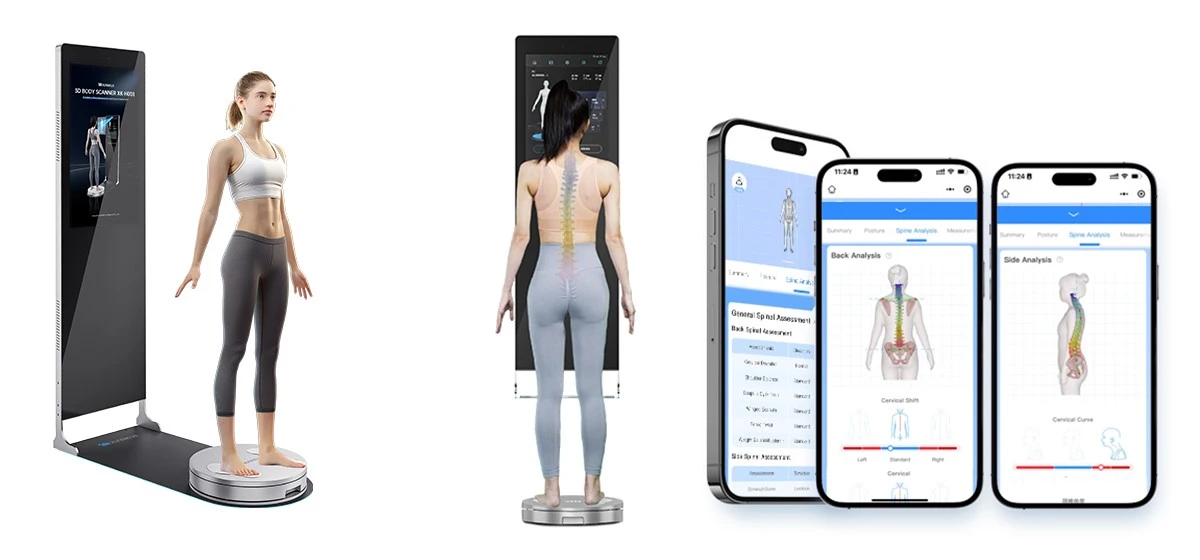
By dramatically improving match accuracy, Xianku-powered personalization reduces returns by 25-35% . This isn't just good business-it's good environmental stewardship. As consumers become more environmentally conscious, retailers who can demonstrate lower return rates will have a marketing advantage.
The $7.3 Billion Opportunity
Recall the statistic that opened this series: U.S. furniture retailers waste an estimated $7.3 billion annually on excess inventory due to demand forecasting inefficiencies . This is the scale of the opportunity.
When retailers understand their customers' actual body data, they can:
- Stock products that actually match their local demographic
- Reduce markdowns on mismatched inventory
- Provide feedback to manufacturers about real-world needs
- Transition from forecasting to responsive inventory management
What Leading Retailers Are Doing
Forward-thinking mattress retailers are already acting on these trends:
- Integrating scanners into every store: Making data capture standard operating procedure
- Training staff as sleep health advisors: Elevating the sales role
- Building customer data platforms: Creating proprietary assets from scan data
- Developing private label products: Using aggregated data to design own-brand mattresses
- Partnering with health providers: Creating referral networks with chiropractors and physical therapists
The Road Ahead
By 2030, we predict that:
- 50%+ of premium mattress sales will involve some form of biometric matching
- Data-driven retailers will capture disproportionate market share
- Personalization will be the standard, not the exception
- Retailers without data capabilities will struggle to compete
The mattress industry's transformation from guesswork to science is underway, and the Xianku 3D Body Scanner is at the center of this revolution.
Conclusion
The trends are clear: consumers want personalization, health-focused products, and integrated solutions. Retailers who provide these through data-driven technologies like Xianku will thrive. Those who continue with traditional approaches will find themselves increasingly disadvantaged.
The $7.3 billion question isn't whether to adopt personalization technology-it's how quickly you can capture your share of the opportunity.
Call to Action: Ready to position your business for the future of sleep retail? Contact Xianku today to learn how our 3D body scanning technology can help you capitalize on these trends.
Sources:
Home Furnishings Association inventory waste report
Sleep Technology Association survey data
Xianku retail partner case studies