
What Are Flat Feet and Why They harmful?
Flat feet, medically known as pes planus, occur when the foot's medial arch is reduced or entirely collapsed, causing the entire sole to make contact with the ground. In a typical foot, the arch functions as a natural shock absorber, distributing forces during standing, walking, and running. When the arch collapses, this biomechanical support is compromised, increasing stress on the ankles, knees, hips, and lower back.
While flat feet may be present from childhood due to developmental factors, they can also emerge over time due to muscle weakness, injury, or obesity. In many cases, the condition does not present obvious pain initially, which can delay intervention. However, over the long term, it can lead to chronic discomfort, altered gait mechanics, and increased risk of musculoskeletal issues.
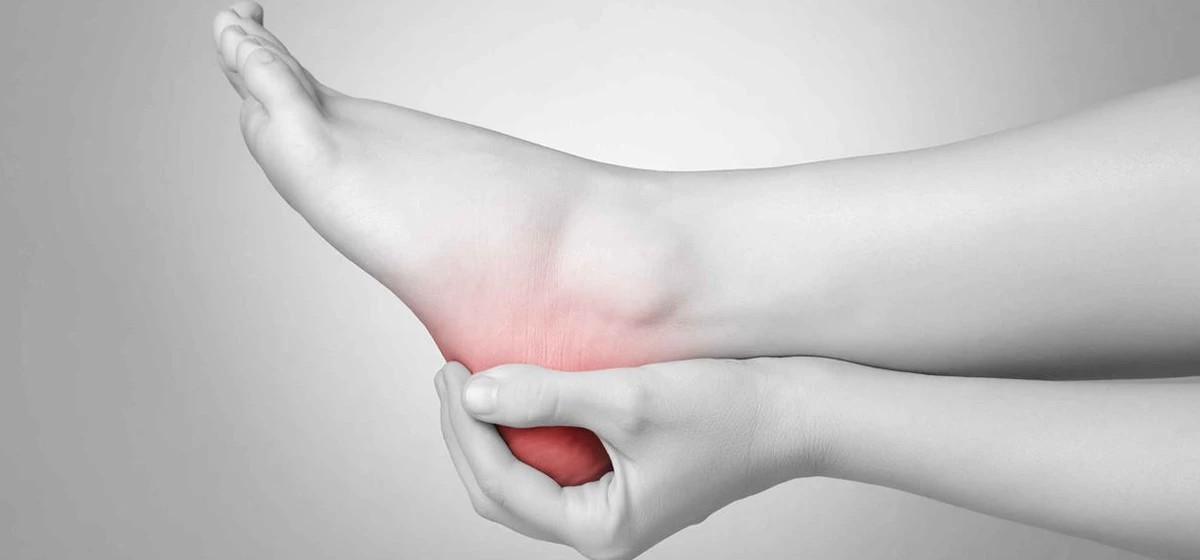
Health Consequences of Flat Feet Across the Lifespan
Effects on Adolescents
For children and teenagers, flat feet pose unique challenges. During rapid growth phases, especially in early adolescence, the musculoskeletal system is still developing. A collapsed arch changes the alignment of the lower limb, which can translate to:
- Altered gait and posture development
- Ankle instability during dynamic activities
- Increased knee stress and early onset pain
- Reduced tolerance for sports participation
Young athletes with flat feet often struggle to achieve optimal performance due to inefficient force distribution and potential overpronation (inward rolling of the foot). These biomechanical inefficiencies can lead to symptoms such as shin splints, plantar fasciitis, and knee discomfort, which may compromise participation in school sports or competitive events.
Effects on Older Adults
In older adults, flat feet can exacerbate age-related declines in balance and mobility. The lack of a supportive arch contributes to:
- Poor balance and increased risk of falls
- Chronic foot pain, especially with prolonged standing
- Compensatory postural changes affecting hips and lower back
- Reduced ability to engage in daily physical activity
As people age, decreased muscle strength and joint flexibility can worsen arch collapse, making early detection and intervention particularly important for maintaining independence and quality of life.
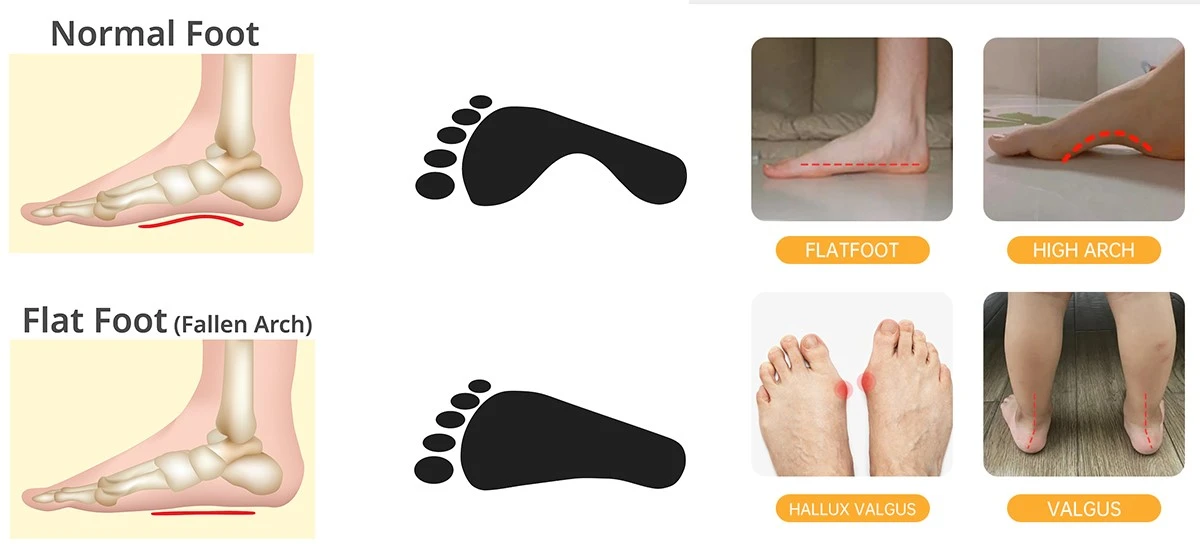
Functional and Societal Impacts: Sports, Military, and Workplace Considerations
Athletic Performance and Injury Risk
In many countries, athletic participation starts early and is a formative part of youth culture. Flat feet can become a barrier for young athletes trying to excel in sports like basketball, soccer, running, and gymnastics. Because proper foot alignment is essential for agility, acceleration, and efficient energy transfer, athletes with untreated flat feet may:
- Experience reduced performance and endurance
- Be more prone to repetitive stress injuries
- Require modified training to minimize biomechanical strain
Military Enlistment and Occupational Fitness
Flat feet also have implications for military readiness. Historically, many armed forces - including branches in the United States and Europe - have screened recruits for structural foot abnormalities, including flat feet. Severe cases can disqualify candidates due to concerns about long marches, load carrying, and sustained physical activity. While modern military standards vary by service and country, functional foot health remains part of physical readiness assessments.
In civilian occupational contexts, particularly those involving standing, walking, or manual labor, flat feet can increase discomfort long-term and contribute to fatigue or loss of productivity. For office workers, altered gait and postural deviations may lead to compensatory pain in hips or back after prolonged sitting or walking.
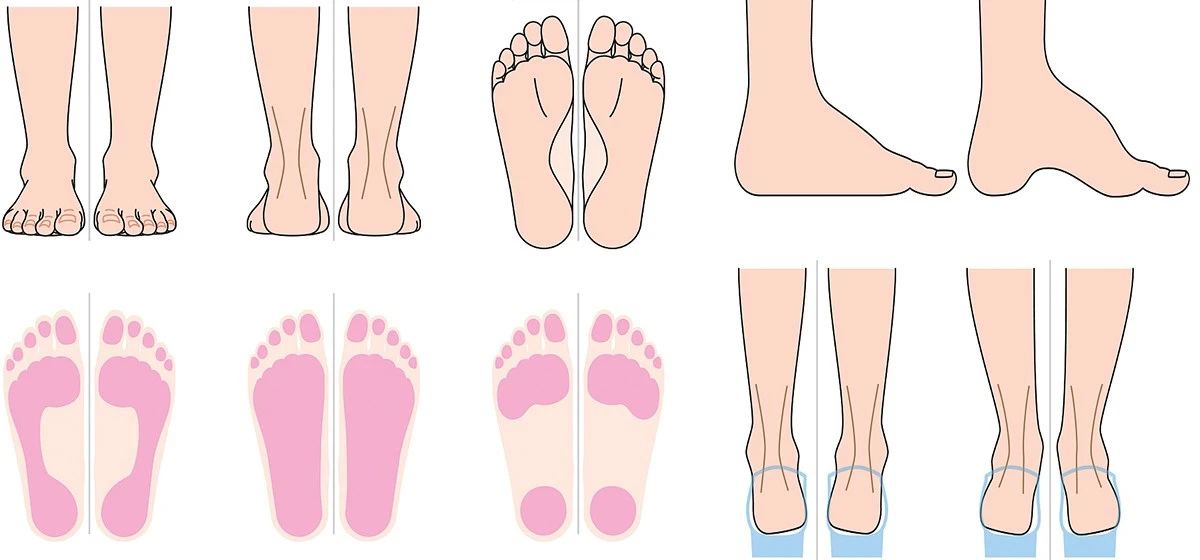
Foot Health Screening Today: The Need for Early Detection
Conventional evaluation of flat feet often relies on visual inspection, footprints, or basic measurements of foot length and width. These traditional approaches can fail to capture underlying structural nuances, such as arch height, heel alignment, and midfoot pressure distribution. Consequently, many individuals go undiagnosed until discomfort becomes significant.
Studies indicate that a considerable proportion of adults globally have undiagnosed foot disorders that can lead to secondary musculoskeletal problems if not addressed early.
This recognition drives the demand for precision foot health assessment technologies that provide objective measurement, early risk detection, and actionable insights-beyond what traditional devices like Brannock tools can deliver.
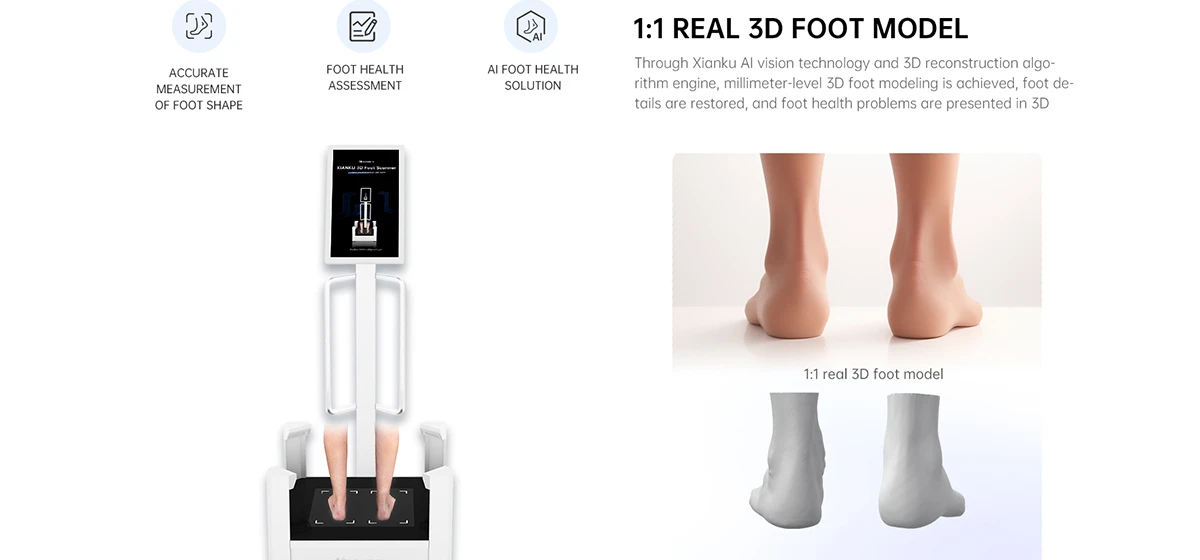
Introducing the Xianku 3D Foot Scanner
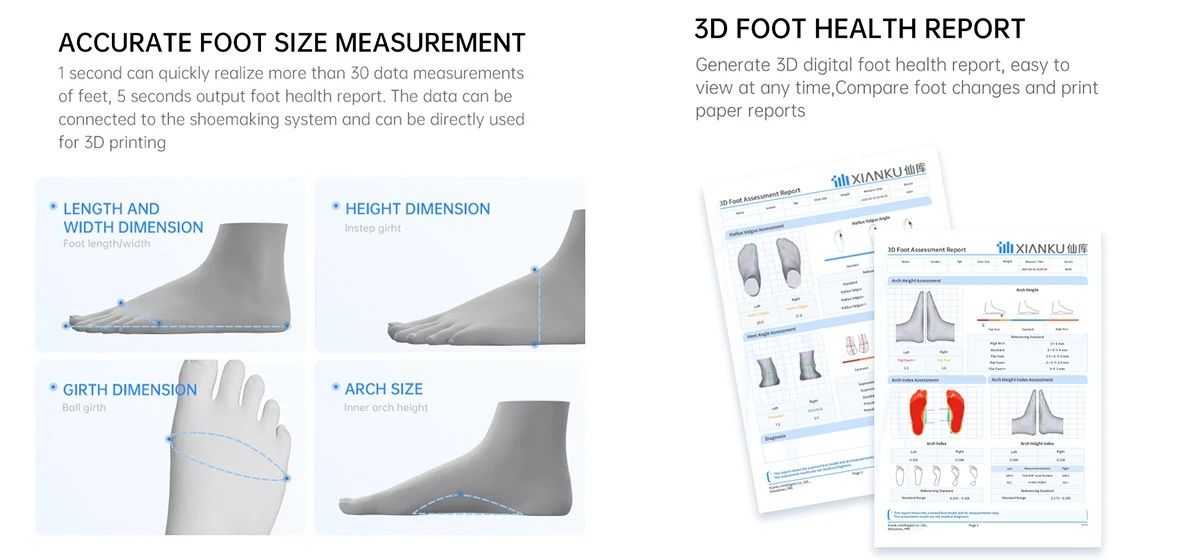
The Xianku 3D Foot Scanner is an advanced diagnostic and evaluation device that captures precise anatomical data of the foot using infrared structured light scanning. This method generates a high-resolution three-dimensional representation of the foot in just one second, with accuracy to within ±1 mm. The system reconstructs detailed geometry from millions of surface data points to quantify over 30 foot dimensions, including arch metrics, heel alignment, and forefoot morphology.
This process goes well beyond traditional sizing and provides a scientific basis for early detection of conditions like flat feet or high arches. Because it captures multiple metrics simultaneously, the Xianku system reveals structural patterns that simple manual tools cannot detect.
How Xianku's Foot Scan Technology Works
1. Rapid 3D Scanning
Xianku's scanner uses structured light patterns projected onto the foot surface. Sensors capture the distortion of these patterns to reconstruct a precise 3D model within one second. The rapid measurement allows for high throughput in retail, clinic, or community screening settings.
Once the model is created, the system analyzes up to 32 anatomical dimensions such as foot length, width, instep height, arch height, heel inclination, and toe angularity. This multidimensional dataset is the foundation for subsequent health analysis.
2. Data Analysis and Arch Classification
From the raw geometry, Xianku's software computes specialized indicators like arch height index, which can differentiate normal arches from flat or excessively high arches. An arch height index outside typical thresholds (such as below a normal range) indicates arch collapse and flat foot tendencies-information that can be used as part of a comprehensive health assessment.
In contrast to static footprint methods, the 3D scan reveals the foot's anatomical structure in detail, allowing early identification of subtle arch collapse before symptoms become pronounced.
3. Health Analysis and Visualization
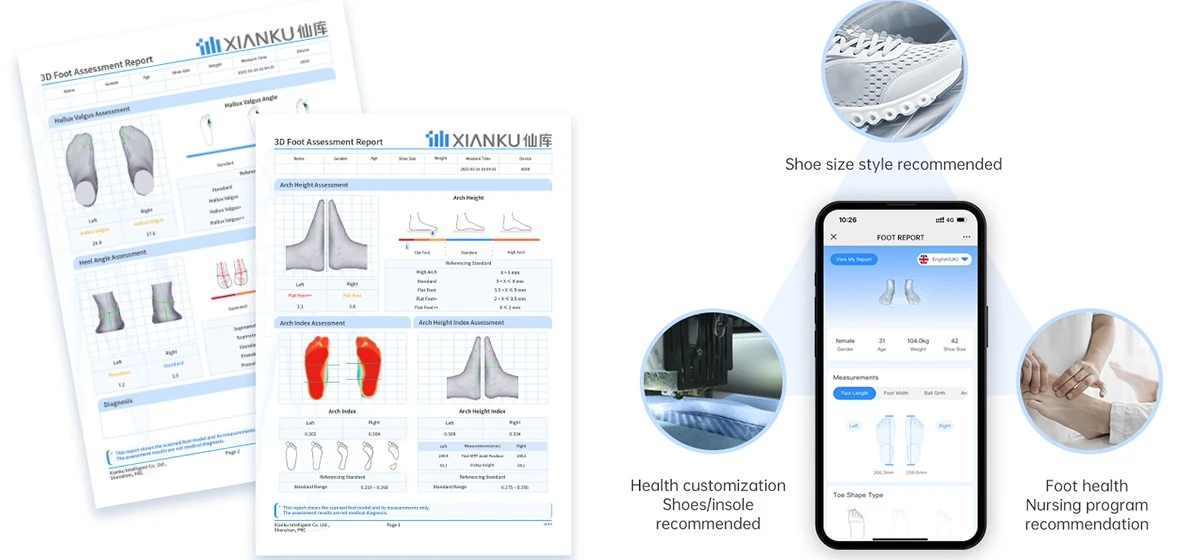
After measurement, the Xianku system provides a visual foot health assessment that highlights key findings. It can identify flat feet, high arches, and other foot conditions like hallux valgus or pronation, displaying results clearly on screen. This visualization helps individuals understand their own foot structure and related risks in an intuitive format.
The foot scanner's health analysis transforms otherwise abstract metrics into a comprehensible health narrative that can guide intervention.
4. AI-Powered Solutions and Personalized Recommendations
Xianku's scanner is integrated with an AI recommendation engine that translates measurement results into actionable solutions. In real time, the system can recommend corrective products such as custom 3D-printed orthotic insoles, supportive footwear, or exercise plans tailored to an individual's structural profile.
This capability empowers clinicians, retailers, and consumers to take immediate, evidence-based action rather than waiting for discomfort to escalate.
Large-Scale Screening: From Schools to Community Health
One of the Xianku 3D Foot Scanner's key strengths is its ability to conduct large-scale foot health screenings efficiently. Mass foot health assessments can be deployed in schools, workplaces, military recruitment centers, and community health programs. The rapid scan time and automated analysis make it practical to screen large populations, identifying individuals at risk before discomfort becomes debilitating.
In school settings, early detection enables educators and parents to intervene with supportive footwear or corrective measures that can significantly reduce long-term joint and musculoskeletal issues. For older adults, population screening can uncover foot structural changes before balance or mobility problems become severe.
Clinical and Economic Benefits of Early Detection
For Individuals
Early identification of flat feet enables:
- Immediate custom support solutions
- Targeted strengthening and mobility exercises
- Footwear recommendations that reduce injury risk
- Improved posture and gait mechanics
By addressing structural issues at an early stage, individuals can avoid progressive pain, compensatory injuries, and later degenerative changes in knees or hips.
For Healthcare Providers
Clinicians have historically depended on manual examination and subjective judgment. Xianku's technology provides objective data, making foot health assessments standardized and reproducible, which enhances diagnostic confidence and improves treatment planning.
For Retail and Consumer Services
Retailers and foot care service providers benefit from:
- Enhanced consultative experiences that build trust
- Data-driven personalized product recommendations
- Increased revenue from custom solutions such as insoles
- Reduced return rates by improving fit and comfort
In preventive care settings, the scanner can also generate follow-up reports to track progress over time, reinforcing sustained engagement and loyalty.
Measuring Precision: Why Structured Light Matters
Infrared structured light scanning, like that used by Xianku, captures three-dimensional surfaces with high fidelity and speed. By projecting coded light and analyzing pattern deformation, this approach achieves high spatial resolution with minimal motion artifacts. Because it captures millions of data points quickly, it delivers both accuracy and repeatability, making it suitable for clinical and retail environments where precise metrics are essential.
In contrast, simpler scanning methods may rely on 2D footprints or slower laser systems that cannot deliver the same level of arch or biomechanical detail in an efficient workflow.
From Data to Personalized Care
Once scan results are generated, Xianku's backend can provide:
- Personalized assessment reports
- Customized insole STL files for 3D printing
- AI-suggested footwear matches
- Foot health education materials
This blend of objective measurement and practical recommendations elevates the foot health conversation from guesswork to science-based action.
Given that many degenerative conditions originate from subtle biomechanical imbalances detectable years before symptoms surface, early detection via foot scan technology represents a fundamental shift in preventive foot care-moving from reactive treatment to proactive wellness.
The Value of Early Detection and Action
Flat feet are more than a cosmetic or sizing concern; they are a biomechanical issue with implications for long-term health, mobility, and quality of life. Especially for adolescents developing athletic capabilities and older adults navigating age-related changes, early identification provides a window to intervene before secondary complications arise.
In Western contexts-from sports performance to military standards and occupational health-structural foot issues like flat feet carry real impact on ability and functionality. Early detection through advanced 3D foot scanning technology, such as that offered by Xianku 3D Foot Scanner, enables individuals, clinicians, and retailers to understand and act on foot health data that was previously invisible.
By combining rapid scanning, precise measurement, visualized assessment, and AI-enabled recommendations, Xianku's solution supports proactive foot health for individuals and population groups alike, transforming preventive care from an aspiration into actionable practice.