

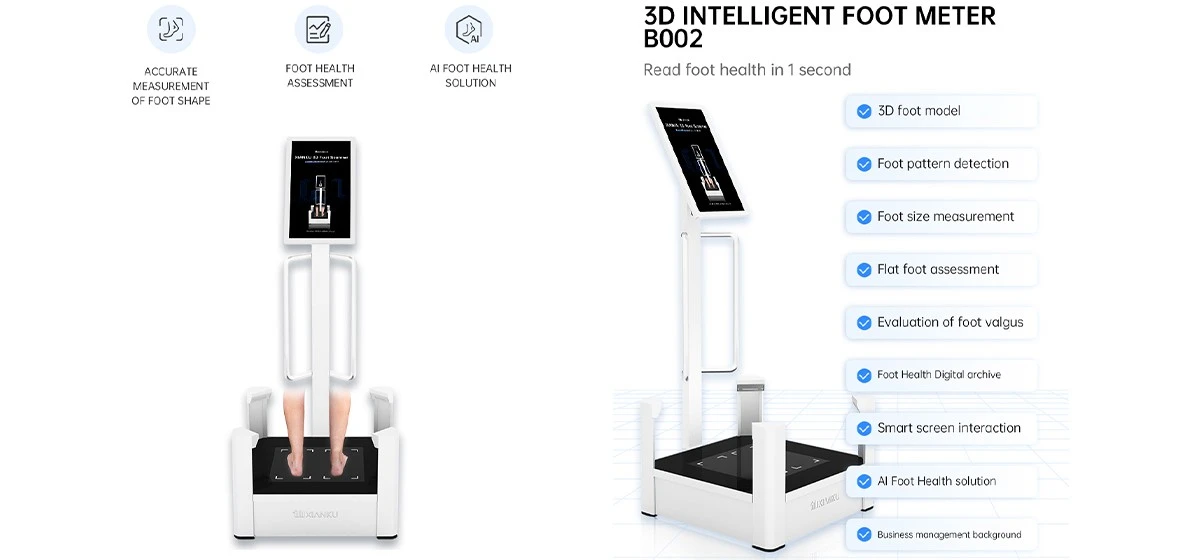
The U.S. footwear industry faces significant challenges in 2025, including tariff pressures, changing consumer preferences, and increased competition. Despite these headwinds, the market demonstrates resilience with particular strength in specialized segments like performance running shoes and sustainable footwear. The integration of 3D foot scanning technology represents an innovative approach to addressing critical industry challenges, from personalized fitting to inventory management. This analysis examines the current state of the American footwear market, explores pressing issues facing retailers and manufacturers, and investigates how advanced technologies like the Xianku3d Foot Scanner can provide transformative solutions while creating competitive advantages in an evolving marketplace.
Table of Contents
The U.S. Footwear Market: Current Status and Metrics
Critical Challenges Facing the American Footwear Industry
The Competitive Landscape: Established Players and Emerging Challengers
Technological Innovation as a Strategic Imperative
Xianku3d Foot Scanner: Technical Specifications and Applications
Implementation Framework: Integrating 3D Scanning into Footwear Retail
Future Outlook: The Path Forward for American Footwear
1 The U.S. Footwear Market: Current Status and Metrics
The American footwear market is navigating a complex landscape characterized by shifting consumer preferences, economic pressures, and evolving retail dynamics. Recent data reveals a market in transition, where traditional business models are being tested by new realities. According to industry reports, the U.S. footwear market experienced a 1.6% decline in sales value during the first half of 2025, largely attributable to weak performance in the initial three months of the year . However, the second quarter showed signs of recovery, suggesting potential resilience despite headwinds.
The impact of tariff policies has been particularly significant on footwear retail prices. The shoe industry faces what industry leaders describe as an "existential threat" from tariffs that have increased costs throughout the supply chain . The Footwear Distributors and Retailers of America (FDRA) has highlighted that tariffs on footwear imports have surged by 108.7% year-over-year, reaching a record $635.8 million . This cost pressure inevitably translates to consumers, with shoe prices increasing steadily-women's footwear prices rose 2.8% year-over-year in August 2025, the largest increase in 34 months .
Despite these challenges, certain segments demonstrate remarkable strength. The performance footwear category, particularly running and training shoes, has outperformed the broader market with a 7% sales increase and 9% volume growth . This trend reflects consumer prioritization of comfort, with over 70% of surveyed Americans citing comfort as their primary consideration when purchasing shoes . The running shoe market specifically has become a key battleground for brands seeking to differentiate through technical innovation and specialized designs.
Table: U.S. Footwear Market Key Metrics (2025)
| Metric | Value | Trend | Source |
|---|---|---|---|
| Overall Market Value (H1 2025) | -1.6% year-on-year | Decline with Q2 recovery | |
| Average Selling Price | +2% year-on-year | Consistent increase | |
| Performance Footwear Sales | +7% year-on-year | Strong growth segment | |
| Online Fashion Sales | $103.3 billion (Jan-Jun 2025) | +10.4% year-on-year | |
| Women's Footwear Prices | +2.8% (August 2025) | 34-month high | |
| Tariff Impact | 108.7% year-on-year increase | Record high of $635.8M |
The online sales channel continues to demonstrate strength, with fashion sales (including footwear) reaching $103.3 billion in the first two quarters of 2025, representing a 10.4% increase compared to the same period last year . The proportion of online sales in total fashion retail has grown to 15.1%, an increase of 0.9 percentage points year-over-year . This trend underscores the continuing shift toward digital channels, accelerated by consumer demand for convenience and more competitive pricing.
2 Critical Challenges Facing the American Footwear Industry
The U.S. footwear industry confronts several structural challenges that threaten profitability and long-term sustainability. These challenges span operational, retail, and competitive dimensions, creating a complex environment requiring strategic responses.
2.1 Standardized Production and Personalization Deficit
A fundamental limitation in the footwear retail experience is the industry's continued reliance on standardized sizing systems that fail to accommodate the full spectrum of foot morphology across diverse populations. This one-size-fits-all approach results in suboptimal fit for significant portions of consumers, contributing to discomfort, foot health issues, and ultimately, product returns and dissatisfaction. The absence of personalized fitting solutions is particularly problematic given increasing consumer expectations for customization across product categories.
The retail model for footwear sales remains largely unchanged despite evolving consumer expectations. Store associates typically lack the tools and training to provide scientific fitting guidance, instead relying on simplistic size references and subjective assessments of fit. This results in a transactional retail experience that fails to educate consumers about their foot characteristics or guide them toward optimal product selections based on individual biomechanical needs. The decline of specialized footwear retailing has exacerbated this problem, as fewer sales staff possess the expertise necessary to provide detailed fitting guidance.
2.2 Tariff Pressures and Supply Chain Challenges
The impact of tariff policies on the footwear industry cannot be overstated. With 99% of shoes sold in the U.S. being imported , the industry is particularly vulnerable to trade policy shifts. The current tariff burden on footwear has escalated to an estimated $5 billion annually , creating significant cost pressures throughout the supply chain. Industry leaders have described these tariffs as an "existential threat" to many companies, particularly those producing affordable footwear .
The supply chain disruptions resulting from tariff uncertainties have further complicated inventory management and production planning. As noted by the Los Angeles Port Executive Director Gene Seroka, container volumes through critical logistics hubs have declined significantly-with a 35% year-over-year decrease expected in May 2025 . This volatility makes it difficult for retailers to maintain optimal inventory levels, leading to both shortages and overstock situations depending on product category and timing.
2.3 Market Polarization and Consumer Shifts
The American footwear market is experiencing increasing polarization between premium and value segments. Luxury brands maintain stronger positioning through emphasis on craftsmanship and brand heritage, while value-oriented brands compete primarily on price points. This bifurcation is squeezing mid-market brands that struggle to justify their value proposition in an increasingly segmented marketplace.
Consumer preferences are also shifting toward integrated functionality and style. The boundaries between performance footwear and fashion continue to blur, with consumers seeking products that deliver both aesthetic appeal and practical benefits. This trend is evident in the growth of "athleisure" categories and technical innovations embedded in lifestyle products. The comfort imperative has become particularly important, with over 70% of consumers citing comfort as their primary purchase consideration . This represents both an opportunity and challenge for brands-those that can successfully deliver on comfort without compromising style gain competitive advantage, while those that fail to adapt risk losing relevance.
Table: Primary Challenges in the U.S. Footwear Industry
| Challenge Category | Specific Manifestations | Business Impact |
|---|---|---|
| Standardized Sizing | Limited width options One-size-fits-all approach Inconsistent sizing across brands |
High return rates (often 30-40%) Customer dissatisfaction Limited differentiation |
| Retail Experience | Subjective fitting processes Undertrained store associates Transactional interactions |
Reduced conversion rates Inability to justify premium pricing Weak customer loyalty |
| Tariff Pressures | 25-30% tariff rates on imports $5 billion annual tariff burden Supply chain uncertainty |
Price increases passed to consumers Margin compression Inventory volatility |
| Market Dynamics | Premium-value polarization Direct-to-consumer disruption Sustainability demands |
Erosion of middle market Channel conflict Need for continuous innovation |
3 The Competitive Landscape: Established Players and Emerging Challengers
The U.S. footwear market features a diverse competitive landscape encompassing global sportswear giants, established premium brands, and innovative emerging players. Understanding this ecosystem is essential for contextualizing the industry's challenges and opportunities.
3.1 Heritage Athletic Brands
The heritage athletic segment continues to dominate market share, though performance varies significantly among leading players. Nike maintains its position as market leader despite reporting a 9% revenue decline in its third fiscal quarter of 2025 . The company has focused on inventory optimization, with stock levels decreasing for three consecutive quarters to $7.5 billion . This disciplined approach to supply chain management has helped maintain profitability despite challenging market conditions.
Adidas has demonstrated stronger recent performance, with first-quarter 2025 revenue increasing 13% year-over-year and operating profit surging 82% . This rebound reflects successful product innovation and channel optimization initiatives. Similarly, ASICS has achieved notable success in the performance running category, with its performance running business generating sales and profit growth of 11.4% and 14.1% respectively . The company's Onitsuka Tiger lifestyle line has been particularly successful, with sales increasing 57.2% .
3.2 Emerging Sustainable Brands
The emerging brand landscape includes innovative players like Allbirds, which has built a compelling value proposition around sustainability and comfort. Since its founding in 2016, Allbirds has sold over 8 million pairs of shoes to more than 4 million customers worldwide . The brand's direct-to-consumer model enables closer customer relationships and faster iteration based on feedback-as exemplified by its ability to address Chinese consumers' concerns about footwear breathability within two months of receiving feedback .
Allbirds' success demonstrates the potential for values-based branding in the footwear space. The company's focus on sustainable materials-including wool, eucalyptus tree fiber, and sugarcane-based foam-resonates with environmentally conscious consumers . This positioning has enabled premium pricing despite competitive market conditions, with products typically retailing between $100-$150. The brand maintains an exceptional Net Promoter Score of 86, reflecting strong customer satisfaction and loyalty .
3.3 Performance Specialists
The performance running segment has become increasingly competitive, with brands like HOKA achieving rapid growth through technical innovation and specialized designs. These brands typically focus on specific athletic activities rather than attempting to serve all segments simultaneously. This focused approach enables deeper understanding of user needs and more targeted product development.
The competitive dynamics in the performance segment illustrate the importance of technical differentiation. Brands that can demonstrate authentic performance benefits through independent testing, athlete endorsements, and user testimonials command greater pricing power and brand loyalty. However, this specialization also creates challenges in scaling beyond core enthusiast audiences to broader consumer segments.
4 Technological Innovation as a Strategic Imperative
In response to these challenges, technological innovation is emerging as a critical differentiator within the footwear industry. Advanced technologies offer pathways to address operational inefficiencies, enhance customization, and create new value propositions for consumers.
4.1 The Rise of 3D Foot Scanning Technology
3D foot scanning technology represents a significant advancement with applications across footwear design, manufacturing, and retail. These systems utilize various technologies to capture detailed foot morphology, creating comprehensive digital models that serve as the foundation for personalized recommendations and custom product development.
The technology encompasses multiple scanning methodologies, each with distinct characteristics and applications. Structured light technology offers high accuracy and speed, while multi-camera systems provide cost-effective solutions suitable for retail environments . Photogrammetry approaches are also growing in popularity, leveraging multiple images to construct comprehensive 3D models . These technological foundations enable precise capture of foot morphology, creating detailed digital representations that serve as the basis for customization and personalized recommendations.
The applications of 3D foot scanning span multiple domains within the footwear industry. In manufacturing and design, scan data informs last development and pattern engineering, creating better-fitting products based on population-level data analysis. In retail environments, scanning enables personalized fitting experiences, guiding consumers toward optimal size selections and style recommendations based on their unique foot characteristics. In medical and wellness contexts, the technology supports orthotic development and therapeutic footwear design, addressing specific pathological conditions.
4.2 Complementary Technological Innovations
Beyond 3D scanning, other technologies are converging to create new possibilities for the footwear industry. Artificial intelligence and machine learning algorithms can analyze scan data to identify patterns and correlations, predicting fit preferences and potential comfort issues before production. These analytical capabilities enhance the value of raw scan data, transforming measurements into actionable insights for both consumers and manufacturers.
Advanced manufacturing technologies including 3D printing and digital fabrication enable responsive production based on actual demand rather than forecasting. This transition from mass production to personalized manufacturing has significant implications for inventory management, waste reduction, and responsiveness to individual customer requirements. While currently limited to premium segments, these technologies are gradually becoming more accessible across price points.
Data analytics platforms integrate information from multiple sources-including scan data, purchasing behavior, and product performance-to generate insights that inform business decisions. This intelligence can guide assortment planning, inventory allocation, and marketing strategies based on empirical understanding of customer needs rather than intuition or historical precedent.
5 Xianku3d Foot Scanner: Technical Specifications and Applications
The Xianku3d Foot Scanner represents a sophisticated implementation of scanning technology specifically designed for footwear retail and manufacturing applications. Its technical capabilities and integration framework offer a compelling solution to many industry challenges.
5.1 Technical Specifications and Capabilities
The scanner utilizes advanced multi-camera technology to capture comprehensive foot data with high precision and efficiency. The system can complete a full foot scan in approximately 3-5 seconds, capturing up to 54 distinct foot measurements that create a detailed three-dimensional model of each foot . This efficiency enables seamless integration into retail workflows without creating bottlenecks in the customer journey.
The system's measurement accuracy extends beyond basic length and width dimensions to include critical parameters such as arch height, plantar pressure distribution, and dynamic weight bearing characteristics. This comprehensive data capture provides a holistic understanding of foot morphology and biomechanics, enabling recommendations based on both fit and function considerations. The scanning process is non-invasive and requires minimal customer effort, enhancing accessibility across demographic groups.
The AI-powered analytical capabilities of the Xianku3d system transform raw measurement data into actionable insights. Proprietary algorithms reference extensive databases of foot morphology to identify characteristic patterns and recommend appropriate sizing and product types based on individual parameters. This analytical layer adds intelligent interpretation to basic measurement capture, creating a more valuable and personalized customer experience.
Table: Xianku3d Foot Scanner Technical Specifications and Applications
| Parameter | Technical Capability | Footwear Industry Application |
|---|---|---|
| Scanning Technology | Multi-camera array with AI-assisted data processing | Rapid customer assessment in retail environments |
| Scan Duration | 3-5 seconds for complete foot capture | Minimal disruption to shopping experience |
| Data Points Captured | Up to 54 distinct foot measurements | Comprehensive fit recommendation database |
| Output Formats | 3D model, measurement profile, pressure map | Custom manufacturing, orthotic integration |
| Analytical Capabilities | AI-based fit recommendation engine | Personalized product suggestions |
| Integration Framework | Cloud-connected data storage and retrieval | Cross-channel consistency and inventory optimization |
5.2 Retail Applications and Implementation Framework
The retail integration of foot scanning technology creates transformative opportunities for the customer experience and operational efficiency. When implemented effectively, scanning transitions footwear purchasing from a transactional exchange to a consultative experience based on objective data and personalized recommendations. This shift enhances customer engagement while providing tangible value beyond conventional retail interactions.
The customer journey incorporating 3D scanning typically begins with baseline assessment, where scanning establishes individual foot characteristics as objective reference points. Store associates can then reference this data during fitting sessions, explaining size and style recommendations based on specific anatomical considerations rather than subjective opinions. This process elevates the role of retail staff from inventory managers to fit experts, enhancing job satisfaction while improving sales effectiveness.
The data captured through scanning applications creates valuable insights beyond individual transactions. Aggregated anonymized data reveals population-level patterns in foot morphology, informing product development decisions based on actual anatomical characteristics rather than assumed sizing standards. This intelligence can guide assortment planning, inventory allocation, and manufacturing decisions, reducing waste while improving conversion rates through better product-market fit.
6 Implementation Framework: Integrating 3D Scanning into Footwear Retail
Successful implementation of 3D scanning technology requires thoughtful integration into retail operations, staff training protocols, and customer communication strategies. This framework ensures technological capabilities translate into tangible business outcomes.
6.1 Staff Training and Role Evolution
The integration of scanning technology fundamentally transforms the role of retail staff from transaction processors to fit consultants. This evolution requires comprehensive training on both technical aspects of operating scanning equipment and interpretive skills for explaining results and recommendations to customers. Store associates must develop comfort with technology interfaces while enhancing their communication abilities to translate data insights into compelling customer benefits.
Effective training protocols typically combine technical instruction on scanner operation with foundational education about foot anatomy and biomechanics. This knowledge enables associates to contextualize scan results within broader foot health considerations, creating more meaningful dialogues with customers. Role-playing exercises help develop confidence in discussing scan findings and making product recommendations based on objective data rather than subjective opinions.
The evolved retail role represents a professional development opportunity for store staff, creating pathways for specialization and career advancement. Associates who develop expertise in fit assessment and scanning technology can become valuable resources within retail organizations, with potential to train colleagues and contribute to consistent implementation across locations. This enhanced scope increases job satisfaction while building institutional knowledge that supports sustained competitive advantage.
6.2 Customer Experience Design
The scanning experience must be designed to feel like a value-added service rather than a technical procedure. Positioning scanning as a complimentary foot health assessment creates intrinsic motivation for participation, regardless of immediate purchase intent. This positioning frames the technology as a benefit rather than a sales tactic, building trust through objective data collection and interpretation.
The physical implementation of scanning technology should prioritize accessibility and privacy within retail environments. Scanning stations should be visibly located to stimulate curiosity while providing sufficient privacy for customers to remove shoes comfortably. Clear signage explaining the benefits of scanning encourages participation, while demonstration units allow customers to observe the non-invasive nature of the process before committing.
The results communication phase is critical for translating technical data into customer value. Associates should present findings in clear, non-technical language focused on practical implications for comfort and performance. Visual aids such as 3D models and comparative foot maps help customers understand their unique characteristics and the rationale for specific product recommendations. This educational approach builds confidence in both the technology and the associate's expertise.
6.3 Operational Integration and Data Utilization
The back-office integration of scanning data creates opportunities for inventory optimization and assortment planning. By analyzing aggregated scan data across customer populations, retailers can identify patterns in foot morphology that inform buying decisions and inventory allocation. This data-driven approach reduces the incidence of overstock in less common sizes while ensuring adequate inventory of frequently required specifications.
The connection between scanning data and manufacturing enables more responsive production models based on actual demand rather than forecasting. While not eliminating seasonal collection planning entirely, this approach can inform capsule collections or special sizes programs that address documented needs within the customer base. This test-and-learn methodology reduces risk while creating differentiation through targeted offerings.
The ongoing relationship management potential of scanning data should not be overlooked. With customer permission, scan profiles can be retained for future reference, enabling consistent sizing recommendations across channels and over time. This creates stickiness in customer relationships while providing valuable information about how foot characteristics may change with age, activity patterns, or other factors.
7 Future Outlook: The Path Forward for American Footwear
The U.S. footwear industry stands at an inflection point, where traditional business models must evolve to address changing consumer expectations and market dynamics. Several trends suggest potential pathways for innovation and differentiation.
7.1 Hybrid Retail Models
The future of footwear retail likely involves seamless integration of physical and digital experiences, where scanning technology serves as a bridge between channels. Customers might undergo initial scanning in physical stores, with profiles accessible for online purchases to ensure consistent fit across channels. Alternatively, mobile scanning technologies could enable remote capture of basic foot data, with professional verification available at retail locations for enhanced accuracy.
This omnichannel fitting approach addresses key limitations of e-commerce while enhancing the value proposition of physical stores. Rather than competing solely on convenience or price, brick-and-mortar locations can emphasize expert fitting services and technological capabilities that cannot be replicated online. This differentiation is particularly valuable as routine purchases migrate to digital channels, requiring physical retail to justify its continued relevance through enhanced experiences.
7.2 Predictive Personalization
Advanced analytics applied to scan data will enable increasingly sophisticated personalization beyond basic size recommendations. Machine learning algorithms may identify correlations between foot characteristics, gait patterns, and product preferences, suggesting styles that align with both anatomical needs and aesthetic tastes. This predictive capability enhances the customer experience while increasing conversion rates through more relevant product suggestions.
The evolution from customization to personalization represents a significant opportunity for footwear retailers. While true customization involves modifying products to individual specifications, personalization uses data to guide selection from existing assortments based on predicted preferences. This approach delivers individualized experiences without the cost and complexity of fully customized production, making personalization accessible at more moderate price points.
7.3 Sustainability Through Precision
The precision enabled by scanning technology supports sustainability objectives through reduced waste and more efficient resource utilization. By producing quantities aligned with documented size distributions rather than assumed averages, manufacturers can minimize overproduction and subsequent markdowns. This data-driven approach to production planning aligns with increasing regulatory and consumer pressure for more sustainable practices throughout the supply chain.
The connection between fit and longevity represents another sustainability dimension. Well-fitting footwear typically enjoys longer useful life, as improper fit accelerates wear and reduces comfort over time. By improving fit accuracy through scanning technology, retailers can extend product lifespan while reducing replacement frequency-addressing sustainability concerns while delivering better customer outcomes.
8 Conclusion
The U.S. footwear industry faces significant challenges from tariff pressures, changing consumer preferences, and operational inefficiencies. However, these challenges also create opportunities for innovation and differentiation through technological adoption. 3D foot scanning technology, as exemplified by systems like the Xianku3d Foot Scanner, offers a promising pathway to address these challenges while creating enhanced value for consumers and retailers alike.
By enabling personalized fitting experiences based on objective data rather than subjective assessment, these technologies elevate the retail experience while improving conversion rates and reducing returns. The integration of scanning data into operational decisions supports more efficient inventory management and product development, reducing waste while better serving customer needs. The evolution of retail roles from transactional processing to consultative fitting creates professional development opportunities while enhancing customer satisfaction.
The future success of the American footwear industry will likely depend on balancing traditional strengths in design and marketing with emerging capabilities in digitalization and personalization. Brands that effectively integrate technologies like 3D scanning while maintaining their distinctive design signatures and quality standards will be well-positioned to navigate current challenges and emerge stronger in an evolving marketplace. The path forward requires neither abandonment of heritage nor resistance to change, but rather the thoughtful integration of tradition and innovation to create new value propositions for discerning consumers.
(86)-181-2464-3821
alexliu@xianku.com
