
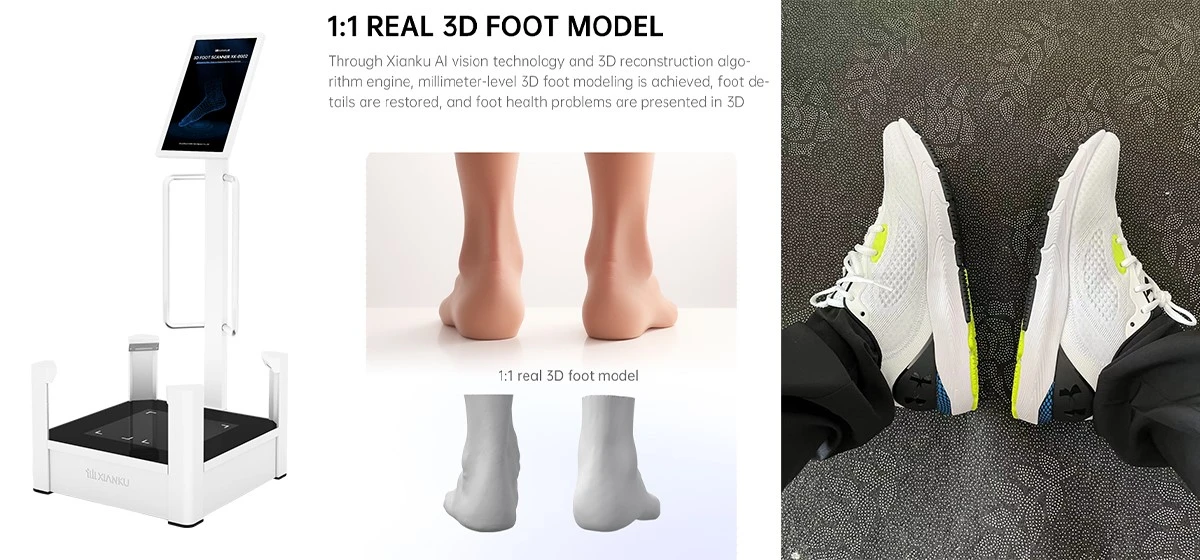
The global footwear market faces a persistent challenge: the inability to deliver consistent, precise fit experiences for consumers. Despite advancements in design and materials, a lack of standardization in sizing systems and the unique morphology of individual feet continue to plague both retailers and customers. With the rise of e-commerce, these issues have become more pronounced, as consumers struggle to find shoes that fit correctly without the opportunity for in-person try-ons.
The industry's reliance on regional sizing standards-such as European, American, and UK systems-has created confusion. Even within premium brands, sizing discrepancies of 1-2 sizes are common across different shoe models. This inconsistency, combined with the multidimensional nature of foot shape (length, width, arch height, and instep girth), often results in discomfort, dissatisfaction, and high return rates.
The Footwear Market's Pressing Challenges
1. Proliferation of Sizing Standards
The absence of a universal sizing system forces consumers to navigate a maze of regional and brand-specific standards.
For example:
- A customer who wears a size 42 in European brands might need a size 9 in the U.S. system for one brand but a 9.5 in another.
- Performance footwear, such as running or hiking shoes, often incorporates additional variables like toe box width and arch support, further complicating size selection.
This variability makes it nearly impossible for consumers to confidently purchase shoes across brands or styles, leading to frustration and lost sales.
2. The Multidimensional Fit Problem
A shoe's comfort and performance depend on its ability to accommodate the foot's holistic shape. However, most brands prioritize a single dimension, typically length, as the primary sizing metric.
This overlooks critical factors like:
- Foot width: Narrow or wide feet require specific last designs.
- Arch height: High arches need additional support, while flat feet benefit from motion control.
- Instep volume: A high instep demands deeper shoe chambers for comfort.
Without addressing these nuances, even the most technologically advanced shoes can fail to provide a personalized fit.
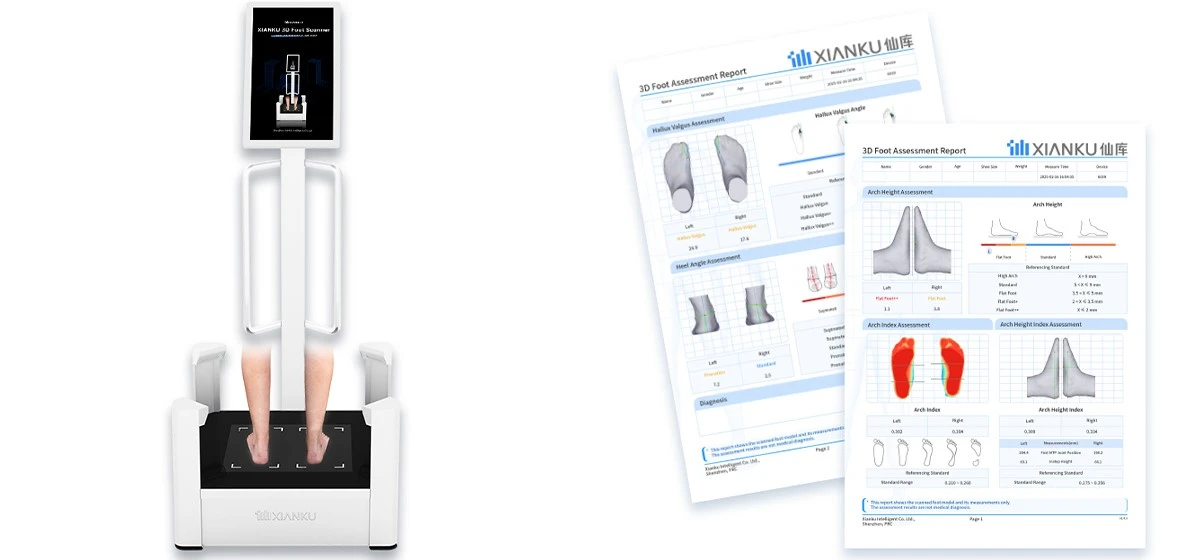
Xianku3d Foot Scanner: A Paradigm Shift in Fit Precision
The Xianku3d Foot Scanner addresses these challenges by combining non-invasive infrared scanning with AI-driven analytics. In under five seconds, the device captures 32 distinct foot dimensions, including length, width, arch height, and ball girth. This data forms the foundation of a transformative retail experience.
1. AI-Powered Product Matching
Using the scanner's proprietary backend system, retailers can digitize fit parameters for each shoe model.
For example:
- A running shoe may be programmed to accommodate feet with high arches and narrow heels.
- A casual sneaker might prioritize wide toe boxes and medium instep volumes.
When a customer undergoes a foot scan, the AI cross-references their unique foot morphology with the brand's product database, recommending only styles that align with their specific measurements. This eliminates guesswork and ensures a higher likelihood of satisfaction.
2. Data-Driven Sizing Optimization
Beyond individual recommendations, the aggregated and anonymized data collected from foot scan assessments provides brands with actionable insights:
- Identify common foot shapes within target demographics.
- Optimize shoe lasts to better reflect real-world foot anatomy.
- Establish cross-brand sizing comparisons to guide consumers.
For instance, a brand might discover that 30% of its customers have low arches, prompting the development of new models with enhanced arch support.
3. Enhancing the In-Store Experience
The scanning process itself elevates the retail journey:
- Health-Centric Narratives: Sales associates transition from style-focused pitches to wellness consultations, using 3D foot models to explain biomechanical needs.
- Visual Engagement: Customers see their own foot rendered in precise detail, fostering trust and investment in the recommended products.
This approach mirrors innovations like Nike FitAdapt, which allows wearers to adjust shoe fit dynamically via an app . Similarly, Volumental's partnership with Red Wing Shoes demonstrates how 3D scanning can create hyper-personalized recommendations for work boots .
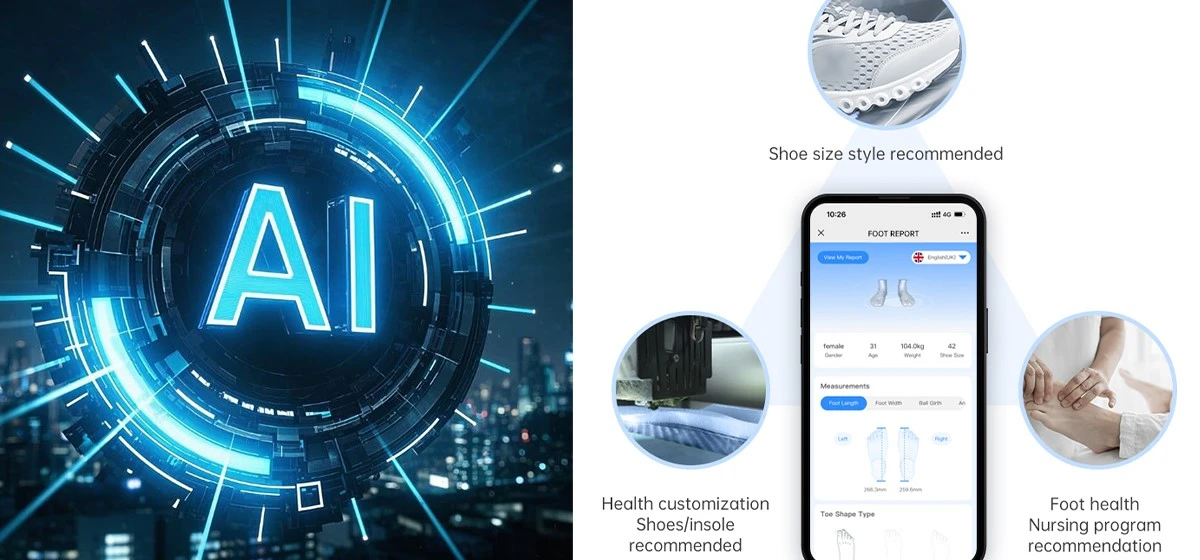
Standardizing Service Excellence: The Xianku3d Workflow
The platform's structured service flow ensures consistency across retail locations:
Step 1: Foot Scan
- A 5-second infrared scan captures 32 dimensions of the foot.
Step 2: Data Analysis
- AI algorithms process the foot's morphology, identifying traits like arch type and pressure points.
Step 3: Health Assessment
- A simplified report highlights postural alignment and fit recommendations.
Step 4: AI Product Matching
- The system curates a personalized selection of shoes from inventory.
Step 5: Transaction & Archiving
- Customer data is stored for future visits, enabling seamless reorders and follow-ups.
*Table 1: Traditional vs. Xianku3d-Enabled Fitting Processes*
| Aspect | Traditional Fitting | Xianku3d-Enabled Fitting |
|---|---|---|
| Measurement Method | Manual tape measure or Brannock device | Non-invasive 3D infrared scanning |
| Data Points Captured | 2-3 (e.g., length, width) | 32 dimensions, including arch height and instep girth |
| Recommendation Basis | Sales associate intuition | AI-driven analysis of foot morphology and product compatibility |
| Customer Experience | Subjective and variable | Engaging, transparent, and educational |
| Long-Term Value | One-time transaction | Ongoing relationship via stored foot profiles |
Industry Leaders in Fit Innovation: Lessons from Global Brands
Several top-tier brands have pioneered technologies to address fit challenges, offering valuable insights for the broader industry:
Nike:
- FitAdapt Technology: Allows wearers to adjust shoe tightness dynamically via a mobile app, catering to individual preferences and activity types .
- Nike FlyEase: Incorporates easy-entry mechanisms for individuals with mobility challenges, emphasizing inclusivity without sacrificing performance.
Red Wing Shoes:
- Volumental Collaboration: Uses 3D scanning and pressure mapping to recommend work boots and custom insoles, reducing fatigue and improving safety .
New Balance:
- Athletic Monitoring Systems: Embeds sensors in shoes to track movement patterns, informing design improvements for better fit and performance
Skechers:
- ARCH FIT® Collection: Features podiatrist-certified arch support and lightweight, responsive cushioning for all-day comfort .
PUMA:
- NITRO™ Foam Midsole: Combines nitrogen-injected foam with biomechanical data to deliver tailored cushioning and stability for runners .
Table 2: Fit Technologies Across Leading Footwear Brands
| Brand | Technology | Key Features | Impact on Fit |
|---|---|---|---|
| Nike | FitAdapt & FlyEase | Dynamic lacing adjustment; accessible design | Customizable tightness; inclusivity for diverse foot shapes and abilities |
| Red Wing Shoes | Volumental 3D Scanning | 16+ measurements; pressure mapping; AI-driven recommendations | Hyper-personalized work boot fits; reduced fatigue |
| New Balance | Embedded Sensors | Gait analysis; real-time movement tracking | Data-driven design optimizations for athletic performance |
| Skechers | ARCH FIT® & Air-Cooled Memory Foam | Podiatrist-certified arch support; breathable cushioning | Enhanced comfort for daily wear; reduced foot fatigue |
| PUMA | NITRO™ Foam & PUMAGRIP ATR | Nitrogen-infused midsole; adaptive traction lugs | Responsive cushioning; stability on varied terrains |
The Business Case: Transforming Data into Value
For retailers, the Xianku3d system delivers measurable benefits across key performance indicators:
- Reduced Return Rates: By ensuring precise fit, brands can significantly lower return rates driven by size issues.
- Higher Conversion Rates: Personalized recommendations shorten decision-making time and increase purchase confidence.
- Enhanced Customer Loyalty: Stored foot profiles enable seamless repeat purchases and targeted marketing.
- Product Innovation: Aggregated data informs design choices, reducing the risks of inventory obsolescence.
Table 3: Operational Impact of Xianku3d's Foot Scan Technology
| Business Metric | Pre-Implementation | Post-Implementation |
|---|---|---|
| Customer Fit Satisfaction | Low (based on self-reported sizing) | High (driven by empirical data) |
| Sales Conversion Time | Lengthy (multiple try-ons required) | Shortened (AI-driven matchmaking) |
| Inventory Management | Forecast-driven (high error margin) | Data-informed (based on actual foot morphology trends) |
| Marketing ROI | Broad campaigns (low segmentation) | Hyper-targeted (leveraging customer foot profiles) |
Conclusion: The Future of Footwear Retail is Personalized
The footwear industry stands at a crossroads. As consumer expectations evolve, the ability to deliver personalized, precise fit experiences will separate leaders from laggards. Technologies like the Xianku3d Foot Scanner offer a scalable solution to longstanding challenges, bridging the gap between mass production and individual needs.
By embracing data-driven fit strategies, brands can not only reduce returns and enhance customer satisfaction but also forge deeper, long-term relationships with their audiences. In an era where customization is king, the future of footwear retail lies not in selling shoes, but in delivering tailored solutions-one foot scan at a time.
(86)-181-2464-3821
alexliu@xianku.com