Posture Is Health: Why Postpartum Recovery Starts with Whole-Body Alignment
Posture is health.
After childbirth, many women experience changes that go far beyond body weight or waist circumference. Lower back discomfort, pelvic instability, neck tension, knee pressure, shoulder imbalance, abdominal protrusion, and fatigue may all be connected to deeper biomechanical changes in the body.
For postpartum women, the body does not recover as isolated parts. The pelvis, spine, abdominal wall, shoulders, knees, body center of gravity, and muscle balance work together as one system. When the pelvis tilts forward or backward, the lumbar spine may compensate. When the body center of gravity shifts, the knees, hips, and lower back may take on additional stress. When posture changes are ignored, pain and movement limitations may become long-term problems.
This is why 3D body scanning for postpartum pelvic tilt assessment is becoming an important digital tool for postpartum recovery centers, women's health clinics, and obstetric institutions.

Traditional body fat scales can measure body composition, but they cannot evaluate skeletal posture. Manual observation may identify visible posture issues, but it is difficult to standardize, quantify, and compare over time. Ordinary 2D photos show only flat images, not true three-dimensional body structure.
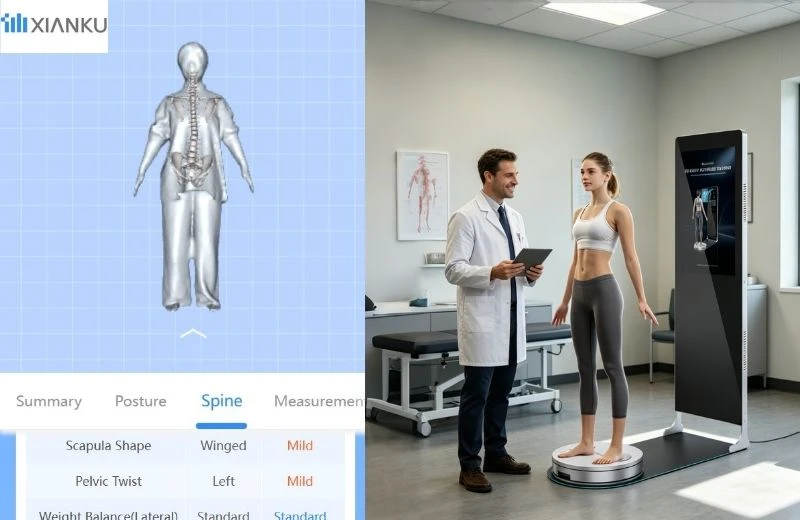
The XIANKU 3D Body Scanner provides a more complete approach: a three-in-one digital assessment of body composition + posture + circumference. Through non-radiation 3D structured light, 3D human body reconstruction, AI posture analysis, and digital trend comparison, it helps postpartum institutions evaluate pelvic tilt and whole-body alignment in a more visual, objective, and client-friendly way.
Why Pelvic Tilt Matters in Postpartum Recovery
Pelvic tilt is one of the most common posture concerns after pregnancy and childbirth. During pregnancy, changes in body weight distribution, abdominal expansion, ligament relaxation, and muscle imbalance can affect pelvic position and spinal alignment.
After childbirth, these issues may continue if the body does not recover properly.
Common postpartum posture-related concerns may include:
- Pelvic forward tilt
- Pelvic backward tilt
- Lumbar curvature imbalance
- Lower back discomfort
- Abdominal protrusion
- Hip asymmetry
- Knee pressure
- Shoulder and neck tension
- Body center of gravity deviation
- Reduced core stability
For postpartum recovery centers, pelvic tilt assessment is not only about appearance. It is closely related to:
- Spinal support
- Core stability
- Pelvic floor rehabilitation
- Movement quality
- Pain prevention
- Posture correction planning
- Long-term physical confidence
A precise assessment helps professionals understand whether a client's discomfort may be connected to pelvic alignment, spinal compensation, or body center of gravity shifts.
What Is 3D Body Scanning for Postpartum Pelvic Tilt Assessment?
3D body scanning for postpartum pelvic tilt assessment is a digital evaluation method that uses 3D infrared structured light scanning and AI body posture analysis to capture the client's body shape, posture, skeletal alignment indicators, and physical measurement data.
Instead of relying only on visual observation or manual measurement, the system creates a 1:1 Realistic 3D model of the body. AI algorithms then analyze posture indicators such as pelvic tilt, spinal curvature, shoulder balance, body center of gravity, and lower-limb alignment.
For postpartum recovery institutions, this means the assessment can be:
- Faster
- More visual
- More standardized
- Easier to explain to clients
- Easier to compare over time
- More suitable for digital health record management
It is important to position this technology correctly: a 3D body scanner is a professional screening and assessment tool. It supports wellness evaluation, posture tracking, and rehabilitation planning, but it does not replace clinical diagnosis by licensed healthcare professionals.
XIANKU 3D Body Scanner: From Visual Posture to Measurable Recovery Data
The XIANKU 3D Body Scanner uses industry-leading 3D infrared structured light scanning and 3D human body reconstruction technology. It performs a contactless scan in approximately 20 seconds and generates a complete digital report within 1 minute.
This speed is especially valuable in postpartum recovery centers and women's health clinics, where clients need a comfortable, non-invasive, and efficient experience.
Core technology features include:
- Non-radiation 3D structured light
- 20-second contactless scanning
- 1-minute digital report generation
- 1:1 Realistic 3D human body models
- AI visualized skeleton display
- Body center of gravity assessment
- Pelvic forward tilt and pelvic backward tilt assessment
- Spinal curvature and posture evaluation
- 45+ body circumference data
- 20 physical health reports
- Body trend comparison
- CRM-based client management system
Unlike formula-based estimation or simple 2D image capture, XIANKU builds a true digital body model that restores body shape and posture in three dimensions. This makes it easier for postpartum clients to understand their body condition and for professionals to provide personalized recovery guidance.

The Three-in-One Assessment: Composition + Posture + Circumference
Postpartum recovery is often misunderstood as weight loss or body shaping alone. In reality, meaningful recovery requires a deeper understanding of body structure, posture, and physical function.
XIANKU's 3D Body Scanner supports three core assessment modules.
1. Body Composition Analysis: More Than Weight
The system includes 15 body composition reports, helping postpartum institutions evaluate physical status beyond simple body weight.
This can support:
- Postpartum wellness tracking
- Body fat and muscle-related awareness
- Fitness recovery planning
- Health program personalization
- Client progress visualization
For many postpartum clients, seeing body composition as part of a larger posture assessment can help shift the conversation from "losing weight" to "recovering function and balance."
2. Digital Precision Body Measurement: 45+ Body Circumference Data
The system provides 45+ body circumference data, supporting a more complete understanding of postpartum body changes.
Relevant measurement areas may include:
- Neck circumference
- Shoulder width
- Waist circumference
- Upper and lower abdominal circumference
- Hip-related measurements
- Leg circumference
- Back length
- Shoulder tilt
- Body proportion indicators
For postpartum recovery centers, these measurements help create a repeatable digital baseline. Instead of relying only on tape measurement, professionals can use standardized data to monitor recovery changes across multiple sessions.
3. AI Spinal Posture Assessment: 20 Physical Health Reports
The system includes 20 physical health reports that help evaluate posture and alignment indicators across multiple body regions.
Important postpartum-related indicators include:
- Pelvic forward tilt
- Pelvic backward tilt
- Lumbar posture changes
- Hunchback posture
- Shoulder imbalance
- Neck extension
- Rounded shoulders
- Knee hyperextension
- O-shaped or X-shaped legs
- Body center of gravity deviation
This is where 3D body scanning for postpartum pelvic tilt assessment becomes especially valuable. It helps professionals connect pelvic position with the full-body compensation chain.
Why Pelvic Tilt Should Be Evaluated with the Whole Body
Pelvic tilt is rarely an isolated issue. After childbirth, the pelvis may influence or be influenced by multiple body regions.
For example:
- A forward pelvic tilt may increase lumbar pressure.
- A shifted center of gravity may affect knee and foot loading.
- Shoulder imbalance may appear as the upper body compensates for lower-body instability.
- Abdominal protrusion may reflect changes in core control and posture.
- Hip asymmetry may influence walking, standing, and exercise recovery.
That is why postpartum assessment should not focus only on the waist or pelvis. A whole-body digital model helps professionals observe the relationship between:
- Pelvis
- Spine
- Abdomen
- Shoulders
- Hips
- Knees
- Body center of gravity
- Overall posture pattern
XIANKU's AI visualized skeleton display allows posture-related information to be presented more intuitively. Clients can see how their body alignment looks, instead of only hearing technical explanations.
This visual experience improves trust, understanding, and engagement.
Body Center of Gravity Assessment: A Key Indicator for Postpartum Balance
Postpartum women often report instability, fatigue, or lower back stress during daily movement. One reason may be a change in the body's center of gravity.
A body center of gravity assessment helps identify whether the body is balanced or whether posture compensation may be occurring.
This is useful for postpartum programs focused on:
- Pelvic floor recovery
- Core training
- Posture correction
- Lower back care
- Movement re-education
- Safe exercise progression
When combined with pelvic tilt assessment, body center of gravity data provides a more complete understanding of postnatal biomechanical recovery.
Body Trend Comparison: Making Recovery Visible Over Time
Postpartum recovery is a journey. A single assessment shows the current condition, but long-term value comes from tracking change.
XIANKU's body trend comparison system allows institutions to visually compare body posture and shape across different time points. The system can overlap and compare two 3D models, making changes easier to understand.
This is valuable for:
- First-visit baseline assessment
- 30-day postpartum recovery tracking
- 60-day or 90-day progress comparison
- Pelvic tilt improvement visualization
- Posture correction program review
- Client retention and service follow-up
- Digital health archive creation
For B2B institutions, trend comparison transforms posture assessment into a professional service loop. Clients can clearly see progress, while centers can provide more structured recovery plans.
Application Value for Postpartum Recovery Centers and Obstetric Institutions
For Postpartum Recovery Centers
XIANKU 3D Body Scanner helps centers provide a more professional digital assessment experience.
It can support:
- Pelvic tilt screening
- Posture recovery evaluation
- Body shape tracking
- Core and pelvic floor program planning
- Personalized service recommendations
- Client progress comparison
- Premium package differentiation
For Obstetric and Women's Health Institutions
The scanner can help women's health providers build a more complete postpartum wellness workflow.
It can support:
- Non-invasive posture screening
- Digital body health reporting
- Referral support for rehabilitation programs
- Health education for new mothers
- Long-term client management through CRM
- More visual communication between staff and clients
For Clients
For postpartum women, the value is emotional as well as physical.
A 3D visual report helps clients:
- Understand their body changes without judgment
- See pelvic tilt and posture issues clearly
- Track progress instead of guessing
- Feel more confident in recovery plans
- Build a personalized digital health profile
- Stay motivated through visible improvement

FAQ: 3D Body Scanning for Postpartum Pelvic Tilt Assessment
What is 3D body scanning for postpartum pelvic tilt assessment?
It is a digital posture assessment method that uses 3D structured light scanning and AI analysis to evaluate pelvic alignment, spinal posture, body shape, body center of gravity, and physical measurement data. It helps postpartum recovery professionals better understand pelvic tilt and whole-body posture changes.
How does a 3D body scanner assess pelvic tilt without radiation?
A 3D body scanner uses non-radiation 3D structured light to capture the external body surface. XIANKU reconstructs a 1:1 Realistic 3D model and applies AI posture analysis to assess pelvic forward tilt, pelvic backward tilt, spinal alignment, and body center of gravity. It is designed for screening and wellness assessment, not radiological diagnosis.
What is the difference between a 3D body scanner and a traditional BIA body fat scale?
A traditional BIA body fat scale mainly focuses on body composition. It cannot visualize skeletal posture, pelvic tilt, spinal alignment, shoulder balance, or body center of gravity. XIANKU combines body composition reports, 45+ body circumference data, and 20 physical health reports into one integrated digital assessment.
Why is pelvic tilt common after childbirth?
Pregnancy and childbirth can change abdominal support, pelvic stability, spinal loading, and body weight distribution. These changes may contribute to pelvic forward tilt, pelvic backward tilt, lower back stress, and posture imbalance. A professional assessment helps identify these changes earlier.
Can 3D body scanning help with pelvic floor rehabilitation?
3D body scanning does not directly diagnose pelvic floor function. However, it can support pelvic floor rehabilitation programs by evaluating related posture factors such as pelvic tilt, spinal alignment, abdominal posture, and body center of gravity. These insights can help professionals design more personalized recovery plans.
Why is body trend comparison important in postpartum recovery?
Postpartum recovery changes gradually. Body trend comparison allows professionals and clients to compare before-and-after 3D models, track posture improvement, and evaluate whether pelvic tilt, body shape, and alignment are moving in the right direction.
Conclusion: Digital Postpartum Recovery Starts with Seeing the Whole Body
Postpartum recovery should not be reduced to weight loss, waist measurement, or appearance management. A woman's body after childbirth needs a more respectful, scientific, and whole-body assessment approach.
3D body scanning for postpartum pelvic tilt assessment helps postpartum recovery centers and obstetric institutions move from subjective observation to digital, visual, and trackable health assessment.
With non-radiation 3D structured light, a 1:1 Realistic 3D model, AI visualized skeleton display, 45+ body circumference data, 20 physical health reports, body center of gravity assessment, and body trend comparison, XIANKU 3D Body Scanner provides a more complete foundation for postpartum posture recovery and pelvic alignment tracking.
Experience Digital 3D Postpartum Health Screening
Help every mother understand her recovery with clarity, confidence, and care.
With XIANKU 3D Body Scanner, postpartum recovery centers and women's health institutions can create personalized digital health files, visualize posture changes, track pelvic alignment over time, and deliver a more professional postnatal recovery experience.