

Introduction
Anterior pelvic tilt (APT) is one of the most common postural deviations observed in modern populations, particularly among individuals with sedentary lifestyles, prolonged sitting habits, and limited movement variability. While often underestimated as a cosmetic or minor alignment issue, anterior pelvic tilt can significantly influence spinal mechanics, lower limb function, muscular balance, and long-term musculoskeletal health.
In recent years, Anterior Pelvic Tilt Assessment has evolved beyond traditional clinical examination and entered the commercial health, fitness, and footwear industries. From posture management studios to fitness clubs and digital health platforms, scalable and standardized assessment methods are becoming a key business driver.
This article provides a comprehensive overview of anterior pelvic tilt, including its causes, health risks, assessment methods, correction strategies, and-most importantly-how Anterior Pelvic Tilt Assessment creates value in commercial and service-based health models.
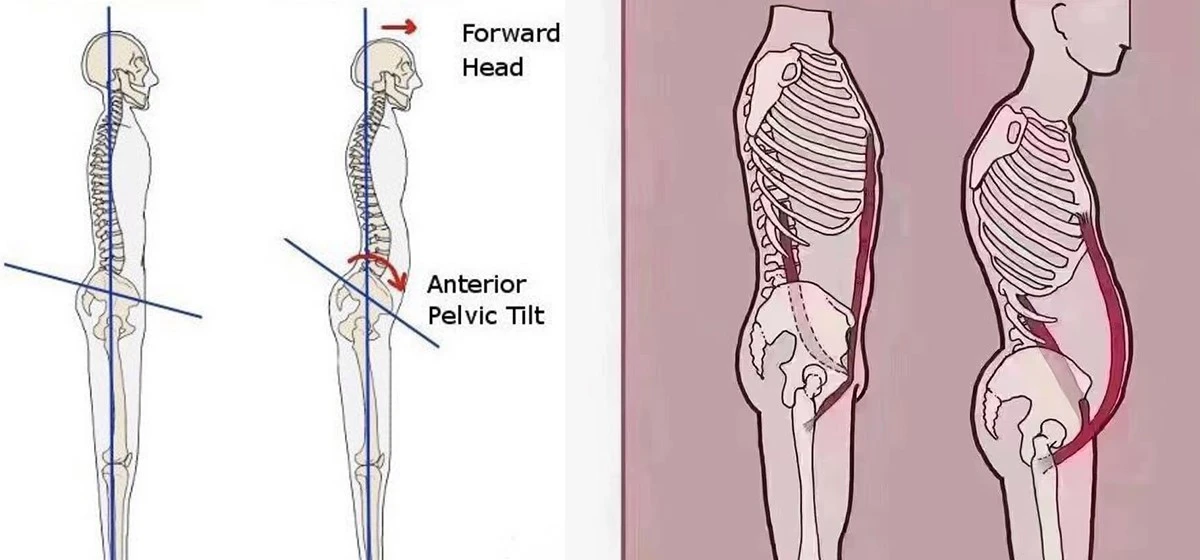
What Is Anterior Pelvic Tilt?
Anterior pelvic tilt refers to a positional imbalance of the pelvis in which the anterior superior iliac spine (ASIS) rotates forward and downward relative to the posterior superior iliac spine (PSIS). This altered alignment increases lumbar lordosis and shifts load distribution throughout the kinetic chain.
In a neutral pelvis, the lumbar spine, pelvis, hips, and lower extremities function in coordinated balance. When anterior pelvic tilt is present, this balance is disrupted, affecting posture, movement efficiency, and joint stress.
Primary Causes of Anterior Pelvic Tilt
Anterior pelvic tilt rarely develops from a single factor. Instead, it is the result of long-term adaptive changes influenced by lifestyle, occupation, and movement patterns.
Common Contributing Factors
| Category | Contributing Factors | Functional Impact |
|---|---|---|
| Lifestyle | Prolonged sitting, low physical activity | Hip flexor shortening, glute inhibition |
| Muscular Imbalance | Tight hip flexors, tight lumbar extensors | Reduced pelvic stability |
| Weakness Patterns | Weak abdominal muscles, weak gluteus maximus | Poor pelvic control |
| Movement Habits | Improper exercise technique, poor posture awareness | Reinforced faulty motor patterns |
| Occupational Demands | Desk work, driving, screen-based tasks | Sustained anterior pelvic bias |
Understanding these causes is fundamental for any Anterior Pelvic Tilt Assessment, particularly in commercial environments where personalized medical history may not be available.
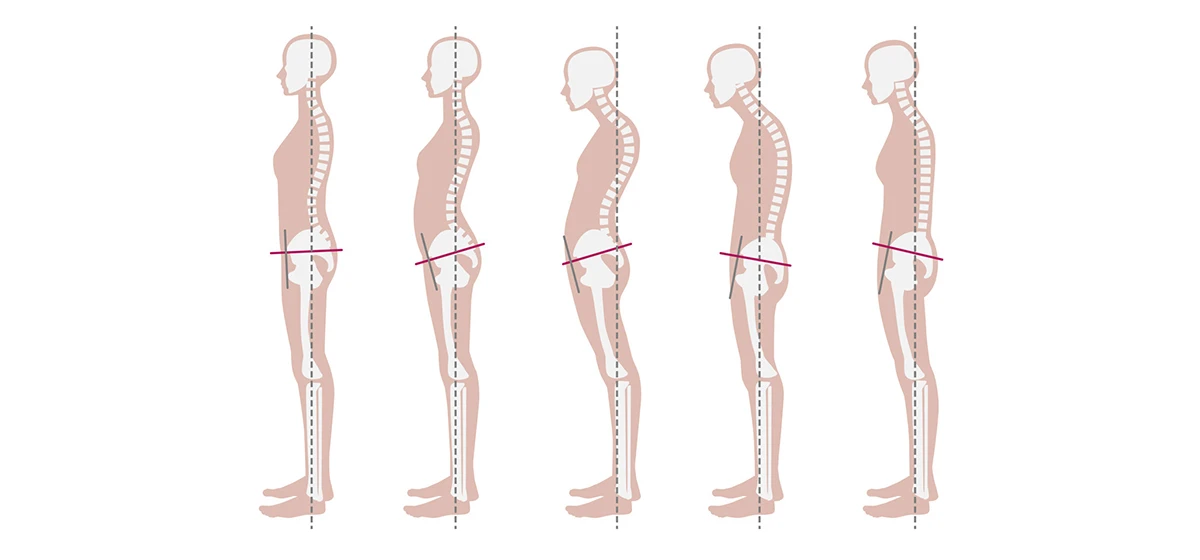
Health Risks and Functional Consequences
Untreated anterior pelvic tilt can lead to a wide range of musculoskeletal issues. These risks increase when faulty posture is combined with repetitive loading, such as running, lifting, or prolonged standing.
Potential Health Impacts
| Area Affected | Associated Risks |
|---|---|
| Lumbar Spine | Chronic lower back pain, disc compression |
| Hip Joints | Reduced hip extension, anterior hip pain |
| Knees | Altered alignment, increased joint stress |
| Gait Mechanics | Shortened stride length, inefficient movement |
| Athletic Performance | Reduced power transfer and stability |
For professionals, these risks emphasize why Anterior Pelvic Tilt Assessment is not merely observational but essential for preventive care and performance optimization.
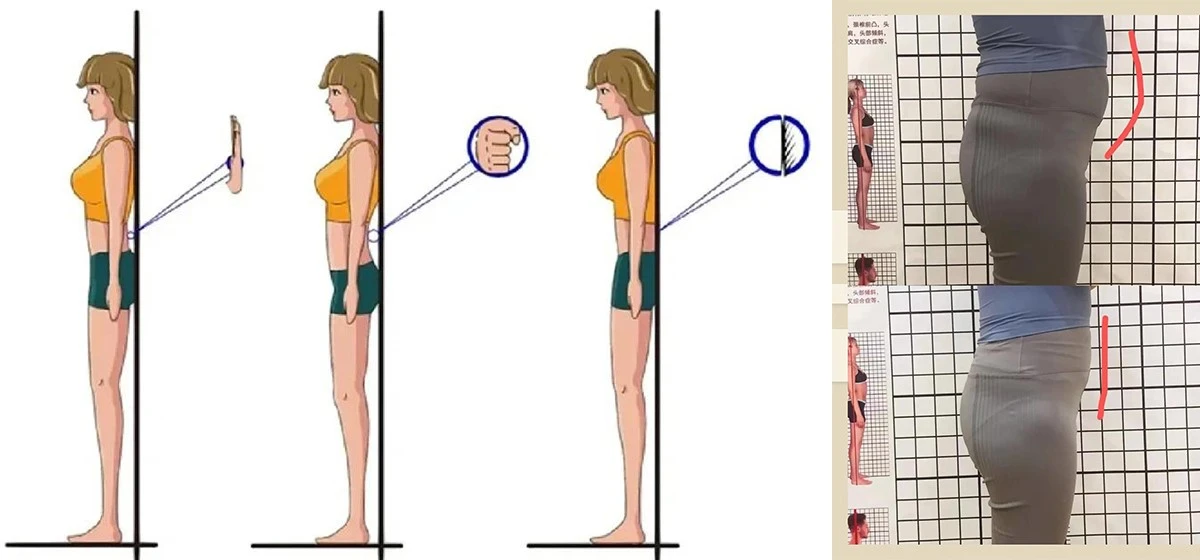
Anterior Pelvic Tilt Assessment: Evaluation Framework
Modern Anterior Pelvic Tilt Assessment can be broadly divided into two categories: medical-grade assessments and commercial assessments. Both play important roles, but they differ in purpose, accessibility, and scalability.
Medical-Grade Anterior Pelvic Tilt Assessment
Medical-grade assessments are typically conducted in clinical or rehabilitative environments and prioritize diagnostic precision.
Common Medical Assessment Methods
| Method | Description | Limitations |
|---|---|---|
| Radiographic Imaging | X-ray or MRI measurement of pelvic angles | High cost, radiation exposure |
| Manual Palpation | ASIS–PSIS comparison by trained clinicians | Examiner variability |
| Goniometric Measurement | Angle measurement in static posture | Limited dynamic insight |
| Clinical Posture Analysis | Visual and physical assessment | Time-intensive |
While these approaches provide high accuracy, they are not scalable for consumer-facing businesses or large population screening.
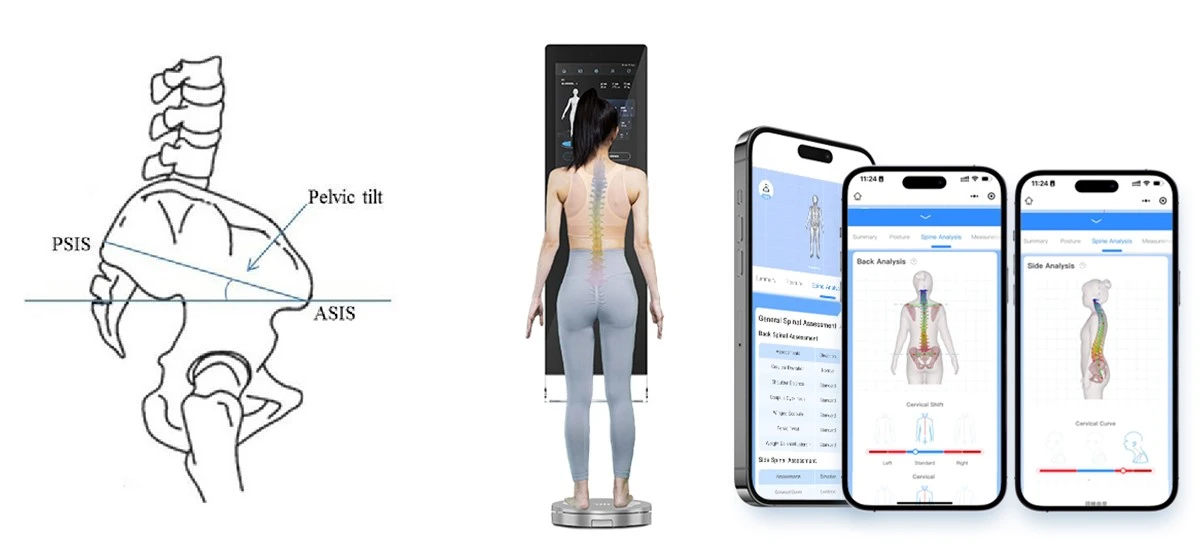
Commercial Anterior Pelvic Tilt Assessment (Key Focus)
Commercial Anterior Pelvic Tilt Assessment emphasizes accessibility, repeatability, and user engagement. These assessments are widely adopted by fitness studios, posture correction centers, footwear retailers, and digital health platforms.
Characteristics of Commercial Assessment
| Feature | Commercial Value |
|---|---|
| Non-invasive | Suitable for frequent use |
| Fast execution | High customer throughput |
| Visual feedback | Improves user understanding |
| Standardized outputs | Enables comparison over time |
| Data integration | Supports personalized services |
Effective Commercial Assessment Methods
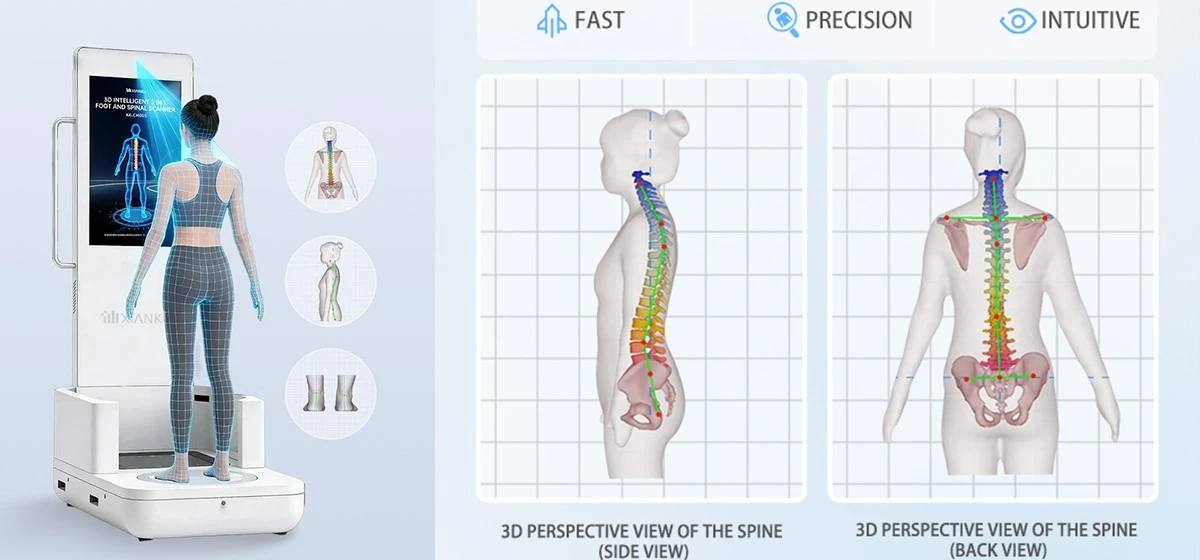
1. 3D Body or Spinal Scanning
Captures pelvic orientation, lumbar curvature, and lower limb alignment in a standing posture.
2. Digital Posture Analysis Systems
Uses structured imaging and algorithms to estimate pelvic tilt angles.
3. Marker-Based Surface Analysis
Identifies anatomical landmarks without manual palpation.
4. AI-Assisted Posture Platforms
Transforms posture data into actionable recommendations for training or lifestyle modification.
In commercial settings, Anterior Pelvic Tilt Assessment serves as both an educational tool and a sales enablement asset.
Why Commercial Anterior Pelvic Tilt Assessment Matters
Unlike medical diagnostics, commercial assessments act as a bridge between awareness and action. They allow businesses to convert abstract posture issues into tangible, measurable outcomes.
Commercial Advantages
| Business Type | Application of Anterior Pelvic Tilt Assessment |
|---|---|
| Fitness Studios | Program personalization and progress tracking |
| Pilates & Yoga | Posture-based class recommendations |
| Footwear & Insoles | Alignment-driven product matching |
| Corporate Wellness | Workforce posture screening |
| Digital Health Platforms | Subscription-based posture monitoring |
When integrated effectively, Anterior Pelvic Tilt Assessment increases customer trust, service differentiation, and long-term engagement.
Correction Strategies for Anterior Pelvic Tilt
Correction should always be guided by assessment results. Without a reliable Anterior Pelvic Tilt Assessment, corrective interventions risk being generic and ineffective.
Core Correction Components
- Mobility Training: Stretching hip flexors and lumbar extensors
- Strength Training: Activating gluteal and abdominal muscles
- Movement Re-education: Teaching neutral pelvic positioning
- Postural Awareness: Reinforcing daily posture habits
Assessment-Driven Correction Model
| Phase | Role of Assessment |
|---|---|
| Baseline | Identify degree of pelvic tilt |
| Program Design | Select targeted interventions |
| Progress Tracking | Quantify posture improvement |
| Retention | Visual proof of results |
Commercial services that continuously apply Anterior Pelvic Tilt Assessment throughout the correction journey demonstrate higher client satisfaction and retention rates.
Business Integration and Revenue Opportunities
The commercialization of Anterior Pelvic Tilt Assessment transforms posture evaluation from a cost center into a profit-generating service.
Monetization Models
| Model | Revenue Potential |
|---|---|
| Paid Assessments | One-time or bundled services |
| Membership Integration | Recurring posture monitoring |
| Product Pairing | Insoles, footwear, training plans |
| Data-Driven Upselling | Personalized recommendations |
By positioning Anterior Pelvic Tilt Assessment as a foundational service, businesses create a scalable entry point into broader musculoskeletal solutions.
Conclusion
Anterior pelvic tilt is a widespread postural issue with significant health, functional, and performance implications. While medical-grade evaluation remains essential for diagnosis, commercial Anterior Pelvic Tilt Assessment plays a critical role in prevention, education, and long-term posture management.
For fitness, wellness, footwear, and digital health businesses, adopting structured and technology-driven Anterior Pelvic Tilt Assessment is no longer optional-it is a competitive necessity. When implemented correctly, it enhances credibility, improves outcomes, and unlocks sustainable business growth.
In a market increasingly driven by data, personalization, and user experience, Anterior Pelvic Tilt Assessment stands as a powerful intersection between health science and commercial value.
